Classical Education
Born into a scholarly household in northern China; mastered the Confucian canon, dynastic histories, and dramatic prosody.
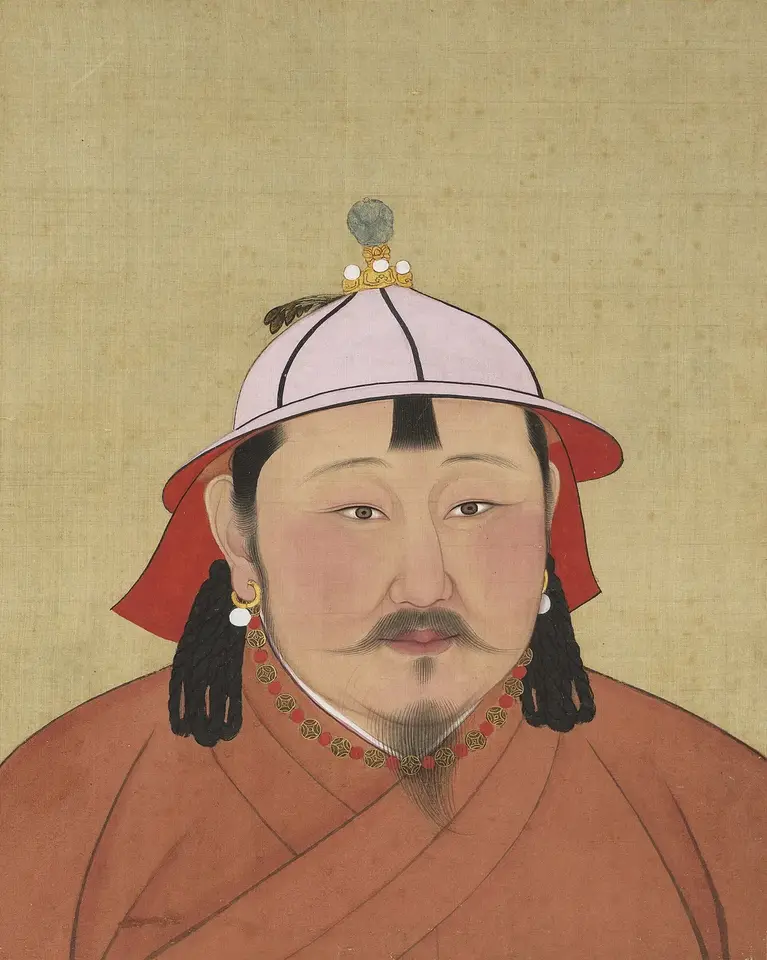
刘时中
Liu Shizhong (刘时中, given name Zhi, went by his courtesy name Shizhong), literary name Buzhai, was a native of Shizhou (modern Lishi, Shanxi; according to some sources, Nanfeng, Jiangxi). He was an illustrious civil official and sanqu lyric poet during the middle and late Yuan dynasty. Endowed with extensive classical erudition and musical sensitivity, Liu achieved literary prominence in southern China in his youth. Entering…
Liu Shizhong (刘时中, given name Zhi, went by his courtesy name Shizhong), literary name Buzhai, was a native of Shizhou (modern Lishi, Shanxi; according to some sources, Nanfeng, Jiangxi). He was an illustrious civil official and sanqu lyric poet during the middle and late Yuan dynasty. Endowed with extensive classical erudition and musical sensitivity, Liu achieved literary prominence in southern China in his youth. Entering administrative service, he served successively as clerk and administrative assistant in the Jiangzhe Branch Secretariat before advancing to secretary in the Ministry of Personnel at the imperial capital of Dadu. During his tenure in Jiangzhe, Liu governed with scrupulous honesty, routinely visiting rural districts to investigate common grievances and harboring deep revulsion toward official extortion, land usurpation, and abusive taxation. In 1329, the lower Yangtze valley suffered a catastrophic drought and locust plague, leaving millions destitute and reducing the population to famine and cannibalism. Confronting bureaucratic inertia, hoarding by grain merchants, and the indifferent formalism of the provincial inspection commission, Liu was moved by deep moral outrage to compose the immortal realist sanqu song-suite Petition to Surveillance Commissioner Gao (Shang Gao Jiansi). Extending across two linked suites and exceeding fourteen hundred characters, the poem graphically documented the horrors of famine while denouncing bureaucratic complicity and official corruption. Hailed as the supreme masterpiece of realist social critique in Yuan dramatic poetry, the work directly pressured authorities to open public granaries, rescuing hundreds of thousands of starving civilians.
Born into a scholarly household in northern China; mastered the Confucian canon, dynastic histories, and dramatic prosody.
Recruited into regional administration in Jiangzhe based on his literary talent and administrative competence.
Promoted to administrative assistant in the Jiangzhe Branch Secretariat, managing civil affairs and judicial audits.
Witnessed devastating famine across Jiangnan; composed the monumental realist song-suite Petition to Surveillance Commissioner Gao.
Elevated to director in the Ministry of Personnel in Dadu, supervising bureaucratic evaluations with strict impartiality.
Passed away in office or in retirement; his poetic suites were anthologized in Zhong Sicheng's Register of Ghosts.
Liu Shizhong was born in Shizhou, a strategic commandery in Shanxi. His youth coincided with the stabilization of the Mongol Yuan dynasty following the southern conquest. Endowed with sharp intellect, Liu complemented his classical Confucian studies with a thorough mastery of northern vernacular drama and musical song-poetry (sanqu).
As a young man, Liu traveled southward to Jiangnan. In Hangzhou, he associated with distinguished literati and civil officials, earning high praise for his administrative acumen and literary elegance. He was soon recruited into government service as a clerk in the Jiangzhe Branch Secretariat, the supreme regional authority governing the affluent southeastern provinces.
Owing to his diligence and fair enforcement of dynastic statutes, Liu rose to become administrative assistant (dushi) in the Branch Secretariat. In this role, he was responsible for auditing administrative memorials, tax assessments, and judicial case files. While examining commandery registries, Liu observed how decades of commercial exactions by Central Asian tax-farmers and Mongol nobles had crushed the agrarian peasantry, creating deep resentment that informed his later writings.
In 1329, the Yangtze and Huai river basins were devastated by one of the most severe droughts in recorded dynastic history. From spring through autumn, no rain fell across Zhejiang, Jiangxi, and Huguang. Canals ran dry, crops withered, and swarms of locusts consumed all remaining vegetation.
Famine quickly engulfed millions of households. Displaced refugees crowded city walls, dying by the thousands along highways. Rather than distributing emergency relief, corrupt regional magistrates conspired with wealthy grain cartels to lock public granaries, hoard provisions, and inflate rice prices a hundredfold. Desperate commoners consumed tree bark, dirt, and eventually the corpses of the starved, while parents abandoned or sold their children into slavery.
Confronting this humanitarian disaster, Surveillance Commissioner Gao, the chief censor charged with supervising relief, remained passive, paralyzed by administrative red tape while subordinates fabricated reports of miraculous omens to conceal the truth. Deeply agonized and unable to sleep, Liu discarded personal caution and took up his brush to write the monumental song-suite Petition to Surveillance Commissioner Gao.
Comprising two extensive musical suites spanning more than fourteen hundred characters, Petition to Surveillance Commissioner Gao stands as a monument in classical Chinese verse.
The suite opens with an unsparing depiction of the drought: "From spring to summer without a single inch of rain; ponds dried up and fields cracked open. Rich houses still had stocks from prior years, while the poor lacked food for the next morning!" Liu then laid bare the gruesome reality of starvation: "Peeling tree bark, digging wild roots; after roots were gone, eating white clay. Fathers abandoning sons, husbands selling wives; white bones heaped like mountains along roads, while weeping kin devour each other!"
Beyond describing suffering, Liu launched an uncompromising assault against the imperial bureaucracy. He revealed how relief funds allocated by Dadu were intercepted and pocketed by provincial intermediaries, leaving the starving without a single grain. He condemned inspectors for demanding endless stamps and forms while victims died on the steps of government offices, contrasted with the luxurious banquets enjoyed by officials and merchants. Finally, he called upon Commissioner Gao to bypass bureaucratic formalities immediately, unlock all granaries, distribute food directly, and severely punish monopolists to halt the catastrophe.
Circulating rapidly through the teahouses and yamens of Hangzhou, the song-suite produced an electric sensation. Weeping crowds memorized its lines, creating overwhelming popular pressure. Humiliated and fearful of popular rebellion, the Branch Secretariat and Commissioner Gao capitulated, ordering all state granaries opened for immediate distribution while capping market prices. Through Liu's intervention, hundreds of thousands of lives were spared.
In recognition of his moral courage and administrative capability during the famine crisis, the imperial court summoned Liu to Dadu during the Zhishun era, appointing him director in the Ministry of Personnel. In this pivotal office, which managed imperial appointments and bureaucratic evaluations, Liu maintained his customary integrity, adamantly refusing private bribes and purging incompetent and venal magistrates.
In the mid-1330s, Liu Shizhong passed away from illness.
Liu's enduring legacy rests upon his revolutionary contribution to Yuan literature. Classical drama historians universally agree that Petition to Surveillance Commissioner Gao was not merely the longest and most structurally profound suite in the sanqu corpus, but also one of the rare epic achievements in Chinese literary history worthy of comparison with the social realist masterpieces of Du Fu.
Served as clerk and administrative assistant in the Jiangzhe Branch Secretariat, managing regional governance and defending commoners against official exploitation.
Authored the epic fourteen-hundred-character realist song-suite in 1329, documenting the horrors of the Jiangnan famine and demanding structural administrative relief.
Mobilized public opinion through literary verse to force imperial officials to open granaries, preserving the lives of hundreds of thousands of starving refugees.
Directed bureaucratic appointments as director in the Ministry of Personnel, enforcing meritocracy and resisting aristocratic interference.
FIGURES ASSOCIATED WITH THIS DYNASTY