Birth into Eminent Lineage
Born into the aristocratic Hedong Liu clan in Huayuan, composed rhapsodies at twelve years old.
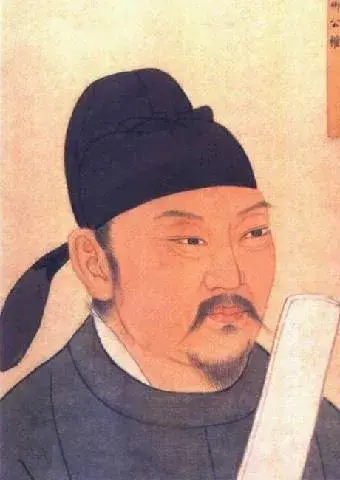
柳公权
Liu Gongquan (柳公权) (778–865), courtesy name Chengxuan (诚悬), was a native of Huayuan in Jingzhao (present-day Yaozhou District, Tongchuan, Shaanxi). He was an illustrious calligrapher, poet, and high-ranking statesman of the Mid-to-Late Tang dynasty, celebrated throughout Chinese cultural history as one of the Four Masters of Regular Script. Liu Gongquan descended from the aristocratic Hedong Liu clan; his grandfather Liu…
Liu Gongquan (柳公权) (778–865), courtesy name Chengxuan (诚悬), was a native of Huayuan in Jingzhao (present-day Yaozhou District, Tongchuan, Shaanxi). He was an illustrious calligrapher, poet, and high-ranking statesman of the Mid-to-Late Tang dynasty, celebrated throughout Chinese cultural history as one of the Four Masters of Regular Script. Liu Gongquan descended from the aristocratic Hedong Liu clan; his grandfather Liu Zhengli served as Service Corps Assistant Administrator of Binzhou, his father Liu Ziwen served as Prefect of Danzhou, and his elder brother was the celebrated chancellor-general Liu Gongchuo. Highly precocious in youth, Liu Gongquan was capable of composing sophisticated poetic rhapsodies at age twelve. In 808, he took first place as Zhuangyuan in the imperial examinations under Emperor Xianzong, commencing service as Collator in the Palace Library before joining the staff of Li Ting, Military Commissioner of Xiasui, as Secretary. In 820, Emperor Muzong ascended the throne and summoned Liu Gongquan to court after admiring his inscriptions at Buddhist temples, appointing him Right Reminder and Calligraphy Academician in Attendance within the Hanlin Academy. He served continuously across seven imperial reigns—Muzong, Jingzong, Wenzong, Wuzong, Xuanzong, and Yizong—holding senior ministerial rank for over thirty years. Although renowned worldwide for calligraphy, Liu Gongquan was unbending, candid, and fearless in political remonstrance. When Emperor Muzong inquired about the secret of stroke mechanics, Liu solemnly replied: "The brushwork resides in the heart; if the heart is upright, the brush will naturally be upright, thereby becoming a standard for the realm," delivering a celebrated remonstrance that startled the pleasure-seeking monarch. When Emperor Wenzong boasted of wearing a robe washed three times, while court flatterers offered lavish praise, Liu Gongquan bluntly remonstrated that a sovereign's virtue lay in advancing worthy talents, expelling sycophants, and clarifying penal justice, dismissing laundered garments as a trivial personal detail. Profoundly impressed by his courage, Wenzong made him Grand Master of Remonstrance and Drafter of Imperial Edicts; during the Kaicheng era, he also intervened to halt the nepotistic appointment of consort-relative Guo Min, compelling the emperor to return Guo's daughters home. In calligraphy, synthesizing the legacy of Wang Xizhi, Ouyang Xun, and Yan Zhenqing, Liu Gongquan founded the celebrated Liu Style (Liuti), distinguished by lean bone, structural rigor, and unyielding vigor, honored alongside Yan Zhenqing under the maxim "Yan's Sinews and Liu's Bones." His immortal stone steles, including the Mysterious Secret Pagoda Stele and the Shencejun Stele, represent the supreme pinnacle of Tang regular script. He died in 865 at age eighty-eight, posthumously honored as Grand Preceptor of the Heir Apparent.
Born into the aristocratic Hedong Liu clan in Huayuan, composed rhapsodies at twelve years old.
Placed first as Zhuangyuan in the imperial examinations, served as Collator and military secretary.
Summoned to court by Emperor Muzong after seeing temple inscriptions, appointed Right Reminder and Academician.
Formulated the immortal maxim "If the heart is upright, the brush will be upright" to admonish Emperor Muzong.
Rebuked Wenzong's vanity regarding washed robes, elevated to Grand Master of Remonstrance for outspoken honesty.
Promoted to Chief Academician of the Hanlin Academy, successfully dissuaded the emperor from consort favoritism.
Reassigned as Right Cavalier Attendant, Chancellor of the Imperial University, and Minister of Works, Duke of Hedong.
Summoned by Emperor Xuanzong to write three scrolls before the throne, appointed Junior Preceptor of the Heir Apparent.
Retired with supreme honors as Grand Guardian of the Heir Apparent after serving seven emperors over three decades.
Passed away peacefully in Chang'an, Emperor Yizong mourned and posthumously granted Grand Preceptor of the Heir Apparent.
Liu Gongquan was born into the prestigious western branch of the Hedong Liu clan, long established in Huayuan of Jingzhao. His ancestral line produced continuous generations of high officials throughout the Northern Dynasties, Sui, and Tang. His grandfather Liu Zhengli served as Service Corps Assistant Administrator in Binzhou, and his father Liu Ziwen served as Prefect of Danzhou. His elder brother Liu Gongchuo was an austere and esteemed statesman under Emperors Xianzong and Muzong, rising to Minister of Justice and Military Commissioner of Shannan East Circuit. Reared in a household governed by strict Confucian decorum, Liu Gongquan absorbed classical letters from childhood. Naturally gifted with extraordinary memory and literary perception, he was capable of composing sophisticated rhymed rhapsodies at the tender age of twelve, gaining widespread fame across the Guanzhong literati.
Legend recounts that as a youth, Liu Gongquan was proud of his calligraphy until he encountered an armless elder writing sublime, soaring characters using his feet, an experience that deeply humbled him. He cast aside vanity and dedicated himself to monastic practice of the brush, practicing through winter freezes and summer heat without interruption. In addition to studying the classical masterpieces of Wang Xizhi and Wang Xianzhi, he surveyed the steles of Zhong Yao, Ouyang Xun, Yu Shinan, and Chu Suiliang, absorbing the chiseled geometry of Northern Wei stone carvings, building a monumental technical foundation for his future artistic creation.
In 808, at the age of thirty-one, Liu Gongquan competed in the imperial examinations. Amidst fierce competition in the Ministry of Rites, Liu Gongquan's prose exhibited brilliant philosophical balance, earning him the prestigious first place as Zhuangyuan. His first post was Collator in the Palace Library, where he proofread and cataloged rare imperial archives in the imperial library. This position afforded him direct access to dynastic treasures of calligraphy and painting. Subsequently, Li Ting, Military Commissioner of Xiasui, recognized Liu's executive and literary versatility, submitting a memorial requesting his transfer to serve as Secretary in his frontier headquarters in northern Shaanxi. Stationed along the nomadic frontier, Liu Gongquan drafted administrative decrees and military dispatches with precision and elegance.
In early 820, Emperor Xianzong passed away and Emperor Muzong ascended the throne. In late 820, Liu Gongquan traveled to the capital to report on northern frontier affairs. During a private audience in the side hall, Emperor Muzong beamed upon seeing him, enthusiastically stating: "We have long admired your magnificent brushwork upon the steles of metropolitan Buddhist temples and have desired to meet you for a very long time!" The emperor immediately elevated Liu Gongquan to Right Reminder, inducting him into the Hanlin Academy as Calligraphy Academician in Attendance, and later advancing him to Remonstrance Official and Vice Director of the Bureau of Honors. From this point onward, Liu Gongquan resided within the inner palace, serving as royal calligraphy preceptor.
Emperor Muzong proved to be an indolent and pleasure-seeking sovereign, neglecting state affairs while indulging in feasts, hunting, and entertainment. One afternoon in the palace, Emperor Muzong questioned Liu Gongquan regarding the inner mechanics of handling the writing brush, asking how one might achieve exceptional structural power and bone strength. Aware of the sovereign's lax discipline, Liu Gongquan replied solemnly: "The secret of brushwork lies entirely in the heart; if the heart is upright, the brush will naturally be upright, thereby becoming a model for all generations!" Recognizing that Liu was using calligraphy to rebuke his moral laxity and urge self-cultivation, Emperor Muzong flushed deeply and visibly altered his countenance in awe. Liu Gongquan's "brushwork admonition" became an immortal legend of Confucian moral courage.
Following the successive deaths of Emperors Muzong and Jingzong, Emperor Wenzong ascended the throne in late 826. Throughout this period, because his calligraphy stood without equal, Liu Gongquan was retained inside the palace as court scribe. His elder brother Liu Gongchuo, then serving as Military Commissioner of Taiyuan, grew concerned that his younger brother would be treated as an ornamental entertainer rather than an authentic statesman. Liu Gongchuo sent an urgent letter to Chancellor Li Zongmin, stating: "My brother originally aspired to classical statecraft. The late court employed him merely as a scribe, which resembles an ancient ritual diviner, something I consider deeply shameful; I beg you to reassign him to a proper outer office." Li Zongmin complied, transferring Liu Gongquan to Director of the Right Bureau in the Department of State Affairs and Academician of the Hongwen Academy, and subsequently to Director of the Bureau of Military Affairs.
Yet Emperor Wenzong loved calligraphy and literature, treasuring Liu Gongquan's talents. He soon summoned Liu back to the palace as Calligraphy Academician, promoting him to Grand Master of Remonstrance, Drafter of Imperial Edicts, and Chief Academician of the Hanlin Academy. Emperor Wenzong extended extraordinary affection to him. When summoning Liu to the Yutang Hall for late-night conferences, the candles frequently burned down to their wicks while conversation remained animated; unwilling to pause the discussion to fetch new tapers, imperial maidservants dipped rolled paper in melted wax to sustain the illumination until dawn.
During a gathering of six Hanlin academicians in the palace, Emperor Wenzong praised the legendary frugality of Emperor Wen of Han, raising his imperial sleeve to declare: "This robe of Ours has already been laundered and worn three times!" The assembled scholars bowed and offered effusive congratulations on the monarch's supreme thrift. Liu Gongquan alone stood silent. Intrigued, the emperor detained him to ask why he had not spoken.
Liu Gongquan replied uprightly: "A sovereign's grand virtue should consist in promoting virtuous men, expelling corrupt flatterers, embracing candid remonstrance, and making rewards and punishments crystal clear. Wearing laundered garments is merely a minor personal trait of commoners, offering no genuine benefit to the governance of the realm!" Standing alongside him, Academician Zhou Chi was terrified by Liu's bluntness, trembling with fear. Yet Liu Gongquan remained composed and resolute. Emperor Wenzong observed: "We recognize that a drafter should not ordinarily be demoted to remonstrator, but because you possess the authentic spirit of an outspoken critic, We bestow upon you the office of Grand Master of Remonstrance!" The following day, an edict appointed Liu Grand Master of Remonstrance and Drafter of Imperial Edicts, while retaining his Hanlin academician rank.
In 838, Liu Gongquan was transferred to Vice Minister of Works while retaining his position as Chief Academician of the Hanlin Academy. Summoning him to private audience, Emperor Wenzong inquired about contemporary public sentiment. Liu Gongquan replied: "Since the court assigned General Guo Min to command Binning Circuit, public opinion has been divided, offering mixed praise and censure." The emperor explained: "Guo Min is the nephew of the late Senior Guardian Guo Ziyi and the maternal uncle of Grand Empress Dowager Guo. He has committed no misconduct in office. In transferring him from Grand General of the Golden Guard to a modest frontier outpost, why should the public complain?"
Liu Gongquan answered candidly: "Given Guo Min's ancestral lineage, appointing him military commissioner is entirely fitting. However, rumors assert that Guo Min obtained this post only after presenting his two daughters into the imperial palace. Is this report true?" Emperor Wenzong insisted: "His daughters entered the palace merely to attend upon the Grand Empress Dowager, not as royal concubines!" Liu Gongquan countered: "As the ancient proverb warns, one does not adjust shoes in a melon patch, nor adjust a hat beneath a plum tree. When matters arouse public suspicion, how can one explain it to every common household? Ambiguous actions tarnish Your Majesty's sage virtue!" Liu then cited the historical precedent of Chancellor Wang Gui urging Emperor Taizong to return Princess Lujiang home. Enlightened by his reasoning, Emperor Wenzong dispatched an imperial eunuch that very day to escort Guo Min's daughters safely back to their family.
In 840, Emperor Wenzong passed away and Emperor Wuzong succeeded him. Emperor Wuzong discontinued palace academician posts, assigning Liu Gongquan to serve as Right Cavalier Attendant-in-ordinary. Chancellor Cui Gong recommended Liu to serve as Academician and Director of the Jixian Academy. Chancellor Li Deyu, who had long patronized Liu, took offense at Cui Gong's unilateral recommendation, demoting Liu to Supervisor of the Household of the Crown Prince and subsequently Mentor to the Prince. Liu was later elevated to Grand Master of Splendid Happiness with Gold Seal and Purple Ribbon, Pillar of State, and Dynastic Commandery Duke of Hedong with a fief of two thousand households, consecutively serving as Left Cavalier Attendant, Chancellor of the Imperial University, and Minister of Works.
Under Emperor Xuanzong in the early Dazhong era, Liu Gongquan was appointed Junior Preceptor of the Heir Apparent. The emperor invited him to demonstrate his brushwork before the throne. With the imperial military commissioner holding the inkstone and the privy councilor presenting brushes, Liu Gongquan executed three legendary scrolls: ten characters in regular script stating "Lady Wei transmitted brushwork to General of the Right Wang"; eleven characters in running script stating "Monk Zhiyong's regular and cursive Thousand Character Classic attained familial heritage"; and eight characters in cursive script. Astounded by his genius, Emperor Xuanzong rewarded him with silver vessels and silk brocades, commanding him to write his gratitude memorial freely in whatever script he pleased.
At the New Year court assembly of 858, the eighty-year-old Liu Gongquan led the assembled bureaucracy into Hanyuan Hall. Exhausted from walking across the vast palace courtyard, he mispronounced the emperor's lengthy honorific title, prompting an impeachment from the censorate that resulted in a quarter's salary forfeiture.
Liu Gongquan occupied second- and third-rank executive offices for over thirty years across seven imperial reigns: Xianzong, Muzong, Jingzong, Wenzong, Wuzong, Xuanzong, and Yizong. During the Xiantong reign of Emperor Yizong, he retired with the title Grand Guardian of the Heir Apparent. In 865, the revered master passed away peacefully in Chang'an at the age of eighty-eight. Emperor Yizong mourned his demise, posthumously conferring upon him the supreme rank of Grand Preceptor of the Heir Apparent.
Liu Gongquan synthesized the ancient elegance of Zhong Yao and Wang Xizhi, the rugged dynamism of Northern Wei stone monuments, and the architectural discipline of Ouyang Xun and Yan Zhenqing to create the immortal Liu Style (Liuti). Characterized by lean bone, structural equilibrium, sharp chisel-like strokes, and impenetrable compositional rigor, his calligraphy counteracted the fleshy decadence of late-Tang writing, establishing the aesthetic zenith of Tang structural discipline, celebrated historically as "Yan's Sinews and Liu's Bones" and ranking him among the Four Masters of Regular Script.
Liu Gongquan bequeathed enduring stone monuments revered through centuries as the Three Divine Masterpieces of Tang Regular Script: the Mysterious Secret Pagoda Stele, the Shencejun Stele, and the Stele of Lord Shi. The Mysterious Secret Pagoda Stele exhibits razor-sharp bone strength and kinetic energy; the Shencejun Stele displays monumental imperial majesty and flawless carving; and his early Diamond Sutra carving exemplifies structural grace, serving as the universal standard for beginners of Chinese calligraphy.
When questioned by Emperor Muzong regarding stroke technique, Liu Gongquan proclaimed that brushwork resides in the heart, and that an upright heart produces an upright brush. This philosophical synthesis integrated calligraphic mechanics with Confucian moral self-cultivation, creating the celebrated "brushwork admonition" that stands as an immortal monument in Chinese political and aesthetic theory.
Refusing to praise Emperor Wenzong's thrice-laundered garments, Liu Gongquan confronted the throne by asserting that true imperial virtue resides in recruiting talent, eliminating scoundrels, and administering impartial law, dismissing domestic thrift as an inconsequential personal detail. His courage elicited the emperor's admiration and earned him appointment as Grand Master of Remonstrance.
When General Guo Min was suspected of presenting daughters to the court to obtain the military command of Binning Circuit, Liu Gongquan confronted Emperor Wenzong with the moral hazards of public suspicion, citing ancient precedent to persuade the monarch to return the women immediately, checking the rise of consort corruption.
Summoned by Emperor Xuanzong to compose scrolls before the throne, with high court ministers serving his inkstone and brushes, Liu Gongquan produced three masterpieces in regular, running, and cursive scripts without hesitation. His artistic reputation spread beyond the empire; foreign embassies from the Khitans, Koreans, and Tibetans brought substantial treasure specifically designated to purchase his calligraphy.
Beyond his monuments, Liu Gongquan revolutionized calligraphic structural theory. He advocated a tightly condensed central core complemented by expansive, soaring radiating strokes, pairing horizontal strokes with chiselled diagonal cuts and vertical strokes with the tensile strength of ancient vines. Su Shi celebrated his art with the verse: "Lord Liu's brushwork penetrates the divine spirit; lean, firm, and pure, it forms a school of its own."
Extensively read in history and classical prose, Liu Gongquan excelled in poetry and rhapsodies. Capable of composing refined verses extemporaneously during imperial banquets without a single revision, his poetry was anthologized in the Complete Tang Poetry, embodying the dignified cultural sophistication of Tang scholar-statesmen.
FIGURES ASSOCIATED WITH THIS DYNASTY