Birth in Taiyuan
Born into the Shatuo military elite of Hedong, the second son of Later Han general Liu Chong.
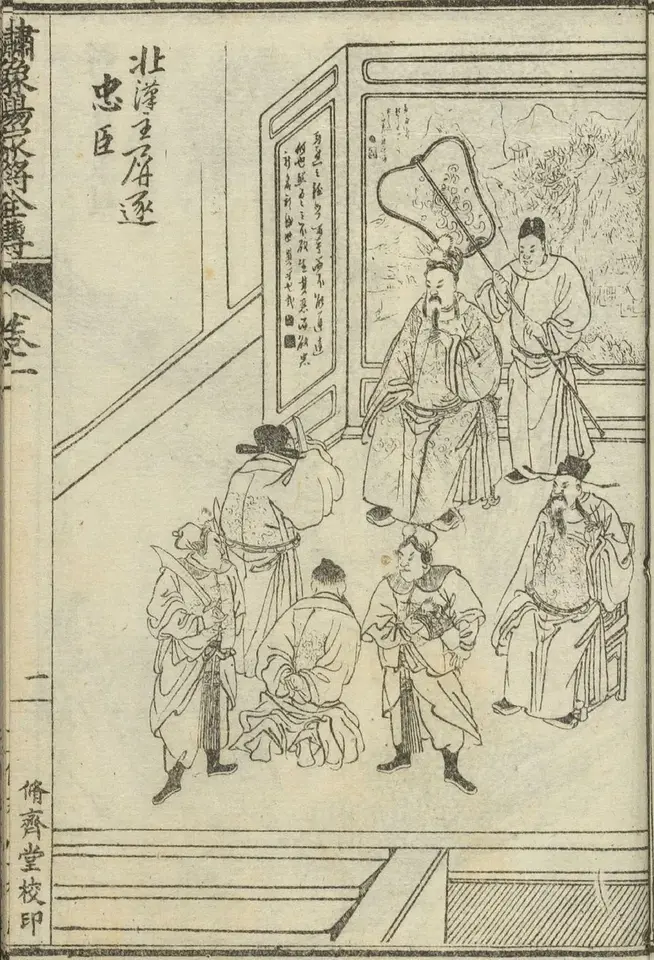
刘承钧
Liu Chengjun (926–968), who later adopted the single personal name Liu Jun, was a native of Jinyang in Bingzhou (modern Taiyuan, Shanxi) and the second emperor of Northern Han (Dong Han), reigning from 954 to 968. The nephew of Later Han founder Liu Zhiyuan and the second son of Northern Han founder Liu Chong, he was known for filial devotion, personal modesty, and administrative restraint, serving as Prefect of Taiyuan and…
Liu Chengjun (926–968), who later adopted the single personal name Liu Jun, was a native of Jinyang in Bingzhou (modern Taiyuan, Shanxi) and the second emperor of Northern Han (Dong Han), reigning from 954 to 968. The nephew of Later Han founder Liu Zhiyuan and the second son of Northern Han founder Liu Chong, he was known for filial devotion, personal modesty, and administrative restraint, serving as Prefect of Taiyuan and Defense Commissioner of the Northern Capital during his early career. In 954 (Xiande 1), following Liu Chong's catastrophic defeat at the Battle of Gaoping and subsequent death, Liu Chengjun ascended the throne. Confronting the overwhelming military might of the Later Zhou and Song dynasties, he pursued a pragmatic survival strategy: deference to the Khitan Liao Empire externally and domestic tranquility and tax relief internally. He addressed the severe poverty of the Hedong region by eliminating predatory taxes, curbing corrupt officials, and resettling refugees. In foreign diplomacy, he addressed the Liao sovereign as "Father Emperor," relying on Khitan cavalry reinforcements to repulse sieges mounted by Emperor Shizong of Later Zhou and Emperor Taizu of Song. In his later years, burdened by the overbearing dominance of Chancellor Guo Wuwei, Liu passed away from illness at age forty-three, posthumously honored as Emperor Xiaohe with the temple name Ruizong.
Born into the Shatuo military elite of Hedong, the second son of Later Han general Liu Chong.
Following the founding of Northern Han, appointed Prefect of Taiyuan and Commander of the Imperial Guards.
Ascended the throne following Liu Chong's death after the Gaoping disaster; secured Liao recognition.
Held the walls of Jinyang with Liao relief forces, forcing Later Zhou Emperor Shizong to abandon the siege.
Reinforced mountain passes following the founding of the Song Dynasty, maintaining Northern Han's regional autonomy.
Confronted renewed Song encirclements and internal powerlessness under Guo Wuwei; passed away from illness at age 43.
Liu Chengjun was born in 926 during the Later Tang Dynasty. His father, Liu Chong, was the younger brother of Later Han founder Liu Zhiyuan and long-time military commissioner of the Hedong region. In contrast to the bellicose temperament common among Shatuo warrior scions, Chengjun demonstrated intellectual inclinations from early youth, devoting his leisure to calligraphy and historical texts, winning his father's deep affection.
In 951, when Guo Wei overthrew Later Han to establish Later Zhou, Liu Chong declared the continuation of the Han dynasty at Taiyuan, founding the Northern Han regime. With his elder brother Liu Yun murdered in Kaifeng, Chengjun was elevated to Prefect of Taiyuan, Chief of the Imperial Guards, and designated successor to the throne. In March 954 (Xiande 1), Liu Chong mobilized his entire army alongside Liao allies, only to be crushed by Later Zhou Emperor Shizong at the Battle of Gaoping. Fleeing back to Taiyuan in disgrace, Liu Chong died of illness in November, leaving the twenty-nine-year-old Chengjun to inherit a shattered realm.
Upon ascending the throne, Liu Chengjun confronted existential peril: Later Zhou legions flushed with victory encircled the walls of Jinyang. Recognizing that Northern Han's meager ten commanderies could not withstand the imperial armies of the Central Plains alone, Chengjun dispatched envoys to the Liao court to solicit military intervention.
Embracing pragmatic realism, Chengjun discarded imperial pretensions, addressing Liao Emperor Muzong (Yelü Jing) as "Father Emperor" while referring to himself as "Son Emperor." Gratifed by this submission, Emperor Muzong deployed general Gao Mohan with fifty thousand elite Khitan cavalry. Harassed by cavalry strikes against supply lines, stalled by torrential summer rains, and confronted by Jinyang's resolute defenses, Emperor Shizong was forced to burn his camps and withdraw. Liu Chengjun preserved Northern Han, subsequently receiving formal imperial investiture from the Liao sovereign.
Having repulsed the invasion, Liu Chengjun turned his full attention toward domestic reconstruction. Under Liu Chong, continuous warfare and predatory requisitions had hollowed out the regional economy, driving commoners into starvation. Chengjun implemented comprehensive reforms.
He slashed palatial expenditures, distributed imperial horses to destitute peasant households for plowing, exempted war-torn districts from autumn taxes, and punished corrupt tax collectors. Furthermore, he issued proclamations encouraging refugees who had fled into Liao or Later Zhou territory to return, granting them abandoned agrarian land. Chengjun's austere personal habits and tax remissions afforded the Hedong economy more than a decade of precious recovery, stabilizing the social fabric of his small kingdom.
Following the founding of the Song Dynasty in 960, regional governor Li Jun rebelled in Zhaoyi and sought aid from Northern Han. Although Chengjun deployed forces to support him, Song Taizu crushed the revolt. Subsequently, Song forces under Li Jixun mounted persistent frontier raids, capturing Liaozhou and tightening the ring of encirclement around Taiyuan.
Confronting immense external pressure, Chengjun relied heavily on Guo Wuwei, a former Buddhist monk elevated to Chancellor and Director of the Secretariat. However, Guo consolidated administrative power, purges political rivals, and conducted covert communications with the Song court. Chengjun grew painfully aware of his chancellor's disloyalty, yet his failing health and total dependence on Liao protection left him politically incapacitated.
In the summer of 968 (Kaibao 1), as Song armies mounted renewed northern offensives, Chengjun succumbed to chronic respiratory illness in Jinyang, passing away at the age of forty-three. He was posthumously honored as Emperor Xiaohe with the temple name Ruizong.
Liu Chengjun's primary diplomatic accomplishment during his fourteen-year reign was preserving the Liao-Northern Han military axis. Facing the overwhelming expansion of Later Zhou and Song, Northern Han's meager territory survived purely through Chengjun's pragmatic diplomacy.
By addressing the Liao sovereign as father and maintaining consistent tribute, Chengjun transformed Northern Han into an indispensable southern buffer for the Liao Empire. Whenever central imperial armies besieged Taiyuan, Liao cavalry counter-attacks relieved pressure, preserving Northern Han's regional autonomy for nearly three decades.
Liu Chengjun was among the few regional monarchs of the Five Dynasties renowned for benevolence and personal austerity. In stark contrast to his father's oppressive wartime taxation, Chengjun prioritized domestic peace and rehabilitation.
He restricted palatial luxuries, wore simple garments, and eliminated exorbitant levies. He established public granaries to distribute grain during poor harvests, earning the gratitude of his subjects and ensuring social stability in Shanxi during a volatile era.
In military strategy, Liu Chengjun adapted skillfully to asymmetric warfare. Recognizing that his infantry could not match imperial armies in open plains, he concentrated his defense along the rugged passes of the Taihang and Lüliang ranges.
He heavily fortified chokepoints including Shiling Pass and Tuanbai Valley, constructing an integrated network of signal beacons and defensive redoubts. This scorched-earth and fortress defense exhausted enemy supply lines, making Northern Han the only regional state that Emperor Taizu of Song failed to annex during his lifetime.
FIGURES ASSOCIATED WITH THIS DYNASTY