Ennobled as Prince
Invested as Prince of Beidi by his father Liu Shan; admired among the nobility for his martial courage
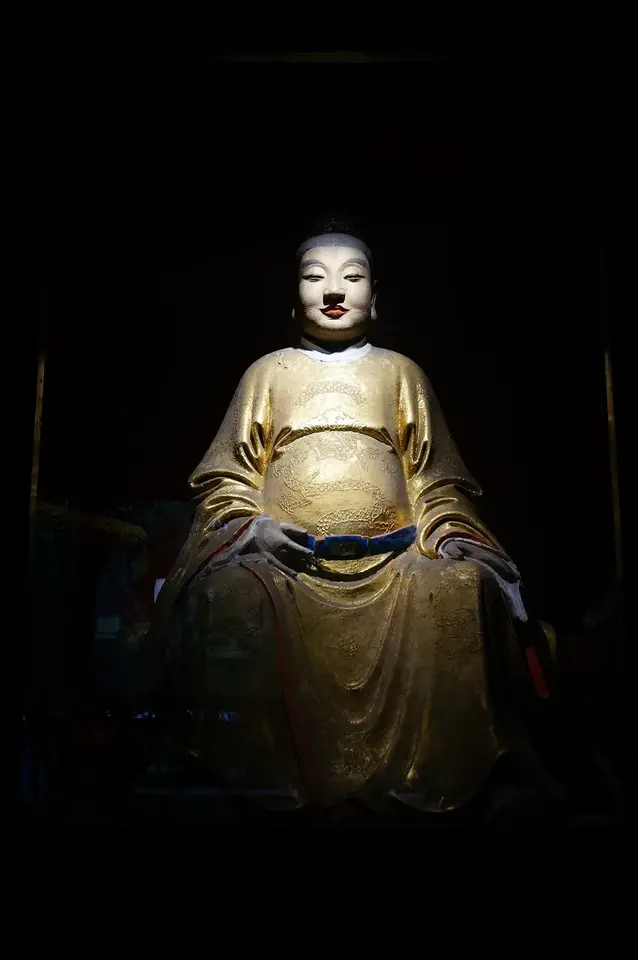
刘谌
Liu Chen was an imperial prince of Shu Han during the Three Kingdoms era, the fifth son of the Second Ruler Liu Shan and a grandson of Founding Emperor Liu Bei. Ennobled as the Prince of Beidi in 259, he was distinguished by unyielding courage and fiery loyalty, embodying the martial spirit of his imperial grandfather. In the winter of 263, Cao Wei general Deng Ai executed an audacious cross-mountain march through Yinping,…
Liu Chen was an imperial prince of Shu Han during the Three Kingdoms era, the fifth son of the Second Ruler Liu Shan and a grandson of Founding Emperor Liu Bei. Ennobled as the Prince of Beidi in 259, he was distinguished by unyielding courage and fiery loyalty, embodying the martial spirit of his imperial grandfather. In the winter of 263, Cao Wei general Deng Ai executed an audacious cross-mountain march through Yinping, annihilating imperial defenders at Mianzhu and marching upon Chengdu. Terrified by the impending siege, Liu Shan accepted the defeatist counsel of Grandee Minister Qiao Zhou, deciding to surrender the realm unconditionally. When news reached Liu Chen, he rushed into the palace in tears, passionately pleading with his father to rally the capital troops for a fight to the death to defend the dynastic ancestral shrines. Rebuffed and cast out by the timid sovereign, Liu Chen went to the ancestral temple of Liu Bei (the Zhaolie Temple). Weeping before the imperial altar, he slew his family to spare them humiliation, and then cut his own throat, dying a heroic martyr in fulfillment of his oath to perish with the state.
Invested as Prince of Beidi by his father Liu Shan; admired among the nobility for his martial courage
Cao Wei forces under Deng Ai crossed the Yinping ranges; Zhuge Zhan fell in battle, leaving Chengdu vulnerable
Wept in court against Liu Shan's decision to capitulate, urging a fight to the death at the city ramparts
Entered Liu Bei's ancestral shrine, executed his family, and took his own life before the altar
Liu Chen was born into the Shu Han imperial house in Chengdu, the fifth son of Liu Shan and grandson of Liu Bei. Reared in the palaces of Sichuan, he witnessed the progressive decline of Shu Han following the passing of Prime Minister Zhuge Liang, as corrupt palace eunuchs like Huang Hao subverted the court. In June 259, Liu Shan invested his sons with royal titles, creating Liu Chen the Prince of Beidi.
In sharp contrast to his father's indulgence in frivolous pleasures, Liu Chen studied military statecraft and revered the martial achievements of his grandfather Liu Bei, who had carved out an empire from nothingness through raw endurance. Deeply concerned by state corruption and military stagnation, Liu Chen dedicated himself to chivalric virtue and dynastic fidelity.
In the winter of 263, the state of Cao Wei launched a massive coordinated invasion of Shu Han. While Zhong Hui's northern strike force was halted by Jiang Wei at the formidable mountain redoubt of Jiange, General Deng Ai conceived a daring flanking maneuver. Leading elite troops on foot across seven hundred li of uninhabited, precipitous terrain through the Yinping pass, Deng Ai captured Jiangyou and advanced to Mianzhu.
Imperial Military Guardian Zhuge Zhan led the capital garrison to intercept Deng Ai at Mianzhu but was completely defeated and killed. Deng Ai's victorious banners advanced directly onto the Chengdu plain. Panic seized the Shu Han court: some ministers urged abandoning the capital to seek refuge in the southern borderlands, while others advocated fleeing down the Yangtze to Wu. However, Grandee Minister Qiao Zhou forcefully urged unconditional surrender, arguing that capitulation would preserve the sovereign's household while sparing Chengdu from slaughter. Weak-willed and paralyzed by fear, Liu Shan accepted Qiao Zhou's counsel, preparing imperial seals to present to the invaders.
Hearing that his sovereign father intended to surrender while tens of thousands of garrison soldiers remained within well-stocked ramparts, Liu Chen rushed into the throne room, weeping bitterly: "If we have truly reached the end of our resources and defeat is inevitable, then sovereign and subject, father and son, should fight back-to-the-wall outside our city gates! Even if we all perish on the field with our altars of soil and grain, we will be able to face the First Emperor in the underworld without shame! How can we prostrate ourselves like dogs before our conquerors?"
However, Liu Shan was completely broken in spirit. Instead of heeding his son's desperate plea, he angrily denounced Liu Chen for insubordination, ordering palace guards to expel the prince from the court. The sovereign subsequently dispatched officials bearing imperial tallies and tribute to surrender to Deng Ai.
Expelled into the street, Liu Chen looked up to the heavens in agony. Disdaining to witness the humiliating spectacle of his imperial father groveling before enemy commanders, he walked through Chengdu to the Zhaolie Temple dedicated to his grandfather Liu Bei.
Prostrating before the statue of the First Sovereign, Liu Chen wept until he coughed blood, lamenting that unworthy descendants had squandered the realm. His wife, Lady Cui, rushed to the temple; affirming that honor demanded she share her husband's fate, she smashed her head against a temple pillar and died. Determined to spare his lineage from captivity and degradation, Liu Chen put his three young sons to the sword. Turning to the imperial altar, he cried out, "May the spirit of the First Emperor bear witness to my heart!" and drew his sword across his throat. The people of Shu mourned his death with bitter tears, remembering him through millennia as the lone heroic martyr of the fall of Shu.
Amid the capitulation of the Shu Han court, Liu Chen's uncompromising declaration—"sovereign and subject, father and son, should fight back-to-the-wall"—redeemed the imperial family from complete dishonor, preserving the martial spirit of the Three Kingdoms era.
Liu Chen's tragic self-sacrifice won universal veneration from later generations. During the Ming and Qing dynasties, the people of Sichuan erected a special shrine dedicated to Liu Chen within the Wuhou Shrine complex in Chengdu, revering him as the ultimate soul of Shu Han.
FIGURES ASSOCIATED WITH THIS DYNASTY