Born in Xingan
Born into the prestigious Mozhuang Liu lineage, inheriting a massive library of classical literature.
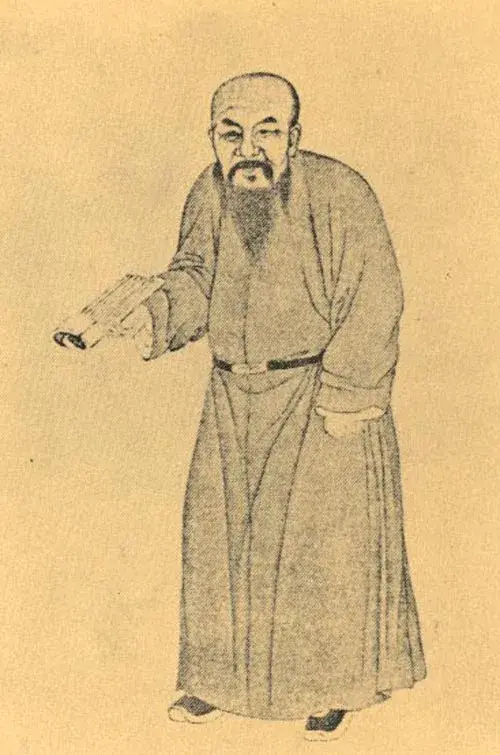
刘攽
Liu Ban (刘攽, 1023 – April 17, 1089 CE), courtesy name Gongfu (贡父, alternatively Gongfu / 贡夫) and art name Gongfei (公非), widely known in literary circles as Liu Gongfu (刘贡父), was a distinguished historian, classical philologist, and literatus of the Northern Song (北宋) dynasty, native to Xingan, Linjiang Military Prefecture (modern Zhangshu, Jiangxi). He belonged to the celebrated Mozhuang Liu clan of…
Liu Ban (刘攽, 1023 – April 17, 1089 CE), courtesy name Gongfu (贡父, alternatively Gongfu / 贡夫) and art name Gongfei (公非), widely known in literary circles as Liu Gongfu (刘贡父), was a distinguished historian, classical philologist, and literatus of the Northern Song (北宋) dynasty, native to Xingan, Linjiang Military Prefecture (modern Zhangshu, Jiangxi). He belonged to the celebrated Mozhuang Liu clan of scholarly gentry, being the younger brother of the renowned classical master Liu Chang and forming with his brother the celebrated intellectual partnership known as the "Two Lius." Gifted with an eidetic memory and encyclopedic erudition, Liu Ban passed the highest imperial civil service examinations alongside his brother in 1046 CE. Over a long administrative career spanning the reigns of Emperors Renzong, Yingzong, Shenzong, and Zhezong, he held various posts including Prefect of Caozhou, Caizhou, and Yanzhou, ultimately rising to Secretariat Drafter. When Chancellor Wang Anshi launched the New Policies during the Xining era, Liu Ban staunchly defended the agrarian peasantry against coercive government lending under the Green Sprouts Law, enduring political exile to regional prefectures. Following the accession of Emperor Zhezong and the regency of Empress Dowager Gao during the Yuanyou era, Chancellor Sima Guang recalled him to the central government. Liu Ban's paramount contribution to Chinese intellectual history was serving as the primary associate editor of Sima Guang's monumental chronological universal history, the Comprehensive Mirror in Aid of Governance (Zizhi Tongjian), where he held exclusive responsibility for researching, compiling, and editing the extensive four-hundred-year chronicle of the Western and Eastern Han dynasties. Sima Guang famously remarked that "no scholar under heaven understands the rise and fall of the Han dynasties like Gongfu; the Han chronicle cannot be accomplished without him." Beyond the Tongjian, Liu Ban founded the Song school of rigorous Han historiographical criticism by authoring the seminal four-volume Corrections to the History of the Later Han (Dong Han Kanwu), which rectified hundreds of factual and chronological errors in Fan Ye's standard history. In literature, he authored the pioneering poetry criticism work Zhongshan Poetry Talks (Zhongshan Shihua) and the literary anthology Gongfei Ji, celebrated by peers such as Su Shi and Huang Tingjian for his sharp wit and scholarly integrity. He passed away in Kaifeng in 1089 at the age of sixty-seven, leaving a towering legacy in classical historiography.
Born into the prestigious Mozhuang Liu lineage, inheriting a massive library of classical literature.
Passed the metropolitan examinations in the same cohort as his elder brother Liu Chang, appointed County Sheriff of Jiangdu.
Promoted to Erudite Scholar of the Court of Imperial Sacrifices and Proofreader in the Palace Library, engaging with Kaifeng literati.
Recruited by Sima Guang to serve as primary associate editor of the Zizhi Tongjian, taking charge of the Han dynasty annals.
Finished the preliminary long draft of the four-hundred-year Han chronicle, providing exhaustive cross-textual verifications.
Criticized Chancellor Wang Anshi's Green Sprouts Law through remonstrance and satirical verse; demoted to Vice Prefect of Taizhou.
Governed Caozhou, Caizhou, Yanzhou, and Bozhou, implementing relief grain distributions and suppressing bureaucratic extortion.
Completed the landmark four-volume critical treatise Corrections to the History of the Later Han (Dong Han Kanwu).
Recalled to the capital by Sima Guang during the Yuanyou Restoration, appointed Supervising Secretary and Secretariat Drafter.
Passed away in Kaifeng at the age of sixty-seven due to chronic illness; mourned with poetic elegies by Su Shi and Huang Tingjian.
Liu Ban was born into the celebrated Mozhuang Liu clan of Xingan County, Linjiang Military Prefecture (modern Zhangshu, Jiangxi). The family traced its ancient ancestry to the imperial Liu clan of Pengcheng. His grandfather Liu Shi was a high minister of the Southern Tang and early Northern Song who declined to acquire landed estates for his heirs, leaving instead several thousand scrolls of classical literature and historical records, famously instructing his descendants: "This library is our family's ink manor (mozhuang)."
Immersed in this profound scholarly atmosphere, Liu Ban manifested an extraordinary photographic memory from early childhood. He possessed the rare ability to recite entire scrolls of canonical treatises after reading them only once. By his adolescence, he had achieved thorough mastery of the Rites of Zhou, the Book of Han, the History of the Later Han, and extensive pre-Qin philosophical texts, displaying deep insight into institutional evolution, official titles, and historical geography.
In 1046 CE (the sixth year of the Qingli era), Liu Ban journeyed to the capital of Kaifeng with his elder brother Liu Chang to sit for the imperial civil service examinations. Both brothers passed the metropolitan examinations in the prestigious Jia An cohort, stunning the capital literati. Contemporaries celebrated their joint success as the "Triumph of the Two Lius." Following his graduation, Liu Ban was appointed County Sheriff of Jiangdu in Yangzhou. In this local post, he adjudicated complex lawsuits with exemplary impartiality, spending his leisure hours collating classical commentaries. He subsequently served as Erudite Scholar of the Court of Imperial Sacrifices, Lecturer in the Imperial Academy, and Proofreader in the Palace Library, granting him unrestricted access to rare Han and Tang dynasty manuscripts stored within the three imperial academies.
In 1066 CE (the third year of the Zhiping era), Emperor Yingzong granted imperial authorization to Sima Guang to compile a comprehensive chronological history of China, subsequently titled the Zizhi Tongjian by Emperor Shenzong. Recognizing that synthesizing thirteen centuries of history from the Warring States to the Five Dynasties exceeded the capacity of any single historian, Sima Guang established an imperial compilation bureau (tongjian shuju) in Kaifeng and Luoyang, recruiting three premier historians to direct specific historical eras.
Among the divisions of Chinese imperial history, the Han dynasty—spanning more than four centuries from Liu Bang's uprising to the abdication of Emperor Xian—presented the most daunting textual challenge. The era encompassed the foundational establishment of imperial institutions, expansive frontier campaigns under Emperor Wu, the usurpation of Wang Mang, the restoration under Emperor Guangwu, and the factional chaos of the Partisan Prohibitions. Sima Guang insisted that only a scholar of supreme erudition could untangle these vast archives, vigorously recommending Liu Ban: "No scholar under heaven understands the causes of Han dynastic prosperity and decay like Gongfu; the Han chronicle cannot be accomplished without him!"
In 1067 CE, Liu Ban entered the bureau as primary associate editor alongside Liu Shu (who directed the Three Kingdoms and Six Dynasties sections) and Fan Zuyu (who oversaw the Tang and Five Dynasties sections). Liu Ban was entrusted with sole responsibility for compiling the comprehensive preliminary draft (changbian) of the Han dynasties.
Working with tireless intensity, Liu Ban assembled Sima Qian's Records of the Grand Historian, Ban Gu's Book of Han, Fan Ye's History of the Later Han, Xun Yue's Han Annals, and Yuan Hong's Annals of the Later Han, alongside hundreds of private memoirs. Relying on his prodigious memory and philological rigor, he cross-referenced conflicting chronologies, exposed factional biases, and distilled mountainous archives into a sequential, year-by-year historical narrative. When Sima Guang edited the final manuscript, he found that Liu Ban had eliminated factual contradictions with immaculate precision, adopting Liu Ban's structural framework almost entirely for the foundational Han section of the Zizhi Tongjian.
In addition to his immense scholarship, Liu Ban was renowned for an open, buoyant temperament and extraordinary conversational wit. He delighted in humorous parodies and satirical witticisms, using ancient historical anecdotes to critique contemporary social absurdities. However, his unbending candor and satirical sharpness inevitably collided with the volatile factional politics of the era.
During the Xining reign of Emperor Shenzong, Chancellor Wang Anshi launched the sweeping New Policies, aggressively introducing the Green Sprouts Law, the Service Exemption Law, and state monopolies. Liu Ban viewed these policies from the classical Confucian perspective of popular welfare, warning that state lending programs inevitably degenerated in the hands of corrupt local magistrates into forced usury that bankrupted agrarian smallholders.
During a discussion with high ministers in the Secretariat, Wang Anshi boasted of the fiscal profits generated by state loans. Liu Ban stepped forward and remarked pointedly: "Those who govern the state effectively store wealth among the common people; they do not compete with impoverished peasants for fractions of copper profit." Furthermore, Liu Ban composed satirical verses mocking the bureaucratic rigidity of the new administrative bureaus. Censors allied with Wang Anshi impeached him for "slandering imperial governance and obstructing state reforms." In 1071 CE, Liu Ban was stripped of his central appointments and exiled to serve as Vice Prefect of Taizhou.
Accepting his demotion with philosophical calm, Liu Ban served with distinction across various regional prefectures over the next decade, holding office as Prefect of Caozhou, Caizhou, Yanzhou, and Bozhou. In these administrative roles, he adhered strictly to the principle of minimal bureaucratic interference, lightening corvee duties, expediting long-delayed judicial cases, and distributing famine relief. In Caizhou, when severe drought threatened widespread starvation, Liu Ban bravely bypassed protocol to open imperial granaries and loan grain to desperate villagers, saving thousands of lives and earning the enduring affection of the local populace.
During his prolonged service in regional prefectural seats, Liu Ban utilized his evening hours to conduct groundbreaking philological research into ancient Han historical texts.
Fan Ye's History of the Later Han was revered as one of the Four Histories, celebrated for its elegant literary style. However, because Fan Ye was executed for treason before completing his final revisions, the text contained numerous errors regarding chronological dates, official titles, administrative geography, and genealogical linkages. Previous Tang dynasty annotators, including Prince Li Xian, had focused primarily on phonetics and glosses, failing to resolve underlying historical contradictions.
Between 1076 and 1082 CE, working in Caizhou and Yanzhou, Liu Ban completed his seminal critical treatise, Corrections to the History of the Later Han (Dong Han Kanwu) in four volumes. In several hundred detailed entries, Liu Ban systematically exposed Fan Ye's chronological misplacements, false geographic coordinates, and corrupted quotations from ancient decrees, proving his points through rigorous textual triangulation. Simultaneously, he composed Annotations on the Book of Han (Hanshu Biaozhu) and Inquiry into Han Officialdom (Hanguanyi Kao), establishing the foundational methodology for early medieval Chinese historical criticism.
In 1086 CE, following the death of Emperor Shenzong, the young Emperor Zhezong ascended the throne under the regency of Grand Empress Dowager Gao. The conservative faction led by Sima Guang and Lü Gongzhu returned to power, rescinding Wang Anshi's New Policies during the historic Yuanyou Restoration.
Upon assuming the chancellorship, Sima Guang's first priority was recalling his trusted editorial colleague Liu Ban to Kaifeng. On Sima Guang's recommendation, the regent appointed Liu Ban Supervising Secretary, swiftly elevating him to Secretariat Drafter (zhongshu sheren), where he was tasked with drafting crucial imperial edicts and diplomatic correspondence. At that time, Liu Ban was over sixty years old and suffered from a severe dermatological and neurological affliction (likely leprosy or facial palsy) that caused severe physical disfigurement.
Despite his bodily suffering, Liu Ban carried out his imperial secretarial duties with immaculate professionalism. His draft edicts were praised by senior colleagues Su Shi and Su Zhe for their majestic classical cadence. Su Shi, who served alongside him as Hanlin Academician, frequently visited his quarters to converse on classical literature and exchange humorous banter. When colleagues occasionally made light of his disfigured appearance, Liu Ban responded with dazzling self-deprecating wit, leaving the assembly roaring in admiration.
On April 17, 1089 CE (the seventeenth day of the third month, the fourth year of the Yuanyou era), Liu Ban succumbed to his chronic illness at his official residence in Kaifeng, passing away at the age of sixty-seven. Leading literary masters of the Northern Song, including Su Shi, Huang Tingjian, and Chen Shidao, mourned his loss with heartfelt poetic elegies. Su Shi composed a moving funerary tribute praising him: "His learning was as vast as oceanic rivers; his perception was as piercing as the sun and moon." Liu Ban's brilliant scholarship remained an enduring beacon for Chinese historical criticism.
Liu Ban's most consequential historical contribution was his sole authorship of the comprehensive long draft (changbian) for the four-hundred-year Han dynasty section of the Zizhi Tongjian.
Converting the biographical, disjointed annals of Sima Qian, Ban Gu, and Fan Ye into a seamless, strictly chronological day-by-day record represented an enormous logistical and intellectual challenge. Liu Ban had to evaluate conflicting accounts of imperial accessions, peasant uprisings, foreign wars, and court conspiracies across hundreds of overlapping texts.
Demonstrating peerless critical acumen, Liu Ban evaluated conflicting testimonies, excised mythic embellishments, and reconciled contradictory calendrical dates. His draft established an unbroken chronological narrative that traced the evolution of imperial governance from the fall of Qin through the Western and Eastern Han to the rise of the Three Kingdoms. Sima Guang relied so completely upon Liu Ban's preliminary draft that he incorporated its analytical judgments, chronological alignments, and source selections almost verbatim into the final text of the Zizhi Tongjian, cementing Liu Ban's status as a co-creator of this historical masterpiece.
Liu Ban's four-volume Corrections to the History of the Later Han (Dong Han Kanwu) is universally recognized as the pioneering monument of Chinese historical textual criticism (kaoguxue).
Prior to Liu Ban, Chinese historical commentary was predominantly exegetical, explaining archaic vocabulary and literary allusions. In Dong Han Kanwu, Liu Ban introduced empirical historical criticism: First, he rectified chronological distortions, exposing instances where Fan Ye had conflated events separated by decades or misplaced pivotal court coups during the reigns of Emperors Guangwu, An, and Shun; Second, he corrected institutional blunders, demonstrating where Fan Ye had misidentified the evolving jurisdictions of the Secretariat, the Three Excellencies, and provincial circuit inspectors; Third, he corrected geographical errors regarding the Western Regions and nomadic frontier territories, demonstrating where Fan Ye had confused border garrisons.
Qing dynasty philological giant Qian Daxin lauded the work in Records from the Studio of Ten Desks: "Among Song scholars of historical criticism, Liu Gongfu stands supreme. His Dong Han Kanwu opened the true gateway to systematic historical verification." His empirical methodology directly inspired the classic evidential scholarship of Zhao Yi, Wang Mingsheng, and Qian Daxin during the Qing dynasty.
In Chinese literary theory and poetic criticism, Liu Ban made a foundational contribution through his acclaimed work, the Zhongshan Poetry Talks (Zhongshan Shihua).
Following Ouyang Xiu's creation of the genre with the Liuyi Shihua, Liu Ban was among the very first literati to adopt the informal, insightful "poetry talks" format. Composed during his administrative postings, the work gathered firsthand literary conversations, anecdotes of poetic composition, and critical analyses of contemporary and ancient verse.
Liu Ban rejected pedantic metric formalisms, arguing that true poetry must embody natural vigor, moral integrity, and spontaneous emotional resonance. He chronicled the compositional methods of masters like Mei Yaochen, Su Shi, and Wang Anshi, analyzing how slight lexical adjustments transformed poetic imagery. Later anthologists such as Hu Zi (Tiaoxi Yuyin Conghua) and He Wenhuan (Lidai Shihua) classified the Zhongshan Shihua as an indispensable cornerstone of Song dynasty literary criticism.
Throughout his prefectural administration across Henan and Shandong, Liu Ban exemplified the highest ideals of the Confucian scholar-official, prioritizing popular welfare over personal bureaucratic advancement.
Governing regions plagued by natural disasters and social dislocation, Liu Ban consistently resisted predatory tax quotas imposed by reform zealots in the central government. In Caozhou, confronting rampant brigandage, he rejected brutal martial purges, instituting agricultural rehabilitation programs that reclaimed thousands of acres of abandoned farmland and reintegrated fugitive peasants into productive civil communities.
In Caizhou, when catastrophic drought threatened mass starvation, Liu Ban bravely assumed personal legal liability by opening imperial granaries to distribute emergency relief grain before receiving formal imperial authorization. Concurrently, he suppressed grain hoarding by wealthy merchants, stabilizing food prices and saving countless households. His benevolent administration was celebrated by local populations, who gathered by the thousands to weep and block his carriage when his official terms concluded.
Liu Ban is universally recognized in Chinese intellectual history as one of the most brilliant historians, philologists, and humanists of the Northern Song dynasty.
Sima Guang praised his historical mastery with profound conviction: "Under the four seas, no scholar understands the causes of prosperity and ruin across the two Han dynasties like Gongfu! The Han history cannot be accomplished without him!"
Su Shi, in his moving Eulogy for Liu Gongfu, lamented his passing: "His scholarship was as vast as oceanic rivers; his perception was as piercing as the sun and moon. His diction was classical and magnificent, his wit divinely bestowed. That such lifelong joy and brilliance should turn to ashes in a day—what a profound tragedy under heaven!"
Huang Tingjian commended his vast erudition: "Liu Gongfu was deeply learned and encyclopedic in mind, retaining everything across the classics and histories; his writing flowed effortlessly as if long premeditated. Beneath his playful wit lay profound philosophical wisdom."
Qing dynasty critical scholar Qian Daxin evaluated his methodology in Records from the Studio of Ten Desks: "Among Song scholars of historical criticism, Liu Gongfu stands first. His four volumes of Dong Han Kanwu established the true path of historical verification, bestowing benefits enduring through a thousand years."
Toqto'a, in the official History of Song (Song Shi), summarized his life: "Liu Ban possessed vast learning and an extraordinary memory, achieving supreme excellence in historiography. From the Han dynasty onward, he scrutinized official posts, commanderies, and clans down to the finest detail. Works like Dong Han Kanwu established truthful historical records that instruct future generations."
FIGURES ASSOCIATED WITH THIS DYNASTY