Birth in Daming
Born into an established scholar-official lineage in Daming; father Liu Hang served as Chamberlain for the Stud.
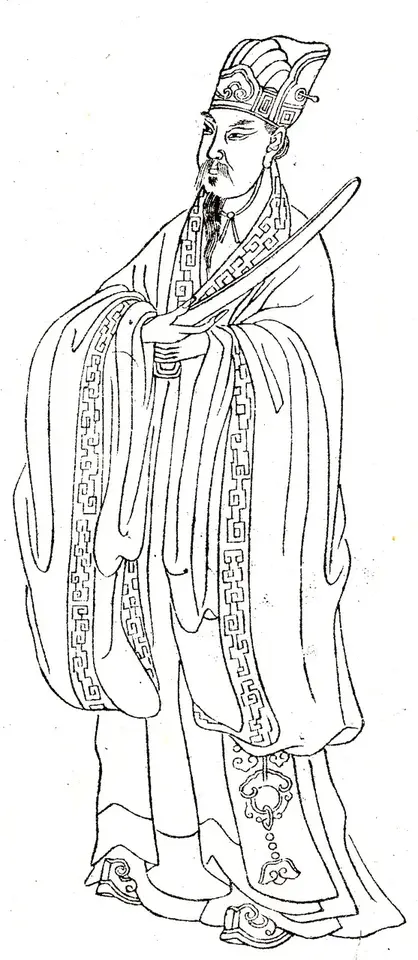
刘安世
Liu Anshi (刘安世, 1048–1125), courtesy name Qizhi, styled Master Yuancheng, was a native of Daming, Hebei. He was one of the most celebrated imperial remonstrators, Neo-Confucian masters, and moral beacons of the Northern Song Dynasty. Born into an illustrious official family, he passed the metropolitan jinshi examination in 1073 during the Xining reign. Rather than pursuing administrative advancement, he devoted himself to…
Liu Anshi (刘安世, 1048–1125), courtesy name Qizhi, styled Master Yuancheng, was a native of Daming, Hebei. He was one of the most celebrated imperial remonstrators, Neo-Confucian masters, and moral beacons of the Northern Song Dynasty. Born into an illustrious official family, he passed the metropolitan jinshi examination in 1073 during the Xining reign. Rather than pursuing administrative advancement, he devoted himself to studying Confucian moral philosophy under the personal tutelage of statesman and historian Sima Guang, mastering the core doctrine of sincerity (cheng) and vowing never to utter a false word throughout his life. During the Yuanyou reign, recommended by Sima Guang, Liu Anshi was appointed to the Censorate, serving as Investigating Censor and Left Grand Master of Remonstrance. Renowned for his fearless rectitude, he repeatedly impeached corrupt chancellors and powerful courtiers including Cai Que and Zhang Dun, stepping forward before the emperor even when the monarch was incensed, earning the legendary epithet "Iron-Faced Censor" (Tiemian Yushi). During the Shaosheng purges, he was branded a principal Yuanyou partisan and subjected to brutal exile in the malarial reaches of Lingnan, narrowly escaping multiple assassination attempts. During his exile in Meizhou, he founded the Yuancheng Academy, igniting the cultural awakening of eastern Guangdong. Passing away in 1125 at age seventy-eight, he was posthumously honored as Minister of Works and granted the posthumous name Zhongding.
Born into an established scholar-official lineage in Daming; father Liu Hang served as Chamberlain for the Stud.
Succeeded in the jinshi examinations; declined bureaucratic postings to study moral philosophy under Sima Guang.
Recommended by Sima Guang, appointed Proofreader in the Palace Library, then Investigating Censor and Palace Censor.
Impeached former chancellors Cai Que and Zhang Dun for seditious poetry and factional abuse, promoted to Left Grand Master of Remonstrance.
Branded a core Yuanyou partisan upon Emperor Zhezong's direct rule and Zhang Dun's ascent, exiled to remote Xinzhou and Meizhou.
Granted general amnesty upon Emperor Huizong's accession, reassigned to govern Hengzhou before being placed under Yuanyou surveillance.
Permitted to settle freely in Yunzhou and Henan, lecturing privately and venerated by scholars as Master Yuancheng.
Passed away peacefully in his Henan residence at age seventy-eight; posthumously honored as Minister of Works with the title Zhongding.
Liu Anshi was born in 1048 in Daming into an esteemed bureaucratic family. His father Liu Hang served as Chamberlain for the Stud, known for spotless integrity. Endowed with natural seriousness and sharp intellect, Liu Anshi passed the metropolitan jinshi examination in 1073 at age twenty-five.
Rather than immediately seeking bureaucratic office, Liu Anshi sought out elder statesman Sima Guang, who had retired to Luoyang in opposition to Wang Anshi's New Policies. Sima Guang asked the young scholar what single moral principle he should practice for a lifetime. Sima Guang answered: "Begin with sincerity (cheng); and to achieve sincerity, begin by never uttering a single false word (bu wangyu)." Liu Anshi embraced this precept as his lifelong sacred creed, practicing absolute truthfulness in speech and deed for more than five decades, becoming Sima Guang's foremost intellectual disciple.
When Sima Guang assumed the chancellorship under the regent Empress Dowager Xuanren in 1086, he recommended Liu Anshi for appointment as an imperial censor. Hesitant about the mortal perils inherent in censorial duties, Liu Anshi returned home to consult his mother.
His mother declared with profound moral clarity: "To serve as a remonstrating censor for the Son of Heaven requires you to offer your life for the state. If you are executed for speaking truth, I will not mourn you with regret; but if you practice sycophancy for personal gain, you are no son of mine!" Deeply inspired by his mother's noble admonition, Liu Anshi accepted the post. Serving as Investigating Censor and Left Grand Master of Remonstrance, he launched fearless impeaching attacks against corrupt grandees. Whenever the young Emperor Zhezong reacted with anger, Liu stood calmly holding his tablet, waiting until the monarch's fury cooled before resuming his forceful arguments, winning universal acclaim as the "Iron-Faced Censor."
In 1094, Emperor Zhezong took direct control of the government, and the New Policies faction led by Zhang Dun and Cai Bian seized power. Initiating the vengeful Shaosheng purges, Zhang Dun systematically arrested and banished conservative Yuanyou scholar-officials. Bearing intense personal hatred toward Liu Anshi, Zhang Dun exiled him to the malarial wilderness of Xinzhou in Lingnan, dispatching assassins disguised as court couriers to execute him en route.
Alerted by friendly officials, Liu Anshi faced mortal danger with serene tranquility, continuing his daily philosophical reading and remarking: "Death is determined by Heaven; if I must die for righteous duty, why fear it?" Through extraordinary composure, he repeatedly disarmed assassins and survived pestilential fevers, eventually being transferred to the remote mountainous county of Meizhou in eastern Guangdong.
Arriving in Meizhou, a remote frontier region where classical Confucian education was virtually non-existent, Liu Anshi showed no sign of bitter resentment. Living in a simple thatch hut, he gathered local youths and founded the Yuancheng Academy.
He personally taught students ancient phonology, Confucian canons, and moral discipline, instilling the principle of non-falsehood. Aspiring scholars from across Guangdong and Jiangxi journeyed across mountains to study under his tutelage. Eminent Southern Song writers such as Lü Benzhong and Zeng Ji received their foundational training through his disciples. Liu Anshi single-handedly ignited the cultural and educational renaissance of eastern Guangdong, transforming Meizhou into a celebrated cradle of southern literati.
In 1100, following Emperor Huizong's accession, Liu Anshi was granted partial amnesty and allowed to relocate northward, though he was soon enrolled in the notorious "Yuanyou Partisan Stele" and placed under strict local surveillance. In 1111, he was finally permitted to settle in Henan.
In his final decades, secluded in Henan, Liu Anshi lived with austere dignity, declining all political rehabilitation that required compromises with corrupt ministers like Cai Jing. Disciples and scholars gathered at his gate, recording his lectures into Sayings of Master Yuancheng. In 1125, Liu Anshi passed away peacefully at age seventy-eight. Under Emperor Gaozong of Southern Song, he was posthumously promoted to Minister of Works and conferred the honorable posthumous name Zhongding.
Liu Anshi stands as the paramount historical exemplar of censorial rectitude in imperial China. His unyielding courage in impeaching supreme chancellors Cai Que and Zhang Dun established an unassailable standard for the Song Censorate. His willingness to confront sovereign anger face-to-face while maintaining serene personal composure transformed the "Iron-Faced Censor" into a permanent archetype of bureaucratic independence.
During his prolonged political exile in Meizhou, Liu Anshi transformed personal adversity into an enduring civilizing mission. By founding the Yuancheng Academy, he introduced orthodox Northern Song classical education to the remote Lingnan frontier. His pedagogical leadership permanently cultivated generations of southern scholars, establishing eastern Guangdong as a prominent center of Confucian scholarship.
In the development of Song Neo-Confucianism, Liu Anshi was celebrated as the ultimate living embodiment of Sima Guang's moral philosophy. By strictly adhering to the discipline of "never speaking a single false word" across five decades of dynastic turmoil, exile, and mortal danger, he elevated moral sincerity from an abstract philosophical ideal into a tangible, heroic way of life.
In literature, Liu Anshi's official memorials and policy discourses were compiled into the celebrated Jinyan Ji (Collection of Exhaustive Words). Written with crystal clarity, uncompromising moral logic, and classical gravity, his memorials avoid ornate rhetoric to focus entirely on dynastic survival and the welfare of commoners, serving as essential literary models for subsequent generations of scholar-officials.
FIGURES ASSOCIATED WITH THIS DYNASTY