Birth in Min County
Born into an impoverished family in Min County, Fujian, studying through his mother and sister's needlework and his uncle's financial support.
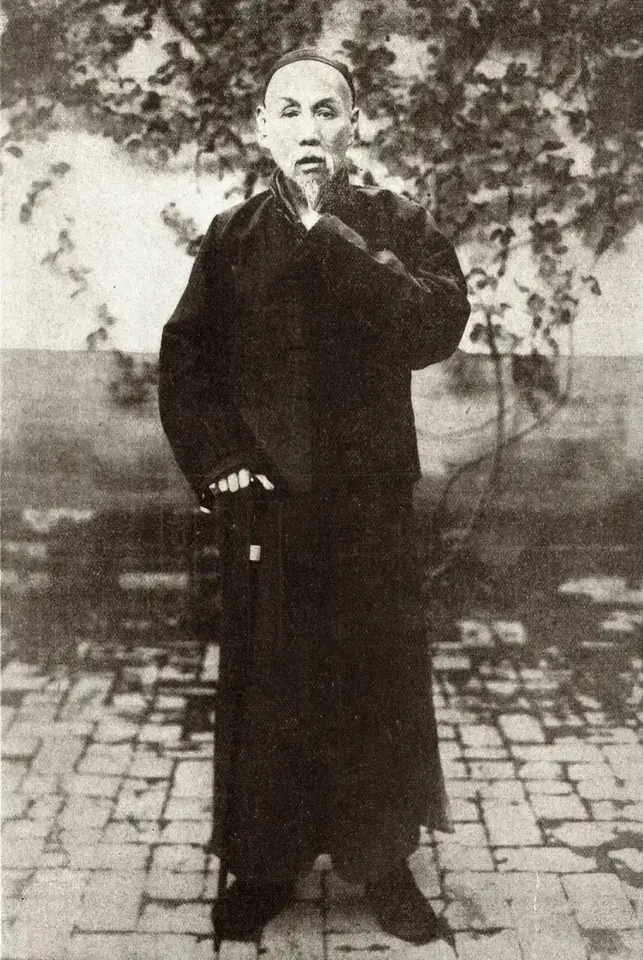
林纾
Lin Shu (1852–1924), courtesy name Qinnan, art name Weilu and Leng Hongsheng, was a native of Min County (modern Fuzhou, Fujian Province). He was an eminent man of letters, translator, classical prose stylist, calligrapher, and painter of the late Qing and early Republican eras. From childhood, he immersed himself in the Confucian canons, dynastic histories, and the prose masters Han Yu and Liu Zongyuan, passing the…
Lin Shu (1852–1924), courtesy name Qinnan, art name Weilu and Leng Hongsheng, was a native of Min County (modern Fuzhou, Fujian Province). He was an eminent man of letters, translator, classical prose stylist, calligrapher, and painter of the late Qing and early Republican eras. From childhood, he immersed himself in the Confucian canons, dynastic histories, and the prose masters Han Yu and Liu Zongyuan, passing the provincial civil service examination to earn the juren degree in 1882 before failing the metropolitan examination seven times. Following China's defeat in the First Sino-Japanese War, he joined fellow Fujian scholars in petitioning the Censorate against ceding Taiwan and advocating institutional reform to resist imperialist aggression. In 1897, grieving the death of his first wife, Lin was encouraged by his close friend Wang Shouchang to collaborate on an oral translation of Alexandre Dumas fils' novel The Lady of the Camellias (La Dame aux Camélias). Published in 1899 under the title The Romance of the Parisian Camellia Lady (Ba-li Chahuaniu Yishi), the work became an instant literary sensation, initiating the modern epoch of large-scale Chinese translation of Western literature into classical prose. Over the ensuing two decades, despite knowing no Western languages, Lin collaborated with multilingual associates—including Wei Yi, Chen Jialin, and Zeng Zongjian—who provided oral paraphrases that Lin rendered into elegant classical Chinese. He translated over one hundred and eighty foreign works spanning Britain, France, the United States, and Spain, introducing Dickens, Scott, Haggard, Defoe, Swift, Shakespeare, and Cervantes to Chinese readers and profoundly inspiring modern literary pioneers such as Lu Xun, Zhou Zuoren, Mao Dun, and Guo Moruo. Lin served as Chief Editor of the Translation Bureau and Professor of Humanities at the Imperial University of Peking. Following the 1911 Revolution, he maintained loyalist fidelity to the fallen Qing dynasty, devoting himself to painting, calligraphy, and classical essays. During the New Culture Movement, he defended Tongcheng classical prose and Confucian ethics in a famous public polemic with Chen Duxiu, Hu Shi, and Cai Yuanpei. Leaving behind an immense body of original compositions and translations, Lin occupies an enduring place in the history of modern Chinese literary translation and cross-cultural communication.
Born into an impoverished family in Min County, Fujian, studying through his mother and sister's needlework and his uncle's financial support.
Read the Classic of Poetry, Zuo Zhuan, and Records of the Grand Historian, adopting the motto "Live by studying, or enter the coffin."
Passed the Fujian provincial civil service examination to become a juren, gaining widespread literary fame across the province.
Witnessed the destruction of the Fujian Fleet during the Sino-French War, fostering deep patriotic resolve to strengthen the nation.
After defeat in the First Sino-Japanese War, united with fellow Fujian scholars in Beijing to memorialize the Censorate against ceding Taiwan.
Grieving the death of his first wife Liu Qiongzhi, began translating French fiction under the consolation of his friend Wang Shouchang.
Published The Romance of the Parisian Camellia Lady, whose mournful prose swept the country and opened a new era of literary translation.
Relocated to Beijing after the Boxer Rebellion, teaching successively at Wucheng Middle School and the Imperial University of Peking.
Collaborated with Wei Yi to translate Uncle Tom's Cabin, awakening patriotic introspection and anti-imperialist awareness among Chinese readers.
Appointed Chief Editor of the Translation Bureau of the Imperial University of Peking, directing translations of Western histories and literatures.
Following the 1911 Revolution and imperial abdication, considered himself a Qing loyalist and supported his family through writing and selling art.
Visited the Guangxu Emperor's Chongling mausoleum in Yi County, weeping bitterly and composing elegies lamenting dynastic fall.
Published Letter to Cai Heqing and satirical short stories defending classical Chinese prose and traditional Confucian ethics.
Passed away from illness in Beijing at age seventy-three, buried at the foot of Yuquan Mountain in the Western Hills.
Lin Shu was born in 1852 in Min County, Fuzhou Prefecture, Fujian Province. His father, Lin Guoquan, once crossed the Taiwan Strait to engage in commercial trade, but lacking business acumen, suffered crippling capital losses, plunging the household into destitution. Throughout Lin's childhood, daily expenses depended almost entirely upon the exhausting embroidery work produced day and night by his mother and elder sister, and the family frequently went without meals.
Recognizing the boy's sharp intellect and passion for learning, his paternal uncle Lin Guobin emptied his own modest savings to support Lin's elementary education. Lin entered a private village school at age nine and, at eleven, became a disciple of regional scholar Xue Zangke, systematically studying classical composition and the poetry of Du Fu. Devoted to his teacher, when he once found Master Xue bedridden with illness and out of food, Lin disregarded his own family's poverty to carry household grain to his mentor's bedside. Lin read voraciously, consuming all the editions of the Classic of Poetry, Book of Documents, Zuo Zhuan, and Records of the Grand Historian in his uncle's home, reciting them aloud day and night. He frequented second-hand bookstalls across Fuzhou, utilizing spare copper coins to purchase discarded manuscript leaves of the Book of Han and the ancient philosophers. Before reaching age twenty, he had transcribed and compiled three bookcases of classical extracts, carving eight characters onto his studio wall as a lifetime oath: "Live by studying, or enter the coffin."
Around 1874, Lin married, but misfortunes multiplied in rapid succession. His grandparents and father passed away within a few years, leaving him in extreme penury; he supported his family by operating village tutorial academies and teaching private pupils. Despite coarse clothing and meager food, Lin persevered in analyzing the prose masters Han Yu and Ouyang Xiu alongside Tongcheng School stylists. His literary reputation gradually spread across Fujian, and he was celebrated alongside fellow natives Chen Yan and Gao Zhaohuang as the "Three Eccentric Talents of Fuzhou."
In 1882, at age thirty, Lin traveled to the Fuzhou provincial examination hall and earned the juren degree. Filled with ambition, he hoped to pass the imperial metropolitan examinations to serve the realm. Over the next two decades, however, he traveled to the capital seven times to sit for the metropolitan examinations, repeatedly failing because his expansive essays did not conform to rigid eight-legged conventions. These repeated failures extinguished his hopes for an official bureaucratic career, freeing him to channel his formidable literary talents toward historical composition and modern open-minded scholarship.
Living through an era marked by foreign incursions and domestic rebellions, Lin maintained the traditional Confucian scholar's duty of taking responsibility for the realm. In 1884, during the Sino-French War, a French naval squadron entered the Min River estuary and launched a surprise assault on the Fujian Fleet at Pagoda Anchorage (Mawei). With battle raging on his doorstep, Lin watched in agony as imperial warships were incinerated and countless naval officers and sailors perished in the river. This trauma shattered his illusions, exposing the rotting complacency of Qing naval defense and awakening a lifelong patriotic determination to advocate military reform and national salvation.
In 1894, the First Sino-Japanese War broke out, culminating in the crushing defeat of Qing land and naval forces. In 1895, following the destruction of the Beiyang Fleet, the Qing court signed the humiliating Treaty of Shimonoseki, agreeing to cede Taiwan and the Penghu Islands to Japan and pay massive war indemnities.
Lin, who was in Beijing for the examinations, was overwhelmed by grief. Taiwan had been the site of his father's early travels, and Fujian shared intimate familial ties with the island. Defying dynastic statutes that strictly prohibited examination licentiates from meddling in state policy, Lin stepped forward to unite with eighteen fellow Fujian provincial degree-holders—including Lin Xu and Gao Zhaohuang—to submit a joint memorial to the Censorate for presentation to the Guangxu Emperor.
In this anti-treaty memorial, Lin argued that ceding Taiwan would undermine dynastic legitimacy and invite imperialist partition, urging the throne to repudiate the peace accord, relocate the capital to prolong resistance, and implement sweeping administrative and military reforms. Although conservative grandees suppressed the petition, Lin's unbending patriotism stirred literati circles, cementing his reputation as an outspoken patriot during the Examination Candidates' Memorial movement.
In 1897, Lin's first wife, Liu Qiongzhi, his companion of twenty-seven years, succumbed to chronic illness in Fuzhou. Devastated by the loss of his devoted spouse, Lin was paralyzed by grief, sitting in his studio in mournful silence and contemplating ending his life.
His close hometown friend Wang Shouchang, who had studied law at the University of Paris, saw Lin wasting away from sorrow and urged him to undertake literary work to channel his grief. Wang told him that French author Alexandre Dumas fils had recently published the novel La Dame aux Camélias, an emotional tragedy whose delicate romance rivaled traditional Chinese romantic tales, proposing that the two collaborate to translate it into Chinese.
At the time, Lin did not know a single Western letter and possessed zero foreign language training. Moved by his friend's warmth, Lin agreed to attempt the project. The two established a translation desk at the Cangxia Study in Fuzhou. Wang held the French text, rendering characters, dialogue, and plotline aloud sentence by sentence into spoken vernacular Chinese, while Lin sat erect at his desk, listening intently and brushing ink rapidly, recasting every phrase into elegant Tongcheng-style classical Chinese prose. Working in seamless synergy over several months, they completed the translation, titling it The Romance of the Parisian Camellia Lady (Ba-li Chahuaniu Yishi).
In 1899, Lin self-funded the publication of the book. Its appearance detonated a cultural sensation across the late-Qing intellectual world. The tragic love between Marguerite and Armand, rendered through Lin's poignant classical prose, moved readers to tears. Scholar-officials and young students throughout the country eagerly shared copies, making the Camellia Lady a household name overnight and eliciting praise from Liang Qichao and Yan Fu. This unplanned endeavor altered Lin's destiny, launching the monumental translation of Western literature into modern China.
Following the Boxer Rebellion, the Qing court launched the New Policies reforms, establishing modern educational academies. In 1901, recruited by Director-General of Education Zhang Baixi, Lin relocated to Beijing, inaugurating a twenty-year career of pedagogy and translation in the capital.
In Beijing, Lin served as an instructor at Wucheng Middle School and was engaged as Chief Editor of the Translation Bureau and Professor of Humanities at the Imperial University of Peking. As an educator, Lin presented classical Chinese literature with clarity, inspiring pupils toward patriotic resolve and independent prose style. His lectures at Wucheng Middle School were renowned for their infectious eloquence, deeply influencing numerous students who later achieved national prominence.
Outside teaching hours, Lin devoted all his remaining hours to translating Western novels through oral collaboration. When Wang Shouchang returned to government administration, Lin partnered with several skilled English and French linguists, maintaining the longest collaborations with Wei Yi, Chen Jialin, Zeng Zongjian, and Mao Qingzhen. Morning and night, his partners read and translated the foreign text aloud while Lin brushed prose with astonishing speed, generating thousands of words daily without pause, classical prose appearing on the paper as soon as his collaborator finished speaking.
During his partnership with Wei Yi, Lin translated American author Harriet Beecher Stowe's anti-slavery novel Uncle Tom's Cabin (translated as The Negro Slave's Cry to Heaven), Walter Scott's historical epic Ivanhoe, Charles Dickens' David Copperfield and Oliver Twist, Arthur Conan Doyle's Sherlock Holmes tales, and H. Rider Haggard's romances.
Lin's classical renderings conveyed the dramatic tension of Western originals while integrating the historiographical methods of the Zuo Zhuan and Records of the Grand Historian, allowing Chinese readers to encounter modern European and American literature directly. The Negro Slave's Cry to Heaven proved especially influential, sounding an urgent alarm against imperialist subjugation and serving as a crucial patriotic awakening text on the eve of the 1911 Revolution.
In 1911, the 1911 Revolution erupted, leading to the Qing emperor's abdication and the establishment of the Republic of China. Facing this seismic political rupture, Lin remained steadfast in Confucian loyalty, styling himself a Qing loyalist survivor (yimin). He resigned from all public educational posts, secluded himself, and adopted the sobriquet "Weilu," supporting his household in Beijing by selling paintings, calligraphy, and books.
Although the Guangxu Emperor had never employed Lin directly during his lifetime, Lin held deep reverence for the deceased monarch's reformist intentions. In the winter of 1913, when the Guangxu Emperor's Chongling mausoleum was completed, Lin braved winter blizzards to travel to Yi County, Hebei. Prostrating himself before the tomb, he wept inconsolably and composed sorrowful elegies lamenting the fallen dynasty, exemplifying the tragic devotion of traditional literati.
In the early Republic, the New Culture Movement gained momentum across China. Reformers including Chen Duxiu, Hu Shi, and Qian Xuantong unfurled the banner of the "Literary Revolution," launching fierce attacks against classical literature and championing vernacular Chinese and modern ideologies, with the Tongcheng School becoming a primary target.
Standing at the vortex of controversy, Lin stepped forward to defend traditional classical prose. In the spring of 1919, he published public letters in Shanghai's Xin Shenbao—most notably Letter to Cai Heqing—alongside allegorical classical short stories such as Jing Sheng, cautioning that abandoning Confucian moral teachings and the classical linguistic corpus would sever the civilizational roots of Chinese culture. Peking University Chancellor Cai Yuanpei published a dignified response, initiating the celebrated "Classical-Vernacular Debate" in modern Chinese intellectual history. Although vernacular Chinese eventually became dominant, Lin's steadfast defense of classical aesthetics and cultural continuity reflected deep cultural solicitude and intellectual integrity.
Following the Classical-Vernacular Debate, Lin withdrew completely from public controversy, devoting himself to painting, calligraphy, and editing classical compilations. In his later years, Lin distinguished himself in landscape painting, employing vigorous and untrammeled brushwork steeped in the traditions of Ming and Qing literati masters. Patrons sought his works eagerly, and he used his fees to assist impoverished kin and disciples.
Even past age seventy, Lin never laid down his translation brush. Over his lifetime, he translated more than one hundred and eighty literary works from eleven countries—including Britain, France, the United States, Russia, Spain, Norway, Greece, Switzerland, Belgium, and Japan—totaling over twelve million words, while leaving behind extensive original prose, poetry, and art treatises such as Collected Works of Weilu, Poetry of Weilu, Painting Catalog of Weilu, and Discussions on Literature at Chunjue Study.
In the autumn of 1924, Lin fell ill from prolonged exhaustion at his Beijing residence, passing away peacefully on October 9 at the age of seventy-three. He was interred at the foot of Yuquan Mountain in the Western Hills of Beijing. His passing was mourned across literary circles, with both traditional scholars and New Culture luminaries honoring him as an extraordinary pioneer who built a bridge of mutual understanding between modern Eastern and Western cultures.
Lin Shu was a peerless titan in modern Chinese translation history. At a pivotal historical juncture marked by deepening national crisis, Lin utilized literary translation to introduce the vast treasury of Western literature to China. His translation of over one hundred and eighty works introduced nearly all major nineteenth-century European and American literary classics.
In The Negro Slave's Cry to Heaven, he depicted Uncle Tom's suffering under chattel slavery with profound empathy, awakening four hundred million Chinese facing imperialist partition; in David Copperfield and Oliver Twist, he revealed the social poverty and psychological dislocations of industrializing Britain; in Ivanhoe, he portrayed the historical forging of Western nationhood. These translations shattered traditional intellectual isolation, providing vital impetus for the enlightenment of modern Chinese society and the awakening of global consciousness.
Lin's translational scope extended into foundational Western classical literature. He translated Miguel de Cervantes' masterpiece Don Quixote (as Mo Xia Zhuan), giving Chinese readers their first encounter with Renaissance humanism and irony; he translated Washington Irving's sketches as Fu Zhang Lu, adapted Shakespearean plays as Chanted Verses of English Poets, and introduced Defoe's Robinson Crusoe and Swift's Gulliver's Travels. These works enriched the intellectual horizons of modern Chinese intellectuals and dismantled traditional dismissals of fiction, elevating the novel within China's literary hierarchy.
Lin's translation practice represents a unique phenomenon in world literary history. Knowing no foreign languages, he relied on multilingual assistants for oral interpretation, transforming spoken narratives into masterful Tongcheng-style classical prose. This collaborative method became celebrated as the "Lin-translated fiction" phenomenon.
In drafting these works, Lin did not engage in literal, mechanical translation; instead, he deployed premodern Chinese narrative techniques to re-create Western literature. Harmonizing the organizational structure of the Zuo Zhuan, the descriptive power of the Records of the Grand Historian, and the rhetorical momentum of Han Yu's prose, he recast foreign syntactic structures into rhythmic, antithetical, and emotionally resonant classical Chinese. His vibrant prose made unfamiliar foreign customs aesthetically accessible to Chinese readers, demonstrating that classical Chinese possessed the expressive capacity to convey complex modern Western psychology and narrative nuance.
Lin's translational genius was especially evident in his localized rendering of landscapes and internal monologues. He drew upon Chinese landscape prose to depict foreign countryside and Alpine vistas, generating immediate aesthetic empathy; similarly, his concise brushwork brought diverse Western characters vividly to life. Qian Zhongshu praised Lin's artistry, remarking that his classical prose frequently enhanced rather than diminished the vitality of the originals, conferring unique artistic life upon the translated texts.
Although Lin adopted a conservative stance in his late career and debated New Culture leaders, his translated novels served as primary intellectual soil nurturing the pioneers of modern Chinese literature.
Lu Xun and Zhou Zuoren read Lin's translations eagerly during their student days in Nanjing and Tokyo. Lu Xun fondly recalled the deep impression made on his youth by Lin's translations; Mao Dun acknowledged in his autobiography that Lin's translations first introduced him to world literature, providing lifelong inspiration for realist fiction; Guo Moruo, Yu Dafu, Bing Xin, and Qian Zhongshu were similarly influenced by his works during their youth. Qian Zhongshu later produced an authoritative scholarly appraisal in his monograph Lin Shu's Translations. By constructing a cross-cultural bridge through classical prose, Lin fostered an entire generation of modern Chinese literary masters.
Furthermore, Lin's translated novels shattered traditional feudal dogmas regarding human emotion and social relationships. The devoted love of Marguerite, the noble sacrifice of Uncle Tom, and the struggles of David Copperfield profoundly moved young readers, fueling May Fourth calls for personal liberation, romantic autonomy, and resistance to oppressive patriarchal morality.
Amidst the clash between Eastern and Western cultures in the early twentieth century, Lin stood as a staunch defender of Chinese cultural continuity and classical aesthetics. Opposing radical proposals that sought to discard traditional Confucian ethics and classical Chinese wholesale, Lin maintained that classical prose embodied thousands of years of civilizational wisdom and moral spirit, arguing that accessibility should not justify the complete abandonment of classical traditions.
In Letter to Cai Heqing and Discussions on Literature at Chunjue Study, he expounded on the compositional disciplines, moral principles, and stylistic varieties of Tongcheng prose, insisting on the harmony of refined language and moral purpose. He fought not merely for a linguistic medium, but for intellectual responsibility rooted in historical reverence and cultural agency. His defense prompted New Culture leaders to refine their cultural critiques, enriching the depth of modern Chinese intellectual thought.
In classical art and aesthetics, Lin's principles were equally evident in his painting and criticism. He studied painting treatises from the Six Dynasties through the Qing, advocating the unity of calligraphy, painting, and literati ethos. In works like Painting Catalog of Weilu, he summarized traditional literati brushwork, preserving classical refinement during chaotic times and embodying the tragic nobility of the traditional scholar facing modern transition.
FIGURES ASSOCIATED WITH THIS DYNASTY