Birth in Qiantang
Born into a scholarly clan in Qiantang, orphaned young and persevering through austere self-study.
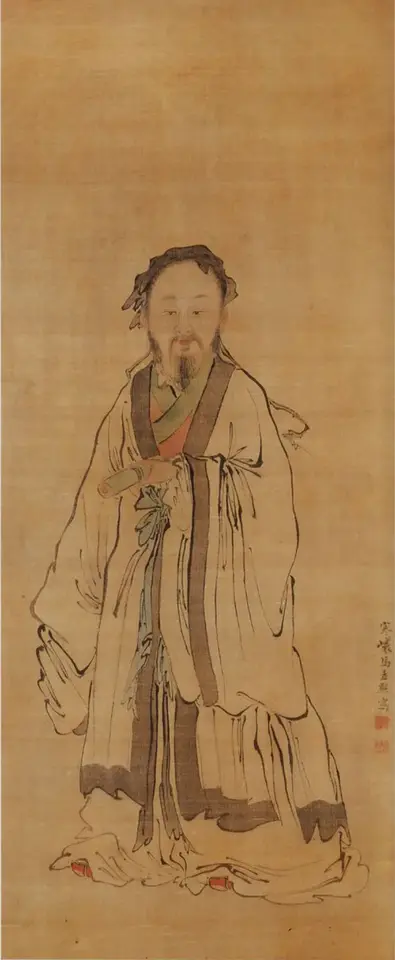
林逋
Lin Bu (967–1028), courtesy name Junfu, posthumously honored by Emperor Renzong as Master Hejing (commonly known as Lin Hejing), was a native of Qiantang in Hangzhou (modern Hangzhou, Zhejiang). He was the most celebrated recluse poet, moral exemplar, and calligrapher of the early Northern Song dynasty. Orphaned in childhood, Lin devoted his youth to rigorous classical and Buddhist studies. Endowed with a serene temperament…
Lin Bu (967–1028), courtesy name Junfu, posthumously honored by Emperor Renzong as Master Hejing (commonly known as Lin Hejing), was a native of Qiantang in Hangzhou (modern Hangzhou, Zhejiang). He was the most celebrated recluse poet, moral exemplar, and calligrapher of the early Northern Song dynasty. Orphaned in childhood, Lin devoted his youth to rigorous classical and Buddhist studies. Endowed with a serene temperament and disdainful of bureaucratic advancement, he traveled extensively across the Jianghuai region before settling permanently on Solitary Hill (Gushan) in the secluded waters of Hangzhou's West Lake. For more than twenty years, he never set foot inside the city walls. Living unmarried without children, Lin planted plum orchards and raised white cranes on Solitary Hill. Whenever guests called during his boating excursions to lakeshore temples, a servant boy released a crane into the sky; seeing the soaring bird, Lin rowed back to receive his guests, famously remarking that he took "plum blossoms as his wife and cranes as his sons." Emperor Zhenzong admired his lofty virtue, granting him imperial grain and silk while commanding local officials to support his retirement. Lin's poetry possessed crystalline purity, with his immortal couplet from Little Plum Blossoms in a Mountain Garden—"Sparse shadows slant across clear, shallow water; secret fragrance floats beneath the hazy moonlight"—revered across generations as the greatest poetic depiction of plum blossoms in Chinese literature. His lean, vigorous calligraphy was equally treasured by masters such as Huang Tingjian and Lu You.
Born into a scholarly clan in Qiantang, orphaned young and persevering through austere self-study.
Traveled for years across the mountains and rivers of the Jianghuai region, broadening his poetic vision.
Concluded his travels and built a thatched retreat on Solitary Hill by West Lake, vowing never to enter officialdom.
Cultivated plum orchards and raised tame cranes, living in harmonious isolation without stepping into the city.
Emperor Zhenzong praised his pure conduct, awarding grain and silk and ordering Hangzhou magistrates to attend to his needs.
Leading statesmen including Fan Zhongyan and Wang Dan sent poems or visited his hermitage in deep reverence.
Foreseeing his end, built his own tomb beside his plum trees, composed a farewell poem, and died peacefully at age sixty-two.
Emperor Renzong conferred the posthumous title Master Hejing, ordering his tomb preserved on Solitary Hill.
Lin Bu was born in Qiantang on the eve of the Song unification of the southeastern kingdoms. His grandfather, Lin Keji, had served as Academician in the Institute of Universal Confucianism under the King of Wuyue. However, both of Lin's parents died when he was still a boy, leaving the family in deep poverty. Amid adversity, Lin studied day and night, mastering the Confucian classics, historical chronicles, and Buddhist sutras.
Possessing an aloof and noble character, Lin found the sycophancy of bureaucratic careerism deeply distasteful. Upon reaching adulthood, he set out with his zither and sword to wander the Jianghuai region. For over a decade, he journeyed through the forested peaks and wide rivers of modern Jiangsu, Anhui, and Zhejiang, befriending monk-poets and mountain recluses. His crystalline landscape verse began to circulate widely among literati.
Around 1000, Lin brought his travels to an end and returned to Hangzhou. Unwilling to dwell amid the noisy commerce of the thriving metropolis, he rowed a skiff into the heart of West Lake and chose the uninhabited, water-encircled island of Solitary Hill (Gushan) as his permanent sanctuary.
There Lin constructed a modest thatched hut, dug a water pool, and planted plum orchards around his cottage. He swore a solemn vow never to set foot inside the city gates of Hangzhou, a promise he kept unswervingly for over two decades. Lin enjoyed rowing his light boat alone among the lake's lotus bays and visiting mountain monasteries along the lakeshore.
Whenever unexpected guests arrived at his cottage, his young servant released a white crane into the sky. Circling above the blue water, the crane alerted Lin across the lake; seeing the flying bird, Lin turned his skiff and rowed home to welcome his visitors with rustic wine. Lin never married and had no descendants, treating the plum trees and cranes as his family and giving rise to the immortal idiom "plum wife and crane son" (meiqi hezi).
Lin's serene integrity soon reached the ears of Emperor Zhenzong in Kaifeng. Revering classical scholarship and upright recluses, the emperor ordered Hangzhou Prefect Xue Ying to deliver generous gifts of rice and silk to Solitary Hill. The emperor specifically instructed the provincial authorities: "Lin Bu is a recluse of sublime tranquility; local officials must supply his needs on festival days and ensure his peace is never disturbed by frivolous intruders."
Following the imperial commendation, eminent statesmen such as Wang Dan and Li Hang regularly corresponded with Lin, while traveling scholars and provincial governors considered an audience with the hermit of Solitary Hill to be the crowning honor of their southern travels.
In the autumn of 1028, Lin calmly realized that his earthly life was drawing to a close. Rejecting elaborate worldly arrangements, he personally dug his own burial site beneath the plum trees next to his cottage. Within the stone chamber, he inscribed his farewell poem: "Facing the blue mountains across the lake I built my hut; beside my grassy mound the tall bamboos stand desolate. In future years when Maoling searches for my lost drafts, how joyful that I never wrote a single letter advocating the Fengshan sacrifices!"
By alluding to Sima Xiangru's fawning sacrifice memorials to Emperor Wu of Han, Lin affirmed that he had lived and died without penning a single flattering word to the powerful. He passed away peacefully in his hut at age sixty-two. When Prefect Xue Ying reported his death to Kaifeng, Emperor Renzong was deeply grieved, officially bestowing the posthumous title Master Hejing.
Lin's burial was celebrated for its ascetic simplicity. In the late Southern Song, grave robbers broke open his tomb expecting vast riches, but found only an antique Duan inkstone and a single hairpin carved from white jade.
Lin Bu's most celebrated achievement in Chinese literary history was elevating plum blossom verse to an unprecedented aesthetic pinnacle. Prior to Lin, traditional poetry favored the lush ostentation of peonies and lotus flowers, treating winter plums as merely early seasonal blossoms.
Lin revolutionized this aesthetic with his seven-character lushi Little Plum Blossoms in a Mountain Garden (Shanyuan Xiaomei). The famous couplet—"Sparse shadows slant across clear, shallow water; secret fragrance floats beneath the hazy moonlight" (Shuying hengxie shui qingqian, anxiang fudong yue huanghun)—captured the ethereal soul of the flower with magical precision. The slant of sparse branches mirrored against clear ripples, paired with the faint scent floating through the dusk, permanently established the plum blossom as the ultimate cultural emblem of solitary purity, moral fortitude, and intellectual independence.
Despite his peerless poetic brilliance, Lin held an attitude of absolute detachment toward his own literary creations. Whenever a poem was completed, he jotted it onto scrap paper and discarded it into the breeze, refusing to preserve a personal manuscript collection.
When an anxious friend urged him to compile his verses for posterity, Lin replied with a gentle smile: "I have hidden my footsteps deep within these crags and waters, seeking no reputation in my own lifetime; why on earth would I seek fame from future generations?" Thousands of his verses vanished forever into the lakeshore mists. Only through the covert transcriptions of curious guests and friends were approximately three hundred poems and three lyrics saved and compiled into the four-volume Collected Works of Master Lin Hejing.
In addition to verse, Lin's calligraphy was revered as one of the Northern Song's rarest treasures. Specializing in semi-cursive and cursive scripts, he absorbed the disciplined framework of Tang master Li Jianzhong while forging a uniquely lean, angular style. Free from all trace of fleshy softness or commercial vulgarity, his brushstrokes mirrored his unyielding recluse spirit.
Huang Tingjian praised his brushwork as "surpassing all others in pure, austere bone", while Southern Song poet Lu You recorded: "Master Junfu's calligraphy is exalted beyond ordinary mortals. Whenever I behold it, illness departs without medicine and hunger vanishes without food." Rare surviving scrolls of his hand-brushed poetry are preserved as national treasures in the Palace Museum in Beijing and the National Palace Museum in Taipei.
Lin Bu's noble character and lofty detachment from worldly fame exerted an enduring influence upon Jiangnan regional culture and literati ethos. The worldwide renown of West Lake and the hallowed status of Solitary Hill both trace their origins to Lin's hermitage. When the Southern Song established Lin'an as its dynastic capital, the imperial court selected Solitary Hill to construct the imperial Four Sages Daoist Abbey and Shou Sheng Palace, decreeing that all existing residences, temples, and common graves be relocated, yet specially ordering that Lin Bu's tomb be preserved intact under state protection.
During the social upheavals of the late Song and early Yuan, grave robbers excavated Lin's tumulus believing that so illustrious a figure must have been interred with rich funerary gold and jade. Upon opening his coffin, they discovered neither treasure nor silk, but merely a single ceramic Duan inkstone and a simple white jade hairpin he had worn in life, leaving the plunderers thoroughly humbled. The Cranes Releasing Pavilion (Fanghe Ting) built on the southern slope of Solitary Hill during the Yuan dynasty stands to this day as an enduring sanctuary celebrating transcendent moral purity.
FIGURES ASSOCIATED WITH THIS DYNASTY