廖化
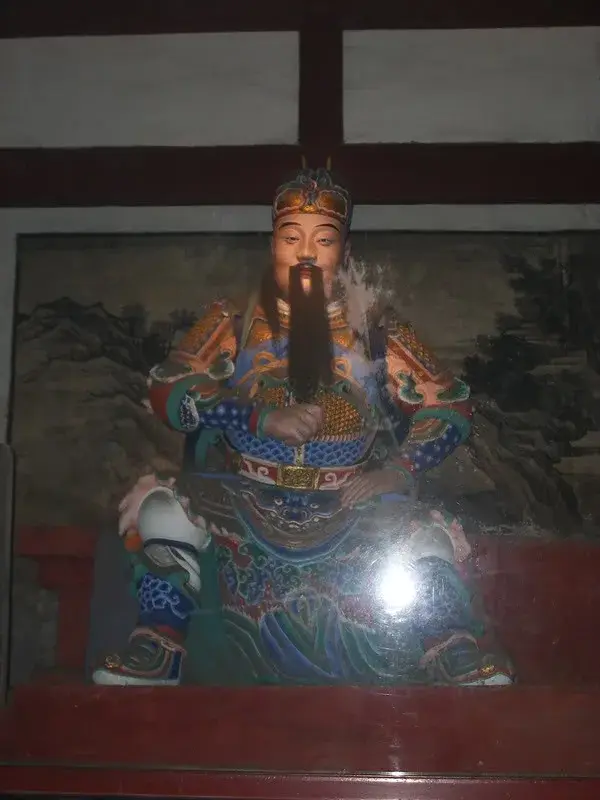
Historic architecture / site (Liao Hua)
Image creditsSamSpade21 · CC BY-SA 3.0Image source

Pillar general of Shu HanSenior General of Chariots and Cavalry of the Rightveteran of the entire dynastic era

Liao Hua (廖化)

廖化

Liao Hua (廖化, d. 264), courtesy name Yuanjian (元俭), originally named Liao Chun, was a native of Zhonglu County in Xiangyang Commandery (modern Nanzhang County, Hubei Province). He was an illustrious pillar general and senior statesman of Shu Han during the mid-to-late Three Kingdoms period, rising to Senior General of Chariots and Cavalry of the Right, with imperial credentials, Regional Inspector of Bingzhou, and Marquis of…

Era not stated

PROFILE

Liao Hua (廖化, d. 264), courtesy name Yuanjian (元俭), originally named Liao Chun, was a native of Zhonglu County in Xiangyang Commandery (modern Nanzhang County, Hubei Province). He was an illustrious pillar general and senior statesman of Shu Han during the mid-to-late Three Kingdoms period, rising to Senior General of Chariots and Cavalry of the Right, with imperial credentials, Regional Inspector of Bingzhou, and Marquis of Zhongxiang. In his early years, Liao Hua served as Registrar under Guan Yu in Jingzhou. In 219, following Guan Yu's defeat and the capture of Jingzhou by Eastern Wu, Liao Hua was temporarily detained. Yearning to return to the Han court, he faked his death, escaped under cover of night, and walked hundreds of miles with his elderly mother to rejoin Liu Bei's eastern expeditionary army at Zigui. During Zhuge Liang's administration, Liao Hua served as Chancellor's Army Advisor and Commander of Guangwu, participating in numerous northern expeditions. In 238, he won a major victory over Wei generals You Yi and Guo Huai in Longxi, earning enfeoffment as a Marquis. In 259, he was elevated to Senior General of Chariots and Cavalry of the Right, paired in authority with Zhang Yi. Known for prudence and strategic wisdom, he was celebrated in Sichuan lore alongside Wang Ping, Ju Fu, and Zhang Yi. During the Wei invasion in 263, he held Jiange alongside Jiang Wei, surrendering only upon imperial order. He died of illness in 264 while being relocated to Luoyang, having witnessed the entire 42-year history of Shu Han.

Courtesy Name
Yuanjian (元俭)
Native Place
Zhonglu County, Xiangyang Commandery (襄阳郡中庐县, modern Nanzhang, Xiangyang, Hubei)
Date of Death
264 (1st year of Xianxi)
Highest and Major Offices
Senior General of Chariots and Cavalry of the Right (右车骑将军), Regional Inspector of Bingzhou (并州刺史)
Noble Titles
Marquis of Zhongxiang (中乡侯)
Identity
Pillar general of Shu Han, Senior General of Chariots and Cavalry of the Right, veteran of the entire dynastic era

LIFE TIMELINE

Relationship graph

BIOGRAPHY

Chronology

  • 219 (24th year of Jian'an) | Faking Death to Escape | Captured by Eastern Wu after Guan Yu's fall; faked his death and fled west with his mother to join Liu Bei at Zigui.
  • 222 (2nd year of Zhangwu) | Eastern Expedition | Appointed Grand Administrator of Yidu, accompanying Liu Bei's campaign; returned to Baidicheng and joined Zhuge Liang's staff.
  • 238 (1st year of Yanxi) | Victory over Guo Huai | Defeated Wei commanders You Yi and Wang Yun in Longxi, earning enfeoffment as a Marquis.
  • 248 (11th year of Yanxi) | Mountain Fortifications | Campaigned under Jiang Wei in Longxi, fortifying Mount Chengzhong to protect migrating Qiang tribes.
  • 259 (22nd year of Yanxi) | Senior General of the Right | Promoted to Senior General of Chariots and Cavalry of the Right, Regional Inspector of Bingzhou, and Marquis of Zhongxiang.
  • 264 (1st year of Xianxi) | Passing in Transit | Surrendered at Jiange following the fall of Chengdu; passed away of illness while being relocated to Luoyang.

Biography

Service Under Guan Yu and the Great Escape

Liao Hua hailed from an established family in Zhonglu, Xiangyang, originally bearing the name Liao Chun. Cultivated in classical literature and military arts, he was appointed Registrar by Forward General Guan Yu, managing administrative paperwork and logistical allocations across the Jingzhou military command.

In 219, Lv Meng launched a surprise naval attack that seized Jingzhou, leading to Guan Yu's defeat and death at Maicheng. Amid the collapse, Liao Hua was detained by Eastern Wu forces.

Unwilling to serve Eastern Wu, Liao Hua resolved to return to Shu Han. Exploiting the summer heat and rampant epidemics in the region, he faked his death from a sudden illness. Convinced that he had died, the Wu guards left his body unattended in an outbuilding. Under cover of darkness, Liao Hua slipped away, rejoined his elderly mother, and set out across mountain trails, walking day and night to reach the west.

In the spring of 222, when Liu Bei's grand expeditionary army reached Zigui, Liao Hua arrived at the imperial camp escorting his mother. Deeply moved by his filial piety and unyielding loyalty, Liu Bei embraced him and praised his devotion as outshining the sun and moon, appointing him Grand Administrator of Yidu. Following the setback at Yiling, Liao Hua accompanied the retreat to Yong'an.

Northern Campaigns and Exploits in Longxi

Following Liu Bei's passing in 223, Chancellor Zhuge Liang assumed executive governance. Appreciating Liao Hua's steadfast loyalty and military competence, Zhuge Liang appointed him Chancellor's Army Advisor and later Commander of Guangwu. Throughout the northern expeditions toward Mount Qi, Liao Hua commanded central guard units, securing supply lines and coordinating advance posts.

In the autumn of 238, Liao Hua led a force deep into enemy territory to attack pro-Wei tribal settlements. Regional Inspector Guo Huai sent Wang Yun and You Yi to encircle his position. Seeing that You Yi's encampments were dispersed across a narrow valley, Liao Hua launched a concentrated assault against his center before the Wei units could unite.

Caught unprepared, the Wei forces collapsed, and commander Wang Yun was killed in the fighting. Liao Hua captured massive quantities of horses and equipment, earning enfeoffment as a Marquis.

In 248, when tribal leaders Baihuwen and Zhiwudai rebelled against Wei to join Shu, Jiang Wei marched into Longxi to escort them. Liao Hua was ordered to fortify Mount Chengzhong, holding the defensive works against counterattacks by Guo Huai and ensuring the safe relocation of tens of thousands of tribal families into Sichuan.

Senior Statesman and Prudent Counsel

In 259, the imperial court promoted Liao Hua to Senior General of Chariots and Cavalry of the Right, with imperial credentials, Regional Inspector of Bingzhou, and Marquis of Zhongxiang. With Zhang Yi serving as Senior General of Chariots and Cavalry of the Left, the two veteran generals directed the imperial guard and capital defenses, standing second only to Jiang Wei.

By this era, founding veterans such as Guan Yu, Zhang Fei, Zhao Yun, Ma Chao, and Huang Zhong had all passed away. The people of Sichuan held Liao Hua and Zhang Yi in high esteem, coining the popular proverb: "Before, there were Wang Ping and Ju Fu; later, there were Liao Hua and Zhang Yi," commemorating four legendary commanders who anchored the state.

In 262, when Jiang Wei planned another northern offensive toward Taoyang, Liao Hua offered prudent remonstrance: "Military force that is never rested will inevitably consume itself. Our state's resources and population cannot match Wei, yet we campaign without end; how can we sustain the realm!" Though his counsel was not fully adopted, it demonstrated his deep strategic wisdom and concern for the state.

Lifelong Loyalty and the Fall of the State

In 263, Cao Wei launched a massive invasion of Shu. While Deng Ai traversed the Yinping mountain trails to compel the surrender of Chengdu, Jiang Wei, Liao Hua, and Zhang Yi were holding Jiange Pass, blocking Zhong Hui's army of over one hundred thousand troops.

When imperial edicts arrived from Chengdu ordering all armies to surrender, the soldiers wept and struck their weapons against the rocks. Recognizing that the sovereign had surrendered, Liao Hua joined Jiang Wei in laying down his seals, marking the end of Shu Han.

In the spring of 264, the Wei court ordered former Shu officials and prominent families to relocate to Luoyang. Well over seventy years of age, Liao Hua bid farewell to the Sichuan mountains and set out along the road to the northern capital. Weakened by decades of campaigning and the arduous journey, he passed away of illness along the road.

Beginning his career as Guan Yu's registrar, serving through Liu Bei's reign and Zhuge Liang's administration, and standing as a pillar general until the dynastic fall, Liao Hua participated in the entire 42-year existence of Shu Han, revered as an enduring symbol of perseverance and loyalty.
Personal Relationships

  • Sovereigns: Liu Bei, who praised his loyalty after his escape from Wu; Liu Shan, who appointed him Senior General of Chariots and Cavalry of the Right.
  • Early Superior: Guan Yu, who employed him as Registrar.
  • Chancellor: Zhuge Liang, who appointed him Army Advisor.
  • Comrades-in-Arms: Jiang Wei, Senior General; Zhang Yi, Senior General of the Left, who shared equal renown with him.

Historical Evaluation

  • Chen Shou, Records of the Three Kingdoms: "Liao Hua was resolute and brave, renowned for his mature judgment. Contemporaries remarked: 'Before, there were Wang Ping and Ju Fu; later, there were Liao Hua and Zhang Yi,' recognizing them as foremost generals of the Han successor."
  • Liu Bei: "Liao Hua's loyalty is pure, traveling a thousand li to return to court; he truly possesses the noble spirit of ancient worthy ministers."
  • Luo Guanzhong, Romance of the Three Kingdoms: "Faking his death to flee the tiger's den, he escorted his mother across wilderness and river. Rejoining his lord at Zigui, his glorious name endures through the ages."

Related Entries

  • Guan Yu
  • Zhuge Liang's Northern Expeditions
  • Jiang Wei
  • Zhang Yi
  • Senior General of Chariots and Cavalry

FIGURES ASSOCIATED WITH THIS DYNASTY

Bibliography

  • Records of the Three Kingdoms, Volume 45, Book of Shu, Biographies of Deng, Zhang, Zong, and Yang
  • Records of the Three Kingdoms, Volume 36, Book of Shu, Biographies of Guan, Zhang, Ma, Huang, and Zhao
  • Chronicles of Huayang, Volume 11