Literary Renown in Shu
Emperor Xizong took refuge in Chengdu; Liang presented poems to Director Liu Xiang, who renamed him Liang Zhen.
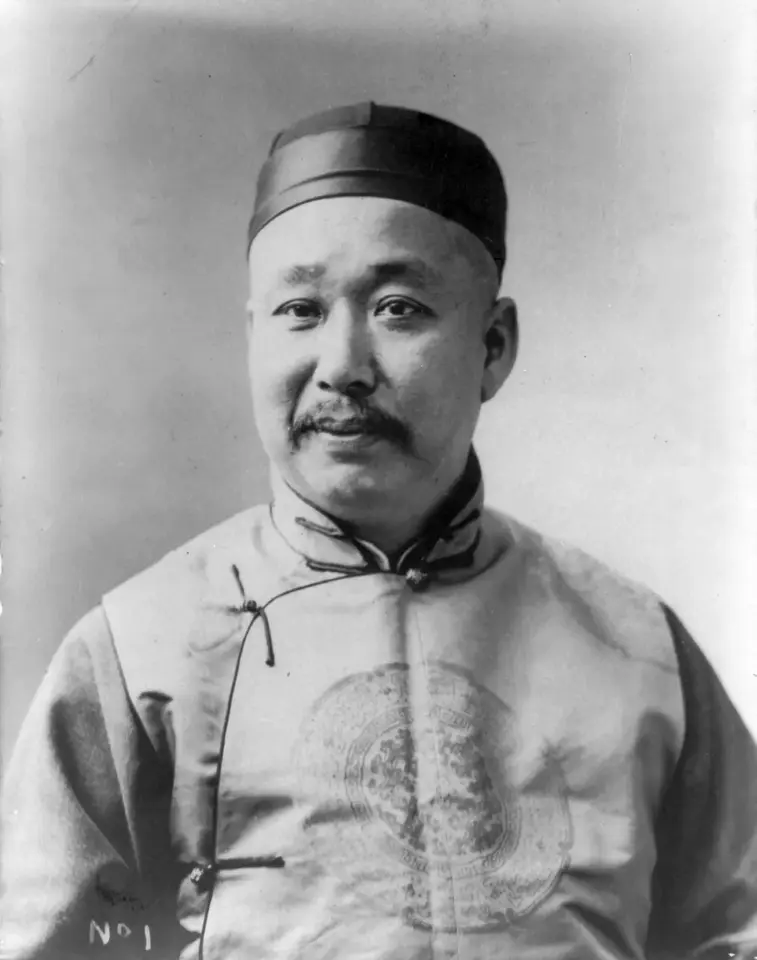
梁震
Liang Zhen (dates unknown), originally named Liang Ai, native of Yizheng in Qiongzhou (modern Qionglai, Sichuan), was the preeminent chief strategist and founding architect of the Jingnan (Nanping) state during the Five Dynasties and Ten Kingdoms period. In 881, when Huang Chao's insurgent army took Chang'an and Emperor Xizong of Tang fled to Sichuan, the young Liang presented poetic compositions to Court Director Liu Xiang,…
Liang Zhen (dates unknown), originally named Liang Ai, native of Yizheng in Qiongzhou (modern Qionglai, Sichuan), was the preeminent chief strategist and founding architect of the Jingnan (Nanping) state during the Five Dynasties and Ten Kingdoms period. In 881, when Huang Chao's insurgent army took Chang'an and Emperor Xizong of Tang fled to Sichuan, the young Liang presented poetic compositions to Court Director Liu Xiang, who lauded his prodigious talent and urged him to adopt the name "Zhen" (meaning "thunderous shaking"). During the Tianfu era, traveling eastward through Jiangling, Liang was retained by Military Commissioner Gao Jixing (Gao Jichang). Resisting the precarious allure of warlord appointments, Liang refused official gazetted rank, serving instead as Gao's "white-robed" confidential strategist. Gao honored him as "Chief Planner" (mouzhu) and addressed him affectionately as "Elder" (qianbei), consulting him on all military and diplomatic matters. Liang Zhen possessed extraordinary geopolitical foresight. During the Tongguang era of Later Tang, he strenuously warned Gao Jixing against traveling to Luoyang to pay personal homage to Emperor Zhuangzong (Li Cunxu). When Gao was detained by the emperor, Liang maintained a formidable defensive posture in Jiangling that secured Gao's safe release. Following the fall of Former Shu, Liang counseled Gao on securing strategic Yangtze River gorges, while firmly restraining him from suicidal open confrontation against the Later Tang imperial court. When Gao Conghui succeeded his father, Liang retired from politics, establishing a hermitage on the sandbars of Jianli. Cloaked in a crane-feather robe, he styled himself the "Hermit of the Jing Platform" (Jingtai Yinshi), living peacefully to a natural end. His statesmanship preserved the diminutive state of Jingnan amidst surrounding military powers for decades, earning him renown as one of the most astute private counselors in medieval Chinese history.
Emperor Xizong took refuge in Chengdu; Liang presented poems to Director Liu Xiang, who renamed him Liang Zhen.
Traveled east to Jiangling; detained and enthusiastically retained by Jingnan Military Commissioner Gao Jixing.
Refused formal bureaucratic rank, serving as Gao Jixing's chief strategist to organize regional defenses.
Emperor Zhuangzong established Later Tang; Liang strenuously advised Gao against personal court attendance.
Gao was detained in Luoyang; Liang mobilized Jiangling's river fleet and forged defensive alliances, compelling Zhuangzong to release Gao.
Following Later Tang's conquest of Former Shu, Liang advised Gao to seize Kuizhou and Xiazhou to secure the upper Yangtze.
Restrained Gao from head-on war against Later Tang; facilitated tributary relations with Yang Wu to maintain equilibrium.
Gao Jixing passed away; Gao Conghui succeeded him. Liang declined high ministerial office, retiring to Tuzhou as the "Hermit of the Jing Platform."
Resided in his riverine hermitage; Gao Conghui frequently visited in person to seek counsel on major state affairs.
Liang Zhen was born into a scholarly lineage in Yizheng County, Qiongzhou (modern Qionglai, Sichuan). From his youth, he demonstrated exceptional intellectual versatility, mastering the Confucian classics and imperial histories while displaying remarkable talent in classical verse.
In 881 (the first year of the Zhonghe era), the insurgent forces of Huang Chao captured the imperial capital of Chang'an, forcing Emperor Xizong of Tang to seek refuge in Chengdu. Many high ministers and court scholars accompanied the imperial retinue into Shu. Liang Ai, then an ambitious young scholar, submitted a scroll of his poems to Court Director Liu Xiang.
Liu Xiang was astonished by the refined elegance and intellectual depth of his verses, declaring: "This youth possesses marvelous talent and extraordinary clarity; he will inevitably become a great pillar of statecraft!" Observing that the character Ai (meaning "mist" or "haze") was excessively soft, Liu recommended that he change his name to Zhen (meaning "thunder" or "shake"), drawing from the I Ching concept of dynamic shock. Liang adopted the suggestion, becoming known as Liang Zhen.
During the subsequent collapse of the Tang dynasty, Wang Jian established the independent state of Former Shu in Sichuan. Recognizing the internal corruption and precariousness of the Shu court, Liang Zhen declined to take office, choosing instead to sail eastward down the Yangtze to explore the lakes and rivers of Jingchu.
In 907, Zhu Wen usurped the Tang throne to establish the Later Liang dynasty, appointing his loyal general Gao Jixing (originally Gao Jichang) as Military Commissioner of Jingnan, centered at Jiangling. Following decades of destructive civil warfare between rival warlords Sun Ru and Cheng Rui, Jiangling lay in ruins, with its surrounding counties depopulated and reduced to fewer than a few hundred households.
When Liang Zhen's boat docked at Jiangling, Gao Jixing learned of the arrival of the renowned Sichuan literatus and personally went out to welcome him with a grand banquet. In their strategic discussions, Gao found that Liang possessed comprehensive knowledge of imperial geography, military strategy, and the internal strengths and weaknesses of regional warlords. Gao enthusiastically pleaded with Liang to remain.
Gao prepared to memorialize the imperial court to appoint Liang as Prefectural Judge (jiedu panguan). However, Liang Zhen exhibited remarkable clarity of mind. Understanding that regional warlords in this violent era were volatile and that holding official rank made one vulnerable to political intrigue, Liang declined the formal appointment.
Liang addressed Gao Jixing: "I am merely a wandering recluse of the mountains, unsuited to bureaucratic ledgers and unwilling to become an official subordinate of a military command. If Your Highness does not disdain my unruliness, I am willing to serve in simple white robes as your private counselor, plotting state security by your side."
Deeply impressed by his noble integrity, Gao accepted Liang's condition with profound respect. He never forced official rank upon him, treating him as a revered mentor and comrade. Gao addressed Liang as "Elder" (qianbei), constructing a special residence adjacent to his private quarters and discussing all state decisions with him behind closed doors.
In 923, Li Cunxu conquered Later Liang, proclaiming himself Emperor Zhuangzong of Later Tang. Flush with victory, Zhuangzong summoned regional warlords to Luoyang to offer direct imperial submission.
Gao Jixing, having previously received extensive patronage from Later Liang, was gripped with terror. Believing that personal attendance would secure imperial goodwill and high ministerial titles, Gao resolved to travel north to Luoyang.
Liang Zhen vehemently opposed the journey: "Li Cunxu is a ferocious warrior whose sudden victories make him arrogant, impulsive, and untrustworthy. For Your Highness to enter his capital in person is like stepping willingly into a tiger's jaws! If the emperor detains you and sends an imperial general to govern Jiangling, how will you preserve your state? It is far better to fortify Jiangling's river walls, train our soldiers, and submit regular tributary memorials from a safe distance."
Swayed by sycophantic courtiers, Gao dismissed Liang's advice and set off for Luoyang with several hundred retainers. Upon his arrival, Zhuangzong was indeed struck by Gao's imposing military demeanor and reconsidered releasing him, placing Gao under effective house arrest in the imperial guest quarters. In deep despair, Gao lamented daily: "Had I only listened to the wisdom of Liang Zhen!"
During this crisis, Liang Zhen maintained absolute composure in Jiangling. Understanding Zhuangzong's suspicious psychology, Liang avoided signs of panic, organizing active military exercises, repairing river ramparts, and spreading rumors that the garrison was prepared to launch counter-offensives and align with the Southern Wu kingdom if Gao were harmed.
Concurrently, Later Tang Chief of the Bureau of Military Affairs Guo Chongtao warned Zhuangzong that executing or detaining a voluntary tributary prince would alienate all other southern lords. Zhuangzong relented, permitting Gao to depart. Fearing pursuit, Gao galloped day and night across the Han River. Meeting Liang Zhen at Jingmen, Gao seized Liang's hands in tears: "Because I ignored your counsel, I came within a hair's breadth of never seeing Jiangling again! Henceforth, my life belongs entirely to you!"
In 925, Later Tang launched a massive invasion of Former Shu, resulting in the rapid surrender of Shu ruler Wang Yan. Prior to the expedition, Gao Jixing had offered to assist the imperial army in exchange for receiving Kuizhou and Xiazhou once the campaign concluded.
However, upon conquering Shu, Later Tang reneged on its agreement, appointing Meng Zhixiang to govern Chengdu and garrisoning imperial troops at Kuizhou, effectively cutting off Jingnan's upper river trade. Infuriated by this betrayal, Gao prepared to mobilize his entire fleet to storm Kuizhou and challenge the Later Tang army.
Liang Zhen intervened once more, sternly admonishing Gao: "Jingnan is a tiny domain with merely several thousand soldiers, maintaining its survival in the Central Plains purely because surrounding powers keep one another in check. Later Tang commands the military power of the nine provinces; for Jiangling to attack the central dynasty head-on is to strike a rock with an egg, courting certain annihilation!"
Liang urged a sophisticated dual strategy: outwardly maintain nominal submission to Later Tang to avert invasion, while dispatching secret envoys to align with the Yang Wu kingdom in Huainan, accepting Wu investiture to secure naval deterrence. Gao adopted Liang's strategy, creating an effective regional counterbalance that deterred Later Tang from invading, preserving Jingnan's sovereignty.
In December 928, the sixty-one-year-old Gao Jixing died in Jiangling. On his deathbed, Gao grasped the hand of his heir Gao Conghui, admonishing him: "Master Liang Zhen is an incomparable genius of the realm. That I was able to build this state and protect our lineage is entirely due to his strategic wisdom. When you succeed me, you must revere him as a father!"
Gao Conghui assumed the leadership of Jingnan, treating Liang Zhen with filial devotion and addressing him as "Uncle." Conghui sought to elevate Liang to Chief State Counselor and top ministerial honors.
However, recognizing that the succession was secure and the regime stabilized, Liang chose to step down completely: "I am merely a wandering commoner who entered Your Highness's service out of gratitude to the late King. Now that the late King rests in peace and Your Highness is wise and established, it is time for this old servant to return to the waters and clouds."
Despite Conghui's tearful pleas, Liang stood firm. Conghui conceded, ordering the construction of a scenic hermitage on Tuzhou, an island in the Yangtze River thirty miles west of Jiangling in Jianli.
There, Liang Zhen spent his final decades donning a white crane-feather robe, boating across misty waters, and enjoying the tranquility of nature under the self-chosen title "Hermit of the Jing Platform" (Jingtai Yinshi). Whenever Gao Conghui encountered difficult diplomatic dilemmas or administrative impasses, he would sail to Tuzhou to seek Liang's guidance, which Liang provided with unfailing precision. Living in peace and detachment, Liang Zhen passed away in advanced age, remembered as an extraordinary model of wisdom, integrity, and self-preservation in a turbulent era.
Among all regimes of the Five Dynasties and Ten Kingdoms, Jingnan (Nanping) was the smallest and most vulnerable, controlling only three prefectures (Jiangling, Guizhou, and Xiazhou) surrounded by aggressive rivals including Wu, Shu, Later Tang, Chu, and Southern Han.
Liang Zhen formulated the foundational national strategy that allowed this diminutive state to survive for over fifty years. His doctrine of "serving the central empire outwardly, maintaining inner military preparedness, maneuvering between neighbors, and exploiting regional rivalries" maximized Jiangling's strategic value as an indispensable waterway hub.
This diplomatic agility ensured that none of the larger kingdoms could easily conquer Jingnan without provoking a wider regional war, providing its populace with decades of relative stability amid widespread carnage.
Liang Zhen's handling of the 924 Luoyang crisis stands as a masterclass in strategic foresight and deterrence.
Having accurately anticipated Li Cunxu's treacherous impulses before Gao departed, Liang maintained iron discipline and defensive readiness in Jiangling when disaster struck. His calculated show of naval strength and diplomatic outreach to southern neighbors generated immense geopolitical pressure on Later Tang.
This decisive deterrence compelled the Later Tang court to release Gao Jixing, neutralizing what would otherwise have been a fatal blow to the embryonic Jingnan state.
In an era infamous for brutal military opportunism, moral betrayal, and unprincipled pursuit of power, Liang Zhen's lifelong refusal to accept official bureaucratic rank established an inspiring ethical benchmark for medieval intellectuals.
Refusing high ministerial titles and stipends, Liang preserved his intellectual independence as a "white-robed advisor," speaking truth to power and preventing reckless military adventures through frank remonstrance. Having accomplished his life's mission, he retired gracefully to the countryside without seeking personal wealth.
Northern Song historian Ouyang Xiu, generally critical of Five Dynasties figures in his New History of the Five Dynasties, offered rare praise for Liang Zhen, extolling his exceptional foresight and unwavering moral character.
Beyond his political and military genius, Liang Zhen was a distinguished poet and classical scholar of the late Tang and Five Dynasties.
His early literary excellence earned the acclaim of Liu Xiang and established his reputation among Sichuan scholars. During his decades in Jingnan, Liang drafted the state's most critical diplomatic memorials and treatises, distinguished by their rhetorical elegance and sharp strategic clarity.
According to the Spring and Autumn Annals of the Ten Kingdoms, his writings were gathered into the one-fascicle Collected Works of Liang Zhen (Liang Zhen Wenji). Though most of his writings were lost in later dynastic conflicts, surviving verses in the Complete Tang Poems (Quan Tang Shi) reflect his lofty, untamed spirit and philosophical detachment.
FIGURES ASSOCIATED WITH THIS DYNASTY