Birth and Upbringing
Born into the Liang family of Anding, showing early literary promise before fleeing south due to the An Lushan Rebellion.
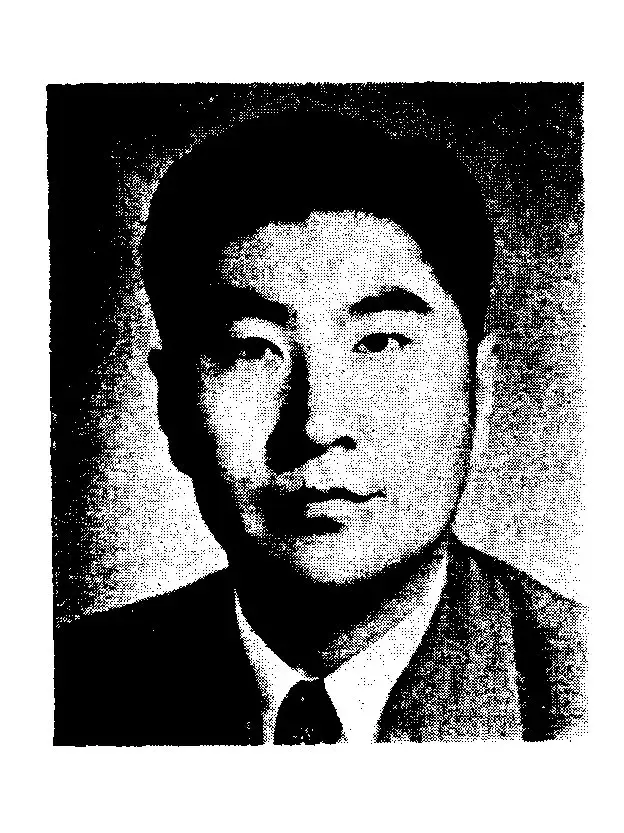
梁肃
Liang Su (梁肃, 753–793), courtesy name Jingrong, was an eminent essayist, official, and a prominent vanguard of the Classical Prose Movement (Guwen Movement) in the mid-Tang dynasty. Born into an elite lineage of Anding, Liang took refuge in the Wu-Yue region south of the Yangtze River during the turbulent An Lushan Rebellion. He studied classical composition under the renowned scholar-official Dugu Ji. Passing the special…
Liang Su (梁肃, 753–793), courtesy name Jingrong, was an eminent essayist, official, and a prominent vanguard of the Classical Prose Movement (Guwen Movement) in the mid-Tang dynasty. Born into an elite lineage of Anding, Liang took refuge in the Wu-Yue region south of the Yangtze River during the turbulent An Lushan Rebellion. He studied classical composition under the renowned scholar-official Dugu Ji. Passing the special imperial decree examination in 780, he served as Proofreader of the Heir Apparent, Investigating Censor, Remonstrance Official, Hanlin Academician, Imperial Reader-in-Waiting to the Crown Prince, and Senior Compiler of the Historiography Institute. Liang strongly advocated replacing ornate parallel prose with ancient moral and reasoned writing rooted in Confucian values, laying the theoretical groundwork for Han Yu and Liu Zongyuan. Concurrently, he was an ardent lay practitioner of Tendai Buddhism (Tiantai), studying under Patriarch Zhanran. He died at forty-one and was posthumously honored as Director in the Ministry of Rites.
Born into the Liang family of Anding, showing early literary promise before fleeing south due to the An Lushan Rebellion.
Traveled to Chang'an, passed the decree examination for Elegant Prose, and was appointed Proofreader of the Heir Apparent.
Summoned as Investigating Censor, later advancing to Remonstrance Official and Hanlin Academician while assisting in inner palace decrees.
Assisted Chief Minister Lu Zhi in presiding over the imperial examinations, selecting prominent figures such as Han Yu and Ouyang Zhan on the celebrated \"Dragon-Tiger List.\"
Passed away in the Yongkang Ward of Chang'an at age forty-one, posthumously awarded Director in the Ministry of Rites.
Liang Su was born during the closing years of Emperor Xuanzong's Tianbao era. When he was nine, the catastrophic An Lushan Rebellion erupted, and rebel forces under Shi Siming overran the eastern capital Luoyang. Liang Su fled south with his family, seeking sanctuary in the Wu-Yue region south of the Yangtze River, where he lived in displacement for nearly two decades. Throughout these difficult years, Liang immersed himself in classical studies, historical annals, and philosophical works.
In southern China, Liang became a student of the distinguished master of classical prose and Prefect of Changzhou, Dugu Ji. Under Dugu's guidance, Liang grasped the fundamental principle that literature should illuminate moral truth (wen yi ming dao), achieving renowned literary reputation throughout Jiangnan. During this time, he also frequented eminent Buddhist monks, receiving instruction from Zhanran, the ninth patriarch of Tendai Buddhism, and Zhanran's disciple Yuanhao. Combining Confucian moral philosophy with Buddhist metaphysics, Liang became one of the foremost lay patrons of Buddhism in the mid-Tang court.
In 780 (Jianzhong 1), Liang traveled west to the imperial capital Chang'an. He competed in the special decree examination and passed the category for Pure and Elegant Prose, receiving appointment as Proofreader of the Heir Apparent. Dignitaries subsequently recommended him for the office of Right Rectifier of Omissions, but he declined due to his mother's advanced age and illness, choosing filial retirement to nurse his parent.
In 789 (Zhenyuan 5), Emperor Dezong summoned Liang to court again, appointing him Investigating Censor. He soon transferred to Remonstrance Official and concurrently served as Hanlin Academician, Imperial Reader-in-Waiting to the Crown Prince, and Senior Compiler of the Historiography Institute. In the Hanlin Academy, Liang drafted crucial imperial edicts and secret palace communications, earning profound trust from the emperor.
In 792 (Zhenyuan 8), Grand Councilor Lu Zhi was appointed to supervise the metropolitan examinations. Greatly respecting Liang's scholarship and integrity, Lu invited Liang to evaluate test essays and identify deserving scholars. Liang disregarded family pedigrees and vigorously recommended talented candidates from modest backgrounds, including Han Yu, Ouyang Zhan, Li Guan, and Cui Qun. This examination class was hailed by posterity as the \"Dragon-Tiger List,\" consolidating the core literati network of the Classical Prose Movement.
In the tenth month of 793 (Zhenyuan 9), Liang Su succumbed to illness in the Yongkang Ward of Chang'an at the age of forty-one. Emperor Dezong expressed deep sorrow, posthumously appointing him Director in the Ministry of Rites and granting funeral textiles. He was interred the following spring in Xiaozhao Village of Wannian County.
During the incubation phase of the mid-Tang Classical Prose Movement, Liang Su inherited and advanced the literary ideals of Dugu Ji, vehemently opposing the ornate, vacuous parallel style characteristic of the Six Dynasties. Liang asserted that literature must be grounded in the moral Way (Dao) and substantial in principle (Li). His unadorned and vigorous prose directly inspired Han Yu, Liu Zongyuan, and Li Ao, establishing him as an indispensable conceptual precursor to the high Guwen Movement.
As a distinguished disciple of Master Zhanran of Jingxi, Liang mastered the profound doctrines of Tendai Buddhism. At the imperial capital, he authored pivotal Buddhist inscriptions and doctrinal treatises, including General Precedents of Calming and Insight (Zhiguan Tongli) and Discourse on the Tiantai Dharma Gate. These works systematically expounded Zhanran's meditative teachings, playing a critical role in preserving and propagating Tiantai teachings prior to the Huichang Buddhist Persecution.
FIGURES ASSOCIATED WITH THIS DYNASTY