Birth in Nanhai
Born into the prominent Liang clan of Xiqiao, Nanhai County, Guangdong, displaying precocious intelligence and extraordinary memory.
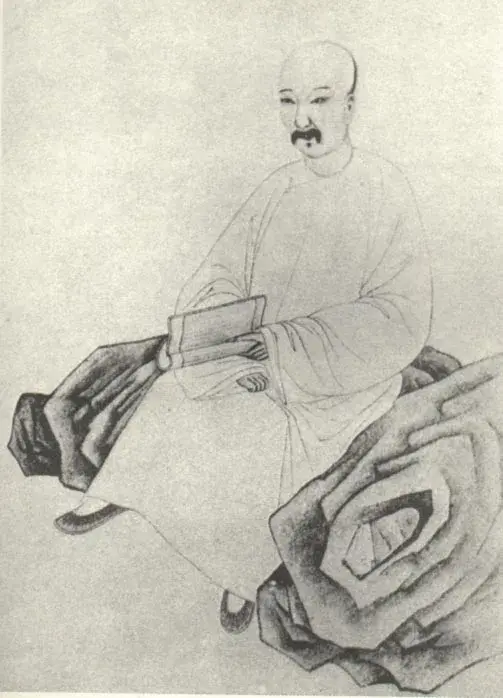
梁佩兰
Liang Peilan (1630–1705), courtesy name Zhiwu, art name Yaoting, and alternate sobriquets Manxisou and Chaiweng, was a native of Nanhai County, Guangzhou Prefecture, Guangdong Province. He was an eminent poet, scholar, and calligrapher of the early Qing dynasty, celebrated alongside Qu Dajun and Chen Gongyin as one of the "Three Great Masters of Lingnan." Born into a prominent late Ming family, he studied in his youth under…
Liang Peilan (1630–1705), courtesy name Zhiwu, art name Yaoting, and alternate sobriquets Manxisou and Chaiweng, was a native of Nanhai County, Guangzhou Prefecture, Guangdong Province. He was an eminent poet, scholar, and calligrapher of the early Qing dynasty, celebrated alongside Qu Dajun and Chen Gongyin as one of the "Three Great Masters of Lingnan." Born into a prominent late Ming family, he studied in his youth under Chen Bangyan, the renowned loyalist martyr who resisted the Qing conquest. Displaying precocious brilliance, Liang ranked first in the Guangdong provincial examination to earn the provincial degree (jieyuan) in 1657. However, over the subsequent three decades, he repeatedly failed the metropolitan examinations in Beijing, traveling to the capital six times without success. Resigning himself to secluded scholarship, he erected the Liuyingtang studio, dedicating himself to classical verse and calligraphy, with his poetry circulating widely across northern and southern China. In 1688, at the age of sixty, Liang traveled to Beijing for his seventh attempt, finally earning the metropolitan jinshi degree in the Wuchen class and being selected as a bachelor in the Hanlin Academy. Deeply attuned to the virtues of withdrawal, Liang promptly requested sick leave on the grounds of advanced age, retiring south to Guangdong and never entering public office again. Upon returning to his native region, he taught and wrote at the foot of Baiyun Mountain, held in supreme reverence by high provincial dignitaries such as Liangguang Governor-General Wu Xingzuo. Contemporary poetic leader Wang Shizhen praised him as the "foremost figure of the scholar-official elite in the Southern Seas," while Zhu Yizun lauded him as the "supreme poet of Lingnan." Liang modeled his verse on High Tang poetry, synthesizing majestic resonance with classical elegance while creating realistic works that reflected commoners' hardships during post-war recovery, preserved in Collected Works of Liuyingtang. In calligraphy, he specialized in running-cursive script, blending early Jin traditions with the dynamic rhythms of Su Shi and Mi Fu, standing as an influential calligraphic pioneer in early Qing Lingnan. Liang made profound historical contributions to the flourishing of Lingnan regional culture and the intellectual synthesis of northern and southern literary traditions.
Born into the prominent Liang clan of Xiqiao, Nanhai County, Guangdong, displaying precocious intelligence and extraordinary memory.
Became a disciple of loyalist master Chen Bangyan, studying classical canons, dynastic histories, and prose composition.
Placed first (jieyuan) in the Guangdong provincial civil service examination, gaining immediate fame across the south.
Journeyed north to Beijing to sit for the metropolitan examinations, failing and initiating thirty years of frustrating examination travel.
Retired to the foot of Baiyun Mountain after repeated failures, constructing Liuyingtang to house books and compose poetry with Chen Gongyin and Qu Dajun.
Traveled through Jiangnan to Beijing, joining poetic societies with literary giants Zhu Yizun and Wang Shizhen and gaining empire-wide fame.
Passed the metropolitan examination on his seventh attempt at age sixty, appointed bachelor in the Hanlin Academy.
Declined appointments as a local magistrate, petitioning for leave due to age and returning home to retire permanently.
Monk-poet Wang Sun edited Selected Poems of the Three Masters of Lingnan, placing Liang at the head of the collection.
Passed away at his residence at the foot of Baiyun Mountain in Guangzhou at age seventy-six, buried at Keziling.
Liang Peilan was born on January 24, 1630 (the 12th day of the 12th lunar month of the second year of Chongzhen) in Nanhai County, Guangzhou Prefecture, Guangdong Province. The Liang family of Xiqiao was an illustrious scholar-gentry lineage renowned for classical traditions. Liang exhibited remarkable intellect from childhood, capable of reciting thousands of words from memory after a single reading. Amidst the picturesque scenery of Mount Xiqiao, he read widely across the Confucian canons, dynastic histories, and pre-Qin masters, building a formidable classical foundation.
During the Ming-Qing transition, southern China was engulfed in warfare. In the early Shunzhi reign, the youthful Liang studied under Chen Bangyan, one of the three heroic loyalist martyrs of Lingnan. Chen was celebrated for moral courage and classical prose, later raising armies to resist the Qing before dying a martyr. Under Chen's guidance, Liang mastered ancient prose, moral philosophy, and literati integrity, forming a lifelong brotherhood with Chen Bangyan's son, Chen Gongyin.
Following the dynastic transition, Liang faced a devastated homeland and channeled his ambitions into the civil examinations. In 1657, at age twenty-eight, he sat for the Guangdong provincial examination in Guangzhou. In the examination halls, his expansive prose and structural mastery surpassed all competitors, winning first place as jieyuan. His literary reputation swept across southern intellectual circles, establishing him as a leader of Lingnan literature.
Having captured first place in the provincial examinations, Liang was eager to succeed in the metropolitan examinations in Beijing. In 1658, he traveled north to the capital to sit for the Wuxu examination, but failed to pass. Over the next three decades, despite long distances and logistical hardships, Liang traveled to Beijing six times, repeatedly failing because his unrestrained, expressive essays did not conform to rigid eight-legged examination conventions.
Frustrated by examination failures, Liang withdrew from worldly ambitions, retiring to his native region under the sobriquets "Manxisou" and "Yaoting." In eastern Guangzhou and near Baiyun Mountain, he constructed the "Liuyingtang" study, closing his gates to study the Songs of Chu, Han-Wei ballads, and the poetry of Li Bai and Du Fu. During this period, he maintained constant companionship with fellow natives Qu Dajun and Chen Gongyin, hiking Mount Baiyun, Yue Wang Platform, and the banks of the Pearl River, composing verses commemorating the rise and fall of southern dynasties and forming the most brilliant literary circle in early Qing Lingnan history.
Liang composed verse with astonishing facility, producing extended poems in single sittings that exhibited refined clarity and deep imagery. His reputation spread far beyond Lingnan. Prominent officials and literati traveling through Guangzhou considered meeting Liang and obtaining a commemorative verse from him a rare honor, and newly penned manuscripts were eagerly transcribed by scholars nationwide.
During the early Kangxi reign, following the suppression of the Revolt of the Three Feudatories, the Qing court promoted civil governance, and Jiangnan scholars rose to prominence in the capital. In the winter of 1681, in his early fifties, Liang journeyed north once more through Jiangnan to Beijing.
During this journey, Liang was warmly received by the foremost literary figures of the era. In Beijing, lyric master Zhu Yizun visited his lodgings, and the two formed a close intellectual bond. Zhu praised Liang's verse as possessing "lofty meter, vigorous bone, and the authentic spirit of the High Tang," introducing him into elite metropolitan poetry societies. Poetic leader Wang Shizhen (Wang Yuyang) held Liang in high esteem, praising his elegant compositions in Yuyang Shihua as the "foremost figure of the scholar-official elite in the Southern Seas."
Through poetry exchanges and intellectual debates with luminaries like Zhu Yizun, Wang Shizhen, and Xu Qianxue, Liang fused the rugged, expansive imagery of the southern landscape with the refined poetic theories of Jiangnan, dramatically elevating the prestige of Lingnan poetry on the national stage and integrating the Lingnan School into the mainstream of Qing literature.
In 1688, the court held the Wuchen metropolitan civil service examination, presided over by Grand Secretary Xu Qianxue. Xu sought to identify scholars of broad erudition, breaking through rigid examination conventions and utilizing comprehensive ranking methods to recruit eminent literati. At sixty years of age, his hair graying, Liang entered the examination hall for the seventh time.
Under Xu's evaluation, Liang's profound and balanced essays stood out, and he earned the jinshi degree at the age of sixty. Following the palace examination, the court initially planned to appoint him as an exterior county magistrate. However, having observed official reality for decades, Liang was unwilling to spend his final years handling burdensome subaltern administration, submitting a petition requesting permission to decline office on grounds of advanced age. Commending his literary renown and moral character, the throne granted an imperial decree appointing him a bachelor in the Hanlin Academy to assist with imperial compilations.
After serving in the Hanlin Academy for only a few months, Liang submitted another memorial requesting leave to return south to care for his family. While contemporaries regarded Hanlin status as a coveted path to high ministerial office, Liang regarded it with detachment, bidding farewell to capital friends amidst grand farewell banquets and departing for his native soil, leaving official life behind forever.
Returning to Guangzhou, Liang embraced the life of a retired gentleman, adopting the art name "Chaiweng" and wandering among the waters and peaks of Baiyun Mountain. In his final years, he commanded immense moral authority and was revered by local officials and gentry. High regional dignitaries—such as Liangguang Governor-General Wu Xingzuo and Guangdong Governor Li Shizhen—admired his character, visiting his Baiyun mountain cottage repeatedly and treating him with the deference shown to a revered mentor. Liang never exploited official connections for personal advantage, once brushing a famous couplet for Governor-General Wu: "When official duties ease, one leisurely chants verse; what harm in resting one's tablet against cloud-veiled peaks?"
In 1692, the monk-poet Wang Sun of Panyu compiled the surviving poetry of Liang Peilan, Qu Dajun, and Chen Gongyin into Selected Poems of the Three Masters of Lingnan. In this anthology, Liang was placed at the head of the three masters due to his balanced poetic style and High Tang resonance, establishing the "Three Great Masters of Lingnan" as an enduring symbol in classical Chinese literature.
In 1705, this venerated master of southern poetry passed away peacefully at his Guangzhou residence at the age of seventy-six. He was interred on the southern slope of Keziling on Baiyun Mountain. Through his poetry, transcendent personality, and distinctive calligraphy, Liang bequeathed a rich cultural legacy to posterity.
Liang Peilan was an exemplary master of the early Qing poetic world and a principal founder of the Lingnan Poetic School. In the late Ming and early Qing, poetry from Lingnan was frequently dismissed by central and northern literati as peripheral and unrefined. Drawing from southern literary heritage and taking the archaic majesty of High Tang masters Li Bai, Du Fu, Gao Shi, and Cen Shen as his models, Liang dismantled the shallow trivia of late Ming Gong'an and Jingling verse, inaugurating an expansive, refined poetic style.
In Wang Sun's Selected Poems of the Three Masters of Lingnan, Liang was placed at the head because his poetry exhibited consummate artistic maturity and structural grandeur. Compared to Qu Dajun's tempestuous passion and Chen Gongyin's mournful sorrow, Liang's verse combined classical discipline with sweeping vigor. He excelled at long travel narratives as well as lucid, evocative landscape quatrains. His representative works—including Composed on the River from Changshui to Raoyang and Guangdong Songs—harmonized southern landscapes with literati sentiments, transforming northern perceptions of southern poetry and establishing Lingnan literature as a respected component of the national canon.
While Liang's poetry included literati exchanges and landscape verses, it remained rooted in social reality. During years of rural seclusion and travel across China, he observed the suffering of common folk during post-war recovery, composing realistic poems addressing popular distress.
In his celebrated Song of Pearl Gathering, he depicted the perilous plight of Hepu pearl divers plunging into oceanic depths to retrieve pearls for opulent aristocrats; in Song of Horse Breeding, he recorded the crushing financial burdens imposed on peasants by state-mandated equine quotas; in Tea Picker's Song and Woodcutter's Ballad, he portrayed the exhausting labor of mountain peasants struggling for survival. Written in unadorned language and animated by Confucian compassion, these works reflected the social consciousness of a traditional scholar-official.
Throughout his life, Liang served as a vital cultural bridge linking Lingnan regional culture with mainstream literary currents in Jiangnan and the Central Plains. During the early Qing, the national literary world was dominated by Zhu Yizun and Wang Shizhen. Wielding formidable literary skill, Liang traveled north multiple times, entering the inner circles of the metropolitan literati elite and forming intimate friendships with Wang Shizhen, Zhu Yizun, Xu Qianxue, and Shi Runzhang.
Zhu Yizun revered Liang's character and verse, counting him among his dearest friends and anthologizing his works; Wang Shizhen praised Liang in multiple poetic treatises, positioning him as a preeminent representative of southern culture. Through Liang's intermediary role, writings by Lingnan scholars gained widespread circulation in northern and eastern China, overcoming the historical marginalization of southern intellectuals and promoting the cultural integration of the early Qing realm.
Beyond his literary contributions, Liang was an accomplished calligrapher universally recognized as an outstanding master of early Qing Lingnan calligraphy. During the Ming-Qing transition, Lingnan calligraphy was dominated by the delicate, gentle style of Ming master Dong Qichang, which had degenerated into languid weakness.
Liang immersed himself in historical calligraphic rubbings, tracing his lineage from the dynamic structures of Song masters Su Shi and Mi Fu back to the bone-strength of Tang master Li Yong and the archaic elegance of Han-Wei masters Zhong Yao and Wang Xizhi. His surviving works consist primarily of running and cursive scripts characterized by vigorous brushwork, expansive composition, and dense inkwash, blending Ming individualist expression with the early stirrings of the Qing epigraphic revival. His masterpiece Running Script Seven-Character Couplet, preserved in the Guangdong Museum, is celebrated by modern connoisseurs as a pinnacle of early Qing southern calligraphy.
FIGURES ASSOCIATED WITH THIS DYNASTY