Imperial Kinship Command
Following his maternal uncle Guo Wei's enthronement, appointed Director of Palace Guards to oversee the palace elite.
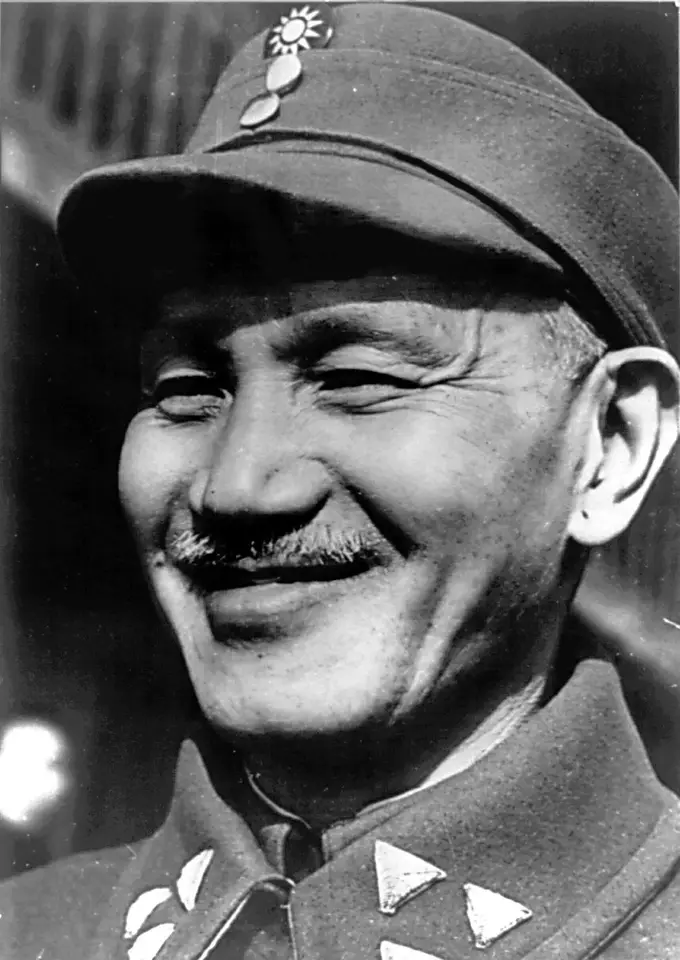
李重进
Li Chongjin (李重进; ?–960), a native of Taiyuan (modern Taiyuan, Shanxi), was an eminent military commander and imperial kinsman during the Later Zhou Dynasty. He was the son of Li Guan and the elder sister of Emperor Taizu (Guo Wei), making him a maternal nephew of the dynasty's founder and an older maternal cousin of Emperor Shizong (Chai Rong). Endowed with extraordinary physical strength, tactical acumen, and personal…
Li Chongjin (李重进; ?–960), a native of Taiyuan (modern Taiyuan, Shanxi), was an eminent military commander and imperial kinsman during the Later Zhou Dynasty. He was the son of Li Guan and the elder sister of Emperor Taizu (Guo Wei), making him a maternal nephew of the dynasty's founder and an older maternal cousin of Emperor Shizong (Chai Rong). Endowed with extraordinary physical strength, tactical acumen, and personal courage, Li Chongjin rose rapidly through the palace guard ranks during the founding years of Later Zhou, serving as Commander of the Palace Guards and Chief of the Bureau of Military Affairs. During Emperor Shizong's reign, Li Chongjin was an indispensable field commander in the campaigns that unified fragmented Chinese territories. At the historic Battle of Gaoping in 954, he fought fiercely alongside Chai Rong to salvage an initial military crisis, driving back the allied forces of Northern Han and Liao. In the southern campaigns against Southern Tang, he served as frontline commander-in-chief, orchestrating the successful siege of Shouchun and crushing Southern Tang field forces in the Huai River valley. Following the Chenqiao Mutiny of 960, in which Zhao Kuangyin seized the throne to establish Northern Song, Li Chongjin refused to submit. Holding the strategic fortress of Yangzhou as Military Commissioner of Huainan, he raised standard in open rebellion. Song Taizu personally led an expeditionary army to besiege Yangzhou. When the city was stormed, Li Chongjin committed suicide alongside his entire family.
Following his maternal uncle Guo Wei's enthronement, appointed Director of Palace Guards to oversee the palace elite.
Promoted to Commander of the Xiaodi Guards and Chief Palace Inspector, enjoying Guo Wei's profound confidence.
Advanced to Palace Grand Commander; fought heroically alongside Emperor Shizong at Gaoping, shattering Northern Han and Liao invaders.
Appointed Commander-in-Chief of the Imperial Guards, becoming the foremost military commander of Later Zhou.
Appointed Commander of the Huainan Expeditionary Army, routing Southern Tang forces under He Yanxi along the Huai River.
Repeatedly crushed Southern Tang reinforcements, captured the key fortress of Shouchun, and was invested as Military Commissioner of Huainan.
On his deathbed, Emperor Shizong charged Li Chongjin with supreme command of the imperial guards to protect the child emperor.
Zhao Kuangyin usurped the throne in the Chenqiao Mutiny, stripping Li Chongjin of his guard command and ordering him to transfer to Qingzhou.
Refused to yield his post, raising the banner of armed resistance at Yangzhou against the Song usurpation; Song Taizu personally led the siege.
When Yangzhou fell, Li Chongjin refused submission, gathering his entire family and committing collective self-immolation in tragic martyrdom.
Li Chongjin was born in Cangzhou, Hebei. His father Li Shen was a military commander of Later Tang, while his mother was the elder sister of Later Zhou founder Guo Wei (posthumously Princess Fuqing). Li Chongjin was endowed with immense physical strength and an imposing dark complexion, earning the fearsome title "Black Prince" among the imperial troops.
During the late Han dynasty, Li Chongjin accompanied his maternal uncle Guo Wei on the campaign against Li Shouzhen in Hezhong, braving arrows and stones in the vanguard to demonstrate extraordinary martial daring. When Guo Wei established the Later Zhou Dynasty in 951, he entrusted palace security to his beloved nephew, appointing him Director of Palace Guards and subsequently Chief Palace Inspector.
In 954, Northern Han ruler Liu Chong invaded the Central Plains with tens of thousands of allied Khitan horsemen. Emperor Shizong marched in person to confront the invasion at Gaoping. When right-wing commanders Fan Aineng and He Hui fled the field, the Later Zhou battle lines were on the verge of annihilation. Li Chongjin, alongside Palace Commander Zhao Kuangyin and Zhang Yongde, charged recklessly into the enemy center. Wielding a heavy broadsword, Li Chongjin cut down several enemy officers in hand-to-hand combat, rallying the imperial troops to achieve a historic victory.
Following the triumph at Gaoping, Emperor Shizong initiated his grand southward expeditions against Southern Tang. In 956, Li Chongjin was appointed Commander-in-Chief of the Huainan Expeditionary Army. Leading the offensive into the Huai River basin, he crushed Southern Tang relief forces at Zhengyang, pursued the enemy across water obstacles, and played a decisive role in reducing the seemingly impregnable citadel of Shouchun. In 958, he was invested as Military Commissioner of Huainan with headquarters in Yangzhou.
In 959, while conducting a northern campaign against Liao, the visionary Emperor Shizong fell gravely ill and died after returning to Kaifeng, leaving his seven-year-old son Chai Zongxun on the throne. Li Chongjin commanded the veteran Imperial Guards in Yangzhou, while Zhao Kuangyin directed the Palace Command inside the capital.
In January 960, Zhao Kuangyin orchestrated the Chenqiao Mutiny, staging a bloodless coup to establish the Northern Song Dynasty. Fully aware that Li Chongjin was the most prestigious surviving kinsman of the Zhou imperial house, Song Taizu sought to neutralize him by appointing him Grand Councilor while ordering his immediate transfer to Qingzhou. Recognizing the move as a preliminary step to his execution, Li Chongjin refused to yield his garrison, fortifying the ramparts of Yangzhou and raising the standard of armed defiance.
Li Chongjin sought coordinated action with fellow loyalist Li Jun in Zhaoyi and dispatched secret envoys to Southern Tang seeking an alliance. However, Li Jun was swiftly crushed by Song field armies, while the timid ruler of Southern Tang betrayed Li Chongjin's correspondence to the Song court. In September 960, Song armies converged on Yangzhou, followed by Emperor Taizu personally directing siege artillery outside the city.
Song forces deployed giant siege catapults and incendiary arrows day and night, reducing the ramparts to rubble. Li Chongjin fought on the parapets in blackened armor, repelling dozens of assaults. When Song shock troops finally stormed through the breached walls, Li Chongjin refused to surrender. Gathering his wives, children, and closest retainers in his official residence, he set fire to the complex, perishing alongside his entire family in the flames in an act of tragic dynastic martyrdom.
Li Chongjin stood as the primary operational commander in Later Zhou's conquest of Huainan. His tactical victories along the Huai River and his leadership during the protracted siege of Shouchun neutralized Southern Tang's defensive capabilities, forcing the southern kingdom to cede all territory north of the Yangtze River and establishing the territorial foundation for northern reunification.
In an era infamous for opportunistic warlord defections, Li Chongjin remained steadfastly loyal to the house of Guo Wei and Chai Rong. Confronting the overwhelming might of the newly founded Song Empire, he chose armed defiance over capitulation, preserving his dynastic honor by perishing in the flames of Yangzhou rather than accepting a compromised survival under the usurping regime.
FIGURES ASSOCIATED WITH THIS DYNASTY