Birth in Cangzhou
Born into a distinguished bureaucratic family in Wudi, Cangzhou.
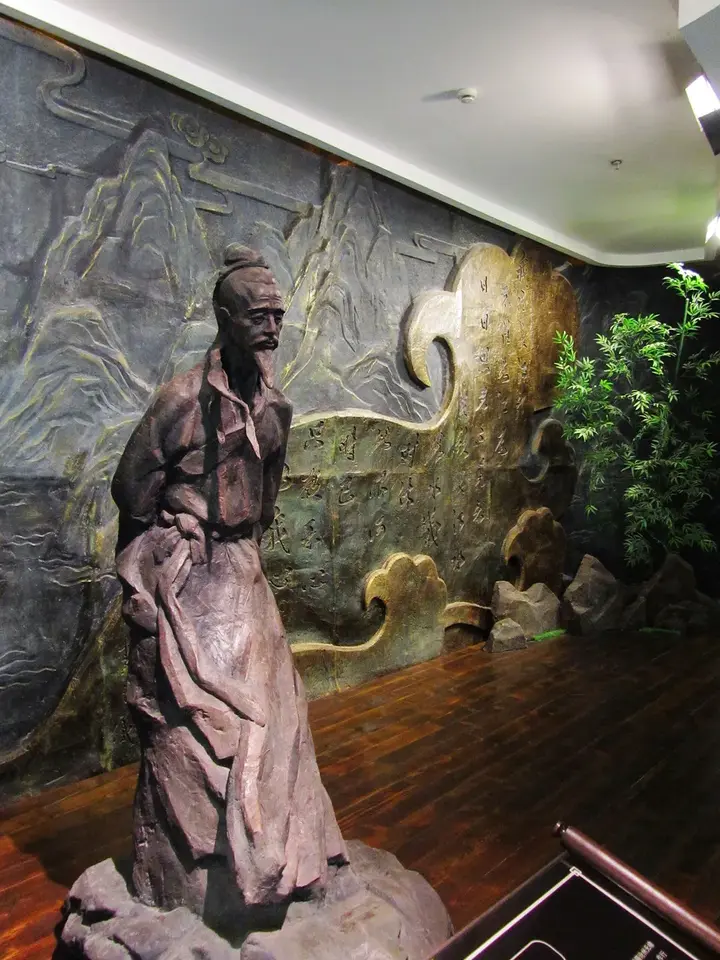
李之仪
Li Zhiyi (1048–1117), courtesy name Duanshu, style Guxi Jushi, was a native of Wudi in Cangzhou (modern Wudi, Shandong). He was an outstanding lyricist, prose writer, and epistolary master in the mid-to-late Northern Song dynasty, celebrated as one of the "Six Gentlemen of the Su School" alongside Huang Tingjian, Qin Guan, Chao Buzhi, Zhang Lei, and Chen Shidao. Born into an esteemed official clan, Li passed the imperial…
Li Zhiyi (1048–1117), courtesy name Duanshu, style Guxi Jushi, was a native of Wudi in Cangzhou (modern Wudi, Shandong). He was an outstanding lyricist, prose writer, and epistolary master in the mid-to-late Northern Song dynasty, celebrated as one of the "Six Gentlemen of the Su School" alongside Huang Tingjian, Qin Guan, Chao Buzhi, Zhang Lei, and Chen Shidao. Born into an esteemed official clan, Li passed the imperial examinations at age twenty. He served successively as Magistrate of Wanquan, military staff adviser along the Shaanxi-Gansu frontier under general Zhe Keshi, and envoy assistant to Goryeo. During the Yuanyou era, he gained the profound mentorship of Grand Councilor Fan Chunren and literary giant Su Shi. Following the resurgence of the New Policies faction during the Shaosheng and Chongning eras, Li was severely persecuted as a member of the Yuanyou party. For courageously penning the biographical chronicle of Fan Chunren without bowdlerizing historical facts, he was stripped of all rank, had his family property confiscated, and was subjected to assigned residence (bianguan) in Taiping Prefecture (modern Dangtu, Anhui). Amid bereavement and poverty, he found solace along the Guxi river, composing pure lyric poetry including the immortal masterpiece Divination Song ("I Live at the Head of the Yangtze River"), which captured eternal devotion through folk song naturalism.
Born into a distinguished bureaucratic family in Wudi, Cangzhou.
Attained the jinshi degree at age twenty, entering administrative service.
Appointed Magistrate of Wanquan County, earning public praise for administrative diligence.
Served as Secretary on the condolences mission to Goryeo, leaving inscriptions at Mount Xiaotang.
Joined Su Shi's inner literary circle in Kaifeng, gaining empire-wide renown alongside Huang Tingjian and Qin Guan.
Exiled to Vice Prefect of Yuanzhou as the New Policies faction launched reprisals against the Yuanyou group.
Penned the unvarnished biographical account of Fan Chunren; Cai Jing stripped him of office and banished him under assigned residence to Taiping Prefecture.
Suffered the consecutive deaths of his wife Hu Shuxiu and sons while living in destitute exile in Dangtu.
Restored to free residence under imperial amnesty; took the style Guxi Jushi and wedded the entertainer Yang Shu.
Passed away peacefully at his Guxi retreat in Taiping Prefecture at age seventy.
Li Zhiyi was born into an illustrious bureaucratic family in Cangzhou. His father, Li Qi, held the jinshi degree and served with high moral distinction as Court of Imperial Sacrifices Officer and Prefect of Taizhou. Inheriting a rigorous familial tradition, Li showed extraordinary brilliance in early youth, studying classical texts diligently at the Shanyang Academy in Chuzhou.
In 1067, at the youthful age of twenty, Li traveled to Kaifeng and successfully passed the imperial jinshi examination. In 1072, he took up his first regional post as judicial officer in Siming (modern Ningbo, Zhejiang), winning popular gratitude for his fair adjudication. In 1079, he was transferred to serve as Magistrate of Wanquan County in Hezhong Prefecture, where he reformed tax burdens and promoted community schools.
During the Yuanfeng era, Li journeyed to the arid northwestern border, serving as private secretary in the military headquarters of regional commander Zhe Keshi along the Fuyan frontier. Witnessing the grim realities of garrison life and barbarian warfare on the frontier, Li composed stirring border ballads that expanded his poetic vision beyond the narrow domestic themes of studio scholars.
In 1083, following the death of King Huizong of Goryeo, the Song court dispatched Left Reviewing Policy Adviser Yang Jinglue as imperial envoy of condolence. Knowing Li's impeccable integrity and literary talent, Yang petitioned the emperor to appoint Li as the diplomatic secretary for the mission. Journeying north through Shandong, Li inscribed five lines of regular script on the Han dynasty stone shrine at Mount Xiaotang in Changqing County, which survive to this day. Upon his return, he was appointed Compiler in the Bureau of Military Affairs in Kaifeng.
With the accession of Emperor Zhezong under the regency of Grand Empress Dowager Gao in 1086, conservative statesmen Sima Guang and Fan Chunren directed imperial policy, and literary titan Su Shi presided over the capital's cultural life. Having studied under Fan Chunren in his youth, Li entered into an affectionate mentorship with Su Shi. Su admired Li's dynamic brushwork and uninhibited essays, frequently trading verses and letters with him.
Under Su Shi's warm patronage, Li was embraced by the inner sanctum of the capital's literary elite. Alongside Huang Tingjian, Qin Guan, Chao Buzhi, Zhang Lei, and Chen Shidao, he was celebrated across the country as one of the "Six Gentlemen of the Su School". His personal letters and short lyric poems were treasured by court grandees and scholars alike for their effortless elegance.
Following the death of the Grand Empress Dowager in 1093, Emperor Zhezong took direct power and reinstated the reformist New Policies under Zhang Dun. The Yuanyou literati suffered wholesale political purges. Li Zhiyi was banished from the capital to serve as Vice Prefect in the remote border outpost of Yuanzhou, where he quietly maintained administrative diligence.
Under Emperor Huizong, Grand Councilor Cai Jing launched the vicious Chongning party proscriptions, engraving the names of over three hundred conservative scholars onto the Stone of Yuanyou Partisans. Following the death of his mentor Fan Chunren in 1102, Li faithfully composed the comprehensive biographical chronicle Fan Zhongxuan Gong Xingzhuang, detailing Fan's noble remonstrations and defense of upright officials. Cai Jing seized upon the text, accusing Li of slandering ancestral imperial reforms. Li was cashiered from all official rank, his family estate was seized, and he was marched under armed escort to assigned residence (bianguan) in the remote southern backwater of Taiping Prefecture (modern Dangtu, Anhui).
During his exile in Dangtu, calamity struck Li's household repeatedly. His devoted wife, Hu Shuxiu—granddaughter of Vice Commissioner of Military Affairs Hu Su—succumbed to the harsh conditions of destitute exile. Soon afterward, his eldest son and second son Li Yaohang died in rapid succession. Impoverished and isolated, Li lacked even the funds to purchase coffins for his beloved kin.
Living near an ancient Buddhist sanctuary along the Guxi river west of Dangtu city, he styled himself "Guxi Jushi". In his darkest hour, the local performer Yang Shu, deeply moved by his moral steadfastness, joined him in poverty. The two supported each other through hardship and married, subsequently having a son, Li Yaoguang.
In the late autumn of 1103, gazing out over the eastward surge of the Yangtze River at the ancient ferry of Guxi, Li poured his life's sorrows and eternal devotion into his transcendent ci poem, Divination Song (Bu Suan Zi: Wo Zhu Changjiang Tou). Under later imperial amnesties, Li was pardoned and lived out his final years along the scenic waters of Dangtu, passing away in 1117 at the age of seventy.
Li Zhiyi's enduring fame in Chinese literature rests preeminently upon his immortal lyric Divination Song: I Live at the Head of the Yangtze River (Bu Suan Zi), composed along the waters of Dangtu. In forty-five concise Chinese characters, the poem achieves an unsurpassed emotional resonance by channeling the directness of ancient Han folk ballads: "I live at the head of the Yangtze River, you live at its tail. Day after day I long for you but see you not, yet together we drink the Yangtze water. When will this river water cease to flow? When will this longing ever end? I pray only that your heart mirrors mine, and never betrays this mutual yearning."
Using the ceaseless eastward flow of the mighty river as an emblem of timeless romantic steadfastness, the poem discards ornamental artifice, attaining the pinnacle of aesthetic economy where "words have an end, but meaning is boundless; meaning is stated, yet feeling remains inexhaustible." It stands universally recognized as China's greatest riverine love poem.
In addition to lyrics, Li was widely acclaimed as one of the Northern Song's greatest writers of private letters (chidu) and essays. His personal correspondence and prose demonstrated sparkling wit, sharp intellectual acumen, and unstudied natural grace, inheriting the true spirit of Su Shi.
The Qing compilers of the Siku Quanshu observed in their imperial summary: "Li Zhiyi traveled in the circle of Su Shi; his prose possessed soaring divine momentum, frequently embodying the very style of Master Su." His fifty-volume Collected Works of Layman Guxi (Guxi Jushi Wenji) and twenty-volume sequel comprehensively gather his political memorials, personal epistles, funerary biographies, and verses, serving as an invaluable documentary treasury for researching mid-to-late Northern Song literary circles.
Li's historical legacy is defined equally by his fearless moral integrity. When the autocratic minister Cai Jing terrorized the court and suppressed free speech during the Chongning era, Li knowingly risked his life and career to record the historical truth of Fan Chunren's loyal service, composing the ten-thousand-character Biographical Chronicle of Lord Fan Zhongxuan (Fan Zhongxuan Gong Xingzhuang).
For refusing to alter a single character to curry favor with the ruling faction, Li suffered removal from official registers, property confiscation, and fifteen years of internal exile that claimed his entire family. Throughout this ordeal, he never bowed to Cai Jing's faction, epitomizing the unbending moral backbone of the Song Confucian gentleman.
Li made seminal contributions to the history of Song dynasty lyric theory. In his treatise Postscript to Wu Sidao's Small Lyrics (Ba Wu Sidao Xiaoci) and numerous prefaces, he articulated a distinct poetics for the song-lyric genre, emphasizing that irregular verse form possessed its own autonomous aesthetic logic and should never be treated as a mere trivial appendix to classical poetry.
In his critical appraisals of contemporaries, Li demonstrated acute discernment. He noted that while Liu Yong excelled at elaborate narrative exposition, his tone tended toward common vulgarity, and that Zhang Xian's lyrical wit lacked deep affective reserve. Li advocated returning to the subtle, unadorned emotional purity exemplified by Yan Shu and Ouyang Xiu, insisting that poets must strip away artificial cosmetic embellishments and directly express genuine internal nature, establishing a vital critical foundation for the elegant refinement of the Song lyric.
During his prolonged years of rustic exile in Dangtu, Li wandered among the lush mountains and rivers, visiting historical landmarks such as Li Bai's Shrine at Caishiji and the Xie Tiao Pavilion. He engaged in frequent poetic exchanges and lyrical harmonizations with prominent literati including He Zhu, Qin Guan, and Chao Chongzhi.
During the Southern Song, Magistrate Wu Fei of Taiping Commandery, deeply moved by Li's virtuous conduct and literary brilliance, commissioned the collection of his dispersed manuscripts, carving and printing the fifty-volume First Collection of Layman Guxi, ensuring his literary heritage endured as a lasting cultural symbol of Jiangnan literati tradition.
FIGURES ASSOCIATED WITH THIS DYNASTY