PROFILE
Li Yangbing (李阳冰, 721–785), courtesy name Shaowen (少温), was a native of Qiaojun (present-day Bozhou, Anhui) with ancestral origins in Pingji of Zhao Commandery (present-day Zhao County, Hebei), and an eminent calligrapher, philologist, and civil official of the Tang dynasty. Originating from the prestigious southern branch of the Li clan of Zhao Commandery, all five brothers in his household were celebrated for their refined literature and mastery of small seal script. During the Qianyuan era of Emperor Suzong's reign, Li served as Magistrate of Jinyun, where he governed with integrity and lightened tax burdens, leaving celebrated accounts of rain prayers and astute judicial rulings; in the second year of the Shangyuan era (761), he was transferred to serve as Magistrate of Dangtu. In the first year of the Baoying era (762), the ailing master poet Li Bai traveled to Dangtu to seek shelter under his care, entrusting his complete surviving manuscripts to him before passing away. Honoring this profound trust, Li Yangbing meticulously compiled, edited, and published the ten-volume collection Caotang Ji with a landmark preface, securing the literary legacy of the High Tang.
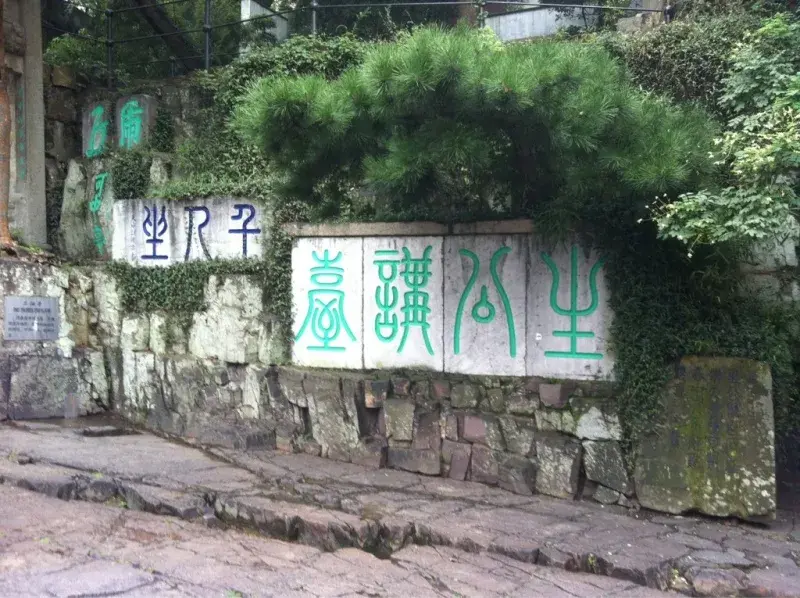
In the history of Chinese calligraphy, Li Yangbing is venerated as the foremost master of small seal script since Li Si of the Qin dynasty. For more than a millennium across the Han, Wei, and Jin periods, calligraphers focused almost exclusively on regular, cursive, and running scripts, leaving classical seal script largely abandoned. Committing himself to cultural revival, Li studied Li Si's Yishan Stele and absorbed ancient bronze and stone inscriptions, pioneering the lean, vigorous, and symmetrically balanced Jade Chopstick seal script (Yuzhu Zhuan). His masterpieces Record of the Three Tombs, Jinyun City God Temple Stele, and Hexagram Qian Inscription became monumental canons in calligraphic history. Collaborating closely with regular script master Yan Zhenqing, whose monumental steles frequently featured seal-script title headings carved by Li, their partnership was lauded as the "Two Paragons." In his later years, he served as Scholar in the Academy of Scholarly Worthies and Junior Director of the Directorate for the Palace Buildings, leaving a standard that governed seal script for a millennium.
- Courtesy Name
- Shaowen (少温)
- Date of Birth
- 721 (Tang Dynasty, 9th year of Kaiyuan)
- Date of Death
- 785 (Tang Dynasty, 1st year of Zhenyuan)
- Age at Death
- 65
- Ancestral Home
- Qiaojun (present-day Bozhou, Anhui)
- Highest Office
- Junior Director of the Directorate for the Palace Buildings (Jiangzuo Shaojian)
- Identity
- Master calligrapher, philologist, and Tang dynasty government official
BIOGRAPHY
Chronology
- 721 (Tang Dynasty, 9th year of Kaiyuan) | Birth into Aristocratic Family | Born into a distinguished scholarly lineage in Qiaojun, immersing himself in classical philology and ancient seal inscriptions from early youth.
- 758 (Tang Dynasty, 1st year of Qianyuan) | Governing Jinyun County | Appointed Magistrate of Jinyun, encouraging agriculture, praying for rain to relieve drought, and composing the Jinyun City God Temple Stele.
- 761 (Tang Dynasty, 2nd year of Shangyuan) | Magistrate of Dangtu | Reassigned as Magistrate of Dangtu; in the same year, his impoverished and ailing clansman Li Bai arrived seeking shelter.
- 762 (Tang Dynasty, 1st year of Baoying) | Compiling Caotang Ji | Entrusted with Li Bai's literary manuscripts on his deathbed, assembling them into the ten-volume collection Caotang Ji with a famous preface.
- 765 (Tang Dynasty, 1st year of Yongtai) | Inscription at Yiting | Traveled up the Yangtze River to Wuchang, gathering with Pei Yan, Pei Qiu, and Li Ju to inscribe the Yiting Inscription on river cliff faces.
- 772 (Tang Dynasty, 7th year of Dali) | Revising Shuowen Jiezi | Diligently researched classical etymology, producing an authoritative thirty-volume revised edition of Xu Shen's Shuowen Jiezi.
- 779 (Tang Dynasty, 14th year of Dali) | Court Appointments | Appointed Scholar in the Academy of Scholarly Worthies and Junior Director of the Directorate for the Palace Buildings in Chang'an.
- 785 (Tang Dynasty, 1st year of Zhenyuan) | Passing in the Capital | Passed away in Chang'an at the age of sixty-five, mourned deeply by calligraphers and scholars across the empire.
Life Course
Aristocratic Lineage and Devotion to Seal Script
Li Yangbing was born in the ninth year of the Kaiyuan era (721) in Qiaojun (present-day Bozhou, Anhui). His household belonged to the renowned southern branch of the Li clan of Zhao Commandery. His father, Li Yongmen, served as Magistrate of Hucheng, and the family maintained an unbroken tradition of high classical scholarship. All five brothers in the family attained acclaim for their prose and poetry and shared a common passion for small seal script, earning broad admiration among contemporary intellectuals. Endowed with exceptional intellect, Li absorbed the Confucian classics while demonstrating a rare fascination with pre-Qin epigraphy and paleography.
During the High Tang period, calligraphic fashions were dominated by regular and cursive scripts led by masters such as Ouyang Xun, Chu Suiliang, and Zhang Xu. Classical small seal script, by contrast, had languished in neglect since the Eastern Han dynasty, regarded by most scholars as an impenetrable ancient relic. Lamenting this cultural rupture, Li resolved to resurrect the orthodox tradition of Li Si. He took Li Si's Yishan Stele as his fundamental model, practicing day and night. Upon later encountering the Wu Jizha Epitaph, he unlocked the vital essence of ancient seal scripts, dedicating his life to reviving the forgotten art.
Magistrate of Jinyun and the Prayer for Rain
In the first year of the Qianyuan era (758) during the reign of Emperor Suzong, Li entered civil administration as Magistrate of Jinyun County in Chuzhou. Nestled within the rugged Kuocang Mountains of southern Zhejiang, Jinyun was impoverished and isolated. Li governed with incorruptible simplicity, cherishing the local population, developing irrigation works, promoting sericulture, and eliminating abusive local customs, earning universal devotion from officials and citizens alike.
In the summer of the second year of Qianyuan (759), a catastrophic drought struck Jinyun, leaving fields parched and crops withered for over forty consecutive days. Distressed by the people's suffering, Li led all county officials and townsfolk to the City God Temple to plead for rain, proclaiming before the deity that if refreshing rains did not fall within five days, he would burn the temple to atone for the populace. On the fifth day, torrential rains swept across the region, saving the harvest. Amid joyful celebrations, Li composed and carved the Jinyun City God Temple Stele in magnificent small seal script, preserving the benevolent episode for posterity.
Transfer to Dangtu and the Preservation of Caotang Ji
In the second year of the Shangyuan era (761), Li was reassigned as Magistrate of Dangtu. Commanding a strategic choke point along the lower Yangtze River, Dangtu possessed bustling water transport routes. Li reorganized public communications, stabilized grain prices, and cleared legal backlogs. That autumn, master poet Li Bai, having suffered exile to Yelang following the Prince of Yong rebellion and struggling with illness and poverty, journeyed from Xuancheng to seek protection under Li Yangbing. Recognizing Li Bai's peerless genius, Li welcomed his clansman warmly into his official residence, providing food, clothing, and medical care while sharing intimate conversations on poetry and art.
In the winter of the first year of the Baoying era (762), Li Bai's illness worsened. Knowing his end was near, the poet gathered all his scattered drafts and manuscripts and tearfully entrusted them to Li Yangbing. Following Li Bai's demise, Li undertook the monumental task of organizing the poet's legacy amid post-war devastation. He scoured the region for missing poems, verified authenticity, organized the works chronologically and by genre, and published the authoritative ten-volume collection Caotang Ji. In his famous preface, Li praised Li Bai as "standing solitary across a thousand years, unmatched throughout the ages," ensuring that the romantic masterpieces of the High Tang would endure through history.
Journeys in Jiangdong and the Yiting Inscriptions
During the Guangde and Yongtai eras, Li traveled widely across the Yangtze and Huai river valleys. In the first year of the Yongtai era (765), he sailed upriver from Dangtu to ancient Wuchang (present-day Ezhou, Hubei), gathering at the foot of Mount Huanghu beside the Yangtze with renowned scholars Pei Yan, Pei Qiu, and clerical script master Li Ju. Sharing deep literary rapport, Pei Yan constructed a pavilion overlooking the river, naming it Yiting. The companions invited Li Yangbing to inscribe the preface in elegant Jade Chopstick seal script, while Pei Qiu drafted the inscription and Li Ju engraved it in robust clerical script. This cliffside monument, combining seal script, clerical script, and landscape prose, became an enduring treasure of Tang epigraphy.
Li's calligraphic fame spread rapidly throughout the southeastern provinces. In the seventh year of the Dali era (772), his relative Li Gong, serving as Proofreader and Investigating Censor, journeyed to Fujian and requested Li Yangbing to write the Prajna Platform Inscription (Banruotai Ming). Engraved upon the sheer rock face of Mount Wushi in Fuzhou, its monumental characters stood as the most celebrated Tang stone carving in coastal southeastern China.
Academician at Court and Final Years in Chang'an
During the Dali era, owing to his unrivaled reputation in calligraphy and paleography, the imperial court summoned Li to the capital, appointing him Scholar in the Academy of Scholarly Worthies. Within the imperial archives, Li collated secret palace libraries while conducting exhaustive research on Xu Shen's Han-dynasty dictionary Shuowen Jiezi. Correcting corruptions and missing characters accumulated over centuries, he produced a thirty-volume revised edition that circulated widely among scholars, laying foundational groundwork for Tang philology.
Under Emperor Dezong, Li was elevated to Junior Director of the Directorate for the Palace Buildings (Jiangzuo Shaojian), holding the rank of fourth grade and supervising the maintenance of imperial ancestral temples, palaces, and ceremonial apparatus. In his advanced years, requests for his calligraphy arrived incessantly, and his brushwork attained peak maturity and restrained power. In the first year of the Zhenyuan era (785), Li passed away peacefully at his Chang'an residence at the age of sixty-five, mourned with profound reverence by scholars and epigraphers across the empire.
Major Achievements
Revival of Small Seal Script and the Jade Chopstick Standard
Prior to Li Yangbing, seal script had fallen into near-total obsolescence during the Tang dynasty. Following Li Si's creation of small seal script to unify the written script of Qin, Chinese writing evolved through the clerical transition of the Han dynasty and the emergence of regular and cursive scripts in the Wei-Jin era. Literati regarded small seal script as an esoteric relic, abandoning it not only in daily administration but also on stone monument headings, which were routinely executed in Han clerical or regular script. Li Yangbing single-handedly reversed this decline, inaugurating the second golden age of small seal script.
Inheriting the rigorous symmetry and balanced architecture of Qin seals, Li introduced revolutionary innovations in brush technique. Breaking free from the rigid, static character of ancient stone inscriptions, he made his linear forms sinuous, flowing, and graceful, while imbuing delicate curves with immense tensile strength, creating the celebrated Jade Chopstick seal script (Yuzhu Zhuan). Named for lines as uniform, smooth, and rounded as jade chopsticks, critics described his brushwork as resembling "silkworm silk hiding an iron core," achieving a supreme pinnacle in classical linear aesthetics.
Li's surviving masterpieces represent absolute pinnacles of epigraphic art. Record of the Three Tombs exhibited rigorous structural discipline and towering vigor, serving as the foundational copybook for subsequent generations; Jinyun City God Temple Stele manifested spirited grandeur; Hexagram Qian Inscription displayed lean, penetrating force; and his cliff carvings at Prajna Platform revealed majestic monumentality. Tang critic Lu Zong concluded: "Across three hundred years of the Tang, Li Yangbing alone reigns supreme in seal script." The Song-dynasty imperial catalog Xuanhe Shupu lauded him as "possessing peerless seal calligraphy, proclaiming himself the reincarnation of Cangjie," cementing his status alongside Li Si as the "Two Lis" of seal script.
Compiling Caotang Ji and Preserving High Tang Poetry
In Chinese literary and cultural history, Li Yangbing's enduring contribution lies in his preservation and editing of the surviving manuscripts of High Tang master Li Bai. Following the An Lushan rebellion, Li Bai had been implicated in the Prince of Yong's rebellion and exiled, spending his twilight years wandering in poverty. His manuscripts were scattered across the war-torn empire, and without Li Yangbing's timely intervention, many masterpieces would have perished.
When Li Bai entrusted his literary legacy to him on his deathbed, Li accepted the responsibility with profound solemnity. While attending to the dying poet, he searched tirelessly across Dangtu, Xuancheng, Jinling, and neighboring regions for scattered poems and copies held by acquaintances. Following Li Bai's death, Li worked day and night in his magistrate yamen, eliminating spurious works and categorizing poems chronologically into the ten-volume collection Caotang Ji.
His preface to the collection stands as both an essential historical record and a masterpiece of literary criticism. Li portrayed the poet's extraordinary talent, tragic struggles, and untamed spirit with moving lyricism, declaring that "in a thousand years, he stands alone without peer." This judgment established the foundational consensus regarding Li Bai's status in world literature, ensuring that the crowning glory of Tang romantic poetry survived intact.
Collaboration with Yan Zhenqing and the Two Paragons
In the calligraphic history of the mid-Tang, the deep friendship and artistic partnership between Li Yangbing and regular script titan Yan Zhenqing became legendary. While Yan dominated calligraphic circles with his muscular, upright, and monumental regular script (Yan Style), Li held undisputed supremacy in sinuous and archaic seal script. Although their scripts differed, both masters shared a common artistic mission: combating the effeminate and superficial tendencies of earlier court styles through structural vigor and moral gravity.
Across numerous imperial and public stele projects, Yan composed the commemorative texts and inscribed them in magnificent regular script, while formally inviting Li to execute the seal-script title headings at the top of the monuments. In classical stele protocol, the head of the stele represented imperial majesty and artistic crowning. Yan's regular script stood like a righteous statesman in the ancestral court, while Li's seal heading coiled like dragons soaring through mist. Contemporary literati acclaimed their combined works as "Yan's calligraphy and Li's seal script," honoring them as the "Two Paragons."
This historic convergence of styles transformed mid-Tang artistic sensibilities. Alongside Zhang Xu's wild cursive script, Yan's regular script and Li's seal script established a tripartite pinnacle of mid-Tang calligraphy, fundamentally reshaping aesthetic theory across the Song, Yuan, Ming, and Qing dynasties.
Philological Scholarship on Shuowen Jiezi
Beyond his calligraphic artistry, Li made foundational contributions to Chinese paleography and etymology. Since Xu Shen composed the Shuowen Jiezi in the Eastern Han dynasty to establish the 540-radical classification system, the text had suffered severe corruptions, variant substitutions, and omissions across centuries of manual copying. As linguistic habits evolved, seal characters increasingly diverged from explanatory glosses, impeding scholarly comprehension of pre-Qin classics.
While serving in the Academy of Scholarly Worthies, Li assembled rare manuscripts from the imperial archives to conduct systematic textual criticism on Xu Shen's treatise. Deploying his profound philological erudition, he corrected distorted seal forms, rectified vulgar variants, reorganized radicals, and elucidated historical character formations. Over several years of meticulous research, he produced the thirty-volume revised edition Kanding Shuowen Jiezi, sparking renewed interest in classical epigraphy and lexicography throughout the Tang empire.
Although Song scholar Xu Xuan later sought to restore Xu Shen's original readings, he acknowledged Li's pioneering role in analyzing character components and rectifying vulgar errors. Li's philological work bridged the preservation of ancient scripts across the Five Dynasties wars and directly inspired the flowering of Song epigraphical studies.
Benevolent Governance in Regional Posts
Although primarily remembered for his art and literature, Li consistently demonstrated the integrity and dedication of an upright magistrate. Whether in Jinyun of Chuzhou or Dangtu of Taiping, he remained incorruptible, defied influential local clans, prioritized tax relief, cleared false accusations, and developed irrigation networks, leaving a legacy of benevolent governance across Jiangnan.
His celebrated prayer for rain during the severe drought in Jinyun was not mere superstition, but an act of political leadership designed to steady public morale and organize communal relief, backed by his solemn vow to burn the shrine if rain failed to fall. Local gazetteers also recorded his sharp judicial insight in solving complex theft cases and settling disputed land claims. In gratitude, the people of Jinyun preserved his Jinyun City God Temple Stele through successive dynasties, maintaining the stone monument intact as a testament to his benevolent rule.
Related Figures
- Li Bai: Celebrated High Tang poet and clansman. In his final years, he sought refuge with Li Yangbing in Dangtu and entrusted his lifetime manuscripts to him; Li compiled and prefaced Caotang Ji.
- Yan Zhenqing: Monumental Tang master of regular script and prominent statesman. He maintained close creative collaboration with Li, producing celebrated steles renowned as the "Two Paragons."
- Zhang Xu: Renowned master of cursive script. He engaged in mutual artistic critique with Li Yangbing, jointly establishing the zenith of Tang calligraphy.
- Li Yongmen: Father of Li Yangbing. Served as Magistrate of Hucheng, fostering a family tradition of classical learning and small seal script.
- Duan Chengshi: Late Tang scholar and author. Extensively praised Li's calligraphic achievements and epigraphical legacy in works such as Youyang Zazu.
Historical Evaluations
- Dou Gao: "Inheriting family scholarship, Master Li of Zhao Commandery rivaled the Yishan Stele and joined the company of Confucius. Profound in character studies, he mastered ancient and modern scripts. Moving like dragons and tigers, sharp, robust, and heroic, discerning scholars called him the reincarnation of Cangjie." (Rhapsody on Calligraphy)
- Lu Zong: "Across the three hundred years of the Tang dynasty, Li Yangbing alone reigned supreme in seal script." (Continued Calligraphy Critique)
- Zhu Changwen: "Yangbing's small seal script was profound, ancient, and spiritually transcendent, ascending to the divine class alongside Yan Zhenqing and Zhang Xu." (Continued Calligraphy Assessment)
- Xuanhe Shupu: "Li Yangbing's seal calligraphy was extraordinary, and he styled himself the reincarnation of Cangjie. He revived ancient methods, and subsequent students of seal script all took him as their master; since Li Si, he stands alone across a thousand years."
- Kang Youwei: "Yangbing triumphed through lean vigor, inaugurating the Jade Chopstick school; his brushwork was rigorously disciplined, yet also sparked later stylistic steepness." (Expanded Bilateral Paddles of Calligraphy Art)
Related Entries
- Sanfen Ji
- Jinyun Chenghuangmiao Bei
- Qian Gua Ming
- Caotang Ji
- Yan Zhenqing
- Li Bai