Birth in Sichuan
Born into an illustrious scholar-gentry lineage in Jingyan County, Longzhou, inheriting deep Confucian scholarship.
李心传
Li Xinchuan (李心传, 1166–1243), courtesy name Weizhi (微之), alternate courtesy name Bowei (伯微), and pseudonym Master Xiuyan (秀岩先生), was a native of Jingyan in Longzhou (present-day Jingyan County, Leshan, Sichuan Province). He was an illustrious Southern Song historian, institutional encyclopedist, and textual critic, universally recognized as one of the greatest chronological historians in imperial China. Born into an esteemed…
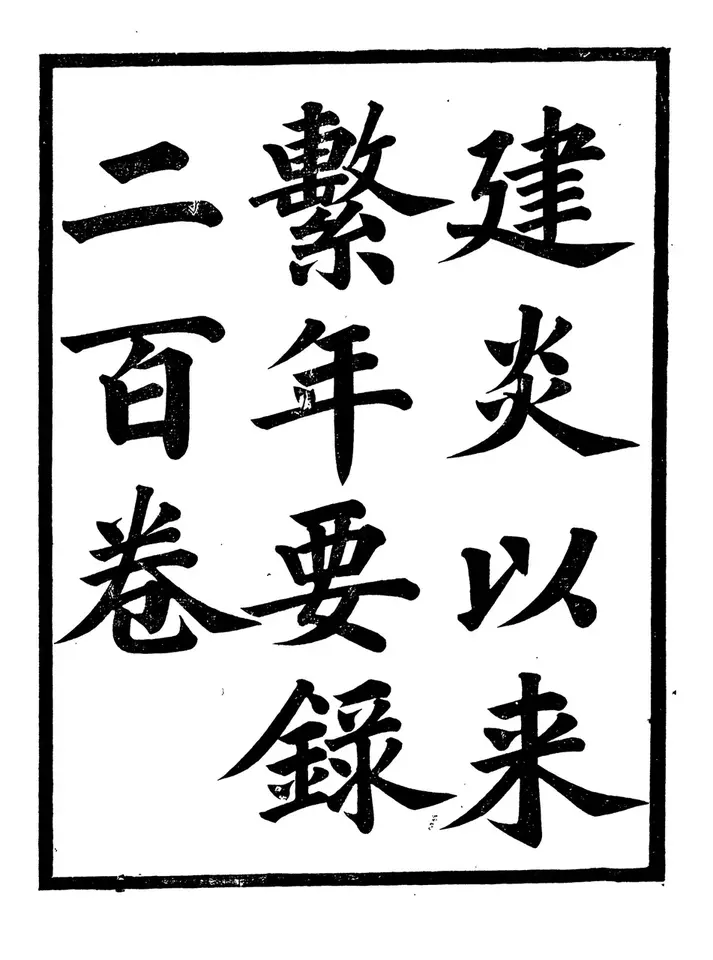
Li Xinchuan (李心传, 1166–1243), courtesy name Weizhi (微之), alternate courtesy name Bowei (伯微), and pseudonym Master Xiuyan (秀岩先生), was a native of Jingyan in Longzhou (present-day Jingyan County, Leshan, Sichuan Province). He was an illustrious Southern Song historian, institutional encyclopedist, and textual critic, universally recognized as one of the greatest chronological historians in imperial China. Born into an esteemed academic household whose father Li Shunchen served as Vice Minister of Court Ceremonials and studied alongside Zhu Xi, Li Xinchuan failed the provincial examination in 1195 and permanently renounced civil examination pursuits. Withdrawing to his ancestral village for over three decades, he dedicated his life to researching the dynastic history of the Southern Song. Meticulously cross-referencing central archival registers, imperial diaries, private collections, and stele inscriptions, he compiled the monumental 200-volume chronological masterpiece Chronological Summary of Events Since the Jianyan Era (Jianyan Yilai Xinian Yaolu) and the 40-volume institutional compendium Miscellaneous Court and Commoner Records Since the Jianyan Era (Jianyan Yilai Chaoye Zaji). In his later years, recommended by twenty-three eminent statesmen including Wei Liaoweng and Cui Yuzhi, he was awarded an honorary metropolitan degree by Emperor Lizong, appointed to the National History Institute to compile imperial annals, and eventually promoted to Vice Minister of Works. His rigorous philological methodology and rich citation of primary sources established an unsurpassed empirical benchmark for Chinese historiography.
Born into an illustrious scholar-gentry lineage in Jingyan County, Longzhou, inheriting deep Confucian scholarship.
Failed the provincial examination in Chengdu; disillusioned with rote exam pedantry, vowed never to seek exam degrees again.
Remained secluded in his ancestral study for over thirty years, collecting archives to write contemporary history.
Formulated the basic manuscript of Jianyan Yilai Xinian Yaolu, arranging the thirty-six years of Gaozong's reign.
Completed Part One (twenty fascicles) of Jianyan Yilai Chaoye Zaji, methodically tracing Song institutional changes.
Twenty-three prominent court ministers, including Wei Liaoweng and Cui Yuzhi, jointly petitioned the throne to employ him.
Awarded an honorary jinshi degree by Emperor Lizong; summoned to the capital as Collator in the Historiography Institute.
Promoted to Vice Minister of Works; dismissed after fearlessly remonstrating against palace extravagance during a severe famine.
Resided in Chaozhou under nominal temple sinecures, completing the philosophical treatise Record of the Mandate of the Way (Daoming Lu).
Formally granted retirement and passed away peacefully at age seventy-eight, revered as an exemplar of documentary history.
Li Xinchuan was born in 1166 in Jingyan County, Longzhou (modern Leshan, Sichuan Province), into a prominent lineage of Confucian scholar-officials. His father, Li Shunchen, received his metropolitan degree in 1166, possessed profound expertise in the Classic of Changes and the Spring and Autumn Annals, and rose to Vice Minister of Court Ceremonials. A close intellectual companion of grand Neo-Confucian philosophers Zhu Xi and Zhang Shi, Li Shunchen maintained a celebrated academic reputation throughout western China. Raised in this scholarly home, Li Xinchuan absorbed rigorous philological training from his earliest youth.
Like other young men of the scholar-official class, Li Xinchuan prepared for the civil service examinations. In 1195, at the age of thirty, he sat for the provincial examinations in Chengdu. However, the contemporary examiners favored superficial parallel prose and ornate rhetoric over substantive historical and institutional acumen, causing Li Xinchuan to fail. Reflecting upon this setback in his ancestral library, he realized that contemporary examinations had degraded into stepping-stones for petty personal advancement. Emulating ancient masters Sima Qian and Sima Guang, he resolved to abandon secular ambitions and devote his life to writing a monumental, objective dynastic history for posterity.
Having taken this solemn vow, Li Xinchuan withdrew completely from the examination halls. He built a quiet retreat in Jingyan, styled himself "Master Xiuyan," and buried himself within the vast ocean of historical archives.
In the wake of the Jurchen invasions and the establishment of the Southern Song court, historical records concerning the reign of Emperor Gaozong were fractured across multiple provinces. While the court maintained daily chronicles and imperial diaries, these official registers suffered from political suppression and factional distortion, while private memoirs teemed with unverified hearsay. Li Xinchuan made it his life mission to reconstruct empirical historical truth.
Throughout three decades of voluntary seclusion in rural Sichuan, Li Xinchuan rarely stepped beyond his village gates. Mobilizing his father's extensive scholarly network, he purchased and transcribed central government edicts, court gazettes, astronomical records, ministerial memorials, and frontline military reports. He voraciously collected private literary anthologies, family genealogies, and tomb epitaphs from across the empire.
Li Xinchuan practiced extraordinarily rigorous textual criticism. Whenever he obtained a text, he collated it against multiple recensions to detect discrepancies and deliberate fabrications. Whenever chronological dates, administrative titles, or geographical coordinates conflicted, he personally researched and rectified the error, annotating the passages with red and black inks. Working without official stipend, his unrelenting dedication resulted in the completion of his monumental 200-volume Jianyan Yilai Xinian Yaolu and his 40-volume Jianyan Yilai Chaoye Zaji, winning acclaim throughout southern scholarly circles.
During the Baoqing reign of Emperor Lizong, reform-minded scholar-officials assumed control of the central administration. Leading Neo-Confucian statesmen, including Wei Liaoweng, Cui Yuzhi, Xu Yi, and Zhen Dexiu, recognized that Li Xinchuan's historical scholarship was peerless in the empire. At that juncture, the imperial court was preparing to compile the Imperial Annals of the Four Restoration Reigns and the Thirteen Dynasties Institutional Compendium, urgently requiring an experienced master of dynastic precedents.
In 1226, Wei Liaoweng and twenty-two senior ministers submitted a joint memorial to Emperor Lizong, praising Li Xinchuan for spending thirty years in seclusion to construct an unshakeable edifice of documentary history. Emperor Lizong granted an imperial dispensation, conferring upon Li Xinchuan an honorary jinshi degree and summoning him to Lin'an.
Arriving in the capital, Li Xinchuan was appointed Collator in the Historiography Institute, quickly advancing to Assistant in the Court of Imperial Clan Affairs and Editorial Compiler in the National History Institute. At the central archives, he obtained full access to the vast imperial libraries, using primary government rolls to cross-check and enrich his manuscripts. He served as the primary compiler of the Imperial Annals of the Four Restoration Reigns and the Thirteen Dynasties Institutional Compendium, establishing an unprecedented standard of factual accuracy that purged official history of partisan flatteries.
During the Duanping era, Emperor Lizong launched the "Duanping Restoration," elevating Li Xinchuan to Vice Minister of Works while retaining his post as Senior Historiographer. Although an elderly scholar steeped in historical archives, Li Xinchuan possessed an unyielding moral conscience and deep empathy for common people.
In 1236, severe droughts devastated the Huai and Yangtze river valleys, causing crops to wither and starving refugees to wander the highways. Drawing upon his comprehensive analysis of historical dynastic collapses, Li Xinchuan submitted a searing memorial to Emperor Lizong. He pointed out that devastating famines invariably follow protracted warfare, emphasizing that excessive military conscription, extortionate grain procurement (hedi), pervasive administrative corruption, and extravagant palace construction projects had alienated the population. He demanded that the emperor practice moral introspection, suspend ostentatious architectural undertakings, and relieve the crushing tax burdens imposed on rural farming households.
This fearless memorial struck directly at entrenched palace factions and court grandees. Enraged by his direct speech, influential ministers accused Li Xinchuan of exploiting natural disasters to slander the administration. Maintaining complete equanimity, Li Xinchuan resigned from his vice-ministerial post, receiving a nominal temple sinecure and being relocated to coastal Chaozhou in Guangdong.
Residing in coastal Chaozhou, Li Xinchuan showed no trace of bitterness. In his tranquil southern retreat, he devoted his twilight years to synthesizing his philosophical and philological discoveries. He compiled his celebrated philosophical work Record of the Mandate of the Way (Daoming Lu), his critical philological masterwork Rectifying Errors in Ancient Accounts (Jiuwen Zhengwu), and specialized commentaries on the Classic of Changes and ancestral ritual codes.
In 1243, the imperial court recognized his towering academic contributions and formally granted him retirement with high administrative honors. In that same year, the venerable historian passed away peacefully at his Chaozhou residence at the age of seventy-eight.
The news of his death was met with profound grief among scholars across the empire. The thousands of fascicles he left behind served not only as the primary source for the official History of Song compiled during the Yuan Dynasty, but have remained the indispensable compass for every modern scholar investigating Song Dynasty history worldwide.
Li Xinchuan's crowning historical monument was his single-handed compilation of the 200-volume chronological masterpiece Chronological Summary of Events Since the Jianyan Era (Jianyan Yilai Xinian Yaolu). In the annals of Chinese chronological history, its stature is second only to Sima Guang's Comprehensive Mirror for Aid in Governance, universally recognized as the absolute summit of private Song historiography.
The work chronicles the thirty-six complex years of the early Southern Song Dynasty, from Emperor Gaozong's accession in 1127 to his abdication in 1162. Organized by year, month, and day, it encompasses central politics, military defense, diplomatic treaties with the Jurchens, factional debates, fiscal reforms, and popular rebellions.
The supreme distinction of the text lies in its rigorous philological architecture, citing hundreds of official and private texts. Whenever transmitted records diverged, Li Xinchuan appended double-column interlinear notes directly beneath the text, transcribing conflicting variants and demonstrating the analytical rationale behind his chronological determinations. This pioneered the methodological standard of textual collation in Chinese historical scholarship.
In institutional history and dynastic precedent, Li Xinchuan authored the monumental 40-volume compendium Miscellaneous Court and Commoner Records Since the Jianyan Era (Jianyan Yilai Chaoye Zaji), published in two twenty-volume sections.
The work meticulously traces the evolution of Southern Song ceremonial codes, administrative ranks, military structures, grain transport, salt and tea monopolies, and civil service examination statutes. Organized under precise categories—including the Court, Ceremonial Rites, Bureaucratic Offices, Fiscal Resources, and Military Defense—each institutional reform is documented with its precise date and legal decree.
The work not only illuminates the functional mechanics of the Southern Song fiscal and military bureaucracies, but also records invaluable behind-the-scenes political maneuvers, standing as an indispensable historical encyclopedia of imperial Chinese institutional history.
Li Xinchuan was a seminal pioneer of Chinese historical textual criticism (kaojuxue). His fifteen-volume treatise Rectifying Errors in Ancient Accounts (Jiuwen Zhengwu) marked a watershed in critical historical analysis.
Observing that private memoirs, anecdotal accounts, and family genealogies routinely exaggerated ancestral virtues and fabricated events to defame political rivals, Li Xinchuan subjected the works of nearly one hundred prominent Song figures to relentless philological cross-examination.
Employing official state papers to critique private memoirs, imperial court diaries to verify stele inscriptions, and administrative geography to test chronological plausibility, he systematically exposed hundreds of fabrications and errors. His empirical methods directly anticipated the methodology of the Qing Dynasty Qianjia philological school led by Qian Daxin and Wang Mingsheng.
Li Xinchuan also made enduring contributions to Chinese intellectual history and official historiography. Inheriting his father's close bond with Zhu Xi, he authored the five-volume Record of the Mandate of the Way (Daoming Lu), methodically tracing the transmission of the Neo-Confucian Way (daotong) from Zhou Dunyi and the Cheng brothers to Yang Shi, Zhu Xi, and Zhang Shi.
During his tenure in the National History Institute, he served as chief compiler for the Imperial Annals of the Four Restoration Reigns and the extensive Thirteen Dynasties Institutional Compendium (Shisanchao Huiyao). He injected his private scholarly rigor into official historiography, eliminating partisan eulogies.
When the Yuan Dynasty court compiled the official History of Song, the compilers adopted Li Xinchuan's factual framework almost wholesale. The Basic Annals of Emperor Gaozong and the biographies of early Southern Song statesmen were transcribed in large part directly from his writings, leaving an indelible imprint upon world historiography.
FIGURES ASSOCIATED WITH THIS DYNASTY