Birth in Qingjian
Born into a prominent military clan in northern Shaanxi, excelling in archery and strategy.
李显忠
Li Xianzhong (李显忠, 1109–1177), originally named Li Shifu (李世辅), courtesy name Junxi (君锡), was a legendary anti-Jurchen general and paramount military commander of the Guizhengren (returned southerners) during the early Southern Song (南宋) dynasty. Born into a hereditary military family in Qingjian, Suide Army, he enlisted at age seventeen to fight against Western Xia and the Jin dynasty. Following the fall of…
Li Xianzhong (李显忠, 1109–1177), originally named Li Shifu (李世辅), courtesy name Junxi (君锡), was a legendary anti-Jurchen general and paramount military commander of the Guizhengren (returned southerners) during the early Southern Song (南宋) dynasty. Born into a hereditary military family in Qingjian, Suide Army, he enlisted at age seventeen to fight against Western Xia and the Jin dynasty. Following the fall of Shaanxi, he feigned allegiance to the Jin and the puppet Qi regime, rising to Prefect of Tongzhou while secretly organizing resistance. In 1138, he engineered the capture of the Jin marshal Salihe in Tongzhou, intending to escort him to the Song court, but when blocked at the swollen Luo River by pursuing cavalry, he broke an arrow as an oath, releasing Salihe on the condition that Tongzhou civilians be spared. In retaliation, Jin forces executed over two hundred members of Li's clan. Fleeing into Western Xia to seek reinforcements, Li gathered forty thousand loyalist troops and led them south across the Qinling mountains into Sichuan in 1139, where Emperor Gaozong commended his devotion and bestowed upon him the name Li Xianzhong. Over three decades, he distinguished himself in the defense of Shunchang and Caishi. In 1163, Emperor Xiaozong appointed Li supreme commander of the Longxing Northern Expedition, where he took Lingbi and Suzhou, routing Jin garrison armies. However, professional jealousy and insubordination by vice commander Shao Hongyuan precipitated the setback at Fuli. In later life, Li was elevated to Grand Commandant and Opening Office Equal to the Three Councils, passing away at age sixty-nine in 1177, being posthumously honored as Grand Preceptor, Prince of Qi, and given the posthumous name Zhongwu.
Born into a prominent military clan in northern Shaanxi, excelling in archery and strategy.
Enlisted at age seventeen, leading frontline charges against Western Xia cavalry.
Detained following the loss of Shaanxi, served as garrison officer while seeking an opportunity to return to Song.
Captured Jin marshal Salihe at Tongzhou; family of two hundred slaughtered after the escape attempt was thwarted.
Led forty thousand troops south through Western Xia into Sichuan, where Emperor Gaozong bestowed the name Xianzhong.
Served under Liu Qi to repel Wuzhu's invasion, promoted to Military Commissioner for battlefield merits.
Repulsed Wanyan Liang's crossing attempts along the Yangtze River, securing the southern capital.
Commanded the northern offensive, storming Lingbi and Suzhou before being undermined by Shao Hongyuan at Fuli.
Appointed Military Commissioner of Ningwu Army and Prefect of Jiankang, overseeing river defenses.
Passed away in his capital residence at age sixty-nine, posthumously elevated to Grand Preceptor and Prince of Qi.
Li Xianzhong was born into a hereditary military family in Qingjian County, Suide Army, where his father Li Yong served as an esteemed border commander. Growing up amidst northern frontier garrisons, Li developed a robust frame, acute eyesight, and the rare ability to shoot heavy crossbows from horseback with either hand. When Jin armies invaded the central plains at the end of the Xuanhe era, the seventeen-year-old Li followed his father to the front, distinguishing himself in numerous engagements against Western Xia and Jin cavalry.
In 1130, Jin forces swept across the Shaanxi plain following the Song reversal at Fuping. Cut off from southern lines, Li and his father accepted nominal commissions under the Jin and puppet Qi regimes to preserve their troops. Serving as assistant military supervisor in Fuyan, Li repulsed multiple Western Xia incursions, eventually rising to Prefect of Tongzhou. However, Li remained steadfast in his devotion to the Song dynasty, maintaining secret ties with Guanzhong loyalist networks.
In 1138, the Jin supreme regional commander Salihe visited Tongzhou on an inspection tour. Recognizing an opportunity, Li positioned concealed guards inside his official residence. When Salihe became intoxicated during a banquet, Li drew his blade, bound the marshal, and placed him in a carriage, racing south toward the Luo River ferry in hopes of delivering him to the Song court.
Arriving at the river, Li found the crossing swollen by floodwaters and the ferry boats missing. Massed Jin cavalry surrounded the area. Realizing he could not escort his prisoner south, Li stood on a high bluff and declared to Salihe: I spare your life today, but you must swear upon heaven never to harm the populace or garrison of Tongzhou! Salihe broke an arrow as an oath, and Li released him, cutting his way through the encirclement alone.
Infuriated by the humiliation, the Jin court broke the oath, executing over two hundred members of Li's family in Tongzhou, including his wife, children, and kin, an atrocity that filled the people of Shaanxi with grief.
Grief-stricken by the massacre of his house, Li broke through enemy lines into Western Xia. Appealing to the Xia regent and chancellor, he recounted the perfidy of the Jin and requested troops to avenge his family. While Western Xia appointed him to a military command, Li realized that Xia leaders were opportunistic and unreliable.
In 1139, Li rallied his Shaanxi subordinates and loyalist fighters, assembling an army of forty thousand cavalry and infantry with ten thousand warhorses. Striking south from Yanan, he fought through thousands of li across the Qinling mountains into Sichuan, arriving at Chenxian to place himself under Sichuan Pacification Commissioner Wu Jie.
Overjoyed, Wu Jie rode out ten li to welcome him. When Emperor Gaozong received reports of Li's sacrifice and return, he showered the commander with honors, granting him the imperial surname Zhao, bestowing the personal name Xianzhong (Displaying Loyalty), and naming him Commander-in-Chief in the Bureau of Military Affairs.
In 1140, when Wuzhu breached the peace accord to invade the south, Li served as Front Army Commander under Liu Qi at Shunchang, launching night cavalry raids against Jin depots. The following year, he was invested as Military Commissioner of the Baoxin Army, serving as a frontline anchor in Huainan.
In 1161, Wanyan Liang mobilized sixty thousand troops to invade the Southern Song, threatening to cross the Yangtze. Li was appointed Huainan Recruitment Commissioner, rushing to reinforce Jiankang and Caishi.
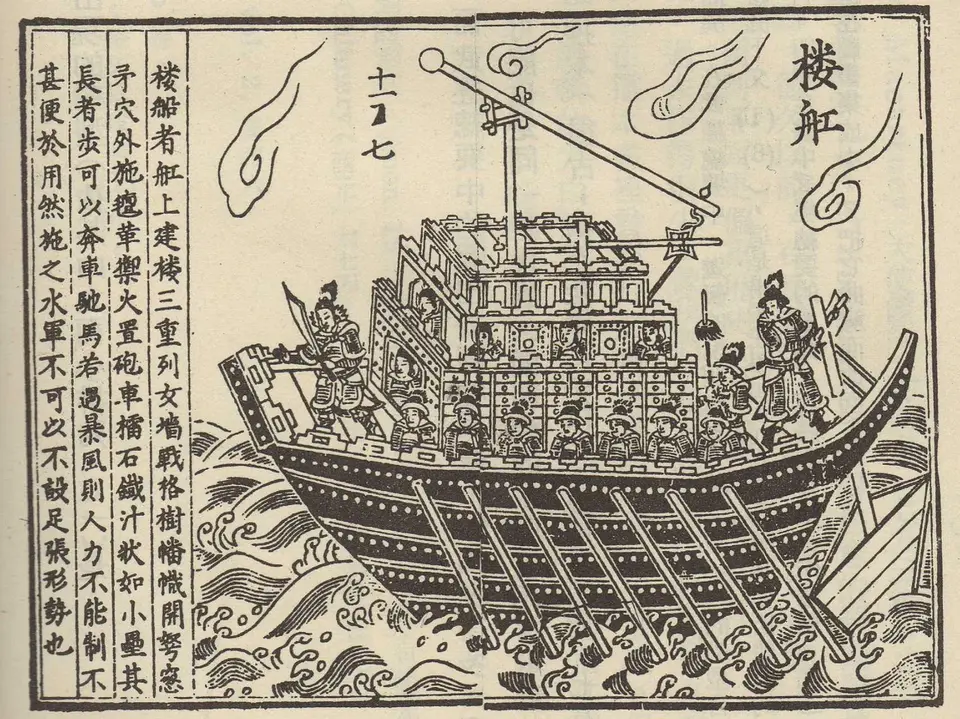
Positioning his fleet along the northern shore, Li coordinated with civil official Yu Yunwen to bombard enemy assault boats with thunderbolt trebuchets and heavy crossbow volleys, shattering Wanyan Liang's crossing attempts and preserving the dynastic heartland. Emperor Gaozong composed an inscription on an imperial fan praising his valor.
Following the accession of Emperor Xiaozong, who was determined to recover the northern territories, Li was appointed supreme frontline commander of the Longxing Northern Expedition in May 1163, with Shao Hongyuan serving as vice commander over an army of one hundred and thirty thousand men.
Advancing rapidly, Li struck the fortified city of Lingbi, breaching the gates with catapults and capturing four thousand enemy combatants. He then laid siege to the major stronghold of Suzhou, personally directing assault ladders amidst heavy arrow fire until the city was taken, prompting local elders to welcome the Song army with tears of joy.
However, the expedition was soon crippled by internal discord. Vice commander Shao Hongyuan, jealous that a northern returnee held supreme command and monopolized credit, refused to support Li, openly spreading defeatist rumors and holding back supplies.
When the Jin army counterattacked Suzhou with over one hundred thousand cavalry, Li fought outside the city walls, repelling multiple charges. When he urgently requested reinforcements from Shao, the vice commander sneered: In this sweltering heat, why should we exhaust ourselves fanning another man's fire?
With supplies cut off and the vice commander refusing to engage, disordered rearguard units broke into a general retreat at Fuli. Li fought tenaciously to cover the withdrawal, but the failure of the expedition gave the peace faction at court the pretext to demote him to Prefect of Guozhou.
Emperor Xiaozong soon recognized that the defeat was not Li's fault, reappointing him Military Commissioner of Ningwu Army and Prefect of Jiankang. During the Qiandao era, Li was elevated to Grand Commandant and Opening Office Equal to the Three Councils. In his retirement, he continued to submit passionate memorials urging the recovery of the central plains.
In 1177, the veteran commander passed away in Lin'an at age sixty-nine. Emperor Xiaozong suspended court audiences in profound sorrow, posthumously elevating him to Grand Preceptor, Prince of Qi, and granting him the posthumous name Zhongwu.
Li Xianzhong's return to the Song stands as one of the most heroic epics of the Guizhengren. Despite the massacre of his entire household of two hundred souls by the Jin, his loyalty never faltered. Leading forty thousand crack troops through Western Xia into Sichuan, he delivered an elite veteran army to the Southern Song dynasty.
In the Longxing Northern Expedition of 1163, Li demonstrated exceptional operational audacity, capturing the twin fortresses of Lingbi and Suzhou in rapid succession and shattering the Jin defensive network in northern Huai. His accomplishments proved that Song forces, under resolute leadership, could overcome Jin armies in field combat.
FIGURES ASSOCIATED WITH THIS DYNASTY