Birth
Born in Carmarthenshire, South Wales, to a blacksmith family, later entering Haverfordwest Theological College.
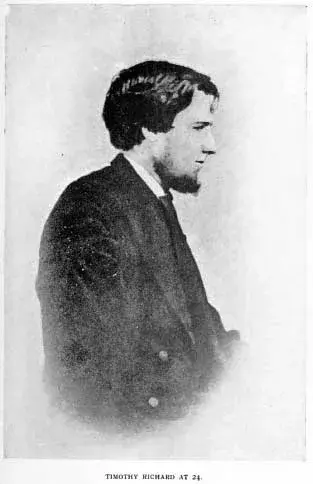
李提摩太
Timothy Richard (李提摩太, 1845–1919) was a Welsh Baptist missionary, scholar, publisher, and prominent educational reformer who emerged as one of the most influential foreign advisers in late Qing China. Arriving in China in 1870, he established mission bases in Shandong and Shanxi. During the catastrophic Northern Chinese Famine of 1876–1879, he pioneered the first large-scale international humanitarian relief effort in modern…
Timothy Richard (李提摩太, 1845–1919) was a Welsh Baptist missionary, scholar, publisher, and prominent educational reformer who emerged as one of the most influential foreign advisers in late Qing China. Arriving in China in 1870, he established mission bases in Shandong and Shanxi. During the catastrophic Northern Chinese Famine of 1876–1879, he pioneered the first large-scale international humanitarian relief effort in modern Chinese history, raising vast sums abroad to preserve hundreds of thousands of lives and earning the deep trust of senior viceroys such as Li Hongzhang and Zeng Guoquan. From 1891, Richard served as General Secretary of the Society for the Diffusion of Christian and General Knowledge Among the Chinese (SDK, or Guangxuehui) in Shanghai for twenty-five years. He edited the Wan Guo Gong Bao (A Review of the Times) and directed the publication of over two thousand educational titles; his Chinese translation of Mackenzie's History of the Nineteenth Century (Taixi Xinshi Lanyao) served as the prime conceptual guide for the Guangxu Emperor and reformists Kang Youwei and Liang Qichao during the Hundred Days' Reform. Following the Boxer Uprising, he mediated the settlement of the Shanxi mission crises, successfully proposing that fifty thousand taels of indemnity funds be redirected to establish the Western Studies College of Shanxi University, of which he became chancellor. Conferred imperial first-class civil rank and the Order of the Double Dragon, he passed away in London in 1919 after authoring Forty-five Years in China.
Born in Carmarthenshire, South Wales, to a blacksmith family, later entering Haverfordwest Theological College.
Joined the Baptist Missionary Society and volunteered for foreign missionary service in China.
Reached Shanghai in December and traveled north to Yantai and Qingzhou in Shandong, immersing himself in classical Chinese texts.
As catastrophic drought devastated northern China, Richard traveled into the heart of the crisis in Shandong and Shanxi to organize humanitarian relief.
Met Viceroy Li Hongzhang in Tianjin, presenting scientific demonstrations and advocating industrialization and railway construction.
Appointed by Li Hongzhang as editor of the Chinese-language edition of the Chinese Times in Tianjin, advocating institutional modernization.
Succeeded Alexander Williamson as General Secretary of the SDK in Shanghai, directing the organization for a quarter of a century.
Published Taixi Xinshi Lanyao, which Grand Secretary Weng Tonghe presented to the Guangxu Emperor as a master manual for imperial reform.
Resided in Beijing during the Hundred Days' Reform, employing Liang Qichao as Chinese secretary and advising key court ministers.
Resolved the Shanxi missionary indemnity by founding Shanxi University Western Studies Hall, receiving first-rank bureaucratic honors.
Resigned from Guangxuehui due to deteriorating health, returning to London where he completed his memoirs.
Passed away in London at age seventy-four, leaving behind a major legacy in modern Sino-Western cultural exchange.
Timothy Richard was born in 1845 in Carmarthenshire, South Wales, into a devout blacksmith household. He received early schooling at Swansea Normal School and worked briefly as a village schoolteacher in a mining district. At twenty, answering a deep religious calling, he entered Haverfordwest Theological College to pursue formal divinity studies. In 1868, he was accepted by the Baptist Missionary Society in London and volunteered for assignment in China.
Embarking in late 1869, Richard reached Shanghai in December 1870. Rejecting the insular life of foreign treaty-port concessions, he relocated to Yantai and Qingzhou in Shandong. Convinced that genuine cultural engagement required deep empathy, he adopted Chinese scholar attire and devoted himself to the rigorous study of the Confucian Four Books and Five Classics, Mahayana Buddhist sutras, and Islamic scriptures. Emulating the intellectual accommodation strategies of Matteo Ricci, he established open lecture halls in Jinan, Qingzhou, and Weifang to engage local literati in philosophical discourse.
In Shandong, Richard prioritized humanitarian service over dogmatic preaching. During the regional drought of 1876, he distributed over thirty thousand silver taels in relief and set up temporary shelters caring for more than four hundred famine orphans, establishing Qingzhou as a major center of the Baptist mission in northern China.
Between 1877 and 1879, northern China suffered the catastrophic "Northern Chinese Famine" (Dingwu Qihuang), which claimed nearly ten million lives across five provinces. Witnessing apocalyptic starvation in Shandong, Richard carried two thousand taels of silver directly into Shanxi, the hardest-hit province, in early 1878.
Traveling across Taiyuan and Pingyang, he documented harrowing scenes of unburied corpses piled outside city gates and widespread cannibalism. His arrival provoked deep xenophobic suspicion in Beijing; Grand Councilor Qu Hongji submitted an urgent memorial warning that foreign preachers were exploiting starvation to win the hearts of the people and spy on Chinese weaknesses. In response, the throne commanded Shanxi Governor Zeng Guoquan to monitor Richard closely.
However, Richard's absolute transparency disarmed imperial suspicion. He submitted detailed accounting registries and requested that local gentry verify all distributions. After discrete undercover investigations proved Richard was distributing funds equitably across Yangqu and Xugou without political intrigue, Zeng Guoquan reported favorably to the throne and formed a full administrative partnership with him. Richard sent dispatches to the British press, prompting the Lord Mayor of London to establish a Chinese Famine Relief Fund that raised over two hundred thousand taels. Richard personally supervised the distribution of twelve thousand taels, rescuing over one hundred and fifty thousand people and establishing lifelong friendships with Zeng Guoquan and Li Hongzhang.
In 1880, Richard met Viceroy Li Hongzhang in Tianjin to advocate mining, communications, and modern science. Spending one thousand pounds of personal funds on scientific instruments, he gave lectures to Qing mandarins, demonstrating Copernican astronomy, chemical reactions, steam engines, and electricity. In 1886, he moved to Beijing and was hired by Zeng Jize, son of Zeng Guofan, as a private English tutor for the Zeng household. In Shanghai, he published Essentials of Modern Learning in Seven Nations, urging the Qing government to allocate one million taels annually for national educational modernization.
In 1890, Li Hongzhang appointed Richard chief editor of the Chinese edition of the Chinese Times in Tianjin. In 1891, Richard succeeded Alexander Williamson as General Secretary of the SDK (Guangxuehui) in Shanghai, a post he held for twenty-five years, transforming it into the most influential modern publishing house in late Qing China.
Under Richard's direction, the society published the monthly journal Wan Guo Gong Bao, read by viceroys, provincial governors, and examination scholars across eighteen provinces. The press issued more than two thousand translated titles on international law, modern history, and science, including Forty-five Years in China, Eight Great European Emperors, and New Policies. Most notably, his translation with Cai Erkang of Robert Mackenzie's History of the Nineteenth Century (Taixi Xinshi Lanyao) sold over thirty thousand copies and was studied night and day by the Guangxu Emperor as a master blueprint for modernization.
Following China's defeat in the First Sino-Japanese War, Richard moved between Beijing, Tianjin, and Shanghai, counseling top statesmen such as Zhang Zhidong, who contributed one thousand taels to Guangxuehui. In Beijing, Richard formed close ties with Kang Youwei and Liang Qichao, hiring Liang as his personal Chinese secretary and introducing him to Western constitutionalism and parliamentary governance.
When Richard reviewed Kang Youwei's reform program, he noted that it incorporated almost every institutional recommendation he had made over the previous decade. Reformers proposed appointing Richard as a senior imperial foreign adviser. When the conservative coup struck in September 1898, Richard was appalled by the execution of the Six Gentlemen and worked tirelessly through diplomatic channels to help Liang Qichao and other reformists escape to safety.
During the Boxer Uprising of 1900, Shanxi Governor Yu Xian massacred dozens of foreign missionaries and Chinese converts in Taiyuan. In the aftermath, as Western powers demanded crushing indemnities, Empress Dowager Cixi and Prince Qing summoned Richard to mediate the Shanxi settlement.
Arriving in Taiyuan, Richard opposed punitive military expeditions and excessive cash reparations. Instead, he proposed an innovative compromise: retain the fifty thousand taels of Boxer indemnity owed by Shanxi within the province to establish a modern university. He maintained that the crisis stemmed from popular ignorance, and that the only permanent antidote to anti-foreign violence was enlightened higher education.
Governor Cen Chunxuan accepted the plan, and in 1902 the Western Studies College of Shanxi University was founded, with Richard appointed chancellor. The Qing court granted him First Class Red Button rank, the Order of the Double Dragon Second Class, and imperial posthumous honors for three generations of his ancestors. Shanxi University subsequently joined Peiyang University and the Imperial University of Peking as one of China's three foundational modern state universities.
As Chancellor of Shanxi University, Richard directed a ten-year curriculum emphasizing engineering, mining, law, and medicine, and arranged for talented graduates to pursue advanced degrees at the University of London and Oxford University from 1908 onward.
In 1916, worn out by decades of relentless labor, Richard resigned as General Secretary of Guangxuehui and returned to Britain. In London, he compiled his extensive memoirs, Forty-five Years in China, documenting the pivotal transformation of the late Qing dynasty. He passed away peacefully in London on April 17, 1919, at age seventy-four.
During the devastating Northern Chinese Famine, Richard broke through racial and national barriers to organize the first modern international famine relief operation in China. Venturing into disease-ridden territories, he applied rigorous surveying methods to register households and deliver targeted financial aid.
Through vivid reporting in the British press, he mobilized the Mansion House Relief Fund in London, channeling hundreds of thousands of taels to Chinese refugees. His personal administration of twelve thousand taels rescued more than one hundred and fifty thousand people from starvation, profoundly softening anti-foreign hostility among Qing officialdom.
Richard transformed the Society for the Diffusion of Christian and General Knowledge into the intellectual powerhouse of late Qing reform. Through the widely circulated Wan Guo Gong Bao, he introduced global geography, constitutional law, and industrial technology to Chinese literati.
Over twenty-five years, Guangxuehui published over two thousand titles that reshaped the mental landscape of a generation of Chinese intellectuals, including Liang Qichao, Huang Zunxian, and the young Lu Xun, catalyzing the nationwide modernization movement of the 1890s.
Richard's collaboration with Cai Erkang in translating Robert Mackenzie's History of the Nineteenth Century provided the core intellectual foundation for the Hundred Days' Reform. Written in elegant classical Chinese, the book analyzed how European nations dismantled feudal stagnation through institutional innovation and industrial commerce.
Studied exhaustively by the Guangxu Emperor and disseminated widely across treaty ports, the work directly inspired imperial edicts on establishing modern academies, abolishing sinecures, promoting private industry, and constructing national rail lines.
Richard pioneered the historic precedent of returning foreign war indemnities to finance Chinese modern education, anticipating the American Boxer Indemnity scholarship program by nearly a decade.
By founding Shanxi University Western Studies College, he established modern professional faculties in civil engineering, mining, chemistry, and legal studies, while creating study-abroad pipelines that trained generations of Chinese engineers, educators, and scientists.
Throughout his forty-five-year career, Richard was a trusted adviser to senior viceroys including Li Hongzhang, Zeng Guoquan, and Zhang Zhidong. He consistently maintained that China's primary vulnerability lay in its lack of modern education, urging the establishment of normal colleges in every province.
While his perspectives reflected the colonial assumptions of nineteenth-century British power, his dedicated commitment to educational development and famine relief established him as a seminal bridge between China and the West during a turbulent era of imperial transition.
FIGURES ASSOCIATED WITH THIS DYNASTY