Birth into a Martial House
Born in Tieling Guard, Liaodong, to future Regional Commander Li Chengliang.
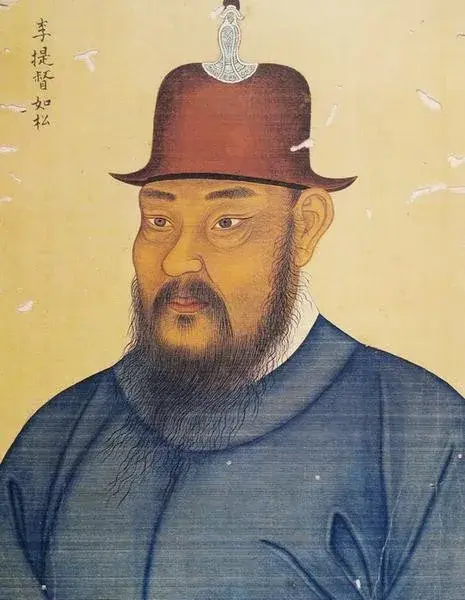
李如松
Li Rusong (李如松, 1549–1598), courtesy name Zimao and pseudonym Yangcheng, was a native of Tieling Guard in Liaodong (modern Tieling, Liaoning Province). He was one of the foremost military commanders of the late Ming dynasty and the supreme commander of Ming expeditionary forces during the early phase of the Imjin War (1592–1598). Born into the premier military clan of Liaodong, he was the eldest son of Li Chengliang, the…
Li Rusong (李如松, 1549–1598), courtesy name Zimao and pseudonym Yangcheng, was a native of Tieling Guard in Liaodong (modern Tieling, Liaoning Province). He was one of the foremost military commanders of the late Ming dynasty and the supreme commander of Ming expeditionary forces during the early phase of the Imjin War (1592–1598). Born into the premier military clan of Liaodong, he was the eldest son of Li Chengliang, the legendary Regional Commander of Liaodong who held the northern frontiers for three decades. Li Rusong was skilled in cavalry archery and strategic operational planning, rising through combat merit to command the prestigious Shenji Firearms Battalion and serve as regional commander across northern frontier garrisons. In 1592, when the mutiny of Vice Regional Commander Pubei erupted in Ningxia, threatening the entire northwestern frontier, the Wanli Emperor appointed Li as Commander-in-Chief. Li personally directed the siege of Ningxia, breaching the Yellow River dikes to inundate the fortress and completely crushing the rebellion within four months. In late 1592, following the massive invasion of Joseon Korea by Japanese forces under Toyotomi Hideyoshi, King Seonjo fled to the border and appealed to the Ming court. Appointed Commander-in-Chief of the Eastern Expeditionary Armies, Li led forty thousand elite Liaodong iron cavalry and southern musketeers across the frozen Yalu River. In February 1593, Li directed a combined-arms siege at the Battle of Pyongyang, deploying heavy artillery to shatter the defenses of Konishi Yukinaga's First Division, inflicting thousands of casualties, and liberating both Pyongyang and Kaesong. Despite surviving an ambush at Byeokjegwan against overwhelming numbers under Kobayakawa Takakage, Li orchestrated a daring cavalry raid that burned the immense Japanese logistical depot at Mount Yongsan, depriving Japanese forces of grain and compelling them to abandon Hanseong (Seoul) and retreat to the southern coast. In 1597, he assumed the supreme command of Liaodong. In April 1598, while leading a cavalry patrol into the Hun River valley to repel a Mongol incursion, he was ambushed by superior forces, dying in combat at the age of fifty. Posthumously created Count of Ningyuan and granted the name Zhonglie, Li Rusong is remembered as a heroic general whose strategic resolve preserved Joseon sovereignty and shielded the Ming frontier.
Born in Tieling Guard, Liaodong, to future Regional Commander Li Chengliang.
Promoted to command the elite Shenji Battalion, reforming metropolitan garrison firearms drill.
Appointed Commander-in-Chief in Shaanxi; flooded Ningxia with Yellow River water to crush Pubei.
Appointed Commander-in-Chief of Expeditionary Armies in December; led 40,000 troops across the Yalu River.
Coordinated cannonades and cavalry assaults in February, liberating Pyongyang and routing Konishi.
Fought out of a close-quarters ambush against Kobayakawa Takakage's army near Byeokjegwan.
Executed a night cavalry raid destroying Japanese grain depots, compelling the evacuation of Seoul.
Invested as Left Chief Military Commissioner and appointed Regional Commander of Liaodong.
Ambushed by Mongol cavalry near Fushun; killed in action after fierce combat at age 50.
Posthumously invested as Junior Protector and Count of Ningyuan, receiving the posthumous name Zhonglie.
Li Rusong was born in 1549 in Tieling Guard, Liaodong, into a family of hereditary military officers. His father, Li Chengliang, was the paramount military figure along the northeastern frontier, awarded the noble title of Count of Ningyuan for repeatedly defeating Mongol and Jurchen incursions. Raised in border fortresses, Li Rusong mastered cavalry archery and studied classical military treatises, forging an aggressive, decisive temperament.
Entering service through hereditary privilege, Li earned swift promotion through verified combat performance along the northern borders. In 1583, recognizing his tactical competence, the court appointed him Assistant Commissioner of the Chief Military Commission and Commander of the Shenji Battalion in Beijing. Li cracked down on payroll corruption, conducted rigorous drills combining volley-firing matchlocks with mobile field artillery, and perfected the synchronization of firearms with infantry charges. He was subsequently promoted to Regional Commander of Xuanfu and Shanxi, garrisoning key sectors of the Great Wall.
In the spring of 1592, a dangerous military rebellion erupted along the northwestern border. Pubei, an ethnic Mongol vice regional commander stationed at Ningxia, mutinied alongside his son Pu Cheng'en, allying with Ordos Mongol chieftains. The insurgents assassinated the governor, captured surrounding fortresses, and defied imperial siege armies for months.
Furious at the stalemate, the Wanli Emperor appointed Li Rusong as Commander-in-Chief of Shaanxi Pacification Armies in July 1592. Surveying the topography, Li noted that Ningxia sat in a low-lying basin adjacent to the Yellow River. Rejecting escalade assaults that caused heavy casualties, Li resolved to utilize hydraulic warfare.
Mobilizing soldiers and local civilians, Li constructed earthen dikes stretching for miles, breaching the Yellow River channels in September. Floods surged into Ningxia, submerging the city under several feet of water and collapsing barracks, storehouses, and outer walls. In October, Li launched assault boats through breached parapets, capturing the rebel commanders and restoring imperial authority over the northwestern frontier within four months.
Simultaneously in 1592, the East Asian geopolitical balance collapsed. Toyotomi Hideyoshi launched a massive amphibious invasion of Joseon Korea with 158,000 troops. Equipped with massed Portuguese-style arquebuses, Japanese armies overran Seoul, Kaesong, and Pyongyang within months, driving King Seonjo to the border at Uiju to petition the Ming court for military deliverance.
Recognizing that the fall of Korea directly imperiled the Liaodong frontier and Beijing itself, the Wanli Emperor appointed Li Rusong as Commander-in-Chief of Eastern Expeditionary Armies in late 1592, with Vice Minister of War Song Yingchang serving as Military Superintendent. In January 1593, Li led forty thousand elite Liaodong iron cavalry, northern archers, and southern musketeers across the frozen Yalu River.
Approaching Pyongyang in early February 1593, Li faced Konishi Yukinaga's fortified First Division holding the fortress. Li deployed a coordinated encirclement, concealing heavy artillery batteries along the hills.
At daybreak on February 8, Li initiated a devastating bombardment. Heavy Great General cannons and breech-loading Folangji guns unleashed an unbroken barrage that pulverized the palisades of Moran Hill. Under cover of smoke, southern infantry under Wu Weizhong assaulted the ramparts, while Li personally galloped along the firing line on a white charger to direct breakthroughs. When his horse was shot dead by matchlock fire, Li mounted another steed and pressed forward. Ming forces stormed the Chilsong and Pothong gates, routing the defenders in intense street fighting. Konishi evacuated across the frozen Taedong River under cover of night with only a fraction of his command. The liberation of Pyongyang liberated northern Korea and shattered the myth of Japanese invincibility.
Pressing south to liberate Seoul, Li led an advance cavalry reconnaissance force of two thousand troopers on February 27, 1593. At Byeokjegwan, ten miles north of Seoul, Li stumbled into a concealed ambush set by Kobayakawa Takakage commanding an army of over thirty thousand troops.
Trapped in muddy terrain, Li formed a defensive circle, utilizing three-barreled carbines (sanyan chong) and composite bows to repel repeated infantry charges. In fierce hand-to-hand combat, Li's personal bodyguard officer, Li Yousheng, was killed while shielding his commander. Vanguard commanders Cha Dashou and Yang Yuan fought their way into the valley, enabling Li to break the encirclement and withdraw in good order to Kaesong.
Recognizing that frontal assaults against Seoul were ill-advised without logistical reinforcements, Li executed a brilliant asymmetrical maneuver in April. He dispatched Cha Dashou with elite light cavalry on a night raid deep behind enemy lines, setting fire to the massive Japanese granaries at Mount Yongsan. The destruction of hundreds of thousands of bushels of rice left Japanese forces facing starvation, compelling them to abandon Seoul on May 19 and retreat to defensive coastal camps near Busan.
Following the conclusion of initial hostilities, Li was promoted to Left Chief Military Commissioner. In late 1597, as Mongol raids flared along the northern borders, the emperor appointed Li as Regional Commander of Liaodong.
In April 1598, several thousand Mongol cavalry crossed the border near Fushun. Characteristically bold, Li led a strike force of three thousand light cavalry deep into enemy territory. Advancing into the Lishan hills near the Hun River, his detachment was surrounded by a massive Mongol force. Refusing to surrender, Li personally engaged the enemy, shooting down dozens of assailants and sustaining multiple wounds. When his arrows were exhausted, the fifty-year-old general fell in combat, his entire vanguard dying beside him.
Upon receiving news of his death, the Wanli Emperor wept openly, suspending court audiences, posthumously promoting him to Junior Protector and Count of Ningyuan, conferring the posthumous name Zhonglie, and constructing shrines in his honor in Beijing and Liaodong.
The pacification of Ningxia demonstrated Li Rusong's operational versatility. Rather than conducting attritional siege operations against heavily fortified urban bastions, he leveraged geographic and hydrological factors.
By diverting the Yellow River into the city, he neutralized enemy defensive advantages while minimizing casualties among imperial forces. This decisive victory eliminated a critical threat to the northwestern frontier and freed imperial military resources for the impending conflict in Korea.
The Battle of Pyongyang was a watershed in East Asian military history, demonstrating the supremacy of massed field artillery and mounted shock cavalry over infantry armed with matchlocks.
Li integrated heavy siege cannons with light mobile field guns, neutralizing Japanese musketeers behind parapets before unleashing armored Liaodong cavalry through the breaches. This tactical doctrine broke the offensive momentum of the Japanese invasion and established a model for early modern combined-arms operations.
Following the setback at Byeokjegwan, Li adapted his strategy from frontal assaults to operational interdiction. Recognizing that Japanese divisions concentrated in Seoul were dependent on coastal grain convoys, he identified the Yongsan depots as their critical vulnerability.
The successful night raid that incinerated the stockpiles paralyzed the Japanese command, achieving through asymmetrical warfare what frontal assaults could not: the bloodless recovery of the Korean capital.
Li Rusong refined the tactical employment of the renowned "Liaodong Iron Cavalry." Equipped with brigandine armor, recurve bows, sabers, and triple-barreled firearms, these units functioned as heavy shock cavalry capable of rapid firepower delivery followed by ferocious mounted charges.
In Korea and Liaodong, Li synchronized this cavalry with southern pike-and-shot formations, pioneering battlefield coordination that influenced East Asian military thought well into the seventeenth century.
FIGURES ASSOCIATED WITH THIS DYNASTY