Rural Birth
Born into an impoverished peasant family in Dacheng County; named Li Jinxi.
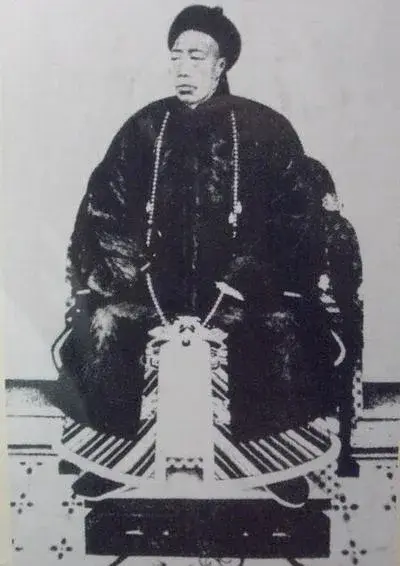
李莲英
Li Lianying (李莲英, 1848–1911), originally named Li Jinxi (李进喜), was a native of Dacheng County, Shuntian Prefecture (modern Dacheng County, Langfang, Hebei Province). He was the Chief Palace Eunuch and paramount confidant to Empress Dowager Cixi during the late Qing Dynasty. Born into extreme rural poverty, he underwent castration and entered the imperial palace in 1857, transferred in 1864 to serve Cixi in the Changchun…
Li Lianying (李莲英, 1848–1911), originally named Li Jinxi (李进喜), was a native of Dacheng County, Shuntian Prefecture (modern Dacheng County, Langfang, Hebei Province). He was the Chief Palace Eunuch and paramount confidant to Empress Dowager Cixi during the late Qing Dynasty. Born into extreme rural poverty, he underwent castration and entered the imperial palace in 1857, transferred in 1864 to serve Cixi in the Changchun Palace. Possessing extraordinary interpersonal tact, emotional intelligence, and discretion, Li learned from the violent downfall of his arrogant predecessor An Dehai in 1869, adhering strictly to the lifelong precept of "serving superiors with absolute reverence and treating subordinates with wide lenience." He secured Cixi's unwavering trust for over four decades while adeptly mediating tensions between the Empress Dowager and Emperor Guangxu. In 1886, he accompanied Prince Chun (Yixuan) on an inspection of the Beiyang Fleet, winning widespread praise for exemplary humility and modesty. In 1894, celebrating her sixtieth birthday, Cixi broke the ancestral Qing statute that capped eunuch ranks at the fourth grade, bestowing upon Li the second-rank ruby cap button and peacock feather. During the Hundred Days' Reform and the Boxer Rebellion, Li protected the vulnerable Guangxu Emperor within the confines of palace protocol. Following the simultaneous deaths of Cixi and Guangxu in 1908, Li observed a hundred days of mourning, returned decades of imperial gifts to Empress Dowager Longyu, and retired into private life, passing away in Beijing in 1911 at the age of sixty-four.
Born into an impoverished peasant family in Dacheng County; named Li Jinxi.
Castrated and assigned to the Forbidden City, serving in the Memorial Office and Jingren Palace.
Transferred to Changchun Palace, securing Cixi's personal favor through attentiveness.
Witnessed the execution of An Dehai; adopted lifelong vows of professional humility and caution.
Appointed Head Eunuch of Chuxiu Palace after only seventeen years of service.
Accompanied Prince Chun to inspect the Beiyang Fleet, conducting himself with self-effacing propriety.
Awarded the second-rank cap button by Cixi, breaking two centuries of Qing dynastic statutes.
Escorted the imperial court during the flight to Xi'an, quietly shielding Emperor Guangxu from privation.
Observed funeral rites for Cixi, surrendered all royal gifts, and retired from the Forbidden City.
Died peacefully at his residence in Haidian, Beijing, on March 4 at age sixty-four.
Li Lianying was born in the twenty-eighth year of Daoguang (1848) in Lijia Village, Dacheng County, Shuntian Prefecture. His family roots traced back to Qihe, Shandong; his father worked as a leather mender and tenant farmer. The second of four brothers, young Jinxi grew up amid grinding poverty. In 1857, facing starvation, his family arranged for his castration through the household of Prince Zheng (Duanhua), sending the nine-year-old into the Forbidden City.
Assigned initially to the Memorial Office and the Eastern Palaces, young Jinxi performed menial labor with quiet efficiency. Naturally observant, possessed of an excellent memory, and gifted with a warm, respectful temperament, he avoided conflict with fellow servants. In 1864, the sixteen-year-old attendant was transferred to Changchun Palace to serve Empress Dowager Cixi. Impressed by his fastidious attentiveness and anticipation of her moods, Cixi favored him, renaming him Lianying.
In 1869, An Dehai, the Chief Palace Eunuch who enjoyed Cixi's absolute indulgence, openly violated the dynastic rule forbidding eunuchs from leaving the capital. An sailed down the Grand Canal in opulent state barges to procure royal textiles. Alerted to his insolence, Shandong Governor Ding Baozhen apprehended him and, backed by Prince Gong and Empress Dowager Ci'an, executed An Dehai by beheading in Jinan.
The sudden execution of An Dehai delivered an indelible lesson to the twenty-one-year-old Li Lianying. He recognized that under the Qing autocracy, an arrogant eunuch who flaunted authority outside palace precincts was destined to become a scapegoat for ministerial outrage. Consequently, Li formulated his lifelong operating code: "Serve superiors with absolute reverence; treat subordinates with wide lenience." He never displayed arrogance toward civil ministers and treated court peers with unfailing courtesy, refusing to allow external factions to use him as a political tool.
In 1874, the twenty-six-year-old Li Lianying was appointed Head Eunuch of Chuxiu Palace. Under imperial regulations, this managerial post was reserved for veterans with over thirty years of palace service, yet Li achieved it after only seventeen years.
By 1879, Li was promoted to Fourth-Rank General Supervisor of Chuxiu Palace, matching the rank of the Chief Eunuch of the Office of Palace Affairs and functioning as the supreme executive of all palace servants. As Cixi cemented her absolute control over state governance following the accessions of Tongzhi and Guangxu, Li's position as her primary attendant made him an indispensable figure within the inner precincts.
During the Yongzheng reign, Emperor Shizong had erected an iron tablet decreeing that eunuchs could never exceed the fourth rank, with illegal external political dealings punishable by lingchi (death by slicing). For one hundred and fifty years, this ancestral regulation remained inviolable.
However, in 1894, commemorating Cixi's sixtieth birthday, the Empress Dowager issued an extraordinary imperial decree rewarding Li Lianying for his decades of service by granting him the ruby cap button and peacock feather of the second imperial official rank. Li became the first and only eunuch in the entire three-century history of the Qing Dynasty to attain second-rank status, elevating his domestic and international profile to unprecedented heights.
In political matters, Li maintained relentless vigilance. In May 1886, Cixi ordered Prince Chun (Yixuan), the biological father of Emperor Guangxu and head of the Admiralty, to conduct an inspection of the Beiyang Fleet in Tianjin, Lushun, and Weihaiwei. Aware of Cixi's suspicious nature, Prince Chun requested that Li Lianying accompany the mission, reassuring Cixi that no subversive plotting would occur.
Throughout the inspection, Li displayed extraordinary self-effacement. Rather than acting as an imperial commissioner, he wore ordinary servant robes, walking behind Prince Chun and carrying his personal tobacco pouch and tea vessels. Whenever regional governors, generals, and Admiral Ding Ruchang arrived to offer banquets or gifts, Li refused all private meetings and rejected monetary presents. At night, he declined the luxurious quarters prepared by the Huai Army, insisting on sleeping in the outer foyer of Prince Chun's tent to guard the sovereign's father. Upon their return, censors like Zhu Yixin submitted memorials accusing Li of extortion, but official investigations confirmed his spotless propriety. Cixi praised his loyalty, and his reputation for modesty was widely acknowledged.
During the ideological schism between Cixi's conservative faction and Guangxu's reformist circle, Li performed a delicate balancing act. Having looked after Guangxu since his sickly toddlerhood—when the young monarch affectionately called him "Anda" (tutor)—Li maintained personal affection for the emperor. Following the defeat of the 1898 Hundred Days' Reform, when Guangxu was confined to Yingtai Island, opportunistic servants treated the fallen emperor with neglect. Li, while obedient to Cixi, instructed his subordinates to treat Guangxu with dignity, providing him with warm clothing and nutritious food while refusing to participate in factional schemes to assassinate or depose the emperor.
In August 1900, during the Boxer Crisis, the Eight-Nation Alliance captured Beijing. Cixi fled the capital with Emperor Guangxu in disguise, accompanied by Li Lianying. During the arduous journey westward toward Xi'an, Li organized wagons, clean water, and provisions, ensuring the survival of the imperial refugees.
At an overnight station in Baoding, while Cixi's quarters were luxuriously appointed, Guangxu was assigned a bare, drafty room without bedding in the autumn cold. Entering the room, Li discovered the sovereign shivering alone by a dim lamp. Weeping, Li knelt and exclaimed: "Your servant deserves death for allowing Your Majesty to endure such misery!" He brought his own padded quilts and blankets to furnish the emperor's cot and remained vigilantly by his side all night. Touched to tears, Guangxu remarked: "Had it not been for Li Anda, I would not have survived this night."
Following the court's return to Beijing in 1901, Li, feeling the weight of advancing age and recognizing the volatility of late Qing politics, sought an exit.
In November 1908, Emperor Guangxu and Empress Dowager Cixi died within twenty-four hours of each other. With Puyi enthroned as Emperor Xuantong and Empress Dowager Longyu presiding over court affairs, Li completed Cixi's state funeral rites and fulfilled a hundred days of formal mourning. In early 1909, Li surrendered seven large chests containing all the jewelry and royal gifts accumulated over fifty years to Empress Dowager Longyu, requesting permission to retire. Grateful for his half-century of loyal service, Longyu granted him an imperial pension for life.
Retiring to his residence in Enjizhuang outside Fuchengmen in Haidian, Li lived in quiet seclusion, practicing vegetarianism and Buddhist meditation. He passed away on March 4, 1911, at the age of sixty-four. The Qing court provided two thousand taels of silver for his state funeral, interring him in a grand marble tomb in the Enjizhuang cemetery, concluding the remarkable career of the late empire's most powerful palace servant.
Li Lianying's accompaniment of Prince Chun during the 1886 naval inspection stands as a masterclass in bureaucratic self-preservation and political discipline. By refusing all ceremonial honors, rejecting bribes, and serving Prince Chun with domestic modesty, Li dismantled the traditional ministerial stereotype of the corrupt, overreaching palace eunuch. His conduct reassured Cixi that her royal kinsman harbored no subversive military ambitions, maintaining the imperial consensus that funded the modernization of the Beiyang Fleet.
Throughout the traumatic Western Flight of 1900, Li Lianying functioned as the indispensable logistical manager and humanitarian mediator of the imperial court. Amid chaos and privation, his timely intervention to provide food, bedding, and dignity to the marginalized Emperor Guangxu prevented the imperial party from fragmenting into internecine recriminations. His diplomatic balancing act between the vengeful Cixi and the vulnerable Guangxu helped preserve dynastic continuity until the signing of the Boxer Protocol.
Serving as Head Eunuch of Chuxiu Palace and Chief Palace Supervisor for decades, Li Lianying mastered the elaborate ceremonial statutes, sacrificial protocols, and palace regulations accumulated since the reigns of Shunzhi and Kangxi. Facing an oversized Imperial Household Department and thousands of palace attendants, Li established streamlined shifts for night watches, expedited memorial transmissions, and standardized imperial audience courtesies. He managed palace banquet arrangements, imperial birthdays, and architectural interior upkeep with flawless procedural accuracy.
Furthermore, Li strictly regulated his subordinate eunuchs, prohibiting them from flaunting influence beyond the palace walls or pilfering imperial treasures. When junior servants committed operational errors, Li preferred disciplinary instruction over draconian corporal punishment, earning the sincere gratitude of the palace's lower servant class. His disciplined administrative stewardship maintained internal stability during Cixi's later years and preserved valuable operational records of late Qing court ritual traditions.
FIGURES ASSOCIATED WITH THIS DYNASTY