PROFILE
Li Jie (d. 1110), courtesy name Mingzhong, was a native of Guancheng County, Kaifeng Prefecture (present-day Guancheng District, Zhengzhou City, Henan Province, with his ancestral tomb in modern Xinzheng City). He was an illustrious architectural theorist, civil engineer, and state official of the Northern Song Dynasty, rising to Director of the Directorate for the Palace Buildings (Jiangzuojian) and Prefect of Guozhou. Li Jie directed the compilation of the epochal architectural treatise Yingzao Fashi (Treatise on Architectural Methods), and is universally recognized as the consummate master of classical Chinese architectural science.
Born into an eminent lineage of scholar-officials, Li Jie was broadly educated from youth, demonstrating exceptional proficiency in painting, calligraphy, epigraphy, and classical philology. In 1085, he entered government service through hereditary privilege (yin) as a Sacrificial Attendant of the Suburban Altar, soon becoming Sheriff of Jiyin in Caozhou. In 1092, he was transferred to the Directorate for the Palace Buildings, the core governmental agency responsible for imperial civil engineering and architectural projects. He served in the Directorate for over a decade, progressing through the ranks of Registrar, Assistant Director, Vice Director, and ultimately Director during the reign of Emperor Huizong. He supervised the construction of more than a dozen monumental national engineering projects, including the Biyong Academy, the Department of State Affairs, the Mansions of the Five Princes, Longde Palace, Dihua Residence, the Zhuque and Jinglong Gates, Jiucheng Hall, the Kaifeng Prefectural Headquarters, and the Imperial Ancestral Temple.
In 1097, Li Jie was commissioned by imperial decree to supervise the revision of national building codes, producing the thirty-four-volume Yingzao Fashi in 1100, which was officially published and promulgated nationwide in 1103. The masterwork systematically synthesized structural traditions dating from antiquity through the Tang and Song eras, established a standardized modular design system based on the timber grade (cai), detailed technical specifications across thirteen specialized construction trades, established labor and material budgeting quotas, and provided precise engineering drawings. In 1110, Li Jie passed away while in office as Prefect of Guozhou and was buried at Mount Meishan in Xinzheng.
- Courtesy Name
- Mingzhong
- Native Place
- Guancheng County, Kaifeng Prefecture (present-day Guancheng District, Zhengzhou / Xinzheng City, Henan Province)
- Date of Death
- 1110 (Fourth year of the Daguan era, Northern Song Dynasty)
- Highest Office
- Director of the Directorate for the Palace Buildings, Prefect of Guozhou
- Historical Role
- Master architect and engineering scientist of the Northern Song Dynasty, compiler of the canonical architectural treatise Yingzao Fashi
BIOGRAPHY
Chronology
- 1085 (Eighth year of the Yuanfeng era, Song) | Official Entry Through Hereditary Privilege | Entered administrative service through ancestral privilege as Sacrificial Attendant, subsequently serving as Sheriff of Jiyin in Caozhou.
- 1092 (Seventh year of the Yuanyou era, Song) | Transfer to the Directorate for Palace Buildings | Appointed Registrar of the Directorate for the Palace Buildings, undertaking central imperial architectural responsibilities.
- 1097 (Fourth year of the Shaosheng era, Song) | Imperial Commission for Architectural Codes | Ordered by Emperor Zhezong to thoroughly revise and compile the official state building standards treatise Yingzao Fashi.
- 1099 (Second year of the Yuanfu era, Song) | Mansions of the Five Princes | Supervised the large-scale construction of palatial residences for imperial princes with disciplined logistical management.
- 1100 (Third year of the Yuanfu era, Song) | Completion of Yingzao Fashi | Finalized the thirty-four-volume treatise Yingzao Fashi and presented the monumental manuscript for imperial review.
- 1102 (First year of the Chongning era, Song) | Construction of the Biyong Academy | Directed the construction of the Biyong Academy for the National University in Kaifeng, achieving classical architectural grandeur.
- 1103 (Second year of the Chongning era, Song) | Imperial Promulgation Nationwide | The imperial court carved printing blocks and promulgated Yingzao Fashi throughout the empire as the statutory building standard.
- 1105 (Fourth year of the Chongning era, Song) | Renovation of the Imperial Ancestral Temple | Rose to Director of the Directorate for the Palace Buildings; directed structural renovations of the Imperial Ancestral Temple and Kaifeng Prefectural Offices.
- 1109 (Third year of the Daguan era, Song) | Prefectural Governance of Guozhou | Appointed Prefect of Guozhou, where he rectified local administration and promoted regional irrigation projects.
- 1110 (Fourth year of the Daguan era, Song) | Demise in Office | Passed away while serving as Prefect of Guozhou; his remains were reinterred at Mount Meishan in Guancheng, Xinzheng.
Biography
Illustrious Heritage and Comprehensive Scholarship
Li Jie was born into a distinguished scholar-official lineage in Guancheng County, Kaifeng Prefecture. His family had served the imperial court across several generations: his great-grandfather Li Weiyin served as Companion to the Crown Prince; his grandfather Li Dunyu served as Vice Director of the Agricultural Colonization Bureau; his father Li Nangong rose to Left Executive Assistant of the Department of State Affairs and Minister of Personnel; and his elder brother Li Hui attained the rank of Auxiliary Academician of the Longtu Pavilion. The family possessed an extensive private library containing tens of thousands of volumes, among which several thousand scrolls were transcribed by Li Jie's own hand.
Immersed in this intellectually vibrant household, Li Jie displayed extraordinary talents and omnivorous reading habits from childhood. In addition to studying the Confucian classics, dynastic histories, and mathematical astronomy, he acquired deep mastery of bronze epigraphy, calligraphy, painting, and musical acoustics. Proficient in diverse calligraphic scripts—particularly seal, great seal, cursive, and clerical—he also demonstrated refined painterly skill, earning acclaim for horse depictions and presenting his Painting of Five Horses to the imperial court. His multidisciplinary erudition provided an indispensable foundation for his subsequent supervision of monumental state engineering projects and the compilation of his comprehensive architectural treatise.
Administrative Service and Appointment to the Directorate
In 1085, Li Jie entered public service through hereditary privilege, initially serving as Sacrificial Attendant of the Suburban Altar, where he oversaw ritual preparations. Soon afterward, he was appointed Sheriff of Jiyin County in Caozhou (modern Heze, Shandong Province), taking charge of local criminal investigation and public order. In this grassroots post, Li demonstrated decisive administrative clarity and judicial fairness.
In 1092, recognizing Li Jie's mathematical acumen, technical expertise, and administrative talent, the imperial court transferred him to the Directorate for the Palace Buildings, the core organ responsible for state civil engineering. Li initially assumed the post of Registrar, commencing a thirteen-year career in court architecture. Within the Directorate, he applied himself diligently to classical building precedents and contemporary workshop techniques, earning promotions to Assistant Director, Vice Director, and ultimately Director. Tasked with the design, construction, and repair of imperial palaces, defensive walls, imperial mausoleums, administrative ministries, bridges, canals, and ancestral altars, Li gained widespread respect for his pragmatic diligence and logistical competence.
Directing Monumental Imperial Construction Projects
From the late Yuanyou era through the Chongning and Daguan eras of Emperor Huizong, Li Jie served as chief engineering superintendent for a succession of major national building projects in the imperial capital of Kaifeng. In 1099, he directed the construction of the Mansions of the Five Princes, completing the expansive residential complex within tight deadlines. In 1102, he was commissioned to build the Biyong Academy, an exterior campus for the National University, delivering a symmetrical complex that served as an exemplar of Song ritual architecture.
Subsequently, Li Jie supervised over ten additional imperial and governmental projects, including Longde Palace, Dihua Residence, the Zhuque and Jinglong Gates, Jiucheng Hall, the Kaifeng Prefectural Headquarters, the Imperial Ancestral Temple, and the Buddhist monastery honoring Empress Dowager Qinci. During the reconstruction of the monumental Zhuque and Jinglong city gates, he solved complex structural challenges regarding weight distribution and arch span. In restoring the Imperial Ancestral Temple, he harmonized ritual decorum with structural stability. Li personally inspected construction sites, consulted senior craftsmen on joinery details, and strictly audited material quotas to eliminate fiscal waste.
Compiling the State Building Standards
Throughout the Northern Song Dynasty, state construction incurred immense public expenditures. The absence of unified technical standards enabled widespread embezzlement, project delays, and substandard construction. Although the imperial court had compiled the Yuanyou Fashi in 1091, that earlier compilation merely gathered administrative regulations without technical specifications or structural illustrations, proving ineffective in practice.
In 1097, Emperor Zhezong ordered Li Jie to compile a comprehensive national building code. Over the course of three years, Li combined philological research on classical texts such as the Rites of Zhou with extensive fieldwork in construction yards, consulting veteran carpenters, stonemasons, tile-makers, and plasterers. Integrating mathematical calculation, classical precedents, and workshop practices, he completed the thirty-four-volume Yingzao Fashi in 1100 and presented it to the throne.
In 1103, Emperor Huizong ordered the text engraved and promulgated nationwide as the binding statutory code for all government civil engineering, encompassing palaces, city walls, administrative offices, bridges, and temples.
Prefectural Service in Guozhou and Interred Heritage
After thirteen years of strenuous service in the Directorate for the Palace Buildings, Li Jie's health was strained by continual overwork. During the Daguan era, he was promoted to Grand Master for Court Service and dispatched as Prefect of Guozhou (modern Lingbao, Henan Province). In Guozhou, Li preserved his pragmatic administrative approach, enforcing discipline, caring for local livelihoods, and constructing regional water-control and granary facilities.
In the second month of 1110, Li Jie passed away at his official residence in Guozhou around fifty years of age. His coffin was conveyed back to his native Guancheng and interred at the foot of Mount Meishan (present-day Yuzhai Village, Longhu Town, Xinzheng City, Henan Province), where his descendants formed a family cemetery. In 2006, the State Council of the People's Republic of China designated the Tomb of Li Jie as a Major Historical and Cultural Site Protected at the National Level.
Major Achievements
Formulating the Modular System Based on Timber Grades
Li Jie's Yingzao Fashi made an epochal contribution to global architectural science by establishing a standardized modular timber-frame design system. Li codified the rule that all timber-frame buildings must use the standard timber unit (cai) as their fundamental modular measure.
The treatise defined the sectional ratio of the standard timber unit at three to two (fifteen fen in height by ten fen in thickness) and established eight graded timber classes based on structural scale and function. First-grade timber was designated for monumental palace halls spanning nine to eleven bays; second-grade timber was assigned to halls spanning five to seven bays; and eighth-grade timber was used for interior joinery bracket-work. The projection of bracket arms, cross-sections of roof beams, column proportions, and bay spans were calculated proportionally from this base module. Predating Renaissance modular treatises by more than four centuries, this system represented the apex of classical modular prefabrication.
Standardizing Thirteen Specialized Construction Trades
Within Yingzao Fashi, Li Jie devoted over one-third of the text (Volumes 3 to 15) to technical regulations across thirteen specialized building trades: trench and moat earthworks (haozhai), stonework (shizuo), structural carpentry (damuzuo), interior joinery (xiaomuzuo), woodcarving, lathe-turning, sawing, bamboo-work, tile-laying, plastering, decorative polychrome painting, brickwork, and kiln operation.
Under each trade, Li codified dimensional tolerances, mortise-and-tenon joints, and procedural sequences for one hundred and seventy-six structural components. In structural carpentry, he detailed the precise geometric curves of column batter (cejiao) to enhance seismic stability and the entasis-like upward curvature of corner eaves columns (shengqi). In decorative painting, he established hierarchical palettes ranging from five-color complete painting to jade-green monochrome designs.
Establishing Labor and Material Quotas to Prevent Corruption
To eliminate institutional corruption in public works, Yingzao Fashi introduced pioneering quantitative quotas for labor limits (gongxian, Volumes 16–25) and material specifications (liaoli, Volumes 26–28).
In the labor regulations, Li Jie established standardized labor quotas adjusted for seasonal daylight variations (categorized into long, medium, and short days), material hardness, and haulage distances. In the material specifications, he defined conversion rates for lumber cutting, stone dressing waste, mortar ratios, and pigment consumption. By providing an unassailable legal basis for engineering budgets and audit procedures, these precise standards eradicated fraudulent invoicing and substantially reduced fiscal waste.
Providing Authoritative Engineering Drawings and Drafting Standards
Volumes 29 to 34 of Yingzao Fashi contain hundreds of official architectural drawings, representing the earliest and most comprehensive graphic corpus in ancient Chinese architectural history. Li personally supervised the drafting of axis diagrams, floor plans, elevations, reflected ceiling plans, structural cross-sections, and perspective joinery illustrations.
Rendered strictly to scale with fine linework, these drawings corresponded to the technical specifications in the text. Long before modern projective geometry was codified in China, Li Jie's drafting team employed orthographic projection and scaled layouts to represent complex interlocking bracket sets and spatial configurations, demonstrating high sophistication in early engineering graphics.
Philological Collation of Classical Architectural Terminology
Transcendental beyond mere workshop craftsmanship, Li Jie approached architectural terminology with rigorous classical philology. In the opening two volumes, General Terminology and General Rules, he collated pre-Qin, Han, Wei, Six Dynasties, and Tang texts, systematically analyzing the etymology and historical evolution of scores of architectural components, including halls, podiums, columns, beams, bracket sets, and ridge ornaments.
Li corrected historical textual corruptions, replaced subjective classical commentaries with empirical evidence from physical structures, and provided vernacular craftsmanship with refined textual clarity, elevating folk architectural craft into systematic academic literature.
Erudite Publications Across Natural and Historical Sciences
Beyond his architectural achievements, Li Jie made extensive contributions to natural history, geography, philology, and musical theory. His written works included Ten Volumes on the Continued Classic of Mountains and Seas, Two Volumes on the Continued Register of Identical Names, Three Volumes on the Pipa Lute, Three Volumes on Equine Veterinary Medicine, Three Volumes on the Game of Liubo, and Ten Volumes on Ancient Seal Script and Etymology.
In his Continued Classic of Mountains and Seas, Li utilized Song geographic maps and field surveys to amend ancient geographical omissions; in his Equine Treatise, he examined horse conformation and anatomy; in his Paleographical Treatise, he gathered inscriptions from bronze vessels, stone steles, and ancient seals to trace the evolution of ancient Chinese characters. Although most of these texts were lost during the Jingkang incident, their titles document his extraordinary scope as a universal scholar.
Modern Scientific Rediscovery by Liang Sicheng and the Society for Research in Chinese Architecture
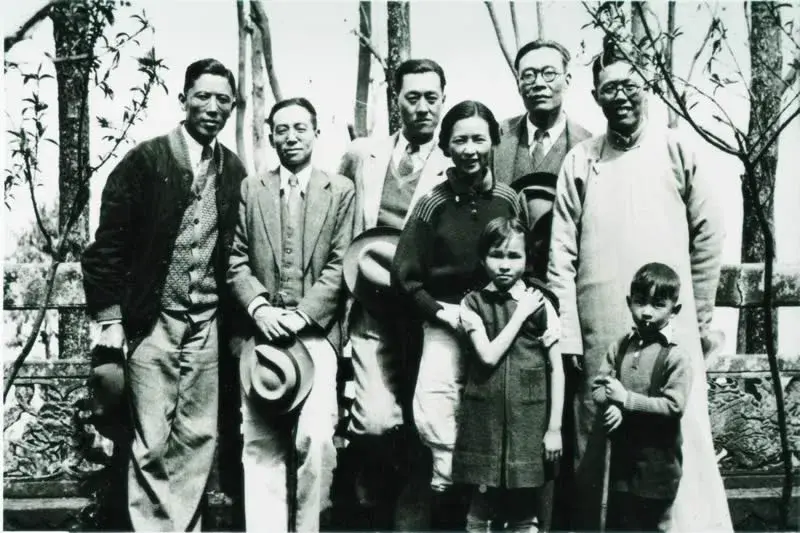
Because dynastic official histories frequently marginalized technical crafts, the History of Song did not grant Li Jie an independent biography, leaving his achievements underappreciated for centuries. During the Republic of China, with the founding of the Society for Research in Chinese Architecture, scholars such as Zhu Qiqian, Liang Sicheng, Lin Huiyin, and Liu Dunzhen rediscovered Song dynasty editions of Yingzao Fashi in the Forbidden City, bringing Li Jie's legacy back to international prominence.
Liang Sicheng devoted decades to measuring, deciphering, and illustrating Yingzao Fashi, publishing his monumental Annotated Yingzao Fashi. Liang praised the work as the foundational grammar of Chinese architecture, comparing its scientific significance to Vitruvius's De Architectura in Western antiquity. Today, Li Jie is recognized globally as one of the preeminent architectural theorists and civil engineering scientists of the medieval world.
Personal Connections
- Imperial Patron: Emperor Zhezong of Song (Zhao Xu): Emperor of the Northern Song Dynasty; issued the imperial decree commissioning Li Jie to revise and compile Yingzao Fashi.
- Imperial Patron: Emperor Huizong of Song (Zhao Ji): Emperor of the Northern Song Dynasty; ordered the empire-wide publication of Yingzao Fashi and praised Li's artistic talent.
- Great-Grandfather: Li Weiyin: Northern Song official who served as Companion to the Crown Prince, establishing the family's administrative status.
- Grandfather: Li Dunyu: Northern Song official who served as Vice Director of the Agricultural Colonization Bureau.
- Father: Li Nangong: Left Executive Assistant of the Department of State Affairs and Minister of Personnel; maintained an extensive private library that fostered Li Jie's classical scholarship.
- Elder Brother: Li Hui: Northern Song scholar who served as Auxiliary Academician of the Longtu Pavilion, serving concurrently at court with Li Jie.
- Modern Scholarly Champion: Liang Sicheng: Pioneer of modern Chinese architectural history who decoded and annotated Yingzao Fashi, restoring Li Jie to world historical acclaim.
Historical Evaluations
- Emperor Huizong of Song in Preface to the Chongning Reprint of Yingzao Fashi: "Li Jie and his colleagues examined the classical canons of successive dynasties and consulted the practical rules of myriad craftsmen, completing this treatise in thirty-four volumes. With its comprehensive systems and standardized labor and materials, it provides an enduring standard for the empire's construction."
- Li Jie in Memorial Presenting the Newly Compiled Yingzao Fashi: "According to the Workman's Code in the Rites of Zhou, the crafts of carts and timber were documented, but later dynasties left many standards unexamined. Your servant gathered the remaining practices of numerous craftsmen, examined classical texts and commentaries, and deduced mathematical principles to complete this work."
- Liang Sicheng in Annotated Yingzao Fashi: "The Yingzao Fashi compiled by Li Jie is not only the most systematic and complete architectural technical canon of ancient China, but also a rare masterpiece in medieval world engineering history. The precision of its timber-grade modular system pioneered modern prefabricated structural design."
- Siku Quanshu Compilers in General Catalogue of the Imperial Library: "This book draws from vast materials with exacting textual criticism. It represents not merely the mechanical craft of construction, but an integral counterpart to classical dynastic institutions."
- Wang Zhenduo in Research on Ancient Chinese Science and Technology: "Li Jie was not only the supreme superintendent of Northern Song state architecture, but a consummate engineering scientist who unified architectural theory, modular design, construction management, and philological scholarship."
Related Entries
- Yingzao Fashi
- Directorate for the Palace Buildings
- Liang Sicheng
- Biyong
- Structural Carpentry
- Dougong
- Yu Hao
- Society for Research in Chinese Architecture