Born in Jinyang
Born into the prominent Shatuo imperial clan; eldest son of Li Cunxu, nicknamed Hege.
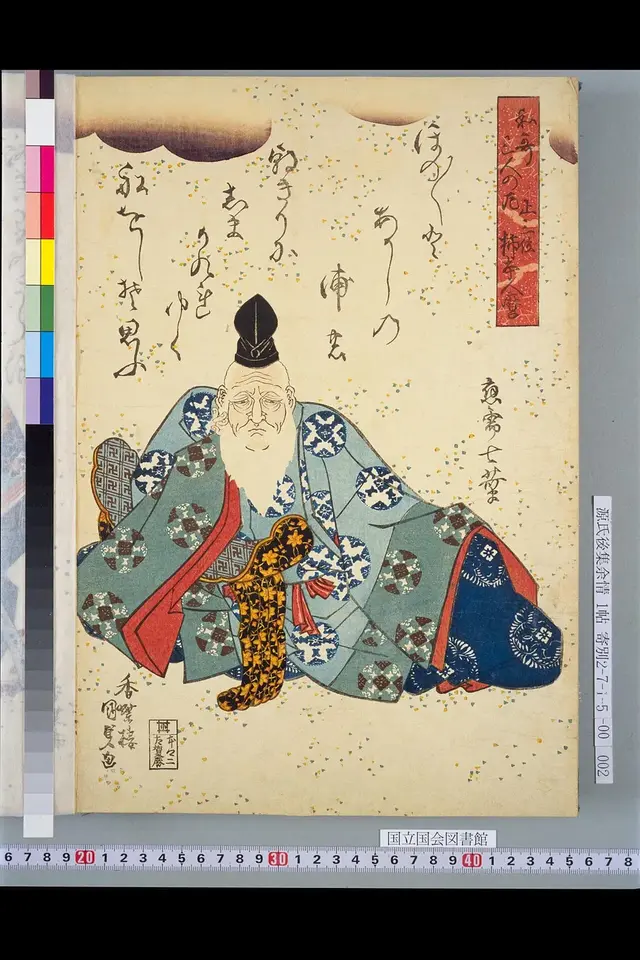
李继岌
Li Jiji (李继岌, ?–926 CE), childhood name Hege, was a native of Jincheng in Yingzhou (modern Ying County, Shuozhou City, Shanxi Province). He was an illustrious imperial prince, generalissimo, and eldest son of Emperor Zhuangzong (Li Cunxu) of Later Tang during the Five Dynasties and Ten Kingdoms period. He attained the paramount military offices of Commander-in-Chief of the Southwestern Expedition, Specially Advanced Grand…
Li Jiji (李继岌, ?–926 CE), childhood name Hege, was a native of Jincheng in Yingzhou (modern Ying County, Shuozhou City, Shanxi Province). He was an illustrious imperial prince, generalissimo, and eldest son of Emperor Zhuangzong (Li Cunxu) of Later Tang during the Five Dynasties and Ten Kingdoms period. He attained the paramount military offices of Commander-in-Chief of the Southwestern Expedition, Specially Advanced Grand Tutor, and Chancellor. Possessing a gentle disposition, refined manners, and handsome countenance, he was treated by Emperor Zhuangzong as the undisputed heir apparent following the unification of the central plains. In the autumn of the third year of Tongguang (925 CE), Emperor Zhuangzong launched a massive invasion to conquer Former Shu, commissioning Li Jiji as Commander-in-Chief of the Southwestern Expedition and Chief Commissioner Guo Chongtao as Commander of Recruitment and Discussion, leading sixty thousand elite troops into Sichuan. Through Guo Chongtao's strategic brilliance and Li Jiji's cooperative leadership, the Later Tang army breached the formidable Jiange Pass and captured Chengdu, compelling King Wang Yan to surrender unconditionally in just seventy-five days, conquering forty-six commanderies. However, in the wake of this triumph, the Later Tang court descended into chaos driven by eunuchs and palace consorts. Empress Liu, greedy and suspicious, listened to eunuch slanders alleging that Guo Chongtao planned to usurp power in Shu. Empress Liu issued an unsanctioned secret decree instructing Li Jiji to execute Guo Chongtao. Intimidated by imperial eunuchs, Li Jiji had Guo Chongtao beaten to death in his command tent, triggering the total collapse of troop morale and regional revolts. In 926 CE, as the Weibo mutiny swept the central plains and Emperor Zhuangzong was murdered in the Xingjiaomen coup in Luoyang, Li Jiji marched his forces back toward the capital. Reaching Weinan in Guanzhong, his commanders deserted and his troops melted away. Isolated and recognizing that his cause was lost, Li Jiji hanged himself in a roadside Buddhist shrine, meeting a tragic end amid the rapid collapse of the dynasty.
Born into the prominent Shatuo imperial clan; eldest son of Li Cunxu, nicknamed Hege.
Honored as Specially Advanced Grand Tutor and Chancellor following the conquest of Later Liang.
Appointed Commander-in-Chief of the Southwestern Expedition, co-commanding sixty thousand troops with Guo Chongtao.
Smashed the defenses of Jiange and captured Chengdu; Former Shu king Wang Yan surrendered his realm.
Yielded to Empress Liu's secret decree and murdered supreme commander Guo Chongtao in Chengdu.
Marched north toward the capital following Zhuangzong's death; army disintegrated at Weinan.
Hanged himself in a Buddhist monastery at Weinan after being abandoned by his retainers.
Emperor Mingzong ascended the throne and issued an edict posthumously granting Li Jiji the title Grand Preceptor.
Li Jiji, styled in childhood as Hege, was born in Taiyuan Prefecture of Hedong. His father was the legendary warrior-monarch Emperor Zhuangzong (Li Cunxu) of Later Tang, and his biological mother was Consort Han (later adopted by Empress Liu). From early youth, Li Jiji exhibited an elegant bearing, refined manners, and a prudent, gentle disposition. Reared in the army camps of his grandfather Li Keyong and father Li Cunxu, he was deeply cherished by his family.
In the first year of Tongguang (923 CE), Li Cunxu annihilated the Later Liang dynasty and unified northern China, establishing the Later Tang court at Luoyang. To solidify the dynastic succession, Emperor Zhuangzong appointed his eldest son Li Jiji Specially Advanced Grand Tutor and Chancellor. Although never formally invested as Crown Prince, Li Jiji was universally recognized as the rightful heir to the imperial throne.
In the ninth month of the third year of Tongguang (925 CE), observing that the central plains were secure, Emperor Zhuangzong set his sights on the wealthy, independent regime of Former Shu in Sichuan. King Wang Yan of Former Shu was corrupt, licentious, and negligent in governance. Wishing his eldest son to establish monumental military glory to secure his imperial succession, Zhuangzong appointed Li Jiji Commander-in-Chief of the Southwestern Expedition, enlisting Chief Commissioner Guo Chongtao as Commander of Recruitment and Discussion and Chancellor, placing sixty thousand elite cavalry and infantry under their joint command.
Modest and respectful, Li Jiji recognized Guo Chongtao's status as a preeminent founding statesman and tactical genius. Throughout the campaign, Li Jiji treated Guo Chongtao with the deference of a disciple, entrusting him with all troop deployments, logistical planning, and strategic operations.
In the autumn of 925 CE, the Later Tang expeditionary forces advanced across the Qinling Mountains from Fengxiang with astonishing rapidity. Vanguard commanders Kang Yanxiao and Dong Zhang captured Sanquan and Jiezhou in rapid succession, bearing down upon the formidable Jiange Pass.
Jiange Pass was an impregnable natural barrier flanked by sheer cliffs, where a single defender could check ten thousand attackers. Former Shu veteran general Wang Zongbi held the pass with massive forces. Guo Chongtao deployed light cavalry through mountain defiles to assault the enemy rear, while Li Jiji spearheaded the main frontal assault. The Shu defensive line disintegrated in panic, and the gateway to Sichuan fell. Later Tang forces swept across Mianzhou and Hanzhou, encamping directly beneath the walls of Chengdu.
Recognizing that defeat was total, King Wang Yan of Former Shu emerged from the gates bearing jade tokens of surrender. In just seventy-five days from their departure from Fengxiang, Li Jiji and Guo Chongtao pacified all forty-six commanderies of Sichuan, annexing three hundred thousand households and capturing astronomical wealth in state granaries and treasuries, achieving one of the swiftest conquest campaigns in imperial Chinese history.
However, this spectacular victory unleashed fatal court factions that destroyed the dynasty.
In Luoyang, Empress Liu was notoriously avaricious, despising Chief Commissioner Guo Chongtao for his uncompromising integrity and suppression of palace eunuchs. When Guo Chongtao impounded Former Shu's state treasuries to remit them to the imperial exchequer, corrupt palace eunuchs such as Ma Yanwei found their demands for bribes rejected. They sent secret dispatches to Empress Liu, fabricating claims that Guo Chongtao planned to usurp power in Sichuan and murder Prince Li Jiji.
Infuriated, Empress Liu pressured Emperor Zhuangzong to execute Guo Chongtao. Though Zhuangzong doubted the accusations, he dispatched Ma Yanwei to Chengdu to observe the situation. En route, Empress Liu bypassed imperial authority, dispatching a private decree strictly commanding Li Jiji to execute Guo Chongtao immediately.
Upon Ma Yanwei's arrival in Chengdu with the secret decree, Li Jiji was horrified, protesting: "The Son of Heaven has issued no formal edict; this is merely an unsanctioned private missive from the Empress. Lord Guo is a founding father of the state who has achieved monumental glory. I dare not commit such an atrocity!" However, Ma Yanwei and palace retainers knelt before Li Jiji, weeping and threatening: "If you do not eliminate Chongtao today, the army will rebel tomorrow, and Your Highness will be slaughtered without a burial place!"
Young and indecisive, Li Jiji succumbed to the relentless coercion of the eunuchs. On the ninth day of the first month of 926 CE, Li Jiji invited Guo Chongtao to his headquarters on the pretext of discussing military affairs. As Guo Chongtao stepped into the pavilion, Li Jiji's personal guard struck him from behind with an iron hammer, crushing his skull. Guo Chongtao and his sons were murdered on the spot.
News of Guo Chongtao's murder shattered army morale. Garrison troops and surrendered Shu commanders fell into panic; general Kang Yanxiao immediately rose in armed rebellion. Although Li Jiji suppressed the uprising after heavy fighting, the cohesion of the Later Tang military was irrevocably broken.
Following Guo Chongtao's death, the central plains erupted in total mutiny. The Weibo army revolted at Yedu and proclaimed General Li Siyuan their leader. In Luoyang, palace guards launched the Xingjiaomen mutiny, shooting Emperor Zhuangzong to death with arrows.
In Chengdu, learning that his father had been assassinated, Li Jiji was overwhelmed with grief and terror. Distributing treasures to appease his troops, he led his army on a forced march north across the rugged plank roads of the Qinling Mountains, hoping to reach the central plains to crush the rebellion and claim the imperial throne.
However, the march was arduous. By the time the army reached Fengxiang and Xingping in Guanzhong, the political situation had already been decided: Li Siyuan had entered Kaifeng and Luoyang, ascending the throne as Emperor Mingzong.
Realizing that Mingzong was established and Zhuangzong was dead, the commanders and soldiers of the expeditionary army refused to follow Li Jiji as rebels. Desertions broke out, with troops plundering baggage trains and fleeing in whole regiments under cover of darkness. Key commanders such as Ren Huan and Li Shaochen abandoned Li Jiji to swear allegiance to Mingzong.
In the fourth month of 926 CE, Li Jiji reached Weinan County in Guanzhong accompanied by only several hundred cavalrymen. Scout reports confirmed that the Yellow River crossings were sealed by Mingzong's armies, while his remaining guards scattered into the hills. Gazing out over the desolate plains with only a few palace attendants remaining, Li Jiji wept bitterly, lamenting to the heavens: "With what face can I look upon the elders of the central plains! Why has Heaven abandoned me so completely!"
Removing his armor and sword belt, Li Jiji walked into an abandoned Buddhist monastery by the roadside at Weinan, tied his sash to a beam, and hanged himself. Upon ascending the throne, Emperor Mingzong remembered their familial kinship, ordering Li Jiji interred with honors at Yingzhou and posthumously granting him the office of Grand Preceptor. A conqueror of Sichuan and imperial heir apparent, Li Jiji's destruction at the hands of palace intrigues stands as one of the most mournful tragedies of the Five Dynasties.
Appointed Commander-in-Chief of the Southwestern Expedition in 925 CE, he led sixty thousand elite troops into Sichuan, holding nominal supreme authority over the conquest of Former Shu.
Relying upon the strategic brilliance of Guo Chongtao, he breached Jiange Pass, took Mianzhou, and forced King Wang Yan to surrender in seventy-five days, annexing forty-six commanderies into Later Tang.
Unable to resist Empress Liu's secret decree and eunuch intimidation, he engineered the assassination of supreme statesman Guo Chongtao in Chengdu, shattering army morale and destabilizing the empire.
Marching north following Emperor Zhuangzong's assassination, his army disintegrated under the weight of general desertion, culminating in his suicide in a Weinan monastery.
FIGURES ASSOCIATED WITH THIS DYNASTY