Exclusive Favor in Eastern Palace
Entered the harem of Crown Prince Liu Qi, winning exclusive favor and bearing three princes: Liu Rong, Liu De, and Liu Eyu.
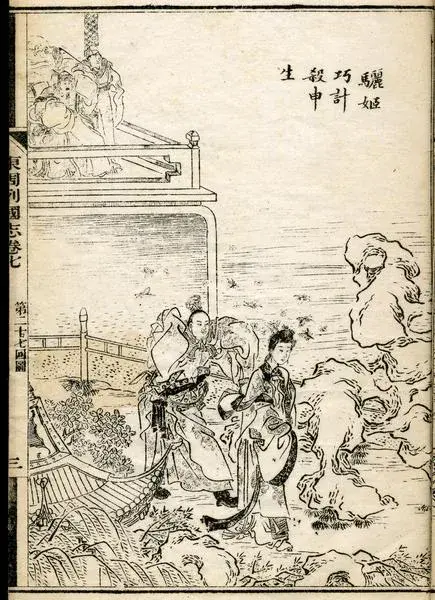
栗姬
Consort Li (栗姬, ? – 150 BCE) was a native of the Qi region during the Western Han dynasty, the foremost favored consort of Emperor Jing of Han (Liu Qi) during his tenure as crown prince, and the biological mother of deposed Crown Prince Liu Rong (King Min of Linjiang), King Xian of Hejian (Liu De), and King Ai of Linjiang (Liu Eyu). During the reign of Emperor Wen of Han, when Liu Qi was crown prince, Consort Li received…
Consort Li (栗姬, ? – 150 BCE) was a native of the Qi region during the Western Han dynasty, the foremost favored consort of Emperor Jing of Han (Liu Qi) during his tenure as crown prince, and the biological mother of deposed Crown Prince Liu Rong (King Min of Linjiang), King Xian of Hejian (Liu De), and King Ai of Linjiang (Liu Eyu). During the reign of Emperor Wen of Han, when Liu Qi was crown prince, Consort Li received exclusive imperial affection due to her extraordinary beauty and elegance. She consecutively gave birth to his eldest son Liu Rong, second son Liu De, and third son Liu Eyu, attaining preeminent status within the Eastern Palace. After Emperor Jing ascended the throne in 157 BCE, Empress Bo remained childless and lacked imperial favor. In the fourth month of 153 BCE, Emperor Jing formally proclaimed Consort Li's eldest son, Liu Rong, as crown prince, elevating her prestige to the pinnacle of the inner palace. However, Consort Li was narrow-minded and intensely jealous. Grand Princess Guantao (Liu Piao), Emperor Jing's elder sister, had introduced numerous beauties into the imperial bedchamber, earning Consort Li's bitter resentment. When Princess Guantao proposed betrothing her daughter Chen Ajiao to Crown Prince Liu Rong as crown princess, Consort Li arrogantly and insultingly rejected the proposal. Humiliated and furious, Princess Guantao allied with Consort Wang Zhi, arranging Chen Ajiao's marriage to Liu Che (King of Jiaodong), while constantly slandering Consort Li before Emperor Jing for allegedly practicing sorcery and witchcraft. In 151 BCE, Empress Bo was deposed, leaving the throne of empress vacant. During a bout of illness, Emperor Jing tested Consort Li by entrusting the welfare of his other sons to her care; Consort Li erupted in rage and answered disrespectfully, deeply alarming and alienating the emperor. In the first month of 150 BCE, Wang Zhi secretly orchestrated a minister from the Court of State Ceremonial to petition the emperor to appoint Consort Li as empress. Emperor Jing flew into a rage at this perceived political pressure, executed the minister for meddling in inner palace affairs, deposed Crown Prince Liu Rong to King of Linjiang, and subsequently elevated Wang Zhi as empress and Liu Che as crown prince. Consort Li was confined to her quarters, deprived of any audience with Emperor Jing, and died of despair and grief later that year. Her jealousy and political blunders altered the trajectory of Western Han imperial politics, directly paving the way for Emperor Wu of Han to ascend the throne.
Entered the harem of Crown Prince Liu Qi, winning exclusive favor and bearing three princes: Liu Rong, Liu De, and Liu Eyu.
Emperor Jing ascended the throne; Consort Li became the most prominent consort in the inner palace as mother of the eldest prince.
Emperor Jing created her eldest son Liu Rong as crown prince, establishing Consort Li as the de facto first lady of the imperial harem.
Princess Guantao proposed her daughter Chen Ajiao marry Liu Rong; Consort Li bitterly refused, igniting fierce enmity.
Empress Bo was deposed; Princess Guantao and Wang Zhi repeatedly slandered Consort Li for using witchcraft and black magic against other concubines.
A bedridden Emperor Jing tested Consort Li by entrusting other sons to her care; Consort Li reacted with furious refusal and insults, losing the emperor's trust completely.
Wang Zhi prompted a high official to demand Consort Li's enthronement; Emperor Jing executed the minister and demoted Liu Rong to King of Linjiang.
Liu Rong departed for his fiefdom; Consort Li, barred from seeing Emperor Jing, perished in confinement from despair and sorrow.
Consort Li was born into an ordinary family in the Qi region during the Western Han dynasty. Sometime between the early and middle years of Emperor Wen's reign, when Crown Prince Liu Qi was young, she was chosen to enter the Eastern Palace on account of her delicate grace and stunning appearance. Liu Qi favored her above all others, granting her exclusive intimacy for many years.
The depth of her imperial favor was clearly recorded in the imperial birth registers. Among Emperor Jing's fourteen sons, the first nine were born during his years as crown prince, and Consort Li bore the first three consecutive imperial sons: the eldest son Liu Rong, the second son Liu De, and the third son Liu Eyu. This rare consecutive birth of three imperial heirs solidified her unchallenged dominance among the consorts of the Eastern Palace. In contrast, Consort Cheng bore the fourth son Liu Yu, fifth son Liu Fei, and eighth son Liu Duan; Lady Jia bore the seventh son Liu Pengzu and ninth son Liu Sheng; Lady Tang bore the sixth son Liu Fa; while Wang Zhi entered the palace latest, being pregnant with the tenth son Liu Che when Emperor Wen passed away.
In June 157 BCE, Emperor Wen died, and Crown Prince Liu Qi ascended the imperial throne as Emperor Jing of Han. Upon his coronation, his principal wife, Lady Bo, was created empress. However, Empress Bo was gentle, lacked the emperor's personal love, and had borne no sons. In 155 BCE, Grand Empress Dowager Bo passed away, stripping Empress Bo of her sole political pillar.
Within the palace, Consort Li, as mother of the emperor's three eldest princes, was regarded by court and attendants as the foremost power in the imperial harem. Although palace staff noted her proud and unyielding nature, the emperor's enduring favor and the maturity of her royal sons commanded widespread deference.
On the jisi day of the fourth month in 153 BCE, Emperor Jing issued an imperial decree designating Consort Li's eldest son, Liu Rong, as crown prince of the Han empire. Following standard dynastic practice, as the eldest and adult son of the sovereign, Liu Rong's succession was widely accepted by the court, earning him the title Crown Prince Li in historical records. On the same day, Wang Zhi's four-year-old son, Liu Che, was enfeoffed as King of Jiaodong.
Liu Rong's elevation elevated Consort Li's prestige to its zenith. Under the traditional Han dynastic precept that a mother is exalted by her son's status, her future ascension to the empress's seat appeared inevitable once the childless Empress Bo was removed. Yet, this summit of prestige brought her fatal character flaw—pettiness and irrational jealousy—to the surface.
Grand Princess Guantao (Liu Piao), elder sister to Emperor Jing, commanded immense influence across the reigns of Emperor Wen and Emperor Jing. To secure her family's long-term standing, Princess Guantao routinely selected beautiful maidens from across the realm to present to Emperor Jing. Many of the emperor's favored concubines had entered the court through Guantao's introduction. This rankled deeply with Consort Li, who harbored smoldering resentment against the princess for eroding her exclusive favor.
Following Liu Rong's appointment as crown prince, Princess Guantao visited Consort Li's palace, proposing that her beloved daughter, Chen Ajiao, be wed to Liu Rong as his principal crown princess. From Guantao's perspective, this union was a natural alliance between the royal line and the foremost imperial princess, offering Liu Rong invaluable political protection.
Blinded by accumulated jealousy, however, Consort Li lost all political perspective. She vented her personal grievance over Guantao's harem introductions, coldly mocking the princess and abruptly rejecting the marriage offer. Princess Guantao departed in acute humiliation and fury, irrevocably severing Consort Li's most vital political alliance.
Humiliated by Consort Li, Princess Guantao immediately resolved to retaliate by cultivating a rival faction. Surveying Emperor Jing's sons, she found Lady Cheng's son Liu Yu afflicted with stuttering, Liu Fei overly haughty, and Liu Duan cruel; Lady Jia's sons were servile or hedonistic; and Lady Tang's son was born of a humble maid. Only King Liu Che of Jiaodong, the tenth son born to Lady Wang Zhi, stood out for his precocious intellect and the emperor's affection. Furthermore, Lady Wang Zhi was discreet, astute, and politically ambitious.
Princess Guantao approached Wang Zhi, who enthusiastically embraced the proposal. The two matriarchs formed an unyielding alliance, sealing a double matrimonial pact: Chen Ajiao was betrothed to Liu Che, while Guantao's second son, Chen Qiao, was betrothed to Wang Zhi's daughter, Princess Longlü. This compact formed a formidable power bloc determined to overthrow Consort Li and Prince Liu Rong.
Thereafter, Princess Guantao frequently visited Weiyang Palace, praising Liu Che's sovereign qualities while systematically poisoning Emperor Jing's mind against Consort Li. She alleged that during gatherings of imperial ladies, Consort Li ordered palace servants to spit behind the backs of favored consorts and perform dark witchcraft curses to charm the emperor and destroy her rivals.
In Han society, sorcery and witchcraft were viewed with dread and treated as capital treason. While Emperor Jing took no legal action due to lack of physical proof, Guantao's steady stream of accusations severely damaged his affection and trust toward Consort Li.
In the ninth month of 151 BCE, Emperor Jing formally deposed Empress Bo, expelling her to an auxiliary palace. With the position of empress vacant, tensions in the imperial court reached a boiling point.
Emperor Jing, worn down by the stress of governing after the Rebellion of the Seven States, fell seriously ill. Brooding over the dynastic future on his sickbed and mindful of Consort Li's volatile temperament, the emperor summoned her to his bedside. In a quiet, intimate test of character, he asked: "After I have lived out my hundred years, will you look kindly upon my other consorts and their royal sons?"
This inquiry was Emperor Jing's final evaluation of Consort Li's maternal magnanimity before considering her for the post of empress. Consort Li, utterly lacking political prudence, took deep offense at his lingering concern for rival concubines. She flew into a rage, refused the dying request, and hurled insolent words at the sick sovereign.
Emperor Jing was deeply shocked and enraged. He recognized that if Consort Li were ever to become empress dowager, the horrors inflicted by Empress Dowager Lü on Consort Qi and Prince Ruyi would inevitably be repeated upon his other children. Concealing his fury with quiet composure, Emperor Jing secretly determined that Consort Li would never become empress and that her son must not inherit the empire.
The politically astute Wang Zhi and Princess Guantao quickly sensed the emperor's revulsion and devised a brilliant scheme of fatal flattery.
In the first month of 150 BCE, Wang Zhi secretly instructed an emissary to convince the Grand Master of Ceremonies that Emperor Jing was eager to promote the crown prince's mother. The official, ignorant of the underlying trap, formally memorialized Emperor Jing at court: "The son is exalted through the mother, and the mother is exalted through the son. The mother of the crown prince lacks an imperial title; she should properly be established as empress!"
The memorial ignited Emperor Jing's suppressed wrath. Believing that Consort Li had conspired with outer-court ministers to coerce him into naming her empress, the emperor roared: "Is this a matter that falls within your official purview to utter?"
Emperor Jing immediately ordered the Grand Master of Ceremonies arrested and executed for treasonous interference in imperial affairs. Days later, he issued an edict stripping Liu Rong of the crown prince status, demoting him to King of Linjiang and ordering his immediate departure for his fief. Consort Li's political foundation collapsed overnight.
In the fourth month of 150 BCE, Wang Zhi was proclaimed empress, and her son Liu Che was named crown prince. Consort Li was placed under house arrest in a secluded pavilion of Weiyang Palace. Barred from ever seeing Emperor Jing again and separated from her eldest son, she fell into uncontrollable fury, grief, and despair, perishing alone in sorrow later that year.
During Emperor Jing's tenure as crown prince, Consort Li enjoyed exclusive favor and bore his first three sons: Liu Rong, Liu De, and Liu Eyu.
Her son Liu De later achieved enduring renown as King Xian of Hejian, rescuing and compiling irreplaceable pre-Qin classical Confucian texts for Chinese civilization.
In 153 BCE, Emperor Jing proclaimed her eldest son Liu Rong as crown prince, placing Consort Li at the de facto head of the Western Han inner court during Empress Bo's decline.
Her prominence defined the early balance of power in Emperor Jing's reign, placing her at the center of the dynastic succession struggle.
When Grand Princess Guantao proposed marrying Chen Ajiao to Crown Prince Liu Rong, Consort Li allowed personal jealousy over palace favorites to dictate statecraft, arrogantly refusing the offer.
This critical miscalculation drove Princess Guantao into an alliance with Wang Zhi, sealing the betrothal of Chen Ajiao to Liu Che and setting the stage for Liu Rong's downfall.
Through her furious disrespect during the emperor's deathbed test and the manipulated petition of the Grand Master of Ceremonies, Consort Li precipitated the deposition of Crown Prince Liu Rong and her own demise.
Her fall enabled the accession of Empress Wang Zhi and Crown Prince Liu Che, directly facilitating the historical emergence of Emperor Wu of Han.
FIGURES ASSOCIATED WITH THIS DYNASTY