Birth in Feixiang
Born into a scholarly family in Mingzhou, composing essays by age seven and mastering the Five Classics by ten.
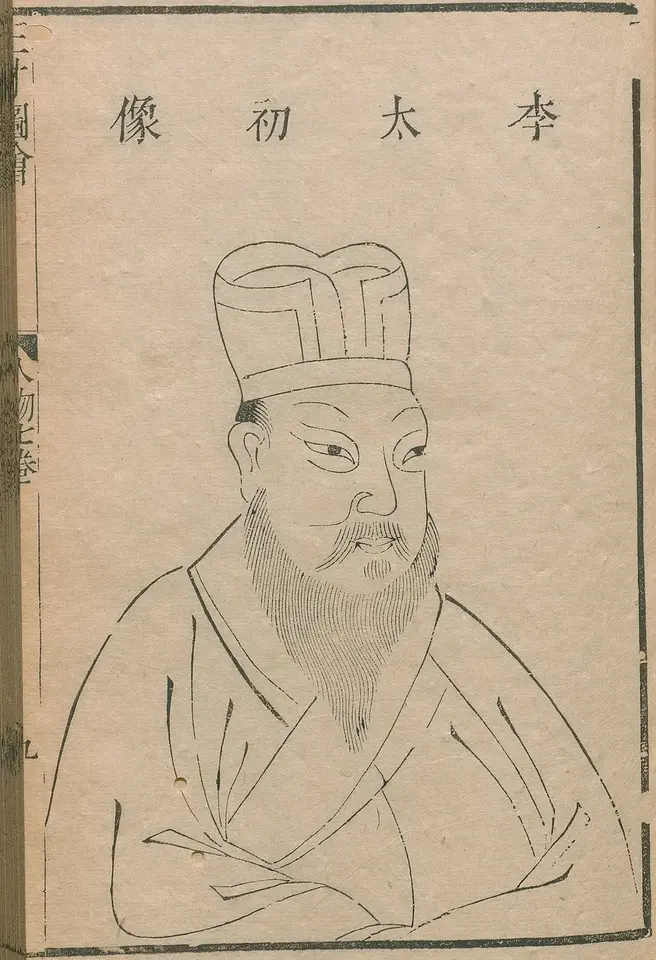
李沆
Li Hang (李沆, 947–1004), courtesy name Taichu (太初), a native of Feixiang in Mingzhou, was a preeminent chancellor and statesman during the reign of Emperor Zhenzong of the Northern Song dynasty, revered by posterity as the Sage Chancellor and enshrined among the Twenty-Four Meritorious Officials of Zhaoxun Pavilion. Born into a distinguished scholarly lineage, he demonstrated precocious intellectual brilliance from childhood…
Li Hang (李沆, 947–1004), courtesy name Taichu (太初), a native of Feixiang in Mingzhou, was a preeminent chancellor and statesman during the reign of Emperor Zhenzong of the Northern Song dynasty, revered by posterity as the Sage Chancellor and enshrined among the Twenty-Four Meritorious Officials of Zhaoxun Pavilion. Born into a distinguished scholarly lineage, he demonstrated precocious intellectual brilliance from childhood and passed the prestigious jinshi examination in the highest tier in 980 under Emperor Taizong. Renowned for his moral rectitude, incorruptibility, and quiet dignity, he served successively as assistant magistrate, court diarist, drafter of imperial decrees, Hanlin academician, and vice chancellor. When Prince Zhao Heng (the future Emperor Zhenzong) was established as Crown Prince, Li Hang served as his mentor with the rank of Crown Prince Attendant, guiding the future monarch with exemplary Confucian ethical principles. Following the accession of Emperor Zhenzong in 997, Li Hang was appointed Vice Chancellor and subsequently elevated to Joint Manager of Affairs with the Secretariat-Chancellery and Supervisor of National History in 998, serving as the paramount prime minister of the new reign. Governing in accordance with Daoist quietism and minimal interference, he adhered strictly to ancestral institutional precedents and absolute public integrity. Alert to the perils of complacency in peacetime, he made a daily practice of presenting reports on droughts, floods, and minor bandit disturbances to the young emperor, purposely impressing upon him the hardships of commoners to dissuade him from personal extravagance, lavish religious architectural projects, and reckless military adventures. In his private life, he refused to solicit favors or expand his modest ancestral residence. Passing away in 1004 at the age of fifty-eight, he was posthumously granted the titles of Grand Preceptor and Director of the Secretariat with the posthumous name Wenjing, receiving sacrificial honors in Emperor Zhenzong's imperial temple and being praised by later philosophers like Wang Fuzhi as the supreme pillar of the Song dynasty.
Born into a scholarly family in Mingzhou, composing essays by age seven and mastering the Five Classics by ten.
Passed the jinshi examination in the premier class; appointed assistant magistrate in Tanzhou to redress wrongful judicial cases.
Summoned to the capital as Court Diarist; recognized by Emperor Taizong for his elegant prose.
Elevated to Right Reminder and Drafter of Imperial Decrees, composing crucial state proclamations.
Appointed Hanlin Academician; served alongside Song Bai as Chief Examiner of the metropolitan civil service examinations.
Promoted to Policy Reviewer and Vice Chancellor; subsequently assigned to govern Henan Prefecture and Luoyang.
Appointed Vice Minister of Rites and Crown Prince Attendant, instructing heir-apparent Zhao Heng in moral statecraft.
Elevated to Vice Minister of Revenue and Vice Chancellor upon the enthronement of Emperor Zhenzong.
Appointed Vice Minister of the Secretariat, Joint Manager of Affairs with the Secretariat-Chancellery, and Supervisor of National History.
Promoted to Vice Minister of the Chancellery and Right Executive Assistant of the Department of State Affairs.
Diligently submitted daily reports of natural disasters to the emperor to caution against pride and extravagance.
Passed away in July at age fifty-eight; posthumously awarded Grand Preceptor, Director of the Secretariat, and named Wenjing.
Li Hang was born in 947 in Feixiang County, Mingzhou. Emerging from an esteemed family of classical scholars, he exhibited extraordinary intellectual capacity from early youth, writing polished literary essays at seven and comprehending the subtle cosmological principles of the Five Classics by the age of ten. Solemn, quiet, and adhering strictly to classical decorum, he achieved early literary renown throughout southern Hebei.
In 980, during the reign of Emperor Taizong, Li Hang passed the civil service examination in the supreme tier. The imperial court appointed him Assistant Magistrate of Tanzhou. During his tenure, Li Hang proved unyielding in the face of local elite pressure, personally investigating and overturning numerous long-standing wrongful convictions while meticulously auditing municipal grain reserves. His administrative excellence came to the attention of Emperor Taizong, who summoned him to the capital in 983 and appointed him Court Diarist after testing his grasp of administrative policy.
In 986, Li Hang was promoted to Right Reminder and Drafter of Imperial Decrees. In 989, he was designated Chief Examiner of the metropolitan examinations alongside Song Bai. In evaluating candidate essays, Li Hang eliminated private influence and selected scholars solely on merit, inducting dozens of brilliant minds into imperial service, which led to his promotion to Hanlin Academician. In 991, he was elevated to Policy Reviewer and Vice Chancellor, entering the supreme governing council. When factional shifts altered the ministry, he voluntarily took a provincial post as Prefect of Henan and Regent of the Western Capital, where he brought exemplary efficiency to local taxation and judicial administration.
In 995, Emperor Taizong formally invested Prince Zhao Heng as Crown Prince. Recognizing Li Hang's unblemished moral integrity and profound erudition, Taizong recalled him to the court as Vice Minister of Rites and Crown Prince Attendant to oversee the heir's ethical and political education. In the Eastern Palace, Crown Prince Zhao Heng treated Li Hang with the highest veneration, seating himself formally in his presence and attentively absorbing his lectures on the rise and fall of ancient dynasties. Li Hang avoided rhetorical flattery, utilizing historical failures to instill prudence and humility in the future sovereign.
Upon Emperor Taizong's death in 997, Zhao Heng ascended the throne as Emperor Zhenzong, immediately promoting Li Hang to Vice Minister of Revenue and Vice Chancellor. In 998, following the retirement of elder statesman Lu Duan, Emperor Zhenzong appointed Li Hang Vice Minister of the Secretariat, Joint Manager of Affairs with the Secretariat-Chancellery, and Supervisor of National History, formally installing him as head of the government. In 999, he was advanced to Vice Minister of the Chancellery and Right Executive Assistant of the Department of State Affairs, directing national revenues, civil appointments, and administrative oversight.
During Li Hang's chancellorship, the Northern Song entered its fourth decade. Agricultural production was expanding, internal commerce flourished, and prolonged peace settled over the Central Plains. Sensing that the court was becoming vulnerable to self-satisfaction and imperial vanity, Li Hang championed an administrative philosophy grounded in quietude and non-interference, refusing to alter established dynastic laws arbitrarily so that lower bureaucrats could not exploit institutional flux to oppress commoners.
Every morning at the dawn imperial audience, Li Hang systematically presented the throne with reports of regional droughts, flood damage, locust plagues, and minor bandit disturbances gathered from across the empire. His fellow minister Wang Dan, observing this daily routine with bewilderment, privately asked: "The four seas are tranquil and the realm is at peace; why do you constantly burden the sovereign's mind with such petty domestic distresses?" Li Hang replied with grave solemnity: "His Majesty is young; it is essential that he remain acutely aware of the hardships and privations of ordinary people! If a young monarch knows nothing of civilian misery, he will inevitably surrender to indolence and luxury, constructing magnificent palaces, indulging in superstitious sacrifices, or waging reckless wars. I am aging and may not live to witness it, but this complacency will be your greatest catastrophe in the years ahead!"
Li Hang's prophetic warning was borne out with striking precision. Following Li Hang's death in 1004, Emperor Zhenzong, feeling humiliated by the compromises of the Chanyuan Treaty, fell prey to the flattery of courtiers like Wang Qinruo. The emperor orchestrated the fraudulent manufacture of Heavenly Texts, squandered imperial treasuries on the construction of the colossal Yuqing Zhaoying Palace, and staged extravagant imperial sacrifices atop Mount Tai. Complicit in these delusions, Wang Dan spent his later years in profound remorse, repeatedly weeping: "Lord Li Wenjing was indeed a sage of infallible foresight!"
Throughout his lengthy tenure as prime minister, Li Hang preserved an absolute standard of personal austerity. Despite occupying the pinnacle of ministerial rank, his family residence in Kaifeng was notoriously cramped and dilapidated, with an entrance hall barely wide enough to turn a horse around. When relatives urged him to purchase an expansive estate suited to a chancellor, Li Hang declined, explaining: "My official salary provides ample sustenance; acquiring lands and building vast palaces is the ambition of greedy men. If a chancellor constructs an opulent mansion, should his descendants fall into poverty and fail to maintain it, who among them could preserve such an estate? It would only invite ruin and malice upon my progeny."
Whenever aspiring literati or powerful grandees dispatched confidential letters seeking offices or personal favors, Li Hang cast the missives unopened into the brazier fire before the messenger's eyes. He maintained no private faction, entertained no unauthorized guests, and rigidly blocked nepotism, earning Emperor Zhenzong's heartfelt praise as a truly upright gentleman of absolute integrity.
In July 1004, worn out by unremitting state service, Li Hang passed away in his official quarters at the age of fifty-eight. Emperor Zhenzong wept bitterly at the loss of his revered mentor, suspending court audiences for five days and attending his funeral rites in person. He posthumously conferred upon him the ranks of Grand Preceptor and Director of the Secretariat along with the posthumous title Wenjing. In 1022, his spirit tablet was granted satellite enshrinement in Emperor Zhenzong's imperial temple. During the Southern Song, his portrait was installed in the Zhaoxun Pavilion as one of the twenty-four supreme statesmen, and the Qing dynasty inducted him into the Temple of Monarchs of Successive Dynasties, honoring him as an immortal exemplar of ministerial rectitude.
Li Hang's historical fame as the Sage Chancellor rests on his extraordinary psychological foresight and uncompromising moral tutelage of the supreme ruler. In autocratic dynastic systems, prolonged prosperity routinely bred complacency, megalomania, and fiscal exhaustion in young emperors.
Rather than offering courtly sycophancy or concealing domestic distress, Li Hang utilized daily disaster dispatches to anchor Emperor Zhenzong's conscience in empirical civilian reality. By forcing the monarch to confront the vulnerability of his subjects, Li Hang restrained the court from embarking on disastrous foreign adventures and extravagant architectural vanity projects, creating the frugal, orderly administrative conditions that defined the Peace of Xianping.
The bureaucratic corridors of Kaifeng were perpetually entangled in web-like patron-client networks and illicit solicitations for office. Li Hang instituted an uncompromising ethical barrier against administrative corruption.
By establishing an absolute rule that all private letters requesting promotions were burned unread, he shielded the civil service from the corrupting influence of powerful clans. He evaluated candidates exclusively through verifiable administrative competence, even daring to return imperial edicts that attempted to bypass established channels. His unblemished public conduct elevated Confucian ministerial ethics to its historical peak.
At a time when victorious military commanders and high ministers accumulated massive landholdings and erected lavish gardens, Li Hang lived like a common scholar. His cramped and unadorned residence became an enduring symbol of philosophical self-restraint.
His famous conviction that vast ancestral mansions were a trap that guaranteed the ruin of impoverished descendants offered an incisive sociological critique of aristocratic vanity. His austere personal discipline provided a direct inspiration for future luminaries like Sima Guang, leaving an imperishable legacy within China's traditional culture of clean governance.
FIGURES ASSOCIATED WITH THIS DYNASTY