Birth in Tokyo
Born at the Nashimoto royal residence in Tokyo as the eldest daughter of Prince Morimasa, titled Princess Masako.
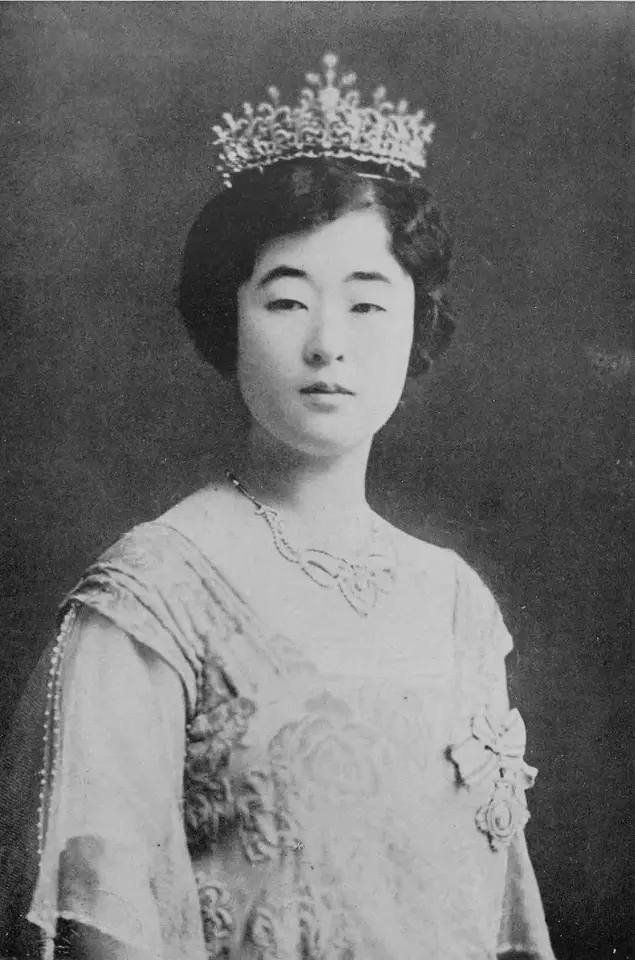
李方子
Yi Bangja (李方子), originally Princess Masako of Nashimoto, born in Tokyo, Japan, was the eldest daughter of Field Marshal Prince Nashimoto Morimasa and Princess Itoko, and the consort of Crown Prince Euimin (Yi Un), the last crown prince of the Joseon Dynasty and the Korean Empire. As a unique personal witness to the turbulent twentieth-century historical entanglements between Japan and Korea, Princess Masako was selected…
Yi Bangja (李方子), originally Princess Masako of Nashimoto, born in Tokyo, Japan, was the eldest daughter of Field Marshal Prince Nashimoto Morimasa and Princess Itoko, and the consort of Crown Prince Euimin (Yi Un), the last crown prince of the Joseon Dynasty and the Korean Empire. As a unique personal witness to the turbulent twentieth-century historical entanglements between Japan and Korea, Princess Masako was selected in her youth by the Japanese military and political leadership as a diplomatic instrument for "Japan-Korea integration," marrying Crown Prince Yi Un in 1920 as Crown Princess Consort. Following World War II, with Japan's defeat and the abolition of aristocratic privileges, the couple were stripped of their royal titles and Japanese nationality, becoming stateless commoners. Due to political suspicion from South Korean President Rhee Syngman, they were barred from entering Korea, enduring years of severe poverty in Tokyo. In 1963, after the Park Chung-hee administration restored their South Korean citizenship, Princess Masako accompanied her bedridden and paralyzed husband home to Korea, taking up residence at Nakseonjae in Changdeok Palace in Seoul. Following Yi Un's death in 1970, Princess Masako honored her late husband's wish to dedicate their remaining lives to the Korean people, choosing to remain in Korea permanently. In her later years, she devoted her energies and personal savings to supporting disabled and marginalized children. Utilizing her master craftsmanship in cloisonné enamel (shippoyaki) to raise funds, she established the Seoul Cloisonné Research Institute, the Fuyokai Association for Japanese wives residing in Korea, the Myeonghwiwon Vocational Rehabilitation Center, and the Jahye School, pioneering modern special education in South Korea. She passed away at Nakseonjae in Changdeok Palace in 1989 at eighty-eight, honored with a quasi-state funeral and posthumously awarded the Order of Civil Merit (Mugunghwa Medal) by the South Korean government, and the posthumous title Crown Princess Hyendeok Jeongmok Onjeong Jaheng by the Jeonju Yi Royal Family Association.
Born at the Nashimoto royal residence in Tokyo as the eldest daughter of Prince Morimasa, titled Princess Masako.
Arranged by Japanese authorities to marry Crown Prince Yi Un of the Korean Empire to promote colonial integration.
Married Crown Prince Yi Un in Tokyo, overcoming political assassination attempts to become Crown Princess Consort.
Traveled to Seoul with infant prince Yi Jin, who tragically died suddenly on the eve of their return to Japan.
Second son Yi Gu was born in Tokyo, whom she raised to study architecture at the Massachusetts Institute of Technology.
Following Japan's defeat and constitutional changes, the family lost noble privileges, falling into stateless poverty.
Restored to South Korean citizenship by the Park Chung-hee government, escorting paralyzed Yi Un to Nakseonjae in Changdeok Palace.
Following Yi Un's death, founded the Seoul Cloisonné Institute and Myeonghwiwon to rehabilitate disabled children.
Passed away peacefully at Changdeok Palace at eighty-eight, buried in a quasi-state funeral at Yeongwon in Namyangju.
Princess Masako was born on March 13, 1901, at the Nashimoto royal estate in Tokyo. Her father, Prince Nashimoto Morimasa, was an imperial prince and Field Marshal in the Imperial Japanese Army; her mother, Princess Itoko, hailed from the prestigious Marquis Nabeshima clan. Masako attended the Gakushuin Peers' School from childhood, receiving rigorous training in royal etiquette, French, piano, and traditional East Asian decorative arts.
When Masako turned sixteen, senior Japanese oligarchs Yamagata Aritomo and Governor-General Terauchi Masatake orchestrated a political marriage between the Japanese imperial family and the former royal house of Korea to reinforce colonial rule. In summer 1916, Masako learned abruptly from morning newspapers that she had been designated as the fiancée of Crown Prince Yi Un, younger brother of Emperor Sunjong of Korea, suffering immense initial shock.
Following her graduation from Gakushuin in 1917, the engagement was formalized. Originally scheduled for late 1918, the royal wedding was postponed when Emperor Gojong passed away suddenly at Deoksugung in Seoul. On April 28, 1920, Masako and Yi Un married in Tokyo. Although Korean independence activists attempted to assassinate the procession, Masako sympathized deeply with Yi Un's melancholy as an exiled royal prince. The couple developed mutual affection, and Masako embraced the duty of serving as a compassionate bridge between two nations.
In August 1921, their firstborn son, Prince Yi Jin, was born in Tokyo. In April 1922, Yi Un and Masako brought the eight-month-old infant to Seoul on their inaugural official visit to the former Korean royal court.
Tragedy struck on the eve of their planned return to Tokyo when healthy infant Jin suffered sudden vomiting at Changdeok Palace and died within hours. Although officially diagnosed as acute indigestion, rumors circulated that the child had been poisoned by anti-Japanese or court factions. Heartbroken by this catastrophe, Masako vowed never to bring another child to the Korean peninsula until they reached adulthood.
In December 1931, their second son, Prince Yi Gu, was born in Tokyo and survived to adulthood. In August 1945, Japan surrendered. The Supreme Commander for the Allied Powers (SCAP) and Emperor Hirohito abolished aristocratic privileges, rescinding imperial and peerage status for twelve collateral branches. Yi Un and Masako lost their official allowances and real estate overnight, becoming impoverished stateless persons who gathered wild mushrooms to survive in postwar Tokyo.
The couple repeatedly petitioned the newly founded Republic of Korea to return home, but South Korean President Rhee Syngman, fearing royalist revival, barred their entry. Grievously distressed by this prolonged exile, Yi Un suffered a severe stroke in 1959, remaining completely bedridden and paralyzed.
In 1961, following the military coup that brought Park Chung-hee to power, the South Korean government reversed Rhee Syngman's ban, officially restoring South Korean nationality to Yi Un and Princess Masako.
In November 1963, after fifty-six years of exile, the sixty-two-year-old Masako escorted her paralyzed husband aboard an aircraft to Gimpo Airport in Seoul. While Yi Un was hospitalized at St. Mary's Hospital, Masako took up residence at Nakseonjae in Changdeok Palace, assuming her responsibilities as royal consort.
On May 1, 1970, Yi Un passed away at Nakseonjae at seventy-three. Honoring her husband's solemn wish to serve the Korean people in atonement for their inability to protect the nation, Masako chose never to leave Korea, dedicating the rest of her life to social philanthropy.
In the 1960s and 1970s, South Korea's war-torn economy lacked basic public welfare for children with physical and cognitive disabilities. Masako deployed her lifelong mastery of cloisonné enamel (shippoyaki), establishing the Seoul Cloisonné Research Institute in 1970, handcrafting thousands of intricate enamel vessels to raise charitable funds through exhibitions across Korea, Japan, and the United States.
In 1971, she founded Myeonghwiwon in Gwangmyeong, Gyeonggi Province, providing rehabilitation and vocational training in printing, carpentry, and weaving for disabled youths. In 1982, she established the Jahye School, providing systematic special education curricula.
She also organized the Fuyokai Association to provide welfare, legal aid, and medical relief for impoverished Japanese wives stranded in Korea after World War II, earning international reverence as the "Mother of Korean Disabled Children." On April 30, 1989, Princess Masako passed away peacefully at Nakseonjae at eighty-eight.
Princess Masako's foremost contribution to modern East Asian social welfare was establishing the institutional foundation for special education and disability rehabilitation in South Korea.
During the postwar decades, impoverished families in South Korea often concealed children with cognitive or physical impairments due to social stigma, as public support was virtually non-existent. Overcoming cultural and linguistic barriers, Princess Masako utilized her royal stature to champion their welfare.
In 1971, using funds generated through her cloisonné artwork, she constructed Myeonghwiwon in Gyeonggi Province, providing physical therapy and practical vocational training to hundreds of disabled youths, enabling them to lead independent lives.
In 1982, she established Jahye School, recruiting qualified educators to pioneer customized academic curricula for children with intellectual disabilities. Her efforts catalyzed South Korea's national legislation on special education, winning admiration across the globe.
In decorative art and philanthropy, Princess Masako was an accomplished enamel craftswoman and humanitarian benefactor.
Trained from youth in classical Japanese cloisonné enamel (shippoyaki), she attained consummate technical skill. Faced with severe budget deficits for her welfare programs in Seoul, she declined government subsidies, putting on an artisan's apron in her seventies to design, wire, and fire enamel wares day and night.
Establishing the Seoul Cloisonné Research Institute in 1970, she taught the craft to local women, enabling many to earn livelihoods. She donated every cent of art sales to Myeonghwiwon and Jahye School, establishing an enduring model of employing master traditional craft for humanitarian relief.
Beyond disability advocacy, Princess Masako worked diligently to heal the tragic human fallout of twentieth-century colonial rule.
Following World War II, thousands of Japanese women married to Korean men or stranded in Korea were trapped in severe poverty, isolated by diplomatic severance and anti-Japanese sentiment. Sympathizing with their plight, Masako founded the Fuyokai Association in 1963, serving as its honorary chairwoman.
She personally visited destitute elderly Japanese women across South Korea, providing medical care, financial stipends, legal protection, and funeral services. Through selfless humanitarian compassion, Princess Masako bridged decades of nationalist animosity, building an enduring monument to reconciliation between Korea and Japan.
FIGURES ASSOCIATED WITH THIS DYNASTY