Birth in Tongzhou
Born into an esteemed scholar-official family in Tongzhou, Jiangnan, demonstrating precocious literary and artistic gifts from youth.
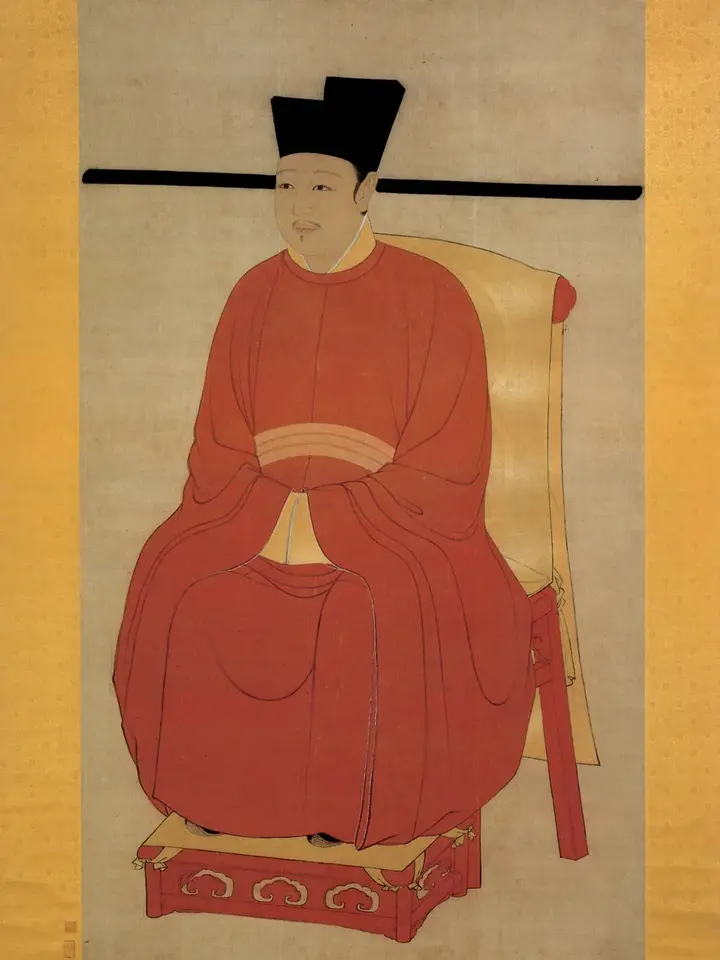
李方膺
Li Fangying (1695–1754), courtesy name Qiuzhong, art name Qingjiang and Qiuchi, and late sobriquet Jieyuan Zhuren, was a native of Tongzhou (modern Nantong, Jiangsu Province). He was a distinguished official, calligrapher, and painter of the Qing dynasty, renowned as one of the Eight Eccentrics of Yangzhou. Born into an illustrious scholar-official family, he accompanied his father to Beijing in his early thirties and was…
Li Fangying (1695–1754), courtesy name Qiuzhong, art name Qingjiang and Qiuchi, and late sobriquet Jieyuan Zhuren, was a native of Tongzhou (modern Nantong, Jiangsu Province). He was a distinguished official, calligrapher, and painter of the Qing dynasty, renowned as one of the Eight Eccentrics of Yangzhou. Born into an illustrious scholar-official family, he accompanied his father to Beijing in his early thirties and was granted an audience by the Yongzheng Emperor, who broke standard conventions to appoint him to administrative service. Li successively served as Magistrate of Le'an, Department Magistrate of Juzhou, and Magistrate of Lanshan in Shandong, as well as Magistrate of Qianshan and Hefei in Anhui. In local administrative office, Li remained resolutely committed to protecting the populace, daring to open imperial granaries without prior authorization during severe floods and famines, and twice suffering false imprisonment for fearlessly rebuking predatory policies of superior provincial governors before eventually being vindicated. Following his final dismissal from office, Li took up residence at the Jieyuan Garden in Jiangning (Nanjing), traveling frequently to Yangzhou to support himself through the sale of paintings and forging intimate intellectual ties with cultural luminaries including Yuan Mei, Zheng Xie (Zheng Banqiao), Shen Feng, and Ding Jing. Accomplished in poetry, prose, calligraphy, and painting, Li earned empire-wide renown for his dynamic inkwash plum blossoms, pines, bamboos, orchids, and storm-swept bamboo groves. His painting style was expansive, bold, saturated with vigorous ink, and unbound by academic conventions, expressing proud, uncompromising literati resolve and exerting a profound influence on subsequent Chinese freehand painting. He passed away in Tongzhou in 1754.
Born into an esteemed scholar-official family in Tongzhou, Jiangnan, demonstrating precocious literary and artistic gifts from youth.
Enrolled in the Tongzhou Confucian School in Yangzhou Prefecture as a licentiate, immersing himself in classical learning.
Selected by provincial authorities under imperial decree for the Worthy and Good civil recruitment category.
Accompanied his father Li Yuhong to Beijing; the Yongzheng Emperor commended his upright bluntness and assigned him to Tian Wenjing.
Appointed acting magistrate of Le'an, opening granaries without authorization to relieve severe flood victims and building levees.
Promoted to Department Magistrate of Juzhou for outstanding flood control and disaster relief, reforming local judicial administration.
Reassigned briefly to Le'an before being transferred to Lanshan County to handle military and banditry defense matters.
Impeached and imprisoned after submitting a fearless memorial opposing reckless land reclamation orders by Governor-General Wang Shijun.
Fully exonerated upon imperial reinvestigation of reclamation abuses, receiving an imperial audience in Beijing.
Lost both parents in succession, withdrawing to Tongzhou to observe six years of strict filial mourning.
Re-entered official service in Anhui, serving as Magistrate of Qianshan, Acting Prefect of Chuzhou, and Magistrate of Hefei.
Framed and dismissed from office after resisting corrupt extortion by the Luzhou Prefect; retired to reside at Jieyuan in Jiangning.
Succumbed to chronic esophageal illness in Tongzhou at age sixty, writing a farewell letter to Yuan Mei requesting an epitaph.
Li Fangying was born in 1695 in Tongzhou, Jiangnan. His grandfather Li Shengtiti and father Li Yuhong were distinguished Qing officials; Li Yuhong rose through the bureaucracy to serve as Deputy Transmission Commissioner and Judicial Commissioner of Fujian. Reared in an environment of scholarly discipline, Li entered the Tongzhou school as a licentiate in 1718. Rather than pursuing conventional examination memorization, he dedicated his formative years to classical poetry, calligraphy, and freehand ink painting.
In 1728, the Yongzheng Emperor promulgated edicts demanding the recommendation of upright, pragmatic men of talent outside standard examination routines. Li was recommended under the "Worthy and Good" category. In 1729, when his elderly father traveled to Beijing to report on state service, the thirty-four-year-old Li accompanied him. During an audience at the Qianqing Palace, the Yongzheng Emperor inquired about the elder's accompanying family. Hearing that Li Fangying was unworldly and plainspoken, the emperor was pleased, observing that resolute natures were best suited for administrative reform. After a personal examination, the emperor granted an imperial decree transferring Li to Tian Wenjing, Governor-General of Henan and Shandong, for coastal county administration.
In 1730, Li was appointed acting magistrate of Le'an County in Qingzhou Prefecture, Shandong. That summer and autumn, catastrophic floods inundated the lower reaches of regional rivers, submerging thousands of homes and leaving widespread famine in their wake. Under standard administrative protocol, seeking imperial approval to distribute stored grain required multiple rounds of bureaucratic review that took months. Recognizing that delays meant mass starvation, Li accepted the risk of capital punishment and ordered the immediate release of one thousand two hundred piculs of imperial grain to feed refugees. Concurrently, he initiated work-relief projects, mobilizing refugees to construct durable flood barriers that stabilized the riverbanks.
Although conservative Qingzhou officials petitioned the throne to impeach Li for misappropriating state reserves, Governor-General Tian Wenjing defended him, reporting that extraordinary crises warranted bold emergency action and praising Li's selflessness. Once floodwaters receded, Li conducted field surveys across coastal basins, compiling treatises on water conservancy including Discourse on the Xiaoqing River and Glimpses of Shandong Water Conservancy, proposing comprehensive hydrological planning for Qingzhou.
In 1732, Li was promoted to Department Magistrate of Juzhou in Laizhou Prefecture in recognition of his flood management and famine relief. In Juzhou, he cleared court dockets, curbed predatory rural elites, and restored displaced tenant families. In 1734, he was briefly reassigned to Le'an to address hydraulic concerns before being transferred in winter to Lanshan County to handle local banditry defense.
In 1735, the newly appointed Governor-General of Shandong and Henan, Wang Shijun, seeking quick accolades at court, decreed an aggressive land reclamation campaign across southern Shandong. Wang forced prefectures and counties to levy land taxes on stony, uncultivable hillsides, sparking extortion by lower clerks and widespread peasant fury. After conducting on-site inspections, Li realized that forcing reclamation in rocky mountainous districts would drive the population into rebellion. Disregarding his own career, he submitted a blunt memorial detailing the ruinous consequences of the policy.
Li's remonstrance enraged Governor-General Wang Shijun. Fabricating charges of insubordination and obstructing imperial policy, Wang stripped Li of his post and had him incarcerated in the Qingzhou prefectural prison, an incident remembered in Qing history as the "Lanshan Injustice." Enraged by the persecution of their upright official, tens of thousands of peasants from Lanshan and Juzhou walked to Qingzhou carrying rice wine and eggs to visit him. When jailers locked the gates against them, crowds tossed provisions and money over the high walls, piling baskets and jars until the entrance street was obstructed. Li remained imprisoned for three years without yielding, spending his confinement reading, writing poetry, and practicing stone painting.
In 1736, upon ascending the throne, the Qianlong Emperor dispatched imperial commissioners to investigate Shandong's reclamation turmoil, dismissed Wang Shijun for deceptive reporting, and ordered Li's full vindication and immediate release. Li was freed in the middle of the night upon the arrival of the imperial courier.
Summoned to Beijing for an audience, Li waited beneath the ancient locust tree beside the Grand Council steps. Grand Secretary Zhu Shi pointed him out to princes and grandees, declaring: "This is Magistrate Li of Lanshan, who risked his life to stop ruinous reclamation!" Court dignitaries crowded forward to observe his austere demeanor. Zhao Guolin, Vice Minister of Rites and an examination contemporary of Li's father, placed a hand on his shoulder and exclaimed that Li Yuhong's house had found a worthy successor. Following the audience, the Qianlong Emperor appointed Li to a magistrate post in Anhui, though Li requested leave to care for his aging mother in Jiangnan before assuming office.
Beginning in 1739, both of Li's parents passed away in close succession. Observing traditional rites, he lived in quiet mourning at his Tongzhou home for six years, shunning visitors while studying classical painting treatises and refining his poetic and brushwork techniques.
In 1745, having completed his mourning obligations, Li reported to the Ministry of Personnel and was assigned as Magistrate of Qianshan County in Anqing Prefecture, Anhui. In Qianshan, he cleared administrative backlogs and abolished illicit levies, winning wide gentry and peasant praise. Impressed by his administrative efficiency, the Anhui Provincial Administration Commission appointed him to oversee affairs in Chuzhou Prefecture, subsequently reassigning him as Magistrate of Hefei County in Luzhou Prefecture.
Hefei was a vital Jianghuai commercial hub rife with entrenched bureaucratic corruption. Shortly after Li's arrival, severe drought struck the region. Following his established principles, Li implemented emergency grain price-stabilization measures without waiting for prefectural approval, disbursing public supplies to alleviate distress. Furthermore, he maintained complete financial purity, refusing to pay customary bribes or seasonal gifts to superior prefectural officials.
His unbending posture provoked the corrupt Luzhou Prefect, who conspired with unscrupulous gentry to fabricate embezzlement accusations against Li, resulting in his dismissal. Over a career spanning more than twenty years as a county magistrate, Li was dismissed or prosecuted three times solely for refusing to flatter corrupt superiors. On the day he departed Hefei, commoners crowded the roads in tears to see him off. Reflecting on bureaucratic rot, Li composed the poem Leaving Hefei City: Two Poems of Farewell to the Elders, delivering his biting verdict: "Local governance in the Han flourished through prefects; local governance in later ages was ruined by them!"
In 1750, at age fifty-six, Li departed officialdom permanently and traveled south to Jiangning (modern Nanjing). He took up residence at the "Jieyuan" (Borrowed Garden), a tranquil retreat owned by his friend the Xiang family, styling himself "Master of the Borrowed Garden." Surrounded by bamboo thickets and old plum trees, the estate afforded him an artistic sanctuary.
Having accumulated no personal savings over decades in public office, Li was reduced to extreme poverty, occasionally struggling to secure daily meals. To support his dependents, he put aside official pride and traveled regularly between Jiangning and Yangzhou, selling calligraphy and paintings for grain and firewood. In his later years, he penned the self-mocking couplet: "Lacking fields, I often beg for rice; in the plum orchard, I spend my days selling plum blossoms," frequently impressing a seal reading "Exchanging for rice to make ends meet" on his paintings, combining free-spirited nonchalance with underlying pathos.
In Nanjing, Li found fellowship among eminent intellectuals and artists. He formed a profound friendship with literary master Yuan Mei of the Suiyuan Garden and master seal carver Shen Feng. The three men frequently toured the Qinhuai River and the scenic slopes of Mount Qixia together, warmly referred to by local literati as the "Three Immortals on an Outing."
Ding Jing, founder of the Zhe School of seal carving in Hangzhou, was famed for his lofty aloofness, rarely carving seals even for high payments. Yet deeply moved by Li's moral character and painterly genius, Ding carved several seals and sent them to Li as gifts, remarking in an inscription: "Li Fangying of Tongzhou is skilled in painting plum blossoms and untrammeled in spirit. Dismissed from office and lodging at the Xiang garden in Jiangning, he wanders daily with Shen Feng and Yuan Mei... Loving his poetry, I carved several seals for him to offer a branch of spring sentiment." In Yangzhou, Li maintained mutual admiration with Zheng Xie (Zheng Banqiao), who lauded Li's bamboo paintings as rivaling Su Shi and Wen Tong.
By 1754, after five years of selling art in Nanjing, Li's health deteriorated severely. Decades of displacement, the physical toll of imprisonment, and lifelong indignation culminated in severe esophageal disease. As his illness worsened, he decided to return to his hometown of Nantong to convalesce.
Only two days after arriving home, Li realized his end was near. On September 2, 1754, he had family members assist him to sit up in bed, writing a farewell letter to Yuan Mei: "I have been home two days, and my illness is critical! I submit the narrative of my life to you. Having lived without worldly glory, I ask whether your luminous prose might illuminate my resting place? Respectfully submitted on September 2." He entrusted the composition of his epitaph entirely to Yuan.
On September 3, Li Fangying passed away at his Tongzhou residence at the age of sixty. When the letter and autobiographical account reached Yuan Mei's Suiyuan retreat, Li was already dead, leaving Yuan inconsolable with grief. Shortly before breathing his last, Li reflected upon his stormy life and brushed eight tragic characters onto his own coffin as an eternal testament and protest: "My death is not to be pitied; I pity only my hands!"
Following his demise, Yuan Mei composed the moving Epitaph of Li Qingjiang, documenting his unyielding integrity and artistic triumphs. Zheng Xie was equally saddened, composing an inscription on Li's plum blossom scrolls five years later that reaffirmed his place as an unparalleled master.
Throughout his administrative posts in Le'an, Lanshan, and Hefei, Li placed the welfare of the people above personal career advancement. During the Le'an floods of 1730, facing the threat of widespread drowning and famine, he risked severe punishment to disburse one thousand two hundred piculs of imperial grain. His work-relief initiatives not only sustained tens of thousands of starving refugees, but also mobilized labor to build flood-control embankments that mitigated long-standing flood hazards.
Furthermore, Li was a pragmatic administrator versed in hydraulic engineering and geography. During his tenure across Shandong, he traveled through marshes and coastal tidal lands, studying sedimentation patterns, flood behavior, and waterways including the Xiaoqing River. He authored practical hydraulic treatises including Discourse on the Xiaoqing River and Glimpses of Shandong Water Conservancy, providing valuable hydrographic records of Yellow River flood zones and offering reliable scientific blueprints for regional river management.
Amidst the pervasive corruption and flattery of Qianlong-era officialdom, Li embodied the finest moral resolve of the traditional scholar-official. When Governor-General Wang Shijun ordered reckless reclamation in 1735, Li protested fearlessly, enduring three years of harsh imprisonment during the Lanshan Injustice without uttering a single plea for leniency. His steadfastness won deep devotion from the peasantry, inspiring massive crowds to assemble and provide food outside his prison gates.
Upon resuming administrative duties in Hefei, Li maintained spotless integrity, resisting the extortion of gifts by the Luzhou Prefect and accepting wrongful dismissal rather than yielding to graft. His verses in Leaving Hefei City: Two Poems of Farewell to the Elders provided an incisive critique of systemic abuses under the centralized bureaucratic apparatus, establishing him as an enduring exemplar of incorruptible local officialdom in Qing history.
In art history, Li is celebrated alongside Li Shan, Wang Shishen, Gao Xiang, Jin Nong, Huang Shen, Zheng Xie, and Luo Ping as one of the Eight Eccentrics of Yangzhou. His artistic genius reached its zenith in paintings of plum blossoms, which stood out within the Eight Eccentrics and marked an epochal development in Qing inkwash painting. Unlike conventional literati works that sought detached fragility and quiet seclusion, Li's plum blossoms radiated wild vitality and defiant power that resisted fierce windstorms.
Li's plum blossoms were distinguished by lean, weathered trunks resembling iron dragons, straight branches rising like spears, and blossoms textured with bold washes of light and dark ink. He favored fractured ancient branches clinging to precipitous cliffs, embodying heroic resilience sharpened by adversity. His famous poetic inscriptions—such as "Snowy blossoms and icy stamens are my daily fare; with a belly full of spring breeze, I am never hungry" and "Unless subjected to crushing breaks, nothing remarkable appears"—mirrored his uncompromising character facing political persecution. Zheng Xie's declaration that Li's plum blossoms were peerless across the realm remains universally endorsed.
Beyond plum blossoms, Li broke fresh ground in portraying ink bamboo, pines, rocks, orchids, and aquatic life. While painters traditionally depicted bamboo in gentle sunshine or soft rain, Li favored storm-tossed pines and bamboos. In his masterpiece Wind-Swept Bamboo along the Xiaoxiang, he used swirling brushstrokes to capture foliage whipped by squalls and bending stems snapping back, inscribing the poem: "Art histories never paint the wind; yet at the hardest point I snatch heaven's craft. Behold this foot of Xiaoxiang bamboo: my ears ring with the clatter of ten thousand jades." He pioneered the visual depiction of auditory tempest forces in Chinese painting.
Li was an accomplished poet and prose writer whose inscribed verses offered sharp social commentary. Later connoisseurs compiled his inscriptions into the collection Poetry of Meihua Lou. His fellowships with Yuan Mei and Shen Feng in Jiangning, alongside his mutual artistic reverence with Zheng Xie and Ding Jing, constituted one of the most culturally vibrant literati circles of the mid-Qing era. His literature and art not only secured his enduring fame, but also infused Chinese literati painting with monumental vitality.
FIGURES ASSOCIATED WITH THIS DYNASTY