Birth in Kuaiji
Born into an esteemed scholarly family within Shaoxing, Zhejiang, displaying extraordinary memory, broad classical literacy, and a passion for bibliophilia.
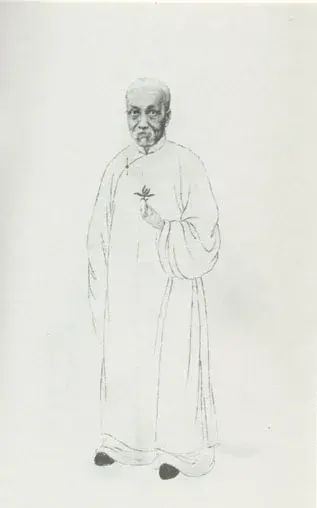
李慈铭
Li Ciming (1830–1895), originally named Maoxue, courtesy name Shenyan, art name Chunke, and late sobriquet Yueman Laoren, was a native of Kuaiji County, Shaoxing Prefecture, Zhejiang Province. He was an outstanding master of literature and history, a towering diarist, a renowned remonstrance official, and an evidential philologist during the Tongzhi and Guangxu eras of the late Qing dynasty, representing the highest zenith of…
Li Ciming (1830–1895), originally named Maoxue, courtesy name Shenyan, art name Chunke, and late sobriquet Yueman Laoren, was a native of Kuaiji County, Shaoxing Prefecture, Zhejiang Province. He was an outstanding master of literature and history, a towering diarist, a renowned remonstrance official, and an evidential philologist during the Tongzhi and Guangxu eras of the late Qing dynasty, representing the highest zenith of premodern Chinese diary literature. Born into a cultured scholar-gentry lineage in eastern Zhejiang, he suffered repeated setbacks in the civil examination halls for three decades before finally passing the imperial palace examination to earn the metropolitan degree (jinshi) in 1870 at age forty-one. He was appointed a secretary in the Ministry of Revenue and subsequently promoted to bureau director. During the Guangxu reign, he served as Investigating Censor of the Shanxi Circuit, where his outspoken remonstrances and unyielding moral courage won him empire-wide fame; he submitted dozens of memorials impeaching imperial princes, metropolitan dignitaries, and powerful provincial governors, celebrated by contemporaries as the "Iron-faced Remonstrator of the Imperial Court." In scholarship and literature, Li accomplished the monumental Diary of Yueman Hall (Yuemantang Riji) through unflagging personal devotion. Spanning forty-one years from 1854 to the eve of his death in 1894, the diary comprises hundreds of juan and several million words. It exhaustively recorded seismic historical transformations including the Taiping Rebellion, the Tongzhi Restoration, the Self-Strengthening Movement, the Sino-French War, and the First Sino-Japanese War, offering meticulous firsthand analyses of metropolitan politics, intellectual networks, evidential textual collation, and literary criticism, widely acclaimed as an "encyclopedia of late-Qing society." Furthermore, he authored major works including Reading Notes of Yueman Hall (Yuemantang Dushu Ji), Notes on the Book of Han, Notes on the Later Han, and Collated Notes on Beitang Shuchao, demonstrating supreme mastery of parallel prose and classical poetry as an exemplar of the traditional scholar. He passed away at his Ping'anju residence in Beijing in January 1895.
Born into an esteemed scholarly family within Shaoxing, Zhejiang, displaying extraordinary memory, broad classical literacy, and a passion for bibliophilia.
Placed first in prefectural examinations to become a licentiate, yet subsequently suffered repeated failures in the provincial exams.
Began keeping a daily journal regardless of weather or health, embarking on the four-decade compilation of the Diary of Yueman Hall.
As Taiping forces threatened eastern Zhejiang, escorted his mother to the countryside before traveling north to Beijing as an itinerant scholar.
After more than two decades of examination struggles, passed the imperial palace examination, appointed Secretary in the Ministry of Revenue.
Appointed Investigating Censor of the Shanxi Circuit and Supervising Censor of Rites, winning renown across the capital for fearless remonstrance.
Impeached Prince Chun Yixuan and Grand Council ministers over military mismanagement during the Sino-French War, stunning court officialdom.
Reassigned to Bureau Director of the Fujian Bureau in the Ministry of Revenue, collating ancient histories and amassing tens of thousands of rare volumes.
Grief-stricken over Qing naval defeats against Japan, concluded his diary in November and passed away in Beijing on January 3, 1895.
Li Ciming was born on January 14, 1830 (the 20th day of the 12th lunar month of the ninth year of the Daoguang reign), into a prominent lineage in Kuaiji County, Shaoxing Prefecture, Zhejiang. His father, Li Baishun, was a commoner Confucian scholar versed in the Book of Changes. Highly precocious from childhood, Li Ciming had a photographic memory and composed refined poetry and prose by age ten. Nevertheless, his civil examination journey proved extraordinarily tortuous. In 1847, at seventeen, Li took first place in the prefectural examination to gain licentiate status, gaining early fame throughout eastern Zhejiang.
Yet over the ensuing two decades, Li traveled repeatedly to Hangzhou for the provincial examinations, failing eight consecutive times. These repeated setbacks and the fickle indifference of worldly society sharpened his aloof and fiercely independent temperament. He redirected his intellect toward scouring the breadth of pre-Qin, Han, Wei, and Six Dynasties canons, histories, and literary compendia, building a humble studio in Xiachuan where he spent his days transcribing and reading books. In 1854, at age twenty-five, Li resolved to record his daily intellectual findings and observations without fail, initiating one of the grandest personal journaling endeavors in Chinese historiography.
During three decades of secluded scholarship, Li copied countless texts by hand. Convinced that the rigid eight-legged examination essay could not serve statecraft, he dedicated himself to original classical texts, reading through the Thirteen Classics with Commentaries, the Twenty-Four Dynastic Histories, the Zizhi Tongjian, and individual collected works, making detailed notes in bright cinnabar and black ink. In his Xiachuan cottage, he debated fellow local scholars, verifying philological etymologies and analyzing the institutional rise and fall of dynasties. This austere early life tempered his unbending scholarly resolve, laying an unshakeable foundation for his future fame in Beijing.
In the winter of 1860, Taiping Heavenly Kingdom forces led by Loyal King Li Xiucheng swept through Jiangsu and Zhejiang, capturing Hangzhou and pressing upon Shaoxing. Li Ciming escorted his elderly mother and family through the rugged hills of Shanxi and Zhuji, witnessing widespread desolation and war-torn misery. Amidst this existential crisis, Li resolved to leave his native soil and travel north to Beijing to seek a livelihood.
Arriving in the capital, Li stayed in monastery quarters such as Fayuan Temple and Bao'an Temple in the Xuan-nan district, sustaining himself through commercial writing while cultivating ties with intellectual luminaries like Pan Zuyin and Zhang Zhidong. In 1870, having endured thirty years of examination frustration, the forty-one-year-old scholar finally passed the palace examination to earn the jinshi degree, appointed as a secretary in the Ministry of Revenue. Li promptly rented a tranquil courtyard on Bao'an Temple Street outside Xuanwumen, naming it "Ping'anju" (The Abode of Peace), adopting the sobriquet "Yueman Laoren," and formally inaugurating a twenty-year career as a metropolitan official and resident scholar.
When he first settled in Beijing, Li was penniless, depending entirely on his brush for subsistence. Yet his formidable reputation for classical and historical erudition rapidly permeated elite literati circles. Pan Zuyin, Minister of Works, was astounded by Li's prose and formed an intimate scholarly fellowship with him; Weng Tonghe, Vice Minister of Revenue, and Zhang Zhidong, Governor of Hubei, frequently visited his quarters to borrow rare editions and debate statecraft. Ping'anju became a vibrant hub for scholarly salons where Li occupied his leisure with poetry, text-collation, and epigraphy, commanding deep respect throughout the capital's intellectual elite.
In 1880, ranking first in the palace selection examination, Li Ciming was appointed Investigating Censor of the Shanxi Circuit, formally entering the Censorate. In an era when bureaucratic corruption was rampant and supervisory officials were often subservient or silent, Li stepped forward with unyielding literati integrity, emerging as one of the last celebrated "iron-faced censors" of the late Qing dynasty.
During his tenure in the Censorate, Li disregarded personal safety, submitting more than sixty memorials addressing state affairs and official misconduct. Around the outbreak of the Sino-French War in 1884, he repeatedly attacked Northern Superintendent Li Hongzhang for excessive vacillation and diplomatic appeasement. Following the disastrous naval defeat at the Battle of Fuzhou, he submitted an unsparing memorial directly impeaching Prince Chun Yixuan, the presiding Grand Council minister, along with other Grand Councilors for strategic incompetence, dereliction of duty, and bureaucratic inertia. High officials trembled at his denunciations; Empress Dowager Cixi, while wary of his bluntness, respected his absolute impartiality and took no punitive action against him.
Within the late-Qing "Pure Stream" (Qingliu) faction of scholar-officials, Li Ciming maintained close solidarity with Baoting, Zhang Peilun, Deng Chengxiu, and Chen Baochen, collectively hailed as the pillars of dynastic rectitude. Unlike others who engaged in broad political rhetoric, Li grounded every memorial in rigorous statutory precedents and historical administrative analysis, making his arguments unassailable. Beyond military affairs, he memorialized on Zhili flood relief, Shandong salt monopoly abuses, Eight Banners livelihood reforms, and metropolitan official evaluations, vehemently excoriating provincial governors for deceiving the throne and earning deep reverence from Beijing residents, who widely praised him as a true censor.
In 1888, Li Ciming was reassigned to the post of Bureau Director of the Fujian Bureau in the Ministry of Revenue, gradually withdrawing from remonstrance controversies to return to private scholarship. At Ping'anju, surrounded by tens of thousands of books lining the walls, he spent evenings beside flickering candles, collating the Book of Han, Book of the Later Han, Records of the Three Kingdoms, Book of Jin, and Beitang Shuchao, compiling tens of thousands of exegetical reading notes.
During his final years as bureau director, Li lived with austere frugality. He channeled his modest salary and literary stipends entirely into purchasing rare woodblock impressions and epigraphic stone rubbings. His personal collection grew to more than forty thousand juan, filling his residence to capacity. Night after night he worked until the early hours, scrupulously cross-examining imperial annals, biographies, treatises on geography, administrative offices, and astronomical charts, covering margins with dense cinnabar annotations. Disinterested in fleeting fame, he sought only objective veracity, demonstrating the noble detachment of an evidential scholar.
In 1894, the First Sino-Japanese War erupted. Confined to his sickbed, the sixty-four-year-old scholar followed reports from Pyongyang and the Yellow Sea with agonizing anxiety. Upon learning of the catastrophic destruction of the Beiyang Fleet and the fall of Lushun, Li was overwhelmed with grief, weeping bitterly and triggering severe hemoptysis. On December 9, 1894 (the 3rd day of the 11th lunar month), he penned his final entry in the Diary of Yueman Hall, his mind subsequently lapsing into delirium. On January 3, 1895 (the 8th day of the 12th lunar month of the 20th year of Guangxu), this intellectual giant passed away in his Ping'anju studio at the age of sixty-six.
Li Ciming's most enduring monument in Chinese cultural history is his authorship of the Diary of Yueman Hall (Yuemantang Riji), celebrated as the supreme pinnacle of premodern Chinese diary literature.
Commenced in September 1854 and concluded in November 1894, Li maintained his journal for forty-one years with exceptional discipline, never missing a day except during critical illnesses. Written in an elegant yet accessible classical style, the diary provides an exhaustive panorama of late-Qing history. Its scope is immense: at the macroeconomic level, it captures imperial policy debates surrounding the Sino-French War, the Sino-Japanese War, the Xinyou Coup, and Tongzhi Restoration; at the administrative level, it assesses key figures such as Weng Tonghe, Zhang Zhidong, Li Hongzhang, Zuo Zongtang, and Zeng Guofan; at the micro-historical level, it records daily scholarly life, book acquisitions, theatrical performances, market price movements, weather patterns, and domestic concerns. It is both an irreplaceable primary historical repository and an exquisite masterpiece of prose, lauded by Hu Shi as "the foremost extraordinary book of the late Qing" and praised by Lu Xun for its acute cultural observations.
Artistically, the diary achieved peerless descriptive craftsmanship. Li drew vivid psychological portraits of hundreds of late-Qing officials and literati, candidly recording the anxieties, struggles, and existential dilemmas of traditional intellectuals during imperial decline. His depictions of seasonal festivals, southern water-town traditions, and urban street life in Beijing possess rich visual immediacy. Flowing with refined cadence across several million words, the work stands not only as an unprecedented peak in premodern Chinese personal journals, but also as a shining treasure in world autobiographical literature.
As Investigating Censor of the Shanxi Circuit, Li established a revered historical standard of fearless, principled remonstrance within late-Qing governance.
Operating as a supervisory censor, Li steadfastly upheld his duty to defend the realm without fear of retribution. He submitted dozens of incisive memorials on major socio-economic matters, including salt tax reform, Banner maintenance, Yellow River levee breaches, and Grand Canal tribute transport. Facing entrenched figures like Prince Chun Yixuan, Prince Gong Yixin, and Grand Secretary Li Hongzhang, before whom most courtiers deferred, Li alone voiced unsparing criticisms, exposing administrative inertia and reckless compromise. In his memorials, he condemned high officials for seeking personal favor while feigning devotion, noting that empty claims of coastal defense concealed a complete lack of military readiness. His moral tenacity revitalized literati conscience and provided an inspiring final chapter in the history of imperial China's supervisory institutions.
Beyond his roles as diarist and censor, Li was a deeply learned evidential scholar who made substantial contributions to premodern philology and historiography.
Li read texts with extraordinary rigor, systematically comparing variant editions word by word and recording extensive analytical notes. His thirty-two-volume Reading Notes of Yueman Hall (Yuemantang Dushu Ji) offered systematic critiques and textual analyses of nearly one thousand ancient and modern works spanning classics, histories, philosophical masters, and literary anthologies. His Notes on the Book of Han and Notes on the Later Han corrected hundreds of errors in the authoritative commentaries of Yan Shigu and Prince Li Xian; his Collated Notes on Beitang Shuchao is universally regarded as a masterclass in ancient encyclopedia textual criticism. Blending broad philological erudition with keen institutional insight, his work established enduring benchmarks for modern Qing historical studies.
In Reading Notes of Yueman Hall, Li approached scholarly criticism without sectarian bias, impartially evaluating Song neo-Confucianism, Han learning, Ancient Text, and New Text traditions. He affirmed predecessors' genuine insights while frankly exposing errors in their textual verifications. In collating the Tang encyclopedia Beitang Shuchao, he aligned ancient Tang manuscript fragments, rectifying thousands of typographical omissions and misreadings, establishing an indispensable model for subsequent textual scholars.
In pure literature, Li Ciming was an acknowledged master of parallel prose (piantiwen) and classical poetry, authoring Collected Poetry of Yueman Hall and Collected Prose of Yueman Hall.
Li championed the authentic lineage of Han, Wei, and Six Dynasties parallel prose, deploying erudite allusions, rigorous antithetical balance, and surging rhythmic power that swept away the shallow verbosity into which later parallel prose had fallen. Alongside Wang Kaiyun and Li Zhaoluo, he was recognized as one of the ultimate masters of late-Qing parallel literature. In poetry, he absorbed the vitality and depth of Han Yu, Su Shi, and Huang Tingjian, blending tragic lamentations over national decline with serene verses depicting natural scenery. His collections remain essential reference points for studying the Tong-Guang poetic style and late imperial classical verse.
Li authored over four thousand poems throughout his life, compiled into collections such as Baihua Jiangfu Ge Shi and Taohua Shengjie'an Shi. While his early poetry aimed at lucid grace, his style deepened into somber majesty following years of wartime displacement, capturing the psychological trauma of Chinese intellectuals facing foreign invasion and internal rebellion. Blending classical erudition with lyrical eloquence, his verse was hailed among late-Qing literati as achieving the harmonious union of the scholar's mind and the poet's spirit.
FIGURES ASSOCIATED WITH THIS DYNASTY