李成梁
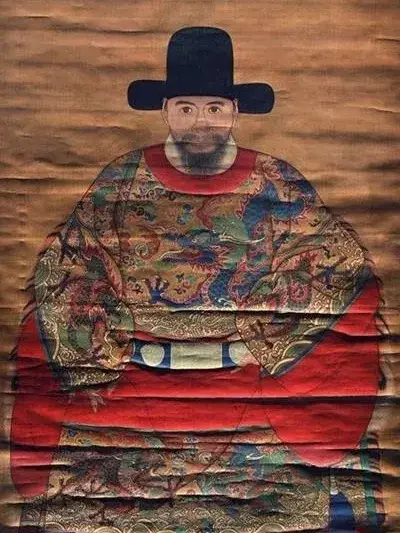
Historical portrait of Li Chengliang
Image creditsUnknown Chinese artist · Public domainImage source

Historical figure

Li Chengliang (李成梁)

李成梁

Li Chengliang (李成梁, 1526–1615), courtesy name Ruqi, art name Yincheng, was a native of Tieling Guard, Liaodong (modern Tieling, Liaoning Province). He was an illustrious military commander and border defense strategist of the mid-to-late Ming dynasty, created Earl of Ningyuan and holding the supreme ranks of Regional Commander of Liaodong, Left Senior Military Commissioner, and Grand Tutor. Li's ancestor Li Ying had migrated…

Era not stated

PROFILE

Li Chengliang (李成梁, 1526–1615), courtesy name Ruqi, art name Yincheng, was a native of Tieling Guard, Liaodong (modern Tieling, Liaoning Province). He was an illustrious military commander and border defense strategist of the mid-to-late Ming dynasty, created Earl of Ningyuan and holding the supreme ranks of Regional Commander of Liaodong, Left Senior Military Commissioner, and Grand Tutor. Li's ancestor Li Ying had migrated to the Ming empire from Korea in the early Hongwu reign, receiving hereditary appointment as Assistant Guard Commander of Tieling Guard. Possessing resolute determination, immense physical prowess, and strategic acumen, Li was impoverished in his youth and unable to afford the travel expenses to Beijing to claim his inheritance, remaining a common licentiate until the age of forty. In 1566, with financial sponsorship from an investigating censor, he traveled to the capital to inherit his military post, quickly distinguishing himself in combat. In 1570, following the death in battle of Liaodong Regional Commander Wang Zhidao, Li was appointed Acting Regional Commander. He instituted sweeping reforms, enforcing iron discipline and assembling the elite "Xuanfeng" shock cavalry, employing aggressive preemptive assaults, deep long-range decapitation raids, and scorched-earth tactics that completely reversed the passive defenses of Liaodong. Supported by Senior Grand Secretary Zhang Juzheng, Li oversaw the fortification of the Six Forts of Kuandian, expanding Ming frontier territory by hundreds of li and settling over sixty thousand agrarian households; he also successfully advocated the reopening of Liaodong horse markets, stimulating multi-ethnic border commerce. During his nearly thirty years governing Liaodong, Li reported ten major battlefield victories to the throne, repeatedly crushing powerful Mongol and Jurchen leaders such as Tuman Khan, Subahai, and Wang Gao. The Wanli Emperor erected a monumental ceremonial stone archway in Liaodong in his honor, and Li's sons—most notably Li Rusong and Li Rubai—achieved regional commands across the empire, elevating the "Li Family Generals" to peerless renown. The History of Ming recorded that his military glory as a border commander was unmatched for two centuries. However, in his later years, Li succumbed to hubris and graft, pocketing border revenues and concealing battlefield reverses. In 1606, he arbitrarily abandoned the Six Forts of Kuandian on grounds of logistical difficulty, forcibly deporting sixty-four thousand households with severe casualties, which inadvertently opened strategic territory for the rise of Nurhaci's Jianzhou Jurchens. Li passed away in Beijing in 1615 at the age of ninety, receiving lavish imperial funerary honors and burial at Mount Yangshan.

Courtesy Name
Ruqi (汝契)
Art Name
Yincheng (引城)
Date of Birth
1526
Date of Death
1615
Age at Death
90
Ancestral Home
Tieling Guard, Liaodong
Highest Office
Regional Commander of Liaodong, Left Senior Military Commissioner, Specially Promoted Grand Master for Glorious Happiness, Grand Tutor, Earl of Ningyuan
Historical Role
Illustrious late Ming military commander who stabilized the Liaodong frontier for three decades, pacified Mongol and Jurchen tribes, and founded the lineage of the Li Family Generals

LIFE TIMELINE

Relationship graph

BIOGRAPHY

Chronology

  • 1526 | Birth in Tieling | Born into a hereditary garrison household in Tieling, Liaodong; lived in deep poverty in his early years.
  • 1566 | Inheriting Post in Beijing | Sponsored by an investigating censor to travel to Beijing to inherit the post of Assistant Guard Commander.
  • 1570 | Acting Regional Commander | Appointed Acting Regional Commander of Liaodong following Wang Zhidao's death; organized the Xuanfeng cavalry.
  • 1573 | Fortification of Kuandian | Defeated the Chahar Mongols and proposed building the Six Forts of Kuandian, expanding borders by hundreds of li.
  • 1574 | Defeat of Wang Gao | Routed the forces of Jianzhou Jurchen leader Wang Gao, capturing and executing him, and advanced to Left Senior Military Commissioner.
  • 1578 | Victories at Pishan and Huanshan | Shattered the combined Mongol hosts of Subahai and Tuman at Pishan and Huanshan, earning investiture as Earl of Ningyuan.
  • 1583 | Storming of Gule Fortress | Destroyed Atai at Gule Fortress, exterminating Wang Gao's lineage, and ambushed Yehe chieftains at Zhenbei Pass.
  • 1591 | Concealing Reverses and Resignation | Impeached by censors for concealing catastrophic casualties in Li Ning's frontier raid; resigned command.
  • 1601 | Reinstatement at Advanced Age | Recalled at the age of seventy-six to reassume the Liaodong command following widespread defense decay.
  • 1606 | Abandonment of Six Forts | Evacuated the Six Forts of Kuandian, forcibly driving over sixty thousand civilian households into the interior with heavy casualties.
  • 1608 | Retirement to Beijing | Impeached by Xiong Tingbi and other censors over the abandonment of Kuandian; relieved of office and retired to Beijing.
  • 1615 | Death at Age Ninety | Passed away in Beijing at the age of ninety; granted state funerary sacrifices and entombed at Mount Yangshan.

Life and Career

Poverty in Early Life and Late Rise

Li Chengliang was born in 1526, during the fifth year of the Jiajing reign, in Tieling Guard, Liaodong. His ancestor Li Ying had submitted to the Ming dynasty from Korea during the early Hongwu reign and was rewarded with the hereditary office of Assistant Guard Commander in Tieling Guard, where the family established permanent roots. Li Chengliang grew up with an imposing stature and resolute spirit, displaying profound mastery of military treatises and equestrian archery. However, by the time of his father Li Jing, the household had sunk into acute destitution, lacking even the basic silver needed to travel to the capital to register his hereditary commission. As a consequence, Li remained an impoverished local student in his home prefecture until the age of forty.

In 1566, during the final year of the Jiajing reign, a provincial investigating censor visited Tieling. Astonished by Li's dignified bearing, eloquent command of strategic issues, and profound understanding of frontier geography, the censor paid Li's travel expenses out of his own funds. Arriving in Beijing, Li completed his examinations at the Ministry of War and formally inherited his ancestral post as Assistant Guard Commander. Displaying extraordinary battlefield courage, he was quickly promoted to Assistant Regional Commander of Xianshan. In 1567, when tens of thousands of Chahar Mongol cavalry under Tuman Khan invaded Yongping, Li led relief detachments in rapid forced marches, achieving distinction that earned him promotion to Vice Regional Commander stationed at Liaoyang. In April 1569, when Mongol chieftain Zhang Baishi encamped outside the border fortifications preparing an assault, Li executed a decisive preemptive ambush, slaying the chieftain and routing his detachment, for which the court advanced his military rank.

First Regional Command and the Xuanfeng Cavalry

In September 1570, during the fourth year of the Longqing reign, Mongol forces under Tuman Khan and Xin'ai Huangtaiji launched a massive invasion of Liaodong. Regional Commander Wang Zhidao fell in battle, leaving the provincial defenses in extreme crisis. Within the preceding decade, three successive Ming regional commanders—Yin Shangzhi, Yang Zhao, and Wang Zhidao—had perished against northern raiders, shattering garrison morale. Facing impending disaster, the court commissioned Li Chengliang as Acting Regional Commander of Liaodong.

Assuming command in the midst of catastrophe, Li recognized that deep-seated decay and defeatism had paralyzed border forces. He enforced strict martial law, executing corrupt officers who embezzled rations, while recruiting thousands of hardy frontiersmen with lavish stipends to form the elite "Xuanfeng" shock cavalry. Breaking with passive defensive traditions, Li led the Xuanfeng units outside the wall to confront invading forces head-on, combining frontal holding maneuvers with crushing flank cavalry charges. Between 1571 and 1573, he scored successive victories against Tuman Khan at Dalinghe and Zhuoshan, earning promotion to Commissioner-in-Chief and hereditary garrison rank.

In July 1573, Li submitted a comprehensive frontier fortification plan to Vice Minister of War Wang Daokun, proposing the forward relocation of Xianshan and Gushan fortifications to Kuandian, Changdian, and Changling, thereby establishing the Six Forts of Kuandian. Personally supervising construction, Li advanced Ming defensive lines hundreds of li into the wilderness, establishing a robust perimeter that shielded eastern Liaodong. He mobilized thousands of displaced peasants and soldiers to establish military agricultural colonies and construct irrigation canals, transforming wilderness into fertile farmland supporting over sixty-four thousand households, which severely curtailed Jurchen raiding paths.

Great Military Triumphs and Ennoblement as Earl

Following the fortification of Kuandian, Jianzhou Jurchen leader Wang Gao, angered by strict imperial trade regulations, murdered Ming border commander Pei Chengzu at the Fushun horse market and launched open rebellion. In October 1574, Wang Gao led a large force against Liaodong borders. Li prepared a devastating ambush near Gule Fortress, deploying his Xuanfeng cavalry to encircle and annihilate the invading host, taking over a thousand heads. Wang Gao fled to the Hada Jurchens, whose chieftain Wang Tai arrested and surrendered him to Ming authorities for execution. In recognition of this complete pacification, the court formally confirmed Li as Regional Commander of Liaodong, promoted him to Left Senior Military Commissioner, and granted his family hereditary honors.

Over subsequent years, Li established unparalleled dominance over northeastern frontiers. In the winter of 1575, he crushed a combined invasion by Chaohua of the Inner Khalkhas and Heishitan of the Chahars. In January 1578, when Subahai of the Taining tribe and Tuman Khan mobilized tens of thousands of horsemen against Liaoyang, Li ambushed and routed them at Pishan; in December, he defeated them again at Huanshan, taking over a thousand heads across both engagements. In 1579, when Tuman launched a retaliatory invasion, Li coordinated with Jizhou Commander Qi Jiguang, delivering a joint defeat that compelled the nomads to withdraw. An elated Wanli Emperor created Li Earl of Ningyuan with an annual stipend of one thousand piculs of grain. In 1580, when Wang Wutang raided the frontier, Li destroyed his stronghold. That October, the emperor ordered the provincial governor to construct the monumental "Earl of Ningyuan Li Chengliang Stone Archway" at Guangning to commemorate his feats for posterity.

In 1583, Atai, son of Wang Gao, reassembled rebel remnants at Gule Fortress. Coordinating with Hada chieftain Nikan Wailan, Li stormed the stronghold, killing Atai and eradicating Wang Gao's faction. During the chaotic assault, Nurhaci's grandfather Giocangga and father Taksi were inadvertently slain by Ming troops; Li subsequently returned their imperial patents and horses to Nurhaci, enlisting him as a subordinate officer while pursuing a divide-and-rule policy among Jurchen tribes. That winter, when Yehe chieftains Yangginu and Cinggiyanu rebelled, Li ambushed and killed them at the Zhenbei Pass horse market in Kaiyuan. During his first tenure, Li reported ten grand victories to Beijing. The emperor conducted ancestral sacrifices at the Imperial Ancestral Temple, heaping lavish gifts of python robes upon Li. Advanced to the supreme rank of Grand Tutor, Li saw his sons Li Rusong, Li Rubai, and others rise to regional commands, inaugurating the legendary era of the "Li Family Generals."

Arrogance, Corruption, and Dismissal from Service

Following the death of Senior Grand Secretary Zhang Juzheng, Li lost his paramount political patron and supervisor in the capital. Gradually succumbing to hubris and extravagance, Li constructed palatial mansions in Liaodong, maintaining hundreds of courtesans and private retainers while indulging his sons and subordinates in unchecked arrogance. The revenues from border horse markets, salt distributions, military allocations, and frontier trade were systematically funneled into Li's private coffers, provoking widespread resentment among soldiers. To shield himself from scrutiny, Li used his illicit fortune to bribe high-ranking courtiers and inner court eunuchs in Beijing.

In February 1590, Li dispatched troops beyond the passes to raid Mongol encampments; the detachment was ambushed with over a thousand casualties, yet Li submitted a fraudulent report claiming a victory of two hundred and eighty heads to claim imperial rewards. In March 1591, Vice Commander Li Ning led an expeditionary force that suffered an even more catastrophic defeat against Mongol cavalry, losing thousands of men. Li Chengliang suppressed the disaster entirely, failing to report the losses to Beijing. Investigating Censor Hu Kejian uncovered the deception and impeached Li for deceiving the throne and falsifying military reports. Although the Wanli Emperor shielded his favorite general, censorate denunciations multiplied. Recognizing his untenable position, Li submitted two retirement petitions citing illness, and in November 1592 the court relieved him of command, permitting him to retain his noble title as Earl of Ningyuan.

During the decade following Li's dismissal, Liaodong fell into defense paralysis. The court rotated eight regional commanders through the post, none of whom possessed the prestige to restrain Mongol or Jurchen tribes. Meanwhile, Nurhaci expanded his dominion unchecked, exploiting the power vacuum to unify the Jianzhou tribes.

Second Command in Old Age and Abandoning the Six Forts

In August 1601, following the dismissal of Commander Ma Lin over clashes with tax eunuch Gao Huai, the Liaodong command became vacant. Grand Secretary Shen Yiguan urged the emperor to recall Li Chengliang, arguing that his veteran prestige could overawe hostile tribes. The Wanli Emperor agreed, reappointing Li as Regional Commander of Liaodong at the advanced age of seventy-six.

Returning to Liaodong in his twilight years, Li lacked the stamina for aggressive campaigning and adopted an appeasement policy. With veteran Mongol chieftains deceased and horse markets flourishing at Kaiyuan and Guangning, border fighting remained relatively quiet during his eight-year second tenure, earning him the supreme rank of Grand Tutor. However, in 1606, Li claimed that the Six Forts of Kuandian were isolated, costly to supply, and impossible to hold, petitioning the court to evacuate the forts and forcibly deport over sixty-four thousand civilian households into the interior. The border populace wept and resisted abandoning their ancestral homesteads, prompting Li to deploy troops to drive them inland by force, causing thousands to perish from trampling, cold, and famine. The evacuation abandoned hundreds of li of fertile territory, creating an unhindered corridor for Nurhaci's southward expansion.

Simultaneously, Li colluded with corrupt eunuch Gao Huai to extort commercial taxes, inciting widespread public indignation. In 1608, newly appointed Investigating Censor Xiong Tingbi and Supervising Secretary Li Qizhen fiercely impeached Li for abandoning vital territory and inviting barbarian aggression. Compelled by mounting pressure, the Wanli Emperor recalled Li to Beijing. Li spent his final years in quiet reclusion, passing away in 1615 at the age of ninety. The emperor expressed grief, granting him lavish state funerary honors, posthumous promotion to Grand Preceptor, and an honorable tomb at Mount Yangshan.
Major Achievements

Building the Six Forts of Kuandian and Reopening Border Horse Markets

During the early Wanli reign, Li proposed and directed the construction of six fortress communities at Kuandian, extending Ming defenses hundreds of li into eastern Liaodong and settling over sixty-four thousand farming households. He championed the reopening of border horse markets, stimulating trade between Han settlers and neighboring tribes, which fostered regional economic prosperity and border stability.

Assembling the Xuanfeng Cavalry to Defeat Northern Incursions

To overcome long-standing military decay in Liaodong, Li organized the elite Xuanfeng shock cavalry, implementing forward offensive ambushes, flank penetrations, and decapitation raids. Reporting ten major triumphs to Beijing over two decades, he repeatedly crushed the Chahar and Taining Mongols, eradicated Wang Gao's Jianzhou forces, and established unprecedented Ming military dominance along the northern borders.

Thirty Years of Command and Establishing the Glory of the Li Generals

Commanding the northeastern borders for nearly three decades under Zhang Juzheng's administrative reforms, Li earned the title Earl of Ningyuan and the rank of Grand Tutor. His sons, including Li Rusong and Li Rubai, became legendary commanders who defended Korea and pacified border rebellions, creating the peerless prestige of the Li Family Generals, though his late abandonment of Kuandian left enduring strategic controversies.

Interpersonal Relations

  • Grand Secretary Patron: Zhang Juzheng, Senior Grand Secretary of the Ming court, whose reforms relied heavily on Li to secure Liaodong and who provided steadfast political protection.
  • Frontier Comrade: Qi Jiguang, renowned Ming general and Regional Commander of Jizhou, who coordinated closely with Li to shield the northern perimeter.
  • Eldest Son and Hero: Li Rusong, Li's eldest son, supreme commander during the Imjin War in Korea, who martyred himself against Mongol raiders and was posthumously created Junior Protector.
  • Second Son and Commander: Li Rubai, Vice Regional Commander of Jizhou, who committed suicide after surviving the disastrous defeat at the Battle of Sarhu.
  • Third Son and General: Li Ruzhen, Regional Commander of Liaodong, who was banished for the loss of Tieling during the late Ming conflicts.
  • Subordinate Jurchen Chieftain: Nurhaci, founder of the Later Jin dynasty, who served in Li's camp in his youth and exploited Li's policies to unify the Jurchen tribes.
  • Incorruptible Censor: Xiong Tingbi, late Ming Supreme Commander of Liaodong, who fiercely impeached Li for abandoning the Six Forts of Kuandian.

Historical Appraisals

  • History of Ming: Biography of Li Chengliang recorded: "Chengliang was valiant, alert, and possessed great strategic cunning, though overly proud of his achievements. When he governed Liaodong, he struck enemy camps with elite shock cavalry, spreading terror among foreign tribes. Reporting ten major triumphs, his martial glory as a border commander stood unmatched for two hundred years. Enjoying imperial favor throughout his life, his sons all rose to supreme military ranks, dominating the northern borders. Yet in his later years he grew conceited and neglectful, abandoning territory and emboldening adversaries, so that his merits and errors shadowed one another."
  • Imperial Ennoblement Patent of the Wanli Emperor: "With grand vision and heroic fortitude, you have anchored our eastern borders. Beheading enemy chiefs and carrying our banners forward, you have submitted ten victory despatches; building strongholds and pacifying the populace, you have swept thousands of li clean. Your loyal valor stands unrivaled through history; thus we enfeoff you as Earl of Ningyuan, hereditary throughout generations."
  • Qing scholar Wei Yuan analyzed in Military Chronicles of the Sacred Dynasty: "Li Chengliang directed Liaodong for thirty years, using barbarians against barbarians and manipulating cunning tribes as if in the palm of his hand. Nevertheless, by harboring the founding Qing emperor under his banners and abandoning the Six Forts of Kuandian outside the wall, though unintentional, he unwittingly laid the foundations for the rise of the Great Qing."
  • Modern historian Meng Sen concluded: "Li Chengliang governed Liaodong for over two decades, checking both Mongol and Jurchen tribes, a feat whose historical merit cannot be erased. Yet his operational methods prioritized decapitation tallies and reckless financial rewards. In his old age he hoarded wealth, accepted bribes, and surrendered the Six Forts, freeing the Jianzhou Jurchens from internal anxieties and handing them dominion over Liaodong. Later commentators rightfully attribute the rise of the Jurchen peril to Chengliang."

Related Entries

  • [[Six Forts of Kuandian]]
  • [[Liaodong Horse Markets]]
  • [[Zhang Juzheng]]
  • [[Li Rusong]]
  • [[Nurhaci]]
  • [[Battle of Sarhu]]

FIGURES ASSOCIATED WITH THIS DYNASTY

Bibliography

  • History of Ming, Volume 238, Biographies 126: Biography of Li Chengliang
  • Veritable Records of the Ming Shenzong, Volumes 98 and 420
  • History of the Founding of Manchuria, by Meng Sen