Birth into Gentry Lineage in Fuzhou
Born into the Ran official clan in Fuzhou, Sichuan; father was regional prefect Ran Wangsuo.
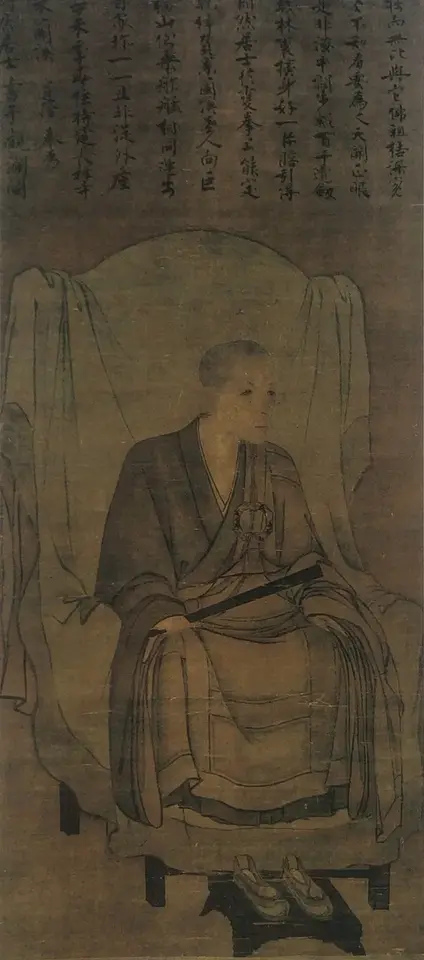
兰溪道隆
Lanxi Daolong (兰溪道隆, 1213–August 13, 1278), secular surname Ran, monastic name Daolong, art name Lanxi, was a native of Fuzhou, Sichuan (modern Fuling District, Chongqing). He was an eminent master of the Yangqi branch of the Linji Chan school during the Southern Song dynasty and the founding patriarch of Kencho-ji in Kamakura, Japan. He was the first Chinese master to transmit pure Song-style Chan monasticism to Japan,…
Lanxi Daolong (兰溪道隆, 1213–August 13, 1278), secular surname Ran, monastic name Daolong, art name Lanxi, was a native of Fuzhou, Sichuan (modern Fuling District, Chongqing). He was an eminent master of the Yangqi branch of the Linji Chan school during the Southern Song dynasty and the founding patriarch of Kencho-ji in Kamakura, Japan. He was the first Chinese master to transmit pure Song-style Chan monasticism to Japan, revered in Japanese Buddhist historiography as the "Founding Father of Zen in this Land," and was posthumously honored by Emperor Go-Uda of Japan as "Great Awakening Zen Master" (Daikaku Zenji). Daolong came from a prominent gentry lineage in Fuzhou; his father, Ran Wangsuo, was Governor of Fuzhou and died in battle resisting Jurchen Jin invasions. Stricken by the transience of life, thirteen-year-old Daolong entered Daci Temple in Chengdu to be tonsured under Master Liangfan. As a young monk, he traveled down the Yangtze River to Jiangnan, visiting renowned masters such as Wuzhun Shifan and Chijue Daochong. Under Master Wuming Huixing in Gusu (Suzhou), he attained profound enlightenment upon contemplating the koan "A Water Buffalo Passing Through a Window Lattice," receiving transmission in the Yangqi lineage. He subsequently dwelled at Jingde Temple on Mount Tiantong in Mingzhou (Ningbo), where he befriended the Japanese pilgrim monk Myokan Chikei. In 1246 (Chunyou Year 6), answering invitations from Japanese practitioners, Daolong led a missionary group of disciples across the sea to Japan, becoming the first Chinese Chan master to lead a formal mission to Japan. Upon arrival, Daolong lectured in Hakata and Sennyu-ji in Kyoto, introducing Song monastic rules. He was invited to Kamakura by Hojo Tokiyori, the fifth regent of the Kamakura shogunate, who took monastic vows under him and installed him as abbot of Joraku-ji. In 1253 (Kencho Year 5), backed by Tokiyori, Daolong completed Kencho-ji—the first pure Song-style Zen monastery in Japan—becoming its founding abbot. Emperor Go-Fukakusa granted the temple plaque "Great Kencho Flourishing-the-Country Zen Temple." Over thirty-three years in Japan, Daolong established nearly fifty Zen monasteries, authored the Monastic Regulations and Dharma Talks, reformed monastic discipline, and introduced Neo-Confucianism, Song architecture, and calligraphic arts to Japanese society. He passed away at Kencho-ji in 1278 at age sixty-six. Emperor Go-Uda conferred upon him the title "Great Awakening Zen Master," inaugurating the imperial tradition of granting the title "Zen Master" in Japan. His teachings were compiled into the three-volume Recorded Sayings of Daikaku Zenji, and his calligraphic masterworks are preserved as National Treasures of Japan. His historic mission parallels that of Jianzhen in the Tang dynasty.
Born into the Ran official clan in Fuzhou, Sichuan; father was regional prefect Ran Wangsuo.
After his father died resisting Jin invaders, thirteen-year-old Daolong was tonsured at Daci Temple in Chengdu under Master Liangfan.
Traveled to Zhejiang; achieved awakening under Wuming Huixing in Suzhou over the water buffalo koan, inheriting the Yangqi lineage.
Invited by Japanese monk Myokan Chikei, set sail from Mingzhou with disciples, arriving safely in Hakata to teach.
Invited to Sennyu-ji in Kyoto, reforming monastic liturgy according to Song standards and introducing pure Zen codes.
Welcomed to Kamakura by Shogunate Regent Hojo Tokiyori, presiding over Joraku-ji and planning a major Zen complex.
Completed Kencho-ji, Japan's first pure Song-style Zen monastery; received an imperial plaque and established the Kencho-ji branch.
Slandered by conservative esoteric rivals as a foreign spy; exiled to Toko-ji in Kai before being exonerated by Hojo Tokimune.
Passed away peacefully on the twenty-fourth day of the seventh month; Emperor Go-Uda conferred the posthumous title Daikaku Zenji.
Lanxi Daolong bore the secular surname Ran, born in the sixth year of the Jiading era (1213) during the reign of Emperor Ningzong of Southern Song. His native place was Fuzhou in Sichuan (modern Fuling District, Chongqing). His lineage was an established official household; his father, Ran Wangsuo, served as the Prefect of Fuzhou.
Daolong possessed keen spiritual perception from childhood. His mother, a devout lay Buddhist, frequently took him to Dianyidong Cave on Mount Beiyan in Fuling and neighboring shrines to chant scriptures. In 1225 (Baoqing Year 1), Jurchen Jin armies invaded the northern passes into Sichuan. Prefect Ran Wangsuo led local forces to defend the frontiers and was killed in action.
The twelve-year-old Daolong was shaken by his father's violent death and the ravages of war, realizing the fleeting vanity of secular power and the pervasive suffering of human existence. In 1226, accompanied by his mother, thirteen-year-old Daolong traveled to Daci Temple in Chengdu, where he was tonsured by Master Liangfan of Tongguan, receiving the monastic name Daolong and the art name Lanxi, devoting himself to Buddhist philosophy and meditation.
After studying textual scriptures at Daci Temple for several years, Daolong recognized that intellectual book learning could not resolve the fundamental question of existential liberation without direct insight into one's original nature. In his early twenties, Daolong departed Sichuan, traveling down the Yangtze River through the Three Gorges to visit renowned Chan monasteries in Zhejiang and Jiangnan.
During his travels, Daolong visited Mount Tiantai, Mount Jing, and King Asoka Mountain, seeking guidance from masters including Wuzhun Shifan, Chijue Daochong, and Beijian Jujian. Yet despite his efforts, existential doubt remained unresolved.
Daolong then journeyed to Gusu (modern Suzhou, Jiangsu), entering the monastery of Master Wuming Huixing, an accomplished teacher of the Yangqi branch of the Linji school. Master Huixing instructed students with sharp pedagogical methods. One day, during formal instruction, Huixing presented the famous Chan koan: "A water buffalo passes through a window lattice; its head, horns, and four hooves all pass through; why cannot its tail pass through?" Hearing this, Daolong experienced sudden awakening, his accumulated intellectual doubts dissolving completely. Master Huixing verified his insight, conferring upon him the dharma transmission of the Yangqi lineage. Subsequently, Daolong took up residence at Tiantong Temple on Mount Tiantong in Mingzhou (modern Ningbo, Zhejiang), becoming an esteemed young master in Jiangnan monastic circles.
During the mid-to-late Southern Song, Chan Buddhism represented the mainstream of Chinese religious culture, centered upon the elite "Five Mountains and Ten Monasteries" in Hangzhou and Ningbo. These centers attracted Japanese monks seeking authentic Dharma instruction. Mingzhou served as the principal maritime conduit for overseas trade and Sino-Japanese cultural exchange.
While residing in Mingzhou, Daolong interacted with several visiting Japanese monastics, forming a close friendship with Myokan Chikei, a scholar-monk from Sennyu-ji in Kyoto. Chikei observed that Japanese Buddhism remained dominated by elaborate esoteric Shingon rituals and Tendai scholasticism, lacking direct, unadorned meditative instruction. Chikei urged Daolong to cross the sea to transmit pure Zen to Japan. In 1246 (Chunyou Year 6), observing Japanese commercial ships anchored at Laiyuan Pavilion in Mingzhou, Daolong felt the spiritual conditions were ripe. Assembling a group of Chinese disciples, including Yiweng and Longjiang, he boarded a merchant vessel and set sail for the Japanese archipelago.
After navigating ocean storms for several months, the delegation made landfall at Hakata Bay in Chikuzen (modern Fukuoka). Local officials of the Dazaifu and monastic assemblies welcomed the Song masters. Daolong opened a teaching center in Hakata, expounding Linji Chan to eager students from across Kyushu. In 1247, invited by Chikei, Daolong traveled to Sennyu-ji in Kyoto. At Sennyu-ji, Daolong systematically introduced Song monastic protocols, demonstrating the proper use of bell and wooden fish signals, formal meditation posture, and dining liturgy, making Sennyu-ji the first Japanese monastery to adopt pure Song practices.
At that time, political power in Japan was centered in the Kamakura shogunate in eastern Japan. Encouraged by Chikei, Daolong traveled to Kamakura. Hojo Tokiyori, the fifth regent of the Kamakura shogunate, had long admired Chinese Chan and Song civilization. Learning of Daolong's arrival, Tokiyori welcomed the Song master with highest state courtesies, received Buddhist precepts from him, and installed him as abbot of Joraku-ji, constructing a specialized Chan meditation hall on the grounds.
In 1249 (Kencho Year 1 of Japan), determined to provide Daolong with a permanent center to propagate pure Chan, Regent Tokiyori allocated extensive resources to clear the valleys of Mount Gofuku in Kamakura. Daolong personally planned and supervised the construction, modeling the layout on Tiantong and Jing Mountains in China. Completed in 1253 after five years of work, this was the first pure Song-style Zen monastery in Japanese history, named Kencho-ji after the imperial era.
Daolong served as the founding abbot of Kencho-ji. Retired Emperor Go-Fukakusa granted an imperial calligraphy plaque reading "Great Kencho Flourishing-the-Country Zen Temple," establishing the formal use of the term "Zen Temple" across Japan. Daolong composed and cast the monumental temple bell inscription, signing it "Song Shamon Daolong, Abbot of Kencho Zen Temple," a bell designated today as a Japanese National Treasure. Within Kencho-ji, Daolong instituted the Rules of Kencho-ji and Dharma Talks, introducing strict zazen meditation schedules, manual monastic labor, daily liturgical recitations, and open public sermons. Over one thousand samurai warriors and monks studied at Kencho-ji, establishing the prominent Kencho-ji branch of the Linji school.
As Kencho-ji's influence grew and Chinese Chan gained popularity among the samurai elite, conservative esoteric and Tendai monks in Kamakura became resentful of Daolong's prestige.
During the Bun'ei era (around 1265), conservative rivals exploited geopolitical tensions surrounding Mongol expansion, submitting false allegations to the shogunate claiming that Daolong was an overseas intelligence agent acting for the Mongol court. To calm unrest, the shogunate temporarily relieved Daolong of his abbacy, exiling him twice to remote Toko-ji in Kai Province (modern Yamanashi Prefecture). Daolong remained composed in exile, continuing to teach students and guide local villagers. Eventually, Hojo Tokimune, Tokiyori's son and the eighth regent, established Daolong's innocence, welcoming him back to Kamakura to resume leadership of Kencho-ji.
On August 13, 1278 (24th Day of the 7th Month, Xiangxing Year 1 of Southern Song / Koan Year 1 of Japan), the sixty-six-year-old Daolong anticipated his passing. Reclining on his right side in the abbot's quarters at Kencho-ji, he chanted a farewell verse and passed away peacefully. News of his death caused widespread grief across Japan. Emperor Go-Uda issued an imperial decree posthumously conferring the title "Great Awakening Zen Master" (Daikaku Zenji). This was the first instance in Japanese history where an emperor bestowed the title "Zen Master" on a Buddhist monk, marking Daolong as the founder of the imperial Zen lineage in Japan.
Daolong left behind extensive literary and artistic works. His sermons and dialogues were compiled by Sino-Japanese disciples into the three-volume Recorded Sayings of Daikaku Zenji, preserved in the Buddhist Canon. His extant calligraphy scrolls of Dharma Talks and Regulations, executed in vigorous regular script, are preserved as National Treasures of Japan, standing alongside the Eisai school as the twin foundational pillars of Japanese Zen calligraphy. Across his thirty-three years in Japan, Lanxi Daolong shaped Zen philosophy, tea culture, calligraphy, and landscape design while introducing Song Neo-Confucian thought, standing as an enduring bridge between medieval Chinese and Japanese civilizations.
Tonsured at Daci Temple in Chengdu, wandering through Jiangnan to study under masters such as Wuzhun Shifan.
Attained spiritual awakening under Wuming Huixing in Suzhou over the water buffalo koan, receiving transmission in the Yangqi Linji lineage.
Led disciples across the sea from Mingzhou in 1246, becoming the first Chinese master to undertake a mission to Japan.
Taught in Hakata and Sennyu-ji in Kyoto, introducing complete Song monastic codes and establishing pure Chan practices.
Constructed Kencho-ji with Regent Hojo Tokiyori's support, creating the first pure Song-style Zen monastery in Japan.
Promulgated the Rules of Kencho-ji, establishing the influential Kencho-ji branch of Japanese Zen.
Introduced Song Neo-Confucian thought to the Kamakura samurai class, shaping warrior ethics.
Achieved peerless calligraphic mastery, with works such as Dharma Talks and Regulations designated as Japanese National Treasures.
Posthumously honored by Emperor Go-Uda with the title "Great Awakening Zen Master" (Daikaku Zenji).
Inaugurated imperial Zen honorifics in Japan, revered across centuries as the Founding Father of Japanese Zen.
FIGURES ASSOCIATED WITH THIS DYNASTY