Birth in the Steppe
Born into a noble family of the Mongol Bayaut clan, reared in traditional steppe customs.
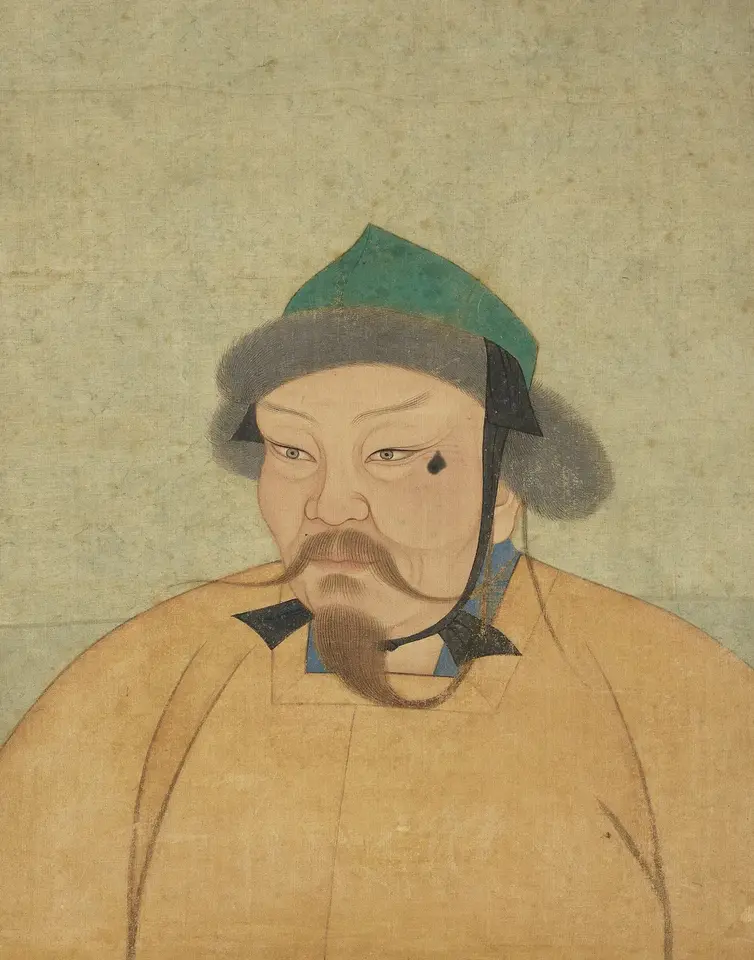
阔阔真
Kököchin (阔阔真, c. 1270s–1296), also rendered as Cocacin or Kökejin, was a Mongol noblewoman of the Bayaut clan who became the principal consort (Khatun) of Ghazan Khan, the seventh ruler of the Ilkhanate in Persia. In 1286, following the death of Queen Bulughan Khatun, the beloved principal consort of Arghun Khan of the Ilkhanate, Arghun sought to honor her dying wish that only a lady of her own lineage, the Bayaut, should…
Kököchin (阔阔真, c. 1270s–1296), also rendered as Cocacin or Kökejin, was a Mongol noblewoman of the Bayaut clan who became the principal consort (Khatun) of Ghazan Khan, the seventh ruler of the Ilkhanate in Persia. In 1286, following the death of Queen Bulughan Khatun, the beloved principal consort of Arghun Khan of the Ilkhanate, Arghun sought to honor her dying wish that only a lady of her own lineage, the Bayaut, should succeed to her royal throne. Arghun dispatched three high-ranking envoys—Uladai, Apushka, and Qoja—to the imperial court of Kublai Khan in Dadu to request a new royal bride. Kublai selected the seventeen-year-old Kököchin, renowned for her grace and deportment, bestowing magnificent dowries upon her. Because overland routes across Central Asia were severed by military conflicts with Kaidu of the Chagatai Khanate, Kublai commissioned a fleet of fourteen large ocean-going vessels and entrusted the Venetian traveler Marco Polo, his father Niccolo, and uncle Maffeo to escort the imperial bride via the Maritime Silk Road. Departing Quanzhou in early 1291, Kököchin's fleet navigated hazardous seas, rounding the Malay Peninsula, anchoring in Sumatra, and crossing the Indian Ocean to reach the Persian Gulf port of Hormuz in the spring of 1293 after a perilous two-year voyage. Upon arrival, the envoys learned that Arghun Khan had died during their voyage. In accordance with the traditional steppe practice of the levirate, regent Gaikhatu directed the envoys to escort Kököchin to Khorasan to wed Arghun's eldest son, Prince Ghazan. Following Ghazan's accession to the throne in 1295 and his conversion to Islam, Kököchin was installed as his senior principal queen. She died in the royal encampment in June 1296. Kököchin's trans-oceanic voyage stands as an epic in medieval maritime history and provides definitive mutual corroboration between Persian chronicles and Western travelogues.
Born into a noble family of the Mongol Bayaut clan, reared in traditional steppe customs.
Ilkhanate envoys reached Dadu seeking an imperial bride; selected by Kublai Khan as consort for Arghun Khan.
Boarded a fleet of fourteen ocean vessels at Quanzhou, escorted westward by Marco Polo and Persian envoys.
Crossed the Indian Ocean after a two-year maritime voyage; Arghun having died, reassigned to wed his son Ghazan in Khorasan.
Ghazan seized the throne of the Ilkhanate; Kököchin officially installed as senior Khatun of the imperial ordo.
Passed away from severe illness while accompanying the royal nomad court across northwestern Persia.
Kököchin belonged to the venerable Bayaut tribe, one of the foremost Mongol aristocratic lineages that had allied through intermarriage with the imperial Borjigin golden clan since the era of Genghis Khan.
In 1286, Arghun Khan, the fourth Ilkhan of Persia and great-grandson of Hulagu Khan, was plunged into mourning by the death of his principal consort, Bulughan Khatun. In her testament, Bulughan requested that her husband fill her position only with a noble maiden of her own Bayaut kin. Determined to respect her wishes, Arghun dispatched an elite embassy headed by three experienced courtiers—Uladai, Apushka, and Qoja—to the court of his grand-uncle, Kublai Khan, in Dadu.
Kublai granted audience to the Persian mission and scrutinized eligible maidens among the Mongol aristocracy. He selected the seventeen-year-old Kököchin, praised for her dignity, intelligence, and lineage, investing her with the formal status of imperial bride for the Ilkhanate and bestowing lavish stores of silks, pearls, and golden vessels as her bridal dowry.
Initially, the embassy intended to return to Persia along the overland Silk Road. However, intense armed clashes between Kublai's central imperial armies and the rebellious coalition led by Kaidu of the Chagatai Khanate rendered Central Asian caravan routes impassable. The Persian envoys remained stranded at Dadu for several years.
Around this time, the Venetian merchant Marco Polo, along with his father Niccolo and uncle Maffeo, had served in Kublai's court for seventeen years and petitioned repeatedly for permission to return to Europe. Knowing that Marco Polo was an accomplished naval traveler fluent in Asian languages, the Persian ambassadors petitioned Kublai to permit the Polos to escort Princess Kököchin by sea. Kublai consented, furnishing golden tablets of authority (paiza) and sovereign credentials addressed to the Pope and European monarchs.
In early 1291, Kököchin and her entourage embarked from the port of Quanzhou aboard an imperial armada consisting of fourteen four-masted ocean junks. The fleet carried six hundred sailors, imperial guards, and handmaidens.
Sailing southward, the expedition was delayed five months on Sumatra awaiting favorable monsoon winds, then crossed the Andaman Sea and the Bay of Bengal, circumnavigated southern India, and visited Sri Lanka and Kollam before entering the Persian Gulf. The two-year voyage was fraught with peril; violent typhoons and virulent tropical fevers killed nearly all travelers. Of the six hundred passengers, only Princess Kököchin, the three Polos, and the Persian ambassador Qoja survived to reach Hormuz in the spring of 1293. Throughout the ordeal, Kököchin displayed extraordinary fortitude and composure, winning the profound devotion of her companions.
Upon disembarking at Hormuz, the travelers learned that Arghun Khan had passed away two years earlier in March 1291, and his brother Gaikhatu was ruling as Ilkhan.
Gaikhatu received the surviving delegation at Tabriz, warmly commending Kököchin and the Polos for their loyalty. Under the traditional steppe levirate custom (youzhi), Gaikhatu directed that Princess Kököchin be given in marriage to Arghun's eldest son, Prince Ghazan, who was then governing the eastern frontier of Khorasan.
Escorted by Persian royal guards and the Polo family, Kököchin traveled to Khorasan, meeting Prince Ghazan at his encampment near Abhar in late 1293. Ghazan was captivated by the grace and character of the bride dispatched from his ancestral homeland. A lavish wedding was celebrated, and Kököchin assumed her position as Ghazan's senior Khatun. With their escort duties fulfilled, the Polos were provided with golden passports and provisions, bidding an emotional farewell to the princess before departing for Venice.
In 1295, Ghazan overthrew the usurper Baydu and ascended the throne as the seventh Ilkhan. Embracing Islam under the name Mahmud Ghazan and establishing it as the state religion, he initiated the comprehensive "Ghazan Reforms" that revitalized Persian agriculture, commerce, and fiscal governance.
As Ghazan's principal consort, Kököchin presided over the first royal ordo, commanding high honor in the Persian court. However, the physical toll of her two-year ocean voyage across the tropics had shattered her constitution.
In June 1296, barely a year after Ghazan's accession, Kököchin succumbed to a sudden illness while accompanying the court on its seasonal migration across Azerbaijan. She was approximately twenty years of age. Ghazan was heartbroken by her untimely demise, ordering that she be buried with full imperial honors according to Mongol and Islamic traditions.
Kököchin holds an extraordinary place in world historiography as an embodiment of Eurasian maritime connectivity in the late thirteenth century.
The Persian vizier and historian Rashid al-Din documented her arrival with precision in Jami al-Tawarikh: "Lady Kököchin was chosen and dispatched from Cathay by Khagan Kublai from the Bayaut clan. After navigating the seas for several years, she arrived at Hormuz and proceeded to Khorasan, where she was wed to Ghazan Khan, proving the most virtuous and noble among his consorts."
In modern scholarship, Chinese historian Yang Zhijiu analyzed administrative documents preserved in the Yongle Dadian (Zhanchi, postal courier registers), discovering the precise Chinese court record of the three Persian envoys—Uladai, Apushka, and Qoja—leaving Dadu in 1291. This match between Persian archives, Chinese imperial registries, and Marco Polo's account settled debates in global historiography, providing documentary confirmation of Marco Polo's presence in China and establishing Kököchin's voyage as a landmark event in trans-Eurasian history.
FIGURES ASSOCIATED WITH THIS DYNASTY