Birth and Heritage
Born in Heizhima Hutong in Beijing to an illustrious Bordered White Banner Manchu lineage
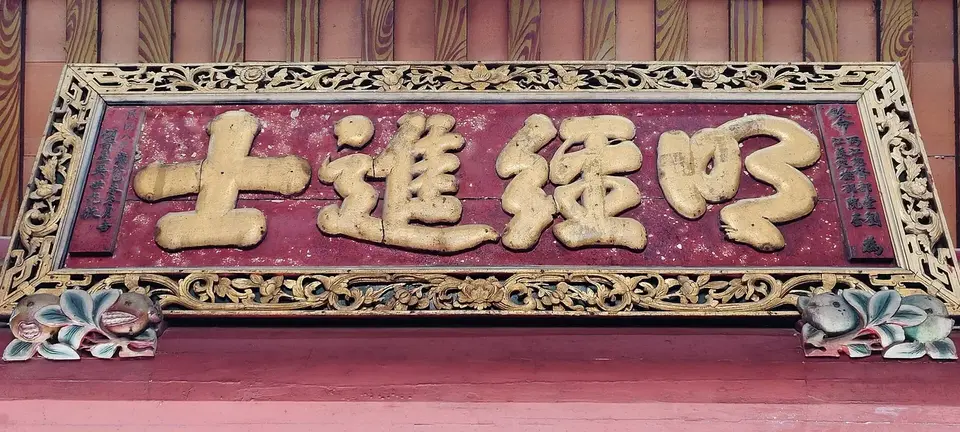
奎俊
Kui Jun(奎俊, 1843–September 2, 1916), courtesy name Lefeng, was a Manchu noble belonging to the Bordered White Banner and the prestigious Gūwalgiya clan, serving as a prominent late Qing imperial statesman and calligrapher. He was the paternal cousin-uncle of the powerful Grand Councillor Ronglu. Beginning his administrative career in the Ministry of Works and the Shenji Battalion, he was dispatched to Fujian in the early…
Kui Jun(奎俊, 1843–September 2, 1916), courtesy name Lefeng, was a Manchu noble belonging to the Bordered White Banner and the prestigious Gūwalgiya clan, serving as a prominent late Qing imperial statesman and calligrapher. He was the paternal cousin-uncle of the powerful Grand Councillor Ronglu. Beginning his administrative career in the Ministry of Works and the Shenji Battalion, he was dispatched to Fujian in the early Guangxu era as a circuit intendant and subsequently promoted to Judicial Commissioner of Fujian. Later, he governed crucial interior and coastal provinces as Financial Commissioner of Shanxi, Governor of Shanxi, and Governor of Jiangsu, simultaneously overseeing the Imperial Silk Manufacturing in Jiangnan. In 1898, Kui Jun was elevated to Governor-General of Sichuan. During the Boxer Rebellion of 1900, he concurrently served as Acting Tartar General of Chengdu, maintaining southwestern border tranquility and public order. Recalled to the capital in 1903, he successively directed the Court of Colonial Affairs, the Ministry of Punishments, and in 1905 the Ministry of Civil Personnel, superintending imperial civil appointments nationwide. In 1906, he was entrusted with the Grand Ministership of the Imperial Household, managing imperial finances, palaces, and parks. After serving in the Privy Advisory Council under the 1911 Prince Qing Cabinet, he retired upon the abdication of the Qing Emperor and passed away in Beijing in 1916. Renowned for his accomplished calligraphy inspired by Zhao Mengfu, he was granted the posthumous title Quejing.
Born in Heizhima Hutong in Beijing to an illustrious Bordered White Banner Manchu lineage
Transferred from the Ministry of Works to serve as Intendant of Yan-Jian-Shao Circuit in Fujian
Promoted to Judicial Commissioner of Fujian after governing the Xing-Quan-Yong Circuit
Appointed Governor of Shanxi and granted the first-rank coral cap button
Appointed Governor of Jiangsu, taking concurrent charge of Jiangnan Imperial Silk Manufacturing
Appointed Governor-General of Sichuan to quell local unrest and direct provincial defense
Concurrently served as Acting Tartar General of Chengdu during the Boxer Crisis
Directed the Court of Colonial Affairs and the Ministry of Punishments, granted purple palace horseback privileges
Appointed Minister of Civil Personnel, directing the nationwide evaluation and assignment of civil officials
Appointed Grand Minister of the Imperial Household, superintending imperial treasury, palaces, and gardens
Appointed Advisor to the Privy Advisory Council upon the establishment of the Prince Qing Imperial Cabinet
Passed away in Beijing at the age of seventy-three following years of quiet retirement; posthumously titled Quejing
Kui Jun embarked on his bureaucratic career in Beijing central departments, serving as an official in the Land Reclamation Department of the Ministry of Works and later as secretary in the elite imperial guard Shenji Battalion. In 1879, he received imperial appointment to Fujian as Circuit Intendant of Yan-Jian-Shao, overseeing public order and provincial revenues with third-rank status. In 1884, he was transferred to the strategic Xing-Quan-Yong Circuit, where he superintended coastal defense fortifications and maritime customs affairs, gaining commendation from regional governors-general. In 1888, he rose to Judicial Commissioner of Fujian, reforming local penal procedures and correcting flawed verdicts.
In 1889, Kui Jun acted as Financial Commissioner of Fujian before being transferred to Shanxi as Financial Commissioner to supervise treasury receipts and famine relief. In October 1891, he was elevated to Governor of Shanxi, rewarded with the prestigious first-rank cap insignia. In April 1892, the throne reassigned him to Jiangsu, one of the wealthiest commercial centers of the empire, where he governed as Governor of Jiangsu and concurrently took charge of the Jiangnan Imperial Silk Manufactory. His administration fostered sericulture, stabilized salt revenues, and maintained administrative efficiency.
In May 1898, amid escalating tensions between local secret societies and foreign missionary institutions, the court promoted Kui Jun to Governor-General of Sichuan. The anti-foreign uprising led by Yu Dongchen in Dazhu County had spread across eastern and northern Sichuan, attacking missionary posts and defying local garrisons. Upon assuming office in Chengdu, Kui Jun implemented a balanced strategy of decisive military suppression and targeted political conciliation. He deployed veteran Hunan and Sichuan regiments to sever insurgent supply lines while granting amnesties to misled peasants, ultimately securing Yu Dongchen's surrender in 1899 and restoring regional stability.
During the Boxer Crisis of 1900, when the Eight-Nation Alliance occupied Beijing and the Empress Dowager fled to Xi'an, Kui Jun mobilized Sichuan's agricultural and financial resources to provision the temporary imperial court in the west. Concurrently appointed Acting Tartar General of Chengdu, he commanded the local banner garrisons and coordinated with southeastern governors-general like Liu Kunyi and Zhang Zhidong. By enforcing strict neutrality and local defense measures, he shielded the southwestern hinterland from foreign military intervention and civil strife.
In January 1903, Kui Jun was summoned back to the imperial capital, serving successively as Minister of the Court of Colonial Affairs, Lieutenant-General of the Bordered White Mongol Banner, and Acting Senior Censor-in-Chief. In August 1903, he was appointed Minister of Punishments and granted the high imperial privilege of riding horseback within the Forbidden City. In June 1905, he assumed the preeminent post of Minister of Civil Personnel, directing the imperial examination quotas, bureau evaluations, and nationwide civil appointment registries during the preparatory phase of constitutional reform.
In September 1906, Kui Jun was appointed Grand Minister of the Imperial Household, placing him in control of the intimate imperial treasury, palace workshops, the imperial stables, Wenyuan Chamber, and the Old Summer Palace gardens. In 1907, he was honored with a knee-length sable coat, and in 1908 received double banner stipends. Upon the formation of the Prince Qing Cabinet in 1911, he transitioned to the newly established Privy Advisory Council. Following the abdication of the Qing Emperor in 1912, Kui Jun retired from public life, passing away in Beijing on September 2, 1916. The imperial house dispatched Prince Zaiying to conduct memorial rites, conferring the posthumous name Quejing.
Kui Jun's tenure as Governor-General of Sichuan represented a critical demonstration of crisis management in the late Qing period. When the Yu Dongchen rebellion threatened to provoke joint foreign military interventions in western China, Kui Jun restructured the disorganized regional defensive battalions, dismissed incompetent local commanders, and methodically suppressed the insurrection without inciting further diplomatic crises. His firm governance preserved agricultural productivity across the Sichuan Basin, safeguarded commercial shipping along the upper Yangtze River, and protected millions of civilian livelihoods during a period of imperial upheaval.
During his tenure as Grand Minister of the Imperial Household, Kui Jun instituted rigorous fiscal accounting over the imperial workshops and storage depositories, checking fraudulent requisitions during the severe financial exhaustion of the post-Boxer era. His integrity and avoidance of factional entanglements shielded him from political intrigue among imperial princes. In cultural life, Kui Jun was celebrated for his mastery of traditional Chinese calligraphy. Deeply grounded in the stylistic tradition of Zhao Mengfu, his brushwork combined structural balance with refined elegance, making him one of the most distinguished scholar-officials among late Qing Manchu nobility.
FIGURES ASSOCIATED WITH THIS DYNASTY