Birth in Qufu
Born on the 17th day of the 9th lunar month in Hushang Village, Qufu, Shandong.
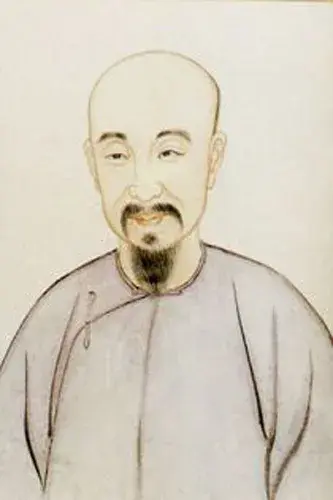
孔尚任
Kong Shangren (1648–1718), courtesy names Pinzhi and Jizhong, art names Dongtang, Antang, and self-styled Yunting Shanren, was a native of Qufu, Shandong Province. A 64th-generation descendant of Confucius, he was an eminent dramatist, literary scholar, and poet of the early Qing dynasty. In traditional Chinese theatre, he was acclaimed alongside southern playwright Hong Sheng as "Hong of the South and Kong of the North." In…
Kong Shangren (1648–1718), courtesy names Pinzhi and Jizhong, art names Dongtang, Antang, and self-styled Yunting Shanren, was a native of Qufu, Shandong Province. A 64th-generation descendant of Confucius, he was an eminent dramatist, literary scholar, and poet of the early Qing dynasty. In traditional Chinese theatre, he was acclaimed alongside southern playwright Hong Sheng as "Hong of the South and Kong of the North." In 1684, when the Kangxi Emperor visited Qufu to sacrifice at the Confucian Temple during his first southern inspection tour, Kong was chosen as a licentiate to lecture on the classics and guide the imperial party through the Cemetery of Confucius. Greatly impressed by Kong's classical erudition and courtly poise, the emperor granted him an extraordinary promotion to Doctor of the National University (Guozijian Boshi). In 1686, he was assigned to assist Vice Minister of Works Sun Zaifeng in dredging the estuary of the Yellow River along the Huai and Yangzi rivers. During three years of water conservancy work, Kong observed the strategic topography of the region, befriended local Jiangnan literati and Ming loyalist remnants, and developed a keen awareness of popular suffering and the tragic upheavals of dynastic fall. Returning to the capital, Kong served successively as Doctor of the National University, Secretary in the Ministry of Revenue overseeing the Baoquan Mint, and Vice Director of the Guangdong Bureau of the Ministry of Revenue. In 1699, after more than a decade of effort and three thorough revisions, his monumental historical chuanqi drama The Peach Blossom Fan (Taohua Shan) was completed. Set against the tragic collapse of the Southern Ming Hongguang regime, the play depicted the romance and separation of Hou Fangyu and Li Xiangjun to expose bureaucratic corruption and probe the causes of dynastic collapse, creating a sensation at court and across society. Dismissed from office in 1700, Kong returned to Qufu, spending his twilight years compiling local gazetteers, editing clan genealogies, lecturing, and writing, until his death in 1718.
Born on the 17th day of the 9th lunar month in Hushang Village, Qufu, Shandong.
Passed the county examination to become an official licentiate, diligently studying Confucian classics and ritual music.
Failed the provincial examination and retreated into seclusion at Mount Shimen in Qufu, drafting an initial sketch of The Peach Blossom Fan.
Lectured on the classics before the Kangxi Emperor at the Confucian Temple in Qufu and received an extraordinary appointment as Doctor of the National University.
Accompanied Vice Minister Sun Zaifeng to survey hydraulics and dredge the Yellow River in the Huaiyang region, forming friendships with Ming loyalists.
Completed his water conservancy mission and returned to Beijing, resuming his lectureship at the National University.
Collaborated with Gu Cai to compose the chuanqi play Xiao Hulei, satirizing political factionalism using Tang dynasty historical lore.
Promoted to Secretary in the Ministry of Revenue and Superintendent of the Baoquan Mint, later receiving the civil rank of Chengdelang.
In the 6th lunar month, completed the final draft of The Peach Blossom Fan, which was immediately transcribed and circulated among capital elites.
Promoted to Vice Director of the Guangdong Bureau of the Ministry of Revenue in early spring, but abruptly stripped of office mid-month.
Departed Beijing in late winter to retire in Qufu, adopting the art name Yunting Shanren and living in mountain seclusion.
Assisted in compiling the Pingyang Prefectural Gazetteer; poet Tong Hong contributed fifty taels of silver to fund the initial woodblock printing of The Peach Blossom Fan.
Passed away on the 15th day of the 1st lunar month at his ancestral home in Qufu at the age of seventy-one.
Kong Shangren was born on October 3, 1648, into the prominent Kong clan of Qufu, Shandong, as a 64th-generation descendant of Confucius. In 1655, he began formal schooling at the academy for descendants of the four sages, reading the Four Books and Five Classics while acquiring broad literacy in historical texts, musical tuning, geography, and mathematics. In 1666, at age nineteen, he passed the elementary examinations to become a county licentiate, earning high praise from clan elders for his precocious scholarship.
In the autumn of 1678, Kong traveled to Jinan to take the provincial examinations but failed. Turning his back on bureaucratic vanity, he retreated to Mount Shimen in Qufu, erecting a thatched study named the Gushi Caotang to pursue secluded reading. There, he pondered the rise and fall of past dynasties and gathered anecdotes regarding the Ming-Qing transition from local elders, compiling a rudimentary outline for The Peach Blossom Fan. In 1681, he sold family plots to purchase student status at the National University. In 1682, Duke Yansheng Kong Yuqi invited him to supervise the elaborate funeral rites of Lady Zhang, where his deep command of archaic ritual protocols won clan-wide admiration. Over the subsequent two years, he directed the compilation of the Genealogy of the Kong Clan and the Annals of Queli, restoring sacrificial vessels and standardizing ceremonial choreography at the Temple of Confucius.
In the 11th lunar month of 1684, the Kangxi Emperor visited Qufu on his journey back from his first southern inspection tour. Duke Yansheng Kong Yuqi recommended Kong to serve as imperial lector and ceremonial guide. Standing before the Dacheng Hall, Kong delivered an exposition on the opening chapter of The Great Learning with exceptional clarity and classical elegance. He then led the emperor through the Confucian Cemetery, narrating ancient stone inscriptions and ancestral lore. Deeply impressed, the emperor issued an imperial decree appointing Kong Doctor of the National University, propelling the rural scholar into the imperial capital's scholarly elite.
In the 1st lunar month of 1685, Kong arrived in Beijing to assume his post at the National University, lecturing Imperial Academy students on classical Confucian philosophy. In the 7th lunar month of 1686, Vice Minister of Works Sun Zaifeng was commissioned to oversee river engineering in Huaiyang, tasked with surveying and dredging the estuary of the Yellow River to drain seasonal floodwaters. Sun specifically selected Kong to join his staff.
Over three years along the Huai and Yangzi rivers, Kong traversed waterways across Huai'an, Yangzhou, Gaoyou, Baoying, and Taizhou, surveying channels, riverbeds, and precarious levees. He witnessed torrential floods, visited disaster-stricken villages, and realized the intimate connection between hydraulic infrastructure and the livelihoods of millions. In his spare time, Kong toured historical landmarks in Nanjing and Yangzhou, ascending Mount Qixia, Meihualing, Mochou Lake, and Pingshan Hall to lament the fallen Ming dynasty. He established intimate ties with prominent Ming loyalist literati such as Mao Pijiang, Deng Hanyi, and Zong Dingjiu, gathering eyewitness accounts regarding the collapse of the Hongguang court. These encounters broadened his intellectual horizons and enriched his reflections on dynastic change. He compiled his riverbank poetry into Huhai Ji and, in the 8th lunar month of 1687, comprehensively restructured The Peach Blossom Fan, giving it an epic historical dimension.
In early 1690, with the estuary dredging successfully concluded, Kong returned to Beijing and resumed his lectureship at the National University. He participated actively in capital literary salons, winning wide acclaim for his poetry. In the autumn of 1691, he acquired an authentic Tang dynasty lute named Xiao Hulei in a capital market. In the 7th lunar month of 1694, collaborating with dramatist Gu Cai, he composed the chuanqi play Xiao Hulei based on the Tang romance of scholar Liang Houben, which won wide applause among court officials upon performance.
In the spring of 1695, recognized for his achievements in hydraulic engineering and academic administration, Kong was appointed Secretary in the Ministry of Revenue and Superintendent of the Baoquan Mint. The mint was responsible for casting copper coins for imperial circulation, an assignment fraught with administrative complexity and illicit embezzlement.
As superintendent, Kong audited accounts, enforced frugality, verified copper purity, and regulated coinage dimensions, completely stamping out illicit skimming by artisans and clerks. Under his management, the official coinage achieved uniform standard quality, stabilizing regional currency markets. In the 7th lunar month of 1697, the Kangxi Emperor commended him by decree for managerial acumen and diligent service, conferring upon him the official civil rank of Chengdelang and honoring his wife, Lady Qin, as Anren.
Outside public duties, Kong lived in seclusion in Haibo Lane outside Xuanwumen, naming his study Antang. Over more than two decades following his initial 1678 draft, he relentlessly refined The Peach Blossom Fan, aligning verse meters with court musical modes, verifying official titles, and weaving authentic historical documents into dramatic plotting. In the 6th lunar month of 1699, after three comprehensive rewrites, the manuscript was completed. The play immediately caused a sensation in the capital; nobles and scholars rushed to transcribe copies, princely mansions staged private performances, and palace eunuchs requested scripts for imperial viewing.
In early spring 1700, Kong was promoted to Vice Director of the Guangdong Bureau of the Ministry of Revenue. However, within two weeks, he was unexpectedly stripped of his office and ordered into retirement.
Scholars have long debated the reasons behind this abrupt dismissal. Many historians suggest that the political critiques in The Peach Blossom Fan—denouncing corrupt ministers and mourning the fallen Ming through the voices of Fu She scholars—transgressed imperial ideological boundaries. Other scholars note that his unbending fiscal integrity at the Baoquan Mint had alienated entrenched power holders who orchestrated false charges against him during official evaluations. Undeterred by the dismissal, Kong remained in Beijing for two years, hosting literary gatherings and appraising bronze inscriptions.
In late winter 1702, Kong left Beijing to return to Qufu, bidding farewell to eighteen years of capital official life. Retiring to Mount Shimen, he styled himself Yunting Shanren and devoted himself to local historiography and family scholarship. In 1707, invited by Prefect Liu Qi of Pingyang, Shanxi, he traveled west to edit the 36-volume Pingyang Prefectural Gazetteer. In 1712, he assisted in compiling the Laizhou Prefectural Gazetteer. In the spring of 1708, Tianjin poet Tong Hong visited Kong in Qufu and, moved by The Peach Blossom Fan, donated fifty taels of silver to fund its first woodblock printing. On February 14, 1718, Kong passed away peacefully at his ancestral home in Qufu at age seventy-one.
The chuanqi drama The Peach Blossom Fan represents the peak of Kong Shangren's literary career and an immortal landmark in Chinese historical dramaturgy. Spanning forty scenes with an opening prologue, the drama began as a draft in 1678, underwent enrichment during his travels in Huaiyang, and achieved completion in 1699 after three exhaustive revisions.
Set during the tragic year-and-a-half existence of the Southern Ming Hongguang court, the play intertwines the romantic trials of courtesan Li Xiangjun and scholar Hou Fangyu with the cataclysmic collapse of the Ming empire. Kong formulated a rigorous principle of historical dramaturgy, professing to use the passions of separation and union to depict the sorrow of dynastic rise and fall. Focusing on the factional struggles between Fu She scholars and corrupt cabals led by Ma Shiying and Ruan Dacheng, the drama unmasks the venality of the late Ming ruling elite and depicts the fall of Yangzhou and Nanjing, revealing the structural inevitability of dynastic collapse.
Artistically, Kong incorporated dialectical principles from the Book of Changes to pioneer a structural technique of natural aesthetic opposition. The drama sets virtuous characters against villainous schemers, male roles against female figures, and odd scenes against even acts in symmetrical harmony. A white silk fan stained with Li Xiangjun's blood, upon which an artist paints peach blossoms, serves as the unifying motif symbolizing romantic devotion and historical tragedy. Departures from conventional scholar-beauty romances include Li Xiangjun's unyielding martyrdom, Hou Fangyu's ideological vacillation, and the selfless loyalty of common storytellers like Liu Jingting. The final scene at Mount Qixia, where both lovers renounce worldly attachments to enter monastic hermitage, rejects the formulaic happy ending in favor of profound tragic resonance.
The drama achieved extraordinary acclaim across the empire, influencing later Qing historical plays such as Dong Rong's Zhikan Ji. Anecdotes record that the Kangxi Emperor, when viewing scenes such as Holding Court and Selecting Actors during palace banquets, repeatedly sighed over the foolish misrule that doomed the Southern Ming, highlighting the work's historical potency.
Beyond The Peach Blossom Fan, Kong achieved distinction in the dramatic arts through his chuanqi opera Xiao Hulei and the zaju play Da Hulei.
In 1691, Kong purchased an authentic Tang dynasty lute named Xiao Hulei in a Beijing market. After tracing the instrument's historical provenance, he partnered with dramatist Gu Cai in 1694 to compose the two-volume chuanqi play Xiao Hulei. Using the romance of Tang scholar Liang Houben and Zheng Yingying as a narrative spine, the play incorporated historical upheavals of the Mid-Tang, including the suppression of the Huaixi rebellion and the Sweet Dew Incident. The work severely castigated tyrannical eunuchs like Qiu Shiliang, using Tang history to satirize imperial despotism and regional warlordism.
Subsequently, Kong drew from the Tangshi Jishi anecdote of early Tang poet Chen Zi'ang to compose the two-act zaju play Da Hulei. The play recounts how Chen Zi'ang, upon arriving unrecognized in Chang'an, purchased an expensive antique lute named Da Hulei, gathered capital literati, and smashed the instrument before the crowd while distributing his poetry manuscripts to achieve instant renown. Possessing dynamic dramatic pacing and heroic characterization, the play celebrated the proud autonomy of talented scholars, demonstrating Kong's mastery of dramatic concision alongside his overarching social critique.
Combining the analytical rigor of a historian with poetic sensibility, Kong composed over a thousand poems, championing spontaneous personal sentiment over mechanical imitation.
His poetic corpus was organized chronologically into five major anthologies: Zhitang Ji, gathering verses from his lectureship at the National University; Huhai Ji, comprising seven volumes of verse and six of prose documenting popular conditions and loyalist interactions during his river dredging mission in Huaiyang; Antang Gao, recording poetic exchanges with capital luminaries like Wang Shizhen; Changliu Ji, a twelve-volume anthology of 999 poems co-edited with Liu Tingji tracing two decades of poetic evolution; and Shimen Ji, containing his retirement verses in Mount Shimen. He was equally accomplished in ci poetry, producing celebrated lyrics set to tunes such as Zhegu Tian and Xijiang Yue.
In historiography and genealogy, Kong made lasting contributions. As a young scholar, he compiled the Genealogy of the Kong Clan and the Annals of Queli, codifying lineage records and ceremonial protocols. In retirement, he edited thirty-six volumes of the Pingyang Prefectural Gazetteer in Shanxi, renowned for its rigorous documentation, and assisted with the Laizhou Prefectural Gazetteer. He also compiled Jiexu Tongfeng Lu to document seasonal customs, Huixin Lu to record exemplary deeds, and Luyan to preserve regional Shandong proverbs, demonstrating a lifelong commitment to folklore and popular culture.
Endowed with broad antiquarian erudition, Kong was an accomplished connoisseur of ancient bronzes, stone inscriptions, and calligraphic rubbings. During his official service and travels across China, he gathered rubbings, stone steles, seal impressions, and jade relics.
Kong recorded 157 ancient ritual bronzes, stone tablets, calligraphic pieces, and paintings in his epigraphic treatise Xiangjin Bu, detailing their dimensions, inscriptions, and historical transmission. His rigorous textual analyses offered groundbreaking dating criteria for archaic jades and Shang-Zhou bronze cauldrons. The treatise was later incorporated into the Meishu Congshu by Deng Shi and Huang Binhong, remaining a primary reference in early Qing antiquarian archaeology.
Additionally, Kong authored Hualin Yanta, providing biographical sketches of painters from the Jin and Tang down to the Qing; and Lülü Zhengyi, which systematically explored ancient metrology, musical temperament, instrument construction, and ceremonial temple dances, accompanied by detailed diagrams. His classical essays, including The Biography of the Wooden-Bark Vagrant and Records on Founding Qiling Temple, showcased expansive scholarly depth and elegant prose style.
FIGURES ASSOCIATED WITH THIS DYNASTY