Birth in Qingjiang
Born into a scholarly family in Xingan, Linjiang, mastering the classics alongside his two elder brothers.
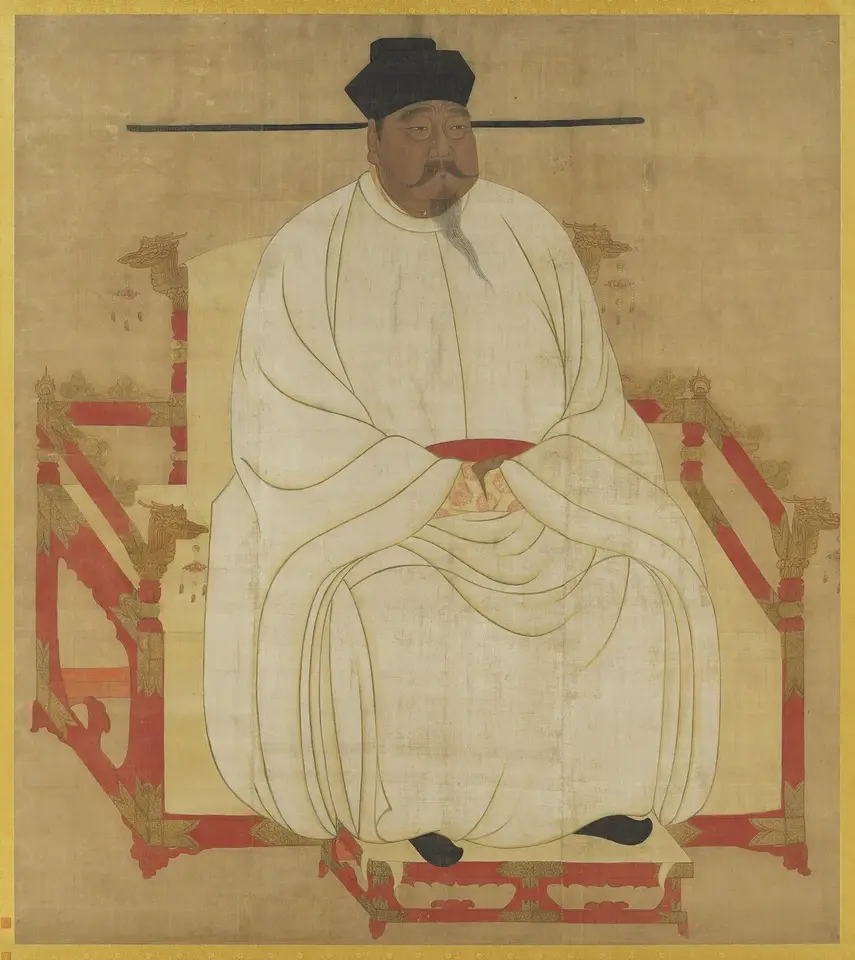
孔平仲
Kong Pingzhong (c. 1044–1100), courtesy name Yifu, was a native of Xingan County in Linjiang (modern Jiangxi). A forty-seventh-generation descendant of Confucius, he was a distinguished man of letters, poet, and historian of the mid-Northern Song dynasty. Together with his elder brothers Kong Wenzhong and Kong Wuzhong, he achieved imperial renown, known collectively as the "Three Kongs of Qingjiang." Attaining his jinshi…
Kong Pingzhong (c. 1044–1100), courtesy name Yifu, was a native of Xingan County in Linjiang (modern Jiangxi). A forty-seventh-generation descendant of Confucius, he was a distinguished man of letters, poet, and historian of the mid-Northern Song dynasty. Together with his elder brothers Kong Wenzhong and Kong Wuzhong, he achieved imperial renown, known collectively as the "Three Kongs of Qingjiang." Attaining his jinshi degree in 1065, Kong began his career as Assistant Magistrate in Jiaoxi, Mizhou. During the early Yuanyou reign of Emperor Zhezong, he was summoned to the central government, serving as Collator in the Palace Library, Imperial Diarist, and Vice Director of the Imperial University. Deeply appreciated by Su Shi and Huang Tingjian, he became an active figure among the Yuanyou literary circle. During the Shaosheng era, the resurgence of the Reformist faction led to his demotion and exile to Hengzhou, Shaozhou, and military confinement in Yingzhou. Pardoned under Emperor Huizong, he served as Vice Director in the Ministry of Revenue and Judicial Commissioner of Yongxing. When factional persecution flared anew under Cai Jing, Kong was stripped of office and died shortly thereafter. Famed for his exuberant, soaring verse and scholarly rigor, he authored Xu Shishuo (Continuation to A New Account of Tales of the World), Kongshi Zashuo, and collected poetry in Qingjiang San Kong Ji.
Born into a scholarly family in Xingan, Linjiang, mastering the classics alongside his two elder brothers.
Traveled to Kaifeng and attained the jinshi degree, appointed Assistant Magistrate of Jiaoxi in Mizhou.
Summoned to the capital under Empress Dowager Xuanren's regency as Collator in the Department of the Palace Library.
Promoted to Imperial Diarist and Vice Director of the Imperial University, exchanging poetry with Su Shi and Huang Tingjian.
Following Emperor Zhezong's personal assumption of power, denounced by censors for Yuanyou affiliations and demoted to Prefect of Hengzhou.
Denounced for lagging in Ever-Normal Granary enforcement, transferred to Shaozhou and subsequently placed under surveillance in Yingzhou.
Pardoned upon Emperor Huizong's accession, appointed Vice Director in the Ministry of Revenue and Judicial Commissioner of Yongxing.
Stripped of office when Cai Jing erected the Yuanyou Partisan Stele; died shortly thereafter at age fifty-seven.
Kong Pingzhong hailed from an illustrious scholar-gentry family claiming direct descent from Confucius. The three brothers possessed distinct gifts: eldest brother Kong Wenzhong was renowned for unbending rectitude, second brother Kong Wuzhong was famed for encyclopedic erudition, while youngest brother Kong Pingzhong was celebrated for dazzling poetic rhetoric and swift prose composition. Their coordinated literary brilliance won admiration across the empire as the "Three Kongs of Qingjiang."
In 1065, Kong Pingzhong passed the metropolitan examinations and was assigned as Assistant Magistrate of Jiaoxi in Mizhou. In Jiaoxi, he managed judicial cases with dispatch and transparency. When Su Shi served as Prefect of Mizhou during the Xining era, Su admired Kong's administrative competence and poetic genius, initiating a lifelong literary friendship.
In 1086, with the accession of the young Emperor Zhezong and the regency of Grand Empress Dowager Xuanren, conservative scholar-officials returned to power. Kong Pingzhong was summoned to Kaifeng as Collator in the Department of the Palace Library and later Proofreader. He participated daily in collating imperial archives, further broadening his historical knowledge.
In 1089, Kong was elevated to Imperial Diarist (Qiju Sheren), charged with recording the emperor's daily movements and decrees, concurrently serving as Vice Director of the Imperial University (Guozi Siye). At the imperial academy, he expounded the Six Classics and nurtured talented scholars. During these golden years, Kong engaged in frequent poetic banquets with Su Shi, Su Zhe, Huang Tingjian, Qin Guan, and Zhang Lei. His vibrant, effortless style earned him a distinct reputation among the capital's literary giants.
In 1094, upon the death of the Grand Empress Dowager, Emperor Zhezong assumed direct rule. Zhang Dun and the Reformist faction regained supreme power, launching an aggressive purge against Yuanyou officials. Factional censors indicted Kong Pingzhong for having supported Sima Guang's conservative policies, leading to his demotion as Prefect of Hengzhou in Hunan.
In Hengzhou, censors further accused him of obstructing the implementation of the Ever-Normal Granary system, ordering his transfer to Shaozhou in Guangdong. Indignant at these groundless accusations, Kong submitted an impassioned memorial vindicating his administrative record. Enraged by his defiance, Zhang Dun stripped Kong of his functional ranks, reducing him to Assistant Prefect of Huizhou and placing him under punitive confinement in Yingzhou. In the rugged southern mountains, Kong maintained philosophical composure, devoting himself to historical writing and poetry.
In 1101, Emperor Huizong ascended the throne under the brief conciliation of Empress Dowager Xiang, who issued an empire-wide pardon for proscribed scholars. Kong Pingzhong was fully rehabilitated, appointed Vice Director in the Ministry of Revenue, and dispatched as Judicial Commissioner of the Yongxing Military Circuit, overseeing military logistics along the northwestern borders.
However, in 1102, Cai Jing seized the chancellorship and revived severe partisan purges, inscribing the names of conservative officials upon the infamous Yuanyou Partisan Stele. Kong was once again removed from official rolls and cashiered back to his hometown. Exhausted by repeated political turbulence and the physical toll of southern exile, Kong Pingzhong passed away in retirement around 1100–1102 at approximately fifty-seven years of age.
Kong Pingzhong occupied a singular place in Song literary history. Unlike the dense, bookish allusions of Huang Tingjian's Jiangxi Poetry School or the tempestuous majesty of Su Shi, Kong's verse was distinguished by what critics termed a "soaring, buoyant, and fluid elegance" (yaojiao liuli).
His renowned poem Ripening Grain (He Shu) captured rural life through vivid plain narration: "West winds for a hundred miles scent the grain and millet; water gushes from mountain sluices as the threshing floors awaken. The old ox has paid its heavy debt of plowing, now peacefully grazing upon the sunset hill." In the forty-volume Qingjiang San Kong Ji, Kong Pingzhong's works occupied twenty-one volumes, proving his prolific creative output.
In addition to his literary mastery, Kong Pingzhong was a gifted historian. Modeling his work on Liu Yiqing's classic A New Account of Tales of the World (Shishuo Xinyu), Kong compiled the twelve-volume Xu Shishuo (Continuation to A New Account of Tales of the World).
Spanning the Han, Wei, Six Dynasties, Sui, Tang, and Five Dynasties, the work categorized historical anecdotes across thirty-eight thematic sections, such as Virtuous Conduct, Eloquent Speech, Affairs of State, and Letters. Characterized by crisp prose and meticulous cross-verification with standard histories, Xu Shishuo preserved vital historical anecdotes omitted by dynastic annals, standing as a landmark in pre-modern biographical narrative literature.
FIGURES ASSOCIATED WITH THIS DYNASTY