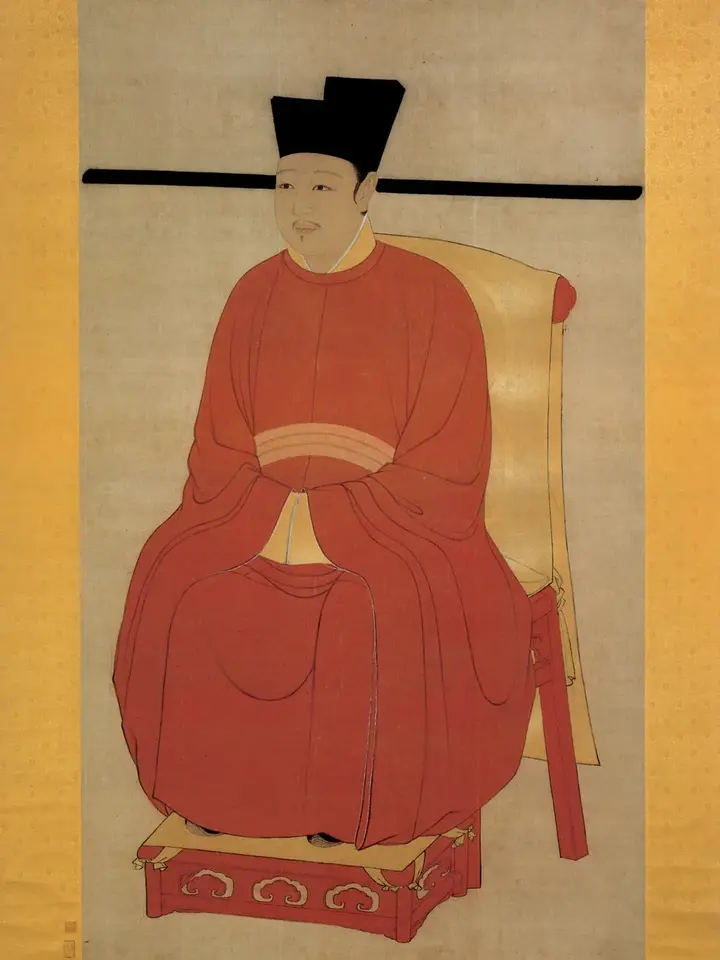
PROFILE
Juran (巨然) was a native of Jiangning. He was an acclaimed Buddhist monk painter spanning the Southern Tang of the Five Dynasties and the early Northern Song Dynasty, serving as a principal founder of the Southern Monochrome Landscape tradition. In his youth, he took monastic vows at Kaiyuan Monastery in Jiangning, combining Chan meditation with ink painting. He entered the academy of Southern Tang master Dong Yuan, mastering his brushwork and establishing the celebrated Dong-Ju school of landscape art.
In 975, following the conquest of Southern Tang by Song forces, Juran accompanied Last Ruler Li Yu to the Song capital Kaifeng, residing at Kaibao Monastery and serving in the Hanlin Academy of Painting. Emperor Taizong held his art in high esteem, commissioning him to paint a monumental landscape mural in the newly constructed Hanlin Scholars Academy, winning capital-wide acclaim.
Juran specialized in depicting the moist, rolling hills and verdant groves of Jiangnan. Departing from the jagged crags of northern painters, he developed the long hemp-fiber texture stroke alongside moss-dotted alum head stones, utilizing delicate ink washes that evoked peaceful misty rivers and the meditative quietude of Chan Buddhism. His surviving masterpieces, including Seeking the Dao in Autumn Mountains, Layered Cliffs and Dense Groves, and Wind in the Pines of Ten Thousand Valleys, laid the foundational aesthetic cornerstone for Chinese literati landscape painting.
- Native Place
- Jiangning (modern Nanjing, Jiangsu)
- Identity Positioning
- Master Buddhist monk painter of Five Dynasties Southern Tang and early Northern Song, founder of the Southern Monochrome Landscape tradition, co-creator of the Dong-Ju paradigm
BIOGRAPHY
Chronology
- 935 (Shengyuan 1, Southern Tang) | Birth in Jiangning | Born in the cultural capital of Jiangning, showing early affinity for Buddhist contemplation and ink painting.
- 950 (Baoda 8, Southern Tang) | Monastic Ordination | Ordained as a Buddhist monk at Kaiyuan Monastery in Jiangning, practicing Chan meditation and landscape sketching.
- 960 (Jianlong 1, Southern Tang) | Mentorship under Dong Yuan | Studied landscape painting under Southern Tang master Dong Yuan, mastering wet ink wash techniques.
- 970 (Kaibao 3, Southern Tang) | Royal Patronage | Deeply favored by Last Ruler Li Yu, commissioned to paint palace folding screens and court hanging scrolls.
- 975 (Kaibao 8, Song) | Relocation to Kaifeng | Traveled to the Northern Song capital alongside Li Yu upon the fall of Southern Tang, residing at Kaibao Monastery.
- 976 (Kaibao 9, Song) | Scholars Academy Mural | Painted a grand landscape mural in the Hanlin Scholars Academy upon imperial order, stunning capital connoisseurs.
- 985 (Yongxi 2, Song) | Peaceful Demise | Passed away in his cell at Kaibao Monastery, his surviving works treasured in the royal Xuanhe Academy.
Life Course
Monastic Vows and Study under Dong Yuan
Juran was born in the bustling southern metropolis of Jiangning during the Southern Tang. Situated along the fertile plains of the lower Yangtze River, the region was characterized by rolling earthen hills, dense vegetation, and meandering waterways that contrasted sharply with the rugged crags of northern China. Gifted with a contemplative temperament, Juran took monastic vows at an early age at Kaiyuan Monastery in Jiangning.
While observing monastic disciplines, Juran devoted his spare hours to monochrome ink painting. At that time, Dong Yuan, Vice Director of the Imperial Parks, led the Southern Tang court academy with a revolutionary style designed to capture southern landscapes through wet ink washes and soft texture strokes. Juran entered Dong Yuan's studio, studying for over a decade. He carefully observed Dong Yuan's brush techniques, learning how water and ink could blend to evoke natural mist and distance. Blending Dong Yuan's structural mastery with his own meditative serenity, Juran developed a mature personal vision that matched his teacher's brilliance.
Southern Tang Acclaim and Relocation to Kaifeng
Throughout the Baoda and Kaibao eras, Juran's artistic fame flourished across the southern capital. Last Ruler Li Yu, an accomplished lyric poet and discerning connoisseur, held Juran in highest esteem, frequently summoning him to the palace to execute hanging scrolls and folding screens.
In the winter of 975, Song armies crossed the Yangtze River and captured Jinling. Following Li Yu's surrender, Juran accompanied the former monarch on his northward journey to Kaifeng, choosing to remain loyal to his royal patron during his captivity. In the Song capital, Juran was assigned quarters at Kaibao Monastery.
At that time, northern connoisseurs were accustomed to the angular, bone-chilling mountain styles of Jing Hao, Guan Tong, and Li Cheng. Juran's arrival introduced a fresh aesthetic dimension characterized by misty rivers, earthen ridges, and soft foliage, captivating northern collectors.
Imperial Court Service and the Celebrated Scholars Academy Mural
Both Emperor Taizu and Emperor Taizong actively collected art and assembled painters in the capital, recruiting Juran into the Hanlin Academy of Painting.
In 976, following the completion of the Hanlin Scholars Academy, Emperor Taizu commissioned Juran to paint a monumental landscape mural across the western wall. Unrolling his sleeves and mixing washes before an assembled crowd of court dignitaries, Juran swiftly conjured sprawling Jiangnan peaks, winding forest trails, rustic thatched huts, and fishermen resting upon quiet waters. The mural appeared alive with fresh morning mist, evoking gasps of astonishment from scholar-officials who declared it an unmatched masterpiece.
Final Years and Classical Legacy
In his later years at Kaibao Monastery, Juran preserved his disciplined monastic routine, meditating daily and producing hanging scrolls that harmonized southern softness with northern vertical compositions.
Around 985, Juran died peacefully in his monastery cloister. When the Xuanhe Painting Catalogue was compiled under Emperor Huizong, the imperial collection preserved one hundred and thirty-six authentic hanging scrolls by Juran, among the highest totals accorded to any landscape master. His artistic innovations became the primary technical inspiration for the Four Masters of the Yuan Dynasty and the entire southern literati school.
Key Achievements
Co-Founding the Dong-Ju Southern Landscape School
Juran's foremost historical monument is co-founding the Dong-Ju Southern Landscape School alongside his mentor Dong Yuan.
Before Dong Yuan and Juran, Chinese landscape painting focused primarily on northern mountain ranges. The Dong-Ju school established an autonomous visual language for the southern landscape. While Dong Yuan excelled in wide, horizontal river scenes, Juran mastered the tall vertical hanging scroll, portraying rolling earthen peaks shrouded in moisture and dense vegetation, establishing the southern tradition as an equal pole in Chinese landscape painting.
Formulating the Hemp-Fiber Stroke and Alum Head Stones
Juran contributed two foundational technical conventions to Chinese brushwork: long hemp-fiber strokes and alum head stones.
Departing from the rigid, angular strokes of northern painters, Juran developed the hemp-fiber stroke, utilizing long, curved, supple center-tip lines laid down in interwoven layers to convey the soft, organic texture of southern soil. Along mountain crests and ridges, he introduced clusters of rounded boulders textured with dark ink moss dots, known as alum head stones, giving structural firmness to earthen heights without disrupting the soft atmospheric harmony.
Integrating Chan Buddhist Serenity with Landscape Art
Juran's compositions were celebrated for their profound Chan Buddhist atmosphere. In masterpieces like Seeking the Dao in Autumn Mountains and Wind in the Pines of Ten Thousand Valleys, he arranged deep mountain valleys, secluded footbridges, and simple thatched pavilions where solitary hermits sat in meditation.
His works balanced structural majesty with unworldly simplicity, transforming landscape painting from an exercise in decorative craft into a spiritual sanctuary for contemplation.
Personal Relationships
- Master: Dong Yuan, founder of the Southern Landscape School who instructed Juran.
- Royal Patron: Li Yu, Last Ruler of Southern Tang who treasured Juran's works and brought him to Kaifeng.
- Imperial Sovereign: Emperor Taizu of Song, who commissioned him to paint the Scholars Academy mural.
- Imperial Sovereign: Emperor Taizong of Song, who retained him as a painter in the Hanlin Academy.
- Pillar Contemporaries: Jing Hao, Guan Tong, Li Cheng, and Fan Kuan, northern masters alongside whom Juran defined Five Dynasties and early Song landscape art.
Historical Evaluation
- Liu Daochun, Evaluations of Song Dynasty Famous Painters: Juran studied under Dong Yuan, excelling in landscapes. His ink was deep and refined, his groves luxuriant, his atmosphere tranquil and distant. His mural in the Scholars Academy was celebrated throughout the empire. (Evaluations of Song Dynasty Famous Painters, Volume 2)
- Guo Ruoxu, Experiences in Painting: Juran captured the marrow of Dong Yuan, painting Jiangnan hills and lush forests with archaic serenity and subtle wonder. (Experiences in Painting, Volume 3)
- Shen Kuo, Dream Pool Essays: Dong Yuan and monk Juran excelled in landscape painting. When viewed up close, their brushwork seems casual and rough; viewed from a distance, the scene comes brilliantly alive with profound thoughts and distant vistas. (Dream Pool Essays, Volume 17)
- Emperor Huizong of Song, Xuanhe Painting Catalogue: Juran was a monk who deeply comprehended the principles of painting. His landscapes possess true natural spirit, with one hundred and thirty-six scrolls in the imperial collection. (Xuanhe Painting Catalogue, Volume 12)
- Dong Qichang, Huachanshi Suibi: The southern school began with Wang Wei and achieved full maturity in Dong Yuan and Juran. Their brushwork was round, harmonious, and naturally pure, far beyond the reach of rigid northern methods. (Huachanshi Suibi, Volume 2)
Related Entries
- Dong Yuan
- Li Yu
- Xuanhe Painting Catalogue
- Hemp-Fiber Stroke
- Alum Head Stones
- Wind in the Pines of Ten Thousand Valleys
- Seeking the Dao in Autumn Mountains
FIGURES ASSOCIATED WITH THIS DYNASTY