Birth in the Upper Capital
Born into the imperial household at Shangjing Huining Prefecture, the eldest son of Prince Wanyan Zongyao.
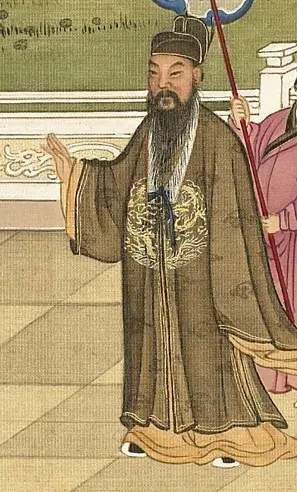
金世宗完颜雍
Emperor Shizong of Jin (完颜雍, 1123–1189), personal Jurchen name Wulu (乌禄), grandson of the dynastic founder Emperor Taizu (Wanyan Aguda) and eldest son of Wanyan Zongyao (posthumously Emperor Ruizong), was the fifth emperor of the Jurchen Jin dynasty. Serving through the reigns of Emperor Xizong and Prince Hailing (Wanyan Liang), Wanyan Yong was renowned for modesty, magnanimity, and peerless equestrian archery. Following the…
Emperor Shizong of Jin (完颜雍, 1123–1189), personal Jurchen name Wulu (乌禄), grandson of the dynastic founder Emperor Taizu (Wanyan Aguda) and eldest son of Wanyan Zongyao (posthumously Emperor Ruizong), was the fifth emperor of the Jurchen Jin dynasty. Serving through the reigns of Emperor Xizong and Prince Hailing (Wanyan Liang), Wanyan Yong was renowned for modesty, magnanimity, and peerless equestrian archery. Following the tragic suicide of his consort Lady Wulinda to protect his household from royal tyranny, Wanyan Yong concealed his grief through prudent self-restraint. In 1161, when Wanyan Liang's disastrous southern campaign against Song triggered rebellions across north China, Wanyan Yong was acclaimed emperor by multi-ethnic troops at the Eastern Capital (Liaoyang), establishing the Dading reign and inaugurating twenty-nine years of benevolent governance. Emperor Shizong's reign transformed the domestic and geopolitical trajectory of twelfth-century East Asia. Externally, he concluded the Longxing Peace Accord with Emperor Xiaozong of Song in 1164, replacing master-vassal relations with an uncle-nephew protocol that ended decades of warfare and initiated forty years of peaceful coexistence. Domestically, he suppressed the Khitan uprising of Woyila, eradicated bureaucratic corruption, and executed the 1181 Nationwide Cadastral Survey to halt noble land encroachment, stabilizing the livelihoods of common Jurchen military households and Han tenant farmers. Revering Confucian ethics while promoting Jurchen cultural heritage, he instituted the Jurchen-language civil service examination, established the Imperial Translation Bureau to translate the Confucian classics, and preserved traditional archery and hunting. His era was celebrated for overflowing granaries, reduced tax burdens, and judicial leniency, earning the historic designation Reign of Dading and winning Shizong the timeless title of the Little Yao and Shun.
Born into the imperial household at Shangjing Huining Prefecture, the eldest son of Prince Wanyan Zongyao.
His father passed away on campaign; the twelve-year-old prince was raised by his mother Lady Li of Bohai.
Granted the title Prince of Ge and appointed Minister of War under Emperor Xizong, gifting an ancestral jade belt to deflect royal suspicion.
Subjected to constant suspicion and frequent regional transfers following the usurpation of Prince Hailing (Wanyan Liang).
Summoned to send his wife to the capital, Lady Wulinda committed suicide at Liangxiang to preserve honor, while Wanyan Yong concealed his vengeance.
Proclaimed emperor at the Eastern Capital (Liaoyang) following widespread frontier revolts against Wanyan Liang's southern invasion, adopting the reign title Dading.
Entered Zhongdu (modern Beijing) after Wanyan Liang was assassinated in Yangzhou, issuing general amnesties and stabilizing administration.
Dispatched expeditionary forces to crush the massive Khitan uprising led by Woyila, securing northern frontiers.
Concluded the Longxing Peace Accord with Southern Song following the Battle of Fuli, establishing lasting bilateral peace.
Established the Jurchen-language jinshi examination, fostering a scholar-official elite proficient in both Confucianism and Jurchen script.
Enacted the comprehensive property reassessment across the empire, curbing illegal noble land seizures and balancing public levies.
Led the crown prince and court to visit Shangjing Huining Prefecture, reminding the nobility of ancestral hardships.
Grieved the untimely death of Crown Prince Wanyan Yungong, subsequently designating his grandson Wanyan Jing (Emperor Zhangzong) as imperial successor.
Died peacefully in Fu'an Palace in Zhongdu at the age of sixty-seven; interred in the Xingling Mausoleum at Mount Dafang.
Emperor Shizong was born on the third day of the second month in the seventh year of the Tianfu reign (March 1, 1123) in Shangjing Huining Prefecture (modern Acheng District, Harbin, Heilongjiang). His grandfather was Wanyan Aguda (Emperor Taizu), the founder of the Jin dynasty, while his father Wanyan Zongyao (originally named Zongfu) was Taizu's third son, an accomplished general who co-led the conquest of the Liao and Northern Song dynasties. Given the Jurchen name Wulu, the young prince possessed a commanding physique and calm, observant demeanor.
In 1135, when Wanyan Yong was twelve years old, his father died while commanding field troops. His mother, Lady Li Hongyuan, hailed from a distinguished Bohai aristocratic family in Liaoyang. Rejecting the traditional Jurchen levirate custom requiring widows to remarry clan relatives, Lady Li became a Buddhist nun in Liaoyang and dedicated herself to educating her son in Confucian classics, statecraft, and ancestral traditions.
Under his mother's tutelage, Wanyan Yong combined scholarly learning with martial skill. Endowed with extraordinary physical strength, he mastered horseback archery. Contemporary historical accounts record that elder warriors celebrated his marksmanship during imperial autumn hunts, praising his accuracy and acclaiming him as the foremost archer in the realm. Accompanying his uncles on military expeditions, he treated his soldiers with generosity, earning widespread admiration among both frontier tribesmen and court nobles.
During the Huangtong reign of Emperor Xizong, Wanyan Yong received the noble title Prince of Ge and was appointed Minister of War. In his later years, Xizong suffered mental instability, indulging in drunkenness and executing imperial relatives. Wanyan Yong possessed a white jade belt inherited from his father's campaigns. His wife, Lady Wulinda, advised him to present the heirloom to Emperor Xizong. Pleased by the tribute, Xizong and Empress Pei ceased suspecting Wanyan Yong.
In 1149, Prince Hailing (Wanyan Liang) assassinated Xizong to usurp the throne. Aware of Wanyan Yong's popularity, Wanyan Liang subjected him to surveillance, transferring him across posts including Governor of Huining, Chief of the Imperial Clan Court, Governor of Zhongjing, Governor of Yanjing, and Magistrate of Jinan. Lady Wulinda urged her husband to maintain outward compliance, sending gifts such as rhinoceros-horn ornaments and jade tea services to allay the usurper's fears.
In 1153, Wanyan Liang appointed Wanyan Yong Magistrate of Xijing and ordered Lady Wulinda to proceed to the capital. Understanding Wanyan Liang's predatory intentions, Lady Wulinda took her own life at an inn in Liangxiang, seventy li outside Zhongdu, leaving a farewell letter urging her husband to practice patience and await heavenly mandate. Concealing his sorrow, Wanyan Yong buried his wife modestly and displayed outward deference, successfully diverting Wanyan Liang's lethal scrutiny.
In 1161, Prince Hailing mobilized imperial resources to launch an invasion of the Southern Song dynasty, enforcing requisitions of horses, provisions, and recruits across northern China. The resulting devastation sparked rebellions among Khitan communities in the northeast, who slaughtered local Jin officials under the leadership of Woyila.
Serving as Governor of the Eastern Capital (Liaoyang), Wanyan Yong learned that Wanyan Liang had dispatched officers to execute him. Encouraged by his maternal uncle Li Shi and imperial kin, Wanyan Yong preempted the plot on October 27, 1161, executing the usurper's agents and ascending the throne in Liaoyang with the reign title Dading.
Wanyan Yong issued general amnesties, suspended taxes, and ordered relief for impoverished communities, while dispatching forces westward toward Zhongdu. On December 15, 1161, following defeats at Caishi on the Yangtze River, Wanyan Liang was assassinated by mutinous officers led by Wanyan Yuanyi. The southern expeditionary armies pledged allegiance to Shizong, terminating Wanyan Liang's reign.
In early 1162, Emperor Shizong arrived in Zhongdu (modern Beijing), prohibiting plundering, reappointing incumbent civil officials, and postulating posthumous honors for his mother as Empress Zhenyi and Lady Wulinda as Empress Zhaode, which stabilized the capital.
Concurrently, the Khitan rebellion under Woyila expanded across the northern steppe, fielding over 100,000 cavalry and allying with Southern Song. Shizong dispatched senior commanders Wanyan Wodai and Wanyan Mouyan to conduct pacification operations.
In autumn 1162, Jin forces crushed the Khitan main body at Hua'erluo. Woyila was captured and executed, while surrendered tribal families received land, oxen, and agricultural tools, restoring order across the northern frontier.
Following the accession of Emperor Xiaozong in the Southern Song, Chancellor Zhang Jun launched the Longxing Northern Expedition in 1163, capturing Lingbi and Hongxian before advancing on Suzhou. Shizong deployed Marshals Pusan Zhongyi and Heshilie Zhining to mount a counter-offensive.
At the Battle of Fuli in June 1163, Jin cavalry routed the Song army, ending the northern campaign. Rather than pursuing expansion, Shizong recognized the need to rehabilitate the domestic economy and initiated diplomatic negotiations with Lin'an.
In December 1164, the two courts concluded the Longxing Peace Accord. The protocol adjusted their relationship from lord and vassal to uncle and nephew, reduced Song annual payments by 50,000 ounces of silver and bolts of silk, and confirmed the border along the Huai River to Dasan Pass, establishing four decades of peace.
Relieved of frontier crises, Emperor Shizong focused on domestic governance. Practicing personal austerity, he banned luxury tributes and curtailed court expenditures. He promoted capable officials across ethnic lines, appointing Han statesman Shi Juxian and Jurchen administrators such as Wanyan Shouzhen to reform supervisory organs.
In 1181, he executed the Nationwide Cadastral Survey, reclaiming noble estates for impoverished military households and equalizing land taxes. He established the Jurchen civil service examination, translating Confucian classics into Jurchen script.
In 1185, Shizong visited Shangjing Huining Prefecture, reminding imperial princes of ancestral hardships. Following the death of Crown Prince Wanyan Yungong in 1186, he designated his grandson Wanyan Jing (Emperor Zhangzong) as successor. On January 20, 1189, Emperor Shizong passed away in Fu'an Palace in Zhongdu at the age of sixty-seven.
The Longxing Peace Accord of 1164 demonstrated Emperor Shizong's diplomatic realism. Recognizing that prolonged conflict drained state resources, he abandoned ideological insistence on Song vassalage, establishing an uncle-nephew protocol that preserved imperial prestige while granting Southern Song diplomatic dignity.
By reducing annual tributes by 50,000 units and maintaining the Huai River boundary, the treaty ended border hostilities and enabled mutual trade through regulated border markets, securing regional stability in East Asia.
In broader foreign relations, Shizong maintained tributary ties with Western Xia and Goryeo, establishing border markets and promoting non-interference, which fostered three decades of peace.
In pacifying the Woyila Khitan rebellion, Shizong combined military operations with political rehabilitation. He prohibited indiscriminate killings, pardoned rebel rank-and-file, and dispersed surrendered tribes across multiple circuits to prevent renewed unrest.
To counter emerging steppe confederations, Shizong constructed border trench networks spanning thousands of li across the northern perimeter, garrisoning strategic passes with military agricultural colonies that defended the frontier while reducing logistical costs.
Shizong streamlined central administration by consolidating bureaucratic functions under the Department of State Affairs, establishing clear ministerial responsibilities.
He empowered the Censorate and regional surveillance circuits to inspect provincial administrations and investigate judicial malfeasance. Prominent nobles and imperial relatives convicted of corruption were punished without exception.
Shizong applied meritocratic recruitment principles, appointing Han scholar Shi Juxian to ministerial posts for over a decade and instituting evaluation codes that assessed magistrates based on agricultural output, tax equity, and judicial fairness.
To resolve landlessness among Jurchen military households resulting from noble encroachment, Shizong launched the Nationwide Cadastral Survey in 1181, dispatching inspection commissioners to survey landholdings across all circuits.
The survey recovered concealed arable land, redistributing properties to impoverished households while registering private estates on official tax rolls, stabilizing public finances and preserving the social foundation of the state.
Shizong prohibited military families from mortgaging state-allocated lands to private landlords, dispatching agricultural advisors to instruct Jurchen settlers in intensive cultivation, which modernized household production.
To address paper currency inflation, Shizong established mints to cast copper Dading Tongbao coins, providing the realm with trusted metallic currency. He regulated paper exchange reserves, ensuring commercial liquidity.
Concurrently, Shizong prioritized flood control along the Yellow River, repairing breached dykes in Henan and dredging waterways to safeguard agricultural centers. He granted tax exemptions and seed provisions to returning farmers, replenishing granary reserves across northern China.
Balancing Confucian administration with ethnic preservation, Shizong established the Imperial Translation Bureau in 1164 to translate classical texts into Jurchen script.
In 1170, he founded the Jurchen-language jinshi examination, testing candidates in moral treatises and classical commentaries in their native tongue to cultivate bilingual scholar-officials.
Simultaneously, Shizong prohibited Jurchen clans from adopting Chinese surnames or wearing lavish Han dress, requiring regular participation in hunting exercises to maintain martial traditions.
Shizong restructured the judicial framework by promulgating the Dading Code and New Revisions of the Huangtong Regulations, standardizing judicial procedures and curbing arbitrary penalties.
He established mandatory capital review systems requiring imperial approval for executions, while exempting children, the elderly, and pregnant women from torture, which reduced capital executions across the empire.
Shizong reconstructed the Imperial Academy and Directorate of Education in Zhongdu, personally offering sacrifices at the Confucian Temple.
He mandated the establishment of official academies in all prefectures, allocating school lands to fund student education and creating direct examination tracks for outstanding graduates into civil magistracies.
Shizong supported military families by providing state stipends and funeral subsidies for soldiers killed in action.
He enforced regular archery and horsemanship reviews, dismissing officers who failed evaluations and selecting elite marksmen for the imperial guard to maintain army discipline.
Shizong renovated water transport routes around Zhongdu, dredging the Lugou River and building granary wharves to facilitate grain transport from southern provinces.
He reformed the state salt monopoly, curbing smuggling, reducing tariffs, and expanding revenues from tea and iron production to strengthen imperial finances.
Shizong maintained peaceful relations with Western Xia and Goryeo, confirming tributary protocols and providing emergency grain relief during famines.
Along the northern border, he employed tribute alliances with the Kereites, Onguds, and Tatars, stabilizing regional commerce and frontier peace.
Demonstrating imperial benevolence, Shizong enacted elderly care decrees in 1167, granting tax exemptions to citizens over seventy and distributing imperial gifts to centenarians.
He established welfare homes and public medical dispensaries across major prefectures, providing free medication and treatment to destitute patients during epidemics.
FIGURES ASSOCIATED WITH THIS DYNASTY