Birth in Huizhou
Born in Oushan Village, Xiuning; his family's ancestral surname Cheng was changed to Jin.
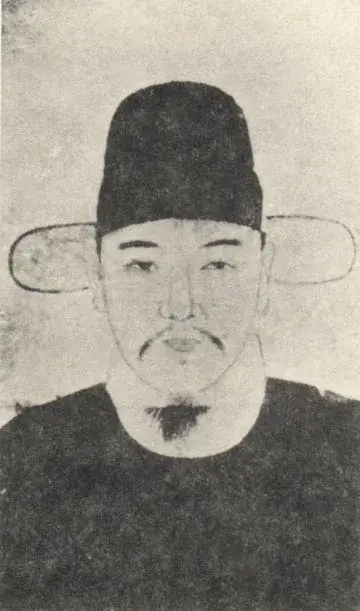
金声
Jin Sheng (金声, 1598–1645), courtesy names Zijun and Zhengxi, pseudonym Chibi, was a prominent late Ming scholar-official, military thinker, and loyalist resistance leader. Hailing from Xiuning in Huizhou, South Zhili, Jin was renowned from his youth for erudite scholarship spanning the Confucian classics, astronomical divination, geographical treatises, and strategic warfare. Passing the imperial metropolitan examinations to…
Jin Sheng (金声, 1598–1645), courtesy names Zijun and Zhengxi, pseudonym Chibi, was a prominent late Ming scholar-official, military thinker, and loyalist resistance leader. Hailing from Xiuning in Huizhou, South Zhili, Jin was renowned from his youth for erudite scholarship spanning the Confucian classics, astronomical divination, geographical treatises, and strategic warfare. Passing the imperial metropolitan examinations to attain the jinshi degree in 1628, he entered the Hanlin Academy as a Bachelor and was subsequently appointed Examining Editor. When the Later Jin forces raided the capital perimeter in 1629, Jin submitted an impassioned memorial outlining seven military strategies for frontier defence and volunteered to lead troops in person. Denounced by entrenched factional ministers in Beijing, he was stripped of his offices and retreated to the Huangshan Mountains to lecture and author military and philosophical treatises. Following the fall of Beijing and the subsequent Qing advance south of the Yangtze in 1645, Jin liquidated his entire family fortune to recruit and command loyalist militias across southern Anhui. The Southern Ming regimes commissioned him as Right Vice Minister of War and Assistant Censor-in-Chief. Fortifying the vital mountain pass of Congshanguan alongside his dedicated disciple Jiang Tianyi, Jin repeatedly defeated Qing vanguards and liberated several surrounding counties. However, betrayed by defecting officers who guided Qing troops through treacherous cliff routes to encircle the pass, Jin was captured after fierce resistance and taken to Nanjing. Confronted by the grand defector Hong Chengchou, who sought his submission on behalf of the Qing court, Jin loudly berated Hong for dishonour and treachery. Maintaining unwavering moral integrity, Jin was executed at Yuhuatai in Nanjing in late 1645 at the age of forty-eight.
Born in Oushan Village, Xiuning; his family's ancestral surname Cheng was changed to Jin.
Entered the National Guozijian Academy as a selected tribute student, earning literary renown.
Placed eleventh in the Shuntian provincial civil examinations to become a juren.
Passed the metropolitan examination and was selected as a Hanlin Bachelor.
As Hong Taiji approached Beijing, Jin petitioned recommending Shen Fu and was named Censor of Shandong.
After Shen Fu fell at Lugou Bridge, Jin repeatedly petitioned for retirement and was permitted to recuperate at home.
Recommended by Grand Secretary Xu Guangqi to serve as Censor assisting calendar reforms, but work ceased.
Promoted to Assistant Surveillance Commissioner of Shandong, he returned home to observe mourning upon his mother's death.
Recommended by General Tang Tong to serve as Senior Compiler, he learned of his father's death at the Huai River and returned.
Following the fall of Nanjing, he mortgaged family wealth to raise loyalist troops, receiving appointment as Vice Minister of War.
Traitor Huang Shu served as a Qing guide, leading to Jin Sheng's defeat and capture at Gangkou in Xuancheng.
Denouncing turncoat Hong Chengchou, he bowed toward the Ming Xiaoling Mausoleum and serenely met execution at age forty-eight.
Jin Sheng was born on November 26, 1598, in Oushan Village, Xiuning County, South Zhili. From childhood, Jin exhibited exceptional intellectual capacity and an austere personal bearing. While mastering orthodox Confucian philosophical texts, he took keen interest in historical statecraft, geography, tactical terrain analysis, and the classical schools of military theory. He passed the southern provincial examination in 1627 and achieved the jinshi degree in 1628 during the inaugural year of the Chongzhen Emperor's reign.
Enrolled in the Hanlin Academy as a Bachelor and subsequent Examining Editor, Jin took his imperial duties with profound solemnity. In the winter of 1629, during the Jisi Incident, Later Jin armies bypassed the Shanhaiguan fortifications and raided the suburbs of Beijing. While most court bureaucrats were paralysed by terror, Jin stepped forward to present a comprehensive ten-thousand-word memorial outlining decisive military countermeasures. He urged the throne to train imperial bodyguards, fortify key passes, employ mobile chariot-and-artillery formations, and remove corrupt eunuchs from military supervision. Jin boldly requested imperial commission as an inspecting censor to drill volunteers beyond the capital passes. However, Chief Grand Secretary Wen Tiren and rival bureaucrats denounced his proposal as reckless insubordination, prompting the emperor to dismiss Jin from civil office.
Following his compulsory retirement, Jin Sheng returned to Anhui and settled in the rugged Huangshan Mountains, where he erected his Meihua Study. For over a decade, he abstained from bureaucratic entanglements, dedicating himself to lecturing, mentoring talented young scholars, and writing. Prominent intellectuals, including Jiang Tianyi, travelled great distances to study classical philosophy, military topography, and administrative logistics under his guidance.
During this period, Jin authored extensive treatises reconciling Song rationalism with pragmatic statecraft, including General Principles of the Book of Changes, Observations on Dynastic History, and The Military Strategy of Master Jin. Jin repeatedly argued that Confucian moral principles were hollow without practical instruments of defence and sound grain logistics. In 1638, as Qing forces raided North China again, the court issued an edict to recall Jin to bureaucratic service; seeing that central governance remained corrupted by factionalism, Jin declined the appointment to remain in mountain seclusion.
Returning to his hometown in Xiuning, Jin Sheng observed the widespread eruption of peasant rebellions and funded local militias to protect his home county. In the twelfth month of Chongzhen 5 (January 1633), upon the strong recommendation of Grand Secretary Xu Guangqi, the Chongzhen Emperor recalled Jin Sheng as an Investigating Censor of the Shandong Circuit to assist Xu in compiling the Chongzhen Lishu (Chongzhen Calendar Treatises), though the project halted before completion. In 1634 (Chongzhen 7), the court promoted him to Assistant Surveillance Commissioner of Shandong; Jin declined the post, and upon the death of his mother, he returned home to observe filial mourning.
In 1643 (Chongzhen 16), when mutinous soldiers dispatched by Governor-General Ma Shiying raided southern Anhui and clashed with local inhabitants, officers falsely accused Jin Sheng of inciting the uprising. Jin submitted a vigorous memorial that cleared his name. Meanwhile, General Tang Tong repeatedly praised Jin's military and civil talents before the Chongzhen Emperor. The emperor issued two urgent edicts summoning Jin to Beijing to serve as Hanlin Senior Compiler. Jin set out northward, but upon reaching the Huai River, received news of his father's passing and turned back to observe mourning, inadvertently sparing him from the collapse of Beijing in the Jiashen crisis of 1644.
In 1644, Beijing fell to peasant rebellions, the Chongzhen Emperor committed suicide, and the Qing forces occupied northern China. Upon receiving news of the national catastrophe, Jin wept bitterly and swore fealty to the fallen dynasty. When Qing forces captured Nanjing in June 1645 and enforced the queue decree across Jiangnan, Jin dispersed his accumulated personal assets to raise an armed loyalist resistance in Huizhou.
Mobilising gentry clans and peasants across Shexian, Xiuning, Qimen, and Jixi, Jin organized tens of thousands of volunteer fighters. The nascent Southern Ming court appointed him Right Vice Minister of War and Assistant Censor-in-Chief. Jin partnered with his premier pupil Jiang Tianyi to fortify Congshanguan, a critical gateway between Anhui and Zhejiang. Under Jin's strict discipline, the militia repeatedly ambushed and routed Qing forward units, capturing surrounding administrative districts such as Ningguo and Jingde, which ignited a broad wave of anti-Qing resistance throughout the southern Yangtze valley.
In the autumn of 1645, Qing authorities directed turncoat commanders Zhang Tianlu and Liu Liangzuo to deploy massive forces against Congshanguan. Despite overwhelming disparities in numbers and ordnance, Jin and Jiang repelled wave after wave of assaults for over a month. Unable to break the defences head-on, Zhang bribed local traitors who guided elite shock troops along obscure cliff tracks to strike the defenders from the rear. Surrounded and out of munitions, Jin was wounded in melee combat and captured alongside Jiang Tianyi.
Transported in heavy chains to Nanjing, Jin was brought before Hong Chengchou, the former Ming Minister of War who had defected to the Qing and was now serving as pacification commissioner of Jiangnan. Hoping to leverage Jin's vast regional prestige to appease southern intellectuals, Hong personally descended into the courtyard to unchain Jin and offer him high imperial office. Jin glared fiercely and shouted: "Hong Chengchou was a noble martyr who died for his country at Songshan, and the late Emperor personally erected a shrine in his honor! What manner of wandering ghost are you, that dares to usurp the sacred name of a loyal minister?" Humiliated and speechless, Hong retreated into the inner chambers. Refusing every subsequent offer of clemency, Jin Sheng was taken to Yuhuatai in Nanjing on November 25, 1645. Straightening his garments and bowing north towards the imperial tombs, he sat calmly and met his execution with dignity at the age of forty-eight.
During the national crisis of 1629, Jin Sheng authored his celebrated memorial offering seven comprehensive strategies to restore military parity against northern incursions. His blueprint emphasised reforming the training of imperial garrison troops, constructing coordinated defensive networks along treacherous terrain, integrating firearms with mobile chariot bastions, and purging cowardly court eunuchs from commanding generals. His insightful analysis anticipated many tactical challenges that plagued the late Ming dynasty and demonstrated his formidable synthesis of Confucian administrative ethics and pragmatic military theory.
Throughout his long hermitage in the Huangshan Mountains, Jin broke away from the decadent, purely meditative trends of late Ming neo-Confucianism. He trained an entire generation of southern scholars in practical governance, cartography, engineering, and logistics. His intellectual legacy was reflected in the exceptional loyalty and tactical competence demonstrated by his students, who formed the administrative backbone of the Anhui resistance movement.
When the Southern Ming capital of Nanjing collapsed, Jin Sheng displayed extraordinary moral courage by committing his entire familial estate to the national defence. He rallied fractured local communities, forged disciplined regiments out of disparate peasant volunteers, and established an impenetrable defensive bastion at Congshanguan. His unyielding stand sustained southern resistance and inspired subsequent generations of Chinese patriots.
FIGURES ASSOCIATED WITH THIS DYNASTY