Royal Birth
Born into the royal Kshatriya/Brahmin house of Malaya in South India, the third son of King Isanavarman.
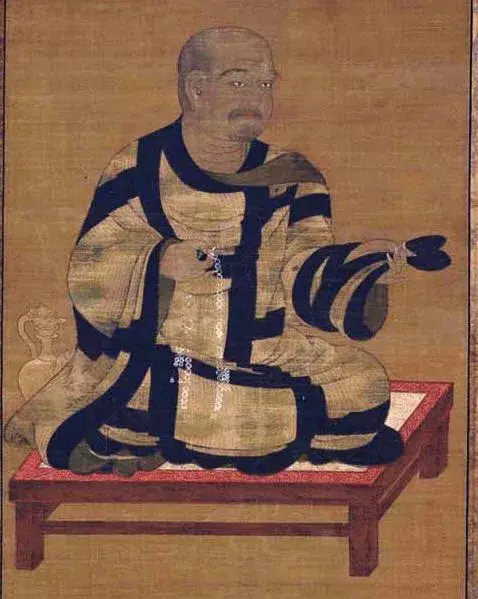
金刚智
Vajrabodhi (669–741), known in Chinese as Jin Gangzhi, was an Indian Buddhist master from the kingdom of Malaya in Southern India (modern Malabar Coast). The third son of King Isanavarman, Vajrabodhi was a towering translation master and a founding patriarch of Esoteric Buddhism (Zhenyan / Tantric Buddhism) in China. Along with Subhakarasimha (Shanwuwei) and Amoghavajra (Bukong), he is venerated in Buddhist history as…
Vajrabodhi (669–741), known in Chinese as Jin Gangzhi, was an Indian Buddhist master from the kingdom of Malaya in Southern India (modern Malabar Coast). The third son of King Isanavarman, Vajrabodhi was a towering translation master and a founding patriarch of Esoteric Buddhism (Zhenyan / Tantric Buddhism) in China. Along with Subhakarasimha (Shanwuwei) and Amoghavajra (Bukong), he is venerated in Buddhist history as one of the "Three Great Masters of the Kaiyuan Era" (Kaiyuan Sandashi). Ordained at Nalanda Monastery, Vajrabodhi mastered grammar, logic (Hetuvidya), and the Mahayana canonical treatises. He spent seven years studying under Master Nagabodhi in Southern India, receiving the fivefold initiation (abhiseka) and inheriting the esoteric teachings of the Diamond Realm (Vajradhatu). In 719 (Kaiyuan 7), Vajrabodhi sailed via maritime routes with his disciple Amoghavajra, arriving at the port of Guangzhou before traveling to the imperial capitals of Luoyang and Chang'an under imperial summons by Emperor Xuanzong. Over twenty years in China, he resided in grand monasteries including Daxingshan, Ci'en, and Jianfu, erecting initiation platforms, translating seminal scriptures such as the Vajrasekhara Sutra, and laying the foundational framework for East Asian Esoteric Buddhism.
Born into the royal Kshatriya/Brahmin house of Malaya in South India, the third son of King Isanavarman.
Entered Nalanda Monastery at age ten under Master Santijnana, studying linguistic treatises and epistemology.
Received full monastic ordination (upasampada) at age twenty; traveled through central and western India studying Madhyamaka texts.
Traveled to Kapilavastu to study under Master Jinabhadra for three years, mastering Yogacara epistemology.
Studied under Nagabodhi in South India for seven years, receiving complete abhiseka and the Vajrasekhara Sutra.
Traveled via Sri Lanka and Srivijaya, arriving at the international port of Guangzhou in the Tang Empire.
Received by Emperor Xuanzong in Luoyang; established esoteric initiation altars at Ci'en and Jianfu monasteries.
Translated the four-volume Vajrasekhara Yoga Abridged Recitation Sutra and the Cundi Dharani Sutra.
Passed away at Guangfu Monastery in Luoyang at age 73; bestowed posthumous titles and stupa at Longmen.
Vajrabodhi was born in 669 in the Malaya kingdom of Southern India, the third son of King Isanavarman. Endowed with precocious intelligence, he could memorize thousands of lines of verse daily. At the age of ten, rejecting royal privileges, he entered the celebrated monastic university of Nalanda, becoming a novice monk under Master Santijnana to master Sanskrit linguistics (Sabdavidya). At fifteen, he journeyed to Western India to study epistemological treatises by Dharmakirti, acquiring formidable debate and logical acumen.
Reaching the age of twenty, Vajrabodhi received full monastic ordination at Nalanda. Over the next eight years, he immersed himself in the Madhyamaka philosophy of Nagarjuna, Aryadeva, and Bhaviveka, mastering fundamental texts including the Prajnapradipa, Shatasastra, and Dvadashamukha Sastra. At twenty-eight, he journeyed to Kapilavastu to study under Master Jinabhadra, dedicating three years to the rigorous study of Asanga's and Vasubandhu's Yogacara philosophy, including the Yogacarabhumi Sastra and Vijnaptimatratasiddhi.
At thirty-one, hearing that Nagabodhi, the direct spiritual successor of Nagarjuna, was residing in Southern India, Vajrabodhi undertook a long pilgrimage to seek his guidance. Nagabodhi, recognized as an immortal adept of immense spiritual stature, accepted Vajrabodhi as his principal disciple. Over the ensuing seven years, Vajrabodhi systematically mastered the Vajrasekhara Sutra, Mahavairocana Dharani, and the secret rituals of the five divisions, receiving the complete initiations of both the Diamond Realm and Womb Realm mandalas.
Having mastered the esoteric doctrines, Vajrabodhi engaged in missionary activities in South India and Sri Lanka. In Sri Lanka, he ascended Adam's Peak (Sripada) to venerate the sacred footprint of the Buddha, winning the profound reverence of the Sinhalese royal court. Recognizing that the Tang Empire was at the zenith of its global prestige and prosperity, Vajrabodhi resolved to embark on a perilous voyage eastward to transmit the Diamond Realm teachings to China.
In 719 (Kaiyuan 7), Vajrabodhi set sail with his disciple Amoghavajra and dozens of attendants aboard large Persian merchant vessels. Navigating treacherous monsoons and maritime typhoons, they made port in the kingdom of Srivijaya (modern Sumatra) before arriving at the great maritime metropolis of Guangzhou. Astounded by the Indian master's spiritual presence, the Military Governor of Lingnan dispatched an express memorial to Chang'an. Emperor Xuanzong, eager to welcome renowned overseas scholars, issued an imperial decree ordering local prefectures to provide formal state escorts to conduct Vajrabodhi to the eastern capital of Luoyang.
In 720, Vajrabodhi arrived in Luoyang, where Emperor Xuanzong granted him a formal imperial audience, treating the former Indian prince with extraordinary veneration. The emperor ordered him to reside in the prestigious Ci'en and Jianfu monasteries, commissioning him to perform esoteric rites for the spiritual defense and prosperity of the empire.
Settling in the metropolitan capitals of Chang'an and Luoyang, Vajrabodhi presided over imperial translation bureaus established at Daxingshan, Ci'en, and Jianfu monasteries. Collaborating with eminent scholar-monks including Amoghavajra and the celebrated astronomer-monk Yi Xing, Vajrabodhi launched the first systematic translation of Diamond Realm scriptures into Chinese.
His translation bureau produced the seminal four-volume Vajrasekhara Yoga Abridged Recitation Sutra, the Cundi Dharani Sutra, and various ritual manuals governing wrathful deities such as Acala (Fudong Mingwang). His abridged Vajrasekhara Sutra expounded the five Buddha wisdoms, the cosmic mandala, and the esoteric practice of the four mudras, unveiling the supreme mystery of the Diamond Realm to East Asian Buddhism.
Simultaneously, Vajrabodhi established public and private esoteric initiation altars (abhiseka mandala). During the Kaiyuan era, members of the imperial family, senior court ministers, and eminent monastic masters gathered at his platforms to receive esoteric consecrations. Vajrabodhi's solemn Sanskrit mantras, majestic mandalas, and efficacious prayers for rain during regional droughts ignited an unprecedented passion for Esoteric Buddhism across the Tang court.
Among Vajrabodhi's numerous disciples, the Sinhalese-born youth Amoghavajra stood out as his foremost successor. Having accompanied Vajrabodhi since youth, Amoghavajra served his master for over a decade with unswerving devotion, internalizing every detail of the esoteric transmissions. Recognizing that the seeds of Esoteric Buddhism were firmly planted in Chinese soil, Vajrabodhi conferred the Acharya initiation upon Amoghavajra, bestowing upon him the original Sanskrit texts of the Vajrasekhara Sutra and ritual implements.
In the autumn of 741 (Kaiyuan 29), Vajrabodhi returned from Chang'an to Luoyang, taking up residence at Guangfu Monastery. In the eighth month, knowing his earthly mission was accomplished, he bathed, assumed the full lotus posture, and peacefully entered parinirvana in his meditation chamber at the age of seventy-three.
Deeply grieved by his demise, Emperor Xuanzong issued an imperial proclamation conferring posthumous honors: Vajrabodhi was promoted to Specially Advanced Official (Tejin) and Chamberlain for Ceremonials (Hongluqing), receiving the posthumous title "Grand Propagator of the Doctrine" (Dahongjiao Sanzang). A magnificent stupa was constructed with imperial funding at Guanghua Monastery in Longmen, commemorating a transcendent master whose legacy bridged the civilizations of India and China.
Prior to Vajrabodhi's arrival, Master Subhakarasimha had translated the Mahavairocana Sutra, establishing the theoretical foundation of the Womb Realm (Garbhadhatu). However, the complementary pillar of esoteric teachings—the Diamond Realm (Vajradhatu)—remained absent. Vajrabodhi's transmission of the Vajrasekhara Sutra completed the dual architecture of Esoteric Buddhism, uniting the Diamond and Womb mandalas into a unified system.
Vajrabodhi expounded the Diamond Realm philosophy of realizing Buddhahood in this very life (sokushin jobutsu) through the harmony of the Three Mysteries: body (mudra), speech (dharani), and mind (samadhi). This rigorous liturgical system transformed Chinese Buddhist practice from theoretical speculation into an empirical path of psycho-spiritual empowerment, securing the Zhenyan School's enduring status as an independent Buddhist tradition.
During his two decades of translation work, Vajrabodhi established rigorous methodological standards for rendering Sanskrit esoteric literature into Chinese. His four-volume translation of the Vajrasekhara Yoga Abridged Recitation Sutra served as the definitive liturgical manual for Diamond Realm practice. He developed precise phonetic transliteration systems that preserved the vibrational efficacy of Sanskrit mantras while conveying profound philosophical meaning in classical Chinese prose.
Additionally, his translation of the Cundi Dharani Sutra popularized the worship of the Cundi Avalokitesvara throughout monastic and lay communities, embedding the Cundi mantra as one of the ten fundamental daily incantations recited in Chinese Buddhist monasteries for over a millennium.
Beyond his textual scholarship, Vajrabodhi was renowned for his mastery of traditional Indian sciences, including astronomy, calendrical calculation, and medicinal arts. When devastating droughts struck the Guanzhong basin, Emperor Xuanzong repeatedly summoned Vajrabodhi to construct rainmaking altars. The master's invocations brought torrential downpours, earning him profound imperial admiration.
By opening formal initiation platforms at Ci'en and Jianfu monasteries, Vajrabodhi initiated imperial princes, chancellors such as Fang Guan and Li Linfu, and leading civil officials. His presence elevated the Zhenyan School to the highest tier of imperial state religion during the High Tang era.
Vajrabodhi's most momentous achievement was training and consecrating Amoghavajra as his lineage successor. Prior to his passing, Vajrabodhi instructed Amoghavajra to travel to India and Sri Lanka to gather the complete, unabridged versions of the Vajrasekhara Sutra and esoteric tantras.
Carrying forward his master's vision, Amoghavajra became the spiritual preceptor to three Tang emperors (Xuanzong, Suzong, and Daizong), elevating Esoteric Buddhism to state preeminence. Amoghavajra's disciple Huiguo subsequently transmitted the dual mandalas to the Japanese pilgrim monk Kukai (Kobo Daishi), who founded Shingon Buddhism at Mount Koya. Thus, the lineage transmitted by Vajrabodhi extended across East Asia, flourishing across centuries.
FIGURES ASSOCIATED WITH THIS DYNASTY