Birth in Fuzhou
Born into a scholarly family in Fuzhou, Jiangxi; began studying classics under his father at age five.
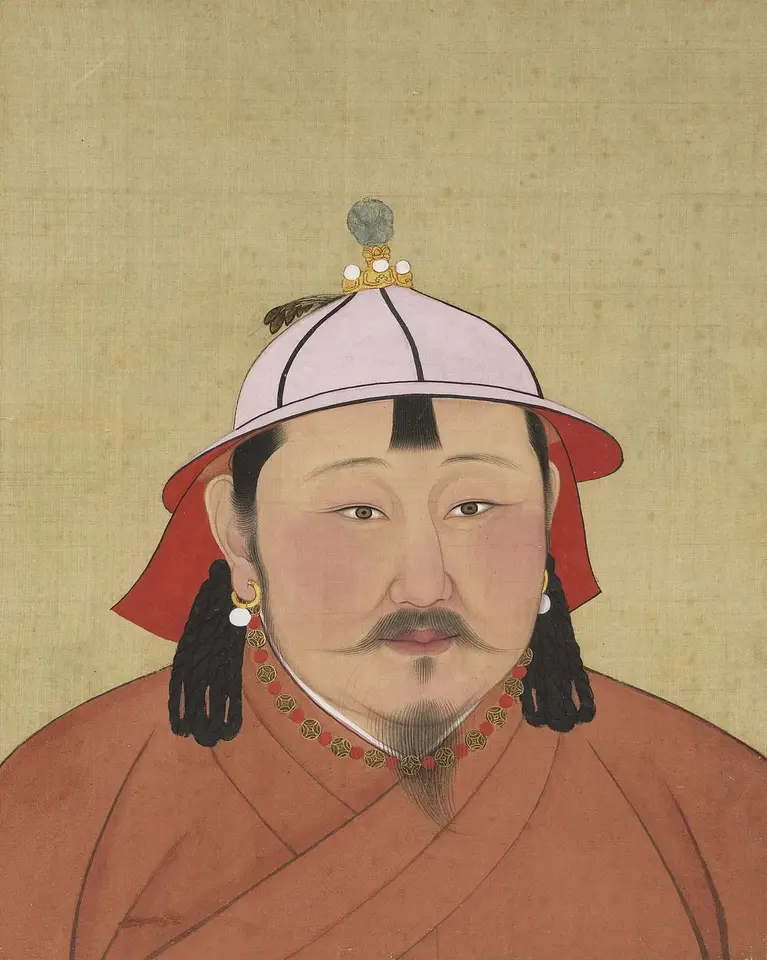
揭傒斯
Jie Xisi (揭傒斯) was a renowned poet, historian, calligrapher, and senior statesman of the Yuan Dynasty. He was celebrated as one of the "Four Great Poets of the Yuan" alongside Yu Ji, Yang Zai, and Fan Peng, as well as one of the "Four Heroes of Confucian Scholarship" together with Yu Ji, Yang Zai, and Huang Jin. Hailing from Fuzhou (modern Fengcheng, Jiangxi Province), he overcame early poverty through relentless…
Jie Xisi (揭傒斯) was a renowned poet, historian, calligrapher, and senior statesman of the Yuan Dynasty. He was celebrated as one of the "Four Great Poets of the Yuan" alongside Yu Ji, Yang Zai, and Fan Peng, as well as one of the "Four Heroes of Confucian Scholarship" together with Yu Ji, Yang Zai, and Huang Jin. Hailing from Fuzhou (modern Fengcheng, Jiangxi Province), he overcame early poverty through relentless self-study, gaining literary renown in Hunan and Hubei where he was patronized by the eminent statesman Cheng Jufu, who gave his cousin to Jie in marriage. In 1314, Jie was recruited directly from commoner status to serve as an editor in the Hanlin Academy, winning the deep respect of Chancellor Li Meng for his elegant biographical treatises. Over a four-decade career serving emperors Renzong, Yingzong, Wenzong, and Shundi, Jie served as the inaugural Instructor of the Classics in the Kuizhang Pavilion and rose to Hanlin Academician Expositor-in-waiting. He played a central role in compiling the Grand Canon of Statecraft (Huangchao Jingshi Dadian) and in his seventies led the compilation of the official histories of the Liao and Jin dynasties (Liao Shi and Jin Shi), tragically dying of exhaustion in the history academy.
Born into a scholarly family in Fuzhou, Jiangxi; began studying classics under his father at age five.
Travelled widely seeking literary patronage, earning high praise from Pacification Commissioner Zhao Qisu.
Paid homage to the eminent Confucian master Cheng Jufu in Wuchang, who recognized his extraordinary talents.
Appointed rector of the Zhuyi Academy in Changsha; climbed Mount Heng and composed celebrated poetry.
Cheng Jufu, deeply impressed by Jie's erudition and character, arranged for his cousin to marry him.
Accompanied Cheng Jufu to the imperial capital Dadu, associating with northern literati.
Returned to Dadu, establishing close literary ties with Yu Ji and presenting his reform essay to Chancellor Li Meng.
Appointed directly from commoner status to Hanlin Compiler, authoring biographies of meritorious founding heroes.
Promoted to Hanlin Drafter, composing major imperial monuments and administrative stele inscriptions.
Appointed Instructor in the Directorate of Education while concurrently retaining his Hanlin editorial post.
Selected as the premier Instructor of the Classics in the newly founded Kuizhang Pavilion Academy.
Drafted core administrative and penal sections of the Grand Canon of Statecraft, winning Emperor Wenzong's lavish praise.
Granted special imperial audience by Emperor Shundi, who bestowed prince-grade ceremonial robes upon him.
Promoted to Academician of the Jixian Academy; subsequently dispatched as imperial envoy to sacrifice at northern sacred mountains.
Appointed Academician Attendant of Kuizhang Pavilion and subsequently Hanlin Academician for State History.
Elevated to Hanlin Academician Expositor-in-waiting and Grand Master of Palace Accord.
Commissioned as Hanlin Chief Director for the compilation of the official History of Liao and History of Jin.
Succumbed to illness caused by relentless toil in the history academy at age seventy-one; posthumously created Duke of Yuzhang and enfeoffed with posthumous name Wen'an.
Jie Xisi was born in 1274 in Fuzhou (modern Fengcheng, Jiangxi Province). His father, Jie Laicheng, was a distinguished Song scholar, and his mother Madame Huang managed the household with strict discipline. From the age of five, Jie studied the Confucian classics day and night under his father's guidance. By age twelve, he had mastered classical histories and philosophical treatises; by age fifteen, he was renowned throughout his native region for his mastery of poetry and calligraphy.
However, amidst the social displacement following the Mongol conquest of Southern Song, his family fell into deep poverty. At fifteen, Jie was forced to leave home, travelling across Hunan and Hubei with only his books and zither to earn a livelihood through teaching and drafting documents. In 1297, at age twenty-four, he gained the patronage of Pacification Commissioner Zhao Qisu, who hailed him as a future pillar of the imperial academy. In 1300, Jie visited the prominent scholar-official Cheng Jufu in Wuchang. Cheng was astonished by Jie's literary elegance and moral gravity, treating him as a treasured younger friend. In 1306, Cheng gave his cousin to Jie in marriage, solidifying Jie's social and literary stature.
In 1308, Jie travelled to Dadu as a guest in Cheng Jufu's residence. Following a period of mourning for his father, he returned to Dadu in 1312, establishing lodgings at Cheng's studio. At that time, the capital was the gathering place of northern and southern literati; Jie engaged in extensive intellectual debates with Yu Ji, Deng Wenyuan, Yuan Jue, Fan Peng, and Yang Zai, gaining paramount prestige. Founding ministers such as Yuan Mingshan, Li Meng, and Zhao Mengfu recognized him as an indispensable statesman and recommended him to the throne.
In 1312, Jie presented his treatise Letter to Duke Li of Qin to Grand Councilor Li Meng, arguing that establishing moral purpose and clarifying righteous principles were the primary foundations for state governance. In May 1314, Emperor Renzong issued an imperial edict bypassing standard examinations to appoint the commoner Jie Xisi directly as Compiler in the Hanlin Academy. Assigned to compile biographies of meritorious founding heroes, Jie exercised rigorous source criticism, writing with majestic precision that earned Li Meng's highest praise. In 1316, he was promoted to Drafter, and in 1317, he became Instructor in the Directorate of Education.
In 1321, Jie returned to Dadu, where his eldest son Jie Hong enrolled as an imperial student. In spring 1329, Emperor Wenzong established the Kuizhang Pavilion Academy to promote classical studies and instruct imperial scions. Jie Xisi was selected as the very first Instructor of the Classics. Whenever Emperor Wenzong visited the pavilion to discuss statecraft, Jie provided insightful analyses drawn from historical precedents. Emperor Wenzong held him in such high esteem that he addressed him familiarly by his courtesy name "Manshuo."
During this period, Jie presented his forty-nine-chapter treatise Essentials of Peaceful Governance (Taiping Zhengyao). Emperor Wenzong kept the book beside his bed, studying it continually, and ordered it copied and distributed to high ministers. In 1330, Jie was tasked with drafting the constitutional and legal sections of the Grand Canon of Statecraft (Huangchao Jingshi Dadian). Upon reviewing his draft of the penal statutes, Emperor Wenzong exclaimed in admiration that its clarity and balance matched the finest legal standards of the Tang Dynasty. When Emperor Shundi ascended the throne in 1333, he summoned Jie to the private palace, presenting him with sets of princely robes. Whenever Shundi inspected ancient calligraphy, paintings, and bronzes at the pavilion, Jie effortlessly explained their dating, provenance, and historical inscriptions, leaving the emperor spellbound.
Between 1334 and the early Later Zhiyuan era, Jie Xisi composed numerous commemorative stele inscriptions during his leisure from court duties, including Stele for the Imperial Shrine of Emperor Zhaolie of Han and Record of the Pengzhou School, and authored the preface to Sheng Ximing's Fashu Kao. In 1335, he was promoted to Hanlin Academician Awaiting Orders and Compiler in the National History Academy. In 1338, he advanced to Direct Academician of the Jixian Academy, his literary and calligraphic reputation spreading widely across Jiangnan and northern regions, where scholars considered a single word of his praise a supreme honor.
In 1339, at age sixty-six, Jie was commissioned as special imperial envoy to perform sacrifices on behalf of the emperor at the Northern Sacred Peak, the Northern Sea, the Jishui River, and the Southern Bastion. Traveling thousands of li to conduct sacrifices across sacred mountains and rivers, he composed and inscribed the Record of Sacrifices at the Southern Bastion. In March 1340, Emperor Shundi, recognizing a shortage of eminent literary ministers in the central government, appointed Jie Academician Attendant of the Kuizhang Pavilion. Upon receiving the edict, Jie set out immediately for the capital, whereupon the court appointed him Direct Hanlin Academician, Drafter, and Co-compiler of National History.
In 1341, Emperor Shundi inaugurated regular imperial classical lectures (jingyan), naming Jie Chief Classical Lecturer to read historical annals and explicate the principles of dynastic order and decline daily before the throne. In 1342, Jie accompanied Shundi on an imperial tour to Shangdu, composing the celebrated Ode to Heavenly Horses. Later that year, the court promoted him to Hanlin Academician Expositor-in-waiting, Grand Master of Palace Accord, and Co-director of the Imperial Lectures. In recognition of his exceptional erudition, Emperor Shundi broke bureaucratic precedent to elevate him four grades and nine ranks. In his lecture presentations, Jie consistently emphasized the welfare of the people and fundamental principles of benevolent governance, earning frequent imperial gifts of gold-woven silks.
In 1343, Emperor Shundi ordered the compilation of the official histories of the Song, Liao, and Jin dynasties under Grand Councilor Tuotuo. Given the fragmented and conflicting nature of Khitan and Jurchen archival records, Jie Xisi was appointed Hanlin Chief Director for the History of Liao and History of Jin.
When Tuotuo asked him about the fundamental principle of historiography, Jie responded: "The foundation lies in selecting the right personnel. Those with literary talent who lack historical knowledge cannot be employed; those with talent and historical knowledge who lack moral integrity must never be used. Moral virtue must always come first." He instructed his colleagues that true historians must record virtue and vice impartially without flattery or concealment.
Despite being in his seventies, Jie personally scrutinized messy drafts, working through cold winter nights to verify official titles, geographical changes, and genealogical records. Exhausted by relentless labor, in early 1344 Jie contracted severe chills in the history academy. Refusing to rest, he continued editing manuscripts until collapsing from exhaustion, passing away at his academy desk at age seventy-one. Emperor Shundi deeply mourned the loss of the intellectual titan, dispatching officials to manage his funeral and posthumously creating him Duke of Yuzhang with the prestigious posthumous name Wen'an.
Jie Xisi was a towering figure in Yuan literary history, celebrated as one of the "Four Great Poets of the Yuan" alongside Yu Ji, Yang Zai, and Fan Peng, and one of the "Four Heroes of Confucian Scholarship." His poetry was characterized by exquisite tonal purity, classical vigor, and profound emotional restraint. Yu Ji famously praised his poetry as resembling "a beautiful maiden pinning flowers in her hair, immensely graceful and refined."
Yet Jie was far from an isolated aesthetician. Having experienced the hardships of commoners during his early wanderings, he wrote many poignant realistic poems reflecting grassroots suffering. His masterpiece The Maiden of Linchuan (Linchuan Nü) depicted the heartbreaking fate of a blind peasant girl driven from home due to family poverty. In Willow Green Ballad and Song of Nü'erpu, he used vernacular folk idioms to portray the bravery of boatmen navigating violent river rapids. His allegorical poem Autumn Wild Geese subtly criticized the arrogance of privileged courtiers who oppressed southern commoners.
Jie made monumental contributions to Chinese historiography both in theoretical vision and practical compilation. He advocated a dynamic historical worldview that emphasized historical evolution while insisting on uncompromising factual truthfulness.
As chief compiler of the legal and constitutional treatises of the Grand Canon of Statecraft, he systematized early Yuan administrative law into an enduring constitutional reference. Later, as director of the History of Liao and History of Jin, he established the critical historiographical principles of direct recording (zhibi) and moral impartiality, organizing complex multilingual sources into coherent dynastic annals that preserved indispensable historical records of northern nomadic and sedentary regimes.
Throughout his bureaucratic career, Jie maintained unbending integrity and deep concern for his home region. In his native Fuzhou, corrupt local officials had falsely reported gold deposits, forcibly conscripting three hundred households into gold-panning corvee labor under a tyrannical headman. As annual quotas escalated from four ounces to forty-nine ounces, countless families went bankrupt or perished. Upon learning of their plight, Jie courageously petitioned the imperial court, securing the complete abolition of the corrupt levy and saving hundreds of families.
Jie steadfastly refused to pander to powerful officials. When an oppressive prefect demanded birthday bribes from citizens and offered Jie heavy payments to compose a commemorative stele celebrating his supposed "benevolence," Jie sternly rebuked the official and rejected the bribe. Conversely, he generously assisted impoverished scholars and sponsored younger talents throughout his life.
During his tenure as Instructor of the Classics in the Kuizhang Pavilion, Jie Xisi instructed the sons of meritorious ministers and imperial scions in Confucian classics. Tailoring his pedagogy to individual abilities, he integrated the profound principles of classical texts with practical statecraft strategies, emphasizing unity of fundamental essence and practical utility. In his imperial lectures before Emperor Wenzong and Emperor Shundi, he spoke forthrightly about administrative shortcomings and public concerns, counseling rulers to practice frugality, cherish the people, and revere Heaven.
Owing to his trenchant and penetrating expositions, Emperor Shundi placed absolute trust in him, referring difficult matters regarding classical rites and education to Jie for final adjudication. Throughout his more than ten years of service within the inner court, Jie maintained strict moral discipline; despite receiving substantial gifts of gold, jade, and brocades, he used his salary and rewards to support impoverished relatives and promote young scholars, providing an essential intellectual anchor for the dynasty's administrative and educational institutions.
Jie Xisi was an accomplished master of calligraphy, excelling in seal script, clerical script, regular script, and running script. Emulating the classical elegance of the Wei, Jin, and Tang dynasties, he championed the revivalist movement alongside Zhao Mengfu and Yu Ji.
His monumental inscriptions on imperial stone tablets, ancestral temples, and historic academies were celebrated for their balanced structure, vigorous brushwork, and scholarly composure. His calligraphic legacy remained an authoritative model for literati throughout the Yuan and Ming dynasties.
FIGURES ASSOCIATED WITH THIS DYNASTY