Birth in Jiangxi
Born into a prominent scholarly lineage in Jishui, composing verse at age five as a celebrated prodigy.
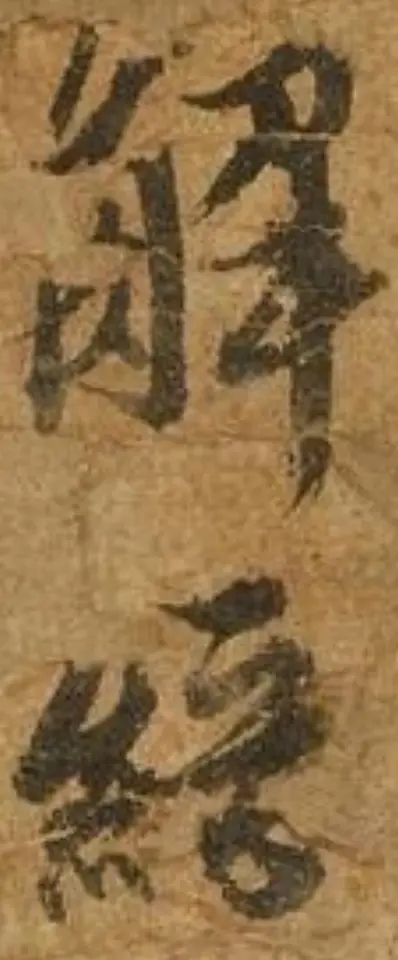
解缙
Xie Jin (解缙, 1369–1415), courtesy name Dashen, literary name Chunyu, posthumously titled Wenyi, was a native of Jishui County in Ji'an Prefecture and one of the most brilliant statesmen, literary figures, and scholars of the early Ming dynasty, serving as the inaugural Senior Grand Secretary of the Grand Secretariat. Renowned as a prodigy from childhood, he attained the jinshi degree in 1388 at the age of nineteen and was…
Xie Jin (解缙, 1369–1415), courtesy name Dashen, literary name Chunyu, posthumously titled Wenyi, was a native of Jishui County in Ji'an Prefecture and one of the most brilliant statesmen, literary figures, and scholars of the early Ming dynasty, serving as the inaugural Senior Grand Secretary of the Grand Secretariat. Renowned as a prodigy from childhood, he attained the jinshi degree in 1388 at the age of nineteen and was commissioned as a central drafter, winning the extraordinary personal favor of Emperor Taizu (Zhu Yuanzhang) after submitting a ten-thousand-word memorial addressing state deficiencies. Recognizing his youthful brilliance and unyielding pride, Taizu instructed his father to escort him home for eight years of moral and intellectual maturation. Recalled under the Jianwen Emperor as a Hanlin expectant, Xie Jin subsequently submitted to the Yongle Emperor (Zhu Di) following the Jingnan Campaign in 1402, being appointed to the newly instituted Grand Secretariat. In this capacity, he functioned as the de facto premier of the realm. Xie Jin presided over the compilation of the monumental Yongle Dadian, the largest encyclopedia in imperial Chinese history, established operational precedents for the cabinet system, and provided decisive counsel securing the imperial succession of Crown Prince Zhu Gaochi. However, his unbending opposition to Prince of Han Zhu Gaoxu provoked relentless slander, resulting in his demotions to Guangxi and remote Jiaozhi. In 1410, he was imprisoned in the Imperial Bodyguard prison after privately paying respects to the Crown Prince. In the winter of 1415, commander Ji Gang had him buried in a snowdrift while intoxicated, causing his death at age forty-seven. In 1465, the Chenghua Emperor fully exonerated him, conferring the posthumous title of Wenyi.
Born into a prominent scholarly lineage in Jishui, composing verse at age five as a celebrated prodigy.
Passed the palace examinations alongside his brother and brother-in-law, appointed Central Drafter.
Ordered by Emperor Taizu to return home with his father to cultivate virtue and avoid court factionalism.
Returned to the capital as Hanlin Expectant; later demoted to an administrative post in Hezhou.
Welcomed Zhu Di into Nanjing following the Jingnan Campaign, promoted to Hanlin Reader Academician.
Headed the newly created Grand Secretariat and was appointed Chief Compiler of the imperial encyclopedia.
Decisively advised the emperor to confirm Zhu Gaochi as Crown Prince with the famous phrase "a worthy grandson."
Demoted to Assistant Administration Commissioner of Guangxi due to factional slander from Prince of Han.
Imprisoned in the Imperial Bodyguard prison on charges of meeting the Crown Prince without imperial authorization.
Intoxicated and buried alive in deep snow by Imperial Bodyguard commander Ji Gang at age forty-seven.
Formally rehabilitated by the Chenghua Emperor, restored to former honors, and granted the title of Wenyi.
Xie Jin was born on the seventh day of the eleventh lunar month in the second year of the Hongwu reign (1369) in Jianhu of Jishui County into a distinguished scholar-gentry lineage. Endowed with extraordinary memory, he was celebrated as a child prodigy who could recite the Six Classics at age four and compose rhymed poetry at age five. His mother Madam Gao, an accomplished calligrapher, personally instructed him in ancient scripts. By age ten, Xie read thousands of words daily and composed literary essays with effortless elegance.
In 1387, at nineteen, Xie Jin achieved first place in the Jiangxi provincial examinations as the jieyuan. In 1388, he sat for the metropolitan examinations in Nanjing, passing with high honors. On the same examination roster, his elder brother Xie Lun and brother-in-law Huang Jinhua also attained the jinshi degree, prompting contemporaries to celebrate their clan as "three jinshi from a single household."
Commissioned as a Central Drafter in the Hanlin Academy, Xie Jin won the profound admiration of Emperor Taizu. The founding monarch frequently summoned the brilliant youth to his private chambers for confidential discussions on governance, telling him affectionately: "In righteousness we are sovereign and minister, but in affection we are as father and son; speak without hesitation and conceal nothing."
Moved to tears, Xie submitted a comprehensive ten-thousand-word memorial addressing systemic flaws in judicial penal laws, military garrison settlements, administrative corruption, and official appointments. Highly impressed by his courage, Emperor Taizu kept him close to the throne to draft important imperial rescripts, granting him favors surpassing senior court ministers.
However, youthful success fostered an arrogant, uncompromising demeanor in Xie Jin. Confronted by administrative improprieties, he rebuked colleagues without reservation, even drafting memorials for censors to impeach corrupt ministers. His abrasive candor incited intense resentment and hostility among senior grandees and imperial relatives.
Censor Yuan Tai, notorious for insidious maneuvering, fabricated charges against Xie Jin before the throne. Although Emperor Taizu recognized Xie's pure loyalty, he realized that without patience and emotional maturity, the brilliant youth would inevitably invite destruction. In 1391, Taizu summoned Xie's father Xie Kai to Nanjing, declaring with paternal concern: "A great vessel matures late. Your son possesses transcendent genius, but his edge is far too sharp. Escort him back to your native village to cultivate moral virtue and study in quiet reclusion for ten years; it will not be too late to employ him then!"
Abiding by the imperial decree, Xie Jin returned to Jishui and entered a strict eight-year scholarly seclusion. In his ancestral home, he studied the dynastic histories, philosophy, astronomy, and calendar science, practicing cursive calligraphy until his literary style matured from extravagant rhetoric into seasoned authority.
In 1399, the Jianwen Emperor ascended the throne and recalled Xie Jin to the capital as Hanlin Expectant. Although Xie submitted memorials outlining military and administrative policies, his unyielding tone again provoked opposition, resulting in his transfer to remote Hezhou in Shaanxi. In 1402, recommended by classical master Fang Xiaoru, Xie was recalled to Nanjing.
In the sixth lunar month of 1402, Prince of Yan Zhu Di breached the gates of Nanjing, bringing an end to the Jianwen reign. While court officials were paralyzed by panic, Xie Jin weighed the preservation of the imperial state and allied with Hanlin colleagues such as Hu Guang to surrender to Zhu Di. Recognizing Xie Jin as the foremost literary scholar of the realm, the Yongle Emperor promoted him to Hanlin Reader, placing all confidential documents under his direction.
In 1403, to manage administrative affairs following the abolition of the prime ministership, the Yongle Emperor selected seven scholars—Xie Jin, Huang Huai, Hu Guang, Yang Rong, Yang Shiqi, Jin Youzi, and Hu Yan—to enter the Wenyuan Hall, establishing the Grand Secretariat. Ranking foremost among the seven counselors, Xie Jin assumed the title of Senior Grand Secretary concurrently with Grand Academician of the Right Spring Chamber, becoming the first premier of the cabinet system in Chinese history.
During his tenure as Senior Grand Secretary, Xie Jin achieved two monumental historical accomplishments. First, he directed the compilation of the imperial encyclopedia. In 1403, the emperor ordered the assembly of all classical literature under Xie's direction, producing an initial draft titled Grand Compendium of Literature. Deeming it insufficiently comprehensive, the emperor commanded a massive expansion, appointing Xie Jin and Yao Guangxiao as chief directors and mobilizing over two thousand scholars.
Adopting the editorial principle of incorporating all knowledge across classical scriptures, histories, philosophy, medicine, astronomy, religion, and artisanal arts, Xie established rigorous cross-referencing criteria. Completed in 1407, the Yongle Dadian comprised 22,877 volumes across 11,095 fascicles, standing as the most immense documentary repository of traditional Chinese civilization.
Second, Xie resolved the imperial succession. The Yongle Emperor hesitated between his eldest son Zhu Gaochi, who was benevolent but physically frail, and his second son Zhu Gaoxu, who was a formidable military commander who had saved the emperor's life during the Jingnan civil war.
Summoning Xie Jin to a confidential chamber, the emperor sought his counsel on the heir apparent. Xie responded with conviction: "The Eldest Son is filial and humane, holding the hearts of all subjects under Heaven; he is the legitimate successor according to ancestral law." When the emperor remained silent, Xie Jin, knowing the emperor's deep love for his grandson Zhu Zhanji, added three words: "A worthy grandson." The emperor was deeply moved, smiled, and confirmed Zhu Gaochi as Crown Prince and Zhu Zhanji as Imperial Grandson. Consequently, Prince of Han Zhu Gaoxu developed an irreconcilable hatred for Xie Jin.
Relying upon imperial favor, Zhu Gaoxu expanded his personal retinues and schemed to undermine the Crown Prince. Xie Jin warned the emperor: "The Prince of Han harbors arrogant ambitions; he must be dispatched to his feudal principality early to avert future civil discord." The emperor suspected Xie of sowing division within the imperial family.
In 1406, when the emperor mobilized troops to invade Vietnam, Xie Jin submitted memorials urging restraint. Following the military conquest, supporters of the Prince of Han accused Xie Jin of favoring Jiangxi candidates during imperial examination grading. In 1407, the incensed emperor stripped Xie of his cabinet post, banishing him as Assistant Administration Commissioner of Guangxi, and later demoting him to the remote post of Prefect of Huazhou in Jiaozhi. Despite hardship, Xie governed benignly, encouraging irrigation and agriculture among the local tribes.
In 1410, Xie Jin traveled to Beijing on official business regarding coal transportation. Because the Yongle Emperor was campaigning against the Mongols in the north, Crown Prince Zhu Gaochi administered state affairs in the capital. Xie Jin conducted official audiences with the Crown Prince and returned to his southern post.
Learning of this, Zhu Gaoxu sent urgent reports to the emperor's military camp, alleging that Xie had secretly met the Crown Prince without imperial authorization, violating the decorum due to a subject. The emperor flew into a rage, suspecting a conspiracy between Xie and the heir apparent. Imperial Bodyguards arrested Xie Jin, subjecting him to brutal interrogation before throwing him into the Imperial Bodyguard prison, where he remained incarcerated for five years without implicating the Crown Prince.
On the thirteenth day of the first lunar month in 1415, commander Ji Gang presented the roster of prisoners to the emperor. Scanning the names, the emperor remarked offhandedly: "Is Xie Jin still alive?"
Perceiving the emperor's unspoken desire to eliminate Xie, Ji Gang returned to the prison, preparing wine under the pretense of announcing an imperial pardon. When Xie became heavily intoxicated, Ji Gang ordered the guards to drag him into the snow-covered courtyard, burying him alive in a deep snowdrift. Xie Jin froze to death at the age of forty-seven.
Following his death, his family estates were confiscated, and his relatives were exiled to military garrisons in Liaodong. In 1465, the Chenghua Emperor formally rehabilitated Xie Jin, restored his official ranks, and conferred the posthumous title of Wenyi.
Xie Jin's foremost cultural achievement was directing the creation of the Yongle Dadian, recognized as the largest encyclopedia in world history. Directing over two thousand scholars across five years, he established the organizational methodology of classifying characters by rhyme and linking characters to comprehensive subjects. Preserving thousands of ancient works from antiquity through the early Ming, the encyclopedia safeguarded countless rare texts that would otherwise have been lost to posterity.
As the inaugural Senior Grand Secretary, Xie Jin served as the architect of the Ming cabinet system. Following the abolition of the prime ministership, he established the institutional routines of drafting imperial rescripts, deliberating upon confidential state memorials, and coordinating administrative decrees across the six ministries. His operational precedents defined the central auxiliary governance structure of the Ming and Qing dynasties for centuries.
During the bitter dynastic succession conflict between the Crown Prince and the Prince of Han, Xie Jin played a decisive historical role. Confronted by the emperor's favoritism toward Zhu Gaoxu, Xie defended the classical principles of primogeniture, uttering the celebrated phrase "a worthy grandson" to resolve the monarch's vacillation. His counsel secured the reigns of the Hongxi and Xuande emperors, laying the political foundation for the golden age of the early Ming dynasty.
In literature and art, Xie Jin stood as one of the preeminent geniuses of the Ming dynasty, later celebrated alongside Yang Shen and Xu Wei as one of the "Three Great Talents of the Ming." In calligraphy, he specialized in wild cursive script (kuangcao), drawing inspiration from Huaisu and Huang Tingjian. His brushwork was characterized by vigorous momentum and dramatic turns, reflecting his uncompromising and uninhibited spirit. His surviving calligraphic scrolls are treasured as supreme masterpieces that profoundly influenced late Ming calligraphic trends.
FIGURES ASSOCIATED WITH THIS DYNASTY