Life and Career
Confucian Scholarship and Founding of the Chu Braves
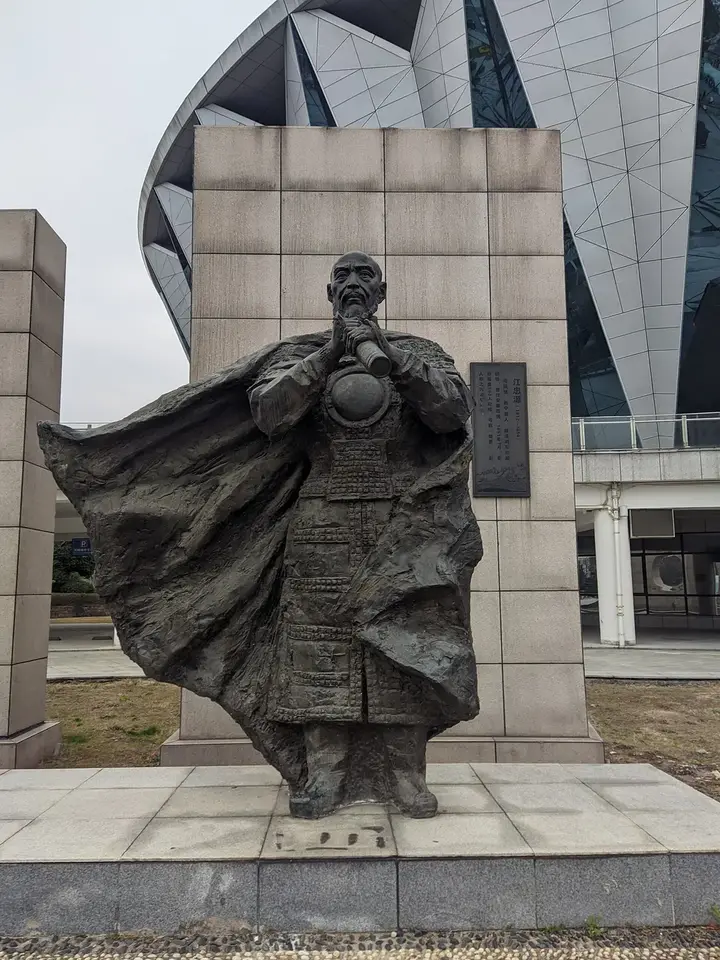
Jiang Zhongyuan was born in 1812 in Xinning County, Hunan. Endowed with a resolute temperament, he studied the Confucian classics while demonstrating keen interest in strategic statecraft and historical geography. In 1837, he passed the provincial examinations. Ten years later, in 1847, he was selected as an imperial tribute student and appointed Magistrate of Xiushui in Zhejiang. That autumn, during mourning in his native county, an insurrection led by Yao chieftain Lei Zaihao broke out on the Hunan-Guangxi border; Jiang organized local militia leagues and coordinated with government troops to suppress the rebellion, demonstrating formidable tactical ability.
In 1850, the Taiping Rebellion erupted at Jintian in Guangxi. Standard Qing Green Standard and Eight Banners garrisons suffered repeated demoralizing defeats. Recognizing Jiang administrative and martial competence, Hunan Governor Luo Bingzhang ordered him to recruit provincial militia. Rejecting conventional military arrangements plagued by mercenary disinterest, Jiang enlisted over a thousand hearty rural volunteers from Xinning, instituting mutual surveillance and bonding troops through clannish kinship and local ties under the name of Chu Braves. This disciplined force fought with fierce unity, marking the maturation of local militarization in nineteenth-century China and providing Zeng Guofan with the structural archetype for the Xiang Army.
The Suoyidu Ambush and National Prominence
In May 1852, the Taiping army advanced northward along the Xiang River after taking Daozhou. Imperial field armies led by General Xiang Rong withdrew passively. Commissioned to reinforce Quanzhou, Jiang observed that the insurgent commanders had requisitioned hundreds of river craft to transport troops and provisions directly toward Changsha. Inspecting the terrain at Suoyidu downstream from Quanzhou, where the river narrowed between precipitous cliffs, Jiang anticipated the enemy route: "If the rebels travel by water, this gorge is their unavoidable chokepoint."
Jiang immediately felled massive trees, chained them to heavy boulders, and sank them across the waterway, completely blockading the river channel while stationing artillery, wall-guns, and incendiary squads along the bluffs. On June 5, 1852, the Taiping fleet sailed into the channel and collided with the underwater obstacles. Jiang troops unleashed a devastating barrage of cannon fire and fire-pots from both banks. Trapped in the river defile, the insurgents suffered thousands of casualties and lost hundreds of vessels. Taiping Southern King Feng Yunshan was mortally wounded during the bombardment. The Battle of Suoyidu was the single most disastrous reverse suffered by the Taiping advance from Guangxi, halting their swift march toward the Yangtze and establishing Jiang military fame across China.
Defense of Anhui and Heroic Martyrdom
Following the victory at Suoyidu, Jiang led the Chu Braves across Jiangxi and Hubei, lifting the siege of Nanchang and defending Wuchang against repeated assaults. His extraordinary battlefield record earned rapid promotions from Judicial Commissioner to Administration Commissioner. In August 1853, after the Taipings established their capital in Tianjing (Nanjing) and initiated their western expedition, central Anhui collapsed into crisis. The imperial court promoted the forty-one-year-old Jiang to Governor of Anhui with supreme command over regional defense.
With the provincial capital of Anqing already fallen, Jiang rode with a small escort into the secondary stronghold of Luzhou (modern Hefei). The city garrison numbered fewer than three thousand weary troops facing chronic ammunition shortages. Taiping Western Expedition commander Hu Yihuang soon surrounded Luzhou with tens of thousands of veteran soldiers. Stricken by severe dysentery, Jiang directed the defenses from the city battlements day and night, repelling dozens of ferocious assaults over several months. On January 14, 1854, Taiping sappers detonated extensive subterranean tunnels beneath the Shuixi Gate, blowing open a wide breach. Swarms of enemy troops flooded into the city. Jiang engaged in ferocious hand-to-hand street fighting, sustaining seven wounds. Refusing humiliation and capture, he cast himself into a nearby pond, drowning in martyrdom at age forty-three.
The Xianfeng Emperor was profoundly grieved, issuing an imperial decree conferring posthumous Viceroy rank and the honorable posthumous title Zhonglie. Zeng Guofan wept bitterly upon learning of his demise, praising him as an incomparable hero of the state.