Birth and Youth
Born into an illustrious scholarly lineage in Changshu, mastering classical philosophy, swordsmanship, and painting
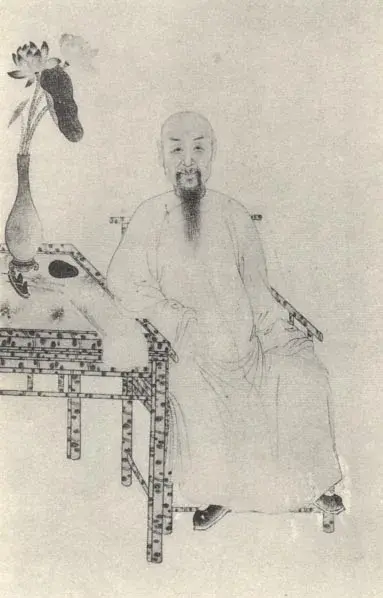
蒋廷锡
Jiang Tingxi (蒋廷锡; 1669–1732), courtesy names Yangsun and Youjun and art names Xigu and Qingtong Jushi, was a native of Changshu in Jiangnan. He was an eminent grand secretary, fiscal statesman, encyclopedic scholar, and celebrated court master of fine-brush (Gongbi) bird-and-flower painting across the Kangxi and Yongzheng reigns of the Qing Dynasty. In 1703, the Kangxi Emperor issued an exceptional decree permitting him…
Jiang Tingxi (蒋廷锡; 1669–1732), courtesy names Yangsun and Youjun and art names Xigu and Qingtong Jushi, was a native of Changshu in Jiangnan. He was an eminent grand secretary, fiscal statesman, encyclopedic scholar, and celebrated court master of fine-brush (Gongbi) bird-and-flower painting across the Kangxi and Yongzheng reigns of the Qing Dynasty. In 1703, the Kangxi Emperor issued an exceptional decree permitting him to sit directly for the palace examinations, conferring the Jinshi degree and appointing him a Hanlin Senior Compiler. Following the accession of the Yongzheng Emperor, Jiang Tingxi enjoyed immense imperial confidence, rising to Minister of Revenue, Grand Secretary of the Wenhua Palace, and Grand Councilor, standing alongside Zhang Tingyu at the apex of imperial governance. In administration, he reformed local rural community schools (Shexue), designed hydraulic systems for the Shandong section of the Grand Canal, audited capital granary reserves, and coordinated logistics and treasury funds during the northwestern Dzungar campaigns. An encyclopedic scholar, he was commissioned to direct the final compilation and copper-movable-type printing of China's monumental encyclopedia, the 10,000-volume Complete Collection of Illustrations and Books from Ancient and Modern Times (Gujin Tushu Jicheng), and served as chief editor of the Veritable Records of Emperor Shengzu. In fine art, he established the definitive imperial aesthetic for Qing bird-and-flower painting. He passed away in office in 1732, prompting the emperor to suspend court sessions, posthumously confer the rank of Grand Tutor, and award the name Wensu.
Born into an illustrious scholarly lineage in Changshu, mastering classical philosophy, swordsmanship, and painting
Attracted the Kangxi Emperor's admiration during the southern inspection tour and joined the court
Granted the Jinshi degree by extraordinary decree and appointed Hanlin Senior Compiler
Appointed Diarist of Imperial Activities, Reader of the Academy, and Junior Supervisor of the Household
Promoted to Sub-Chancellor of the Grand Secretariat and Vice Minister of Rites
Elevated to Vice Minister of Rites, petitioning for the empire-wide revival of rural community schools
Appointed Vice Minister of Revenue, formulating hydraulic plans for the Grand Canal in Shandong
Commissioned as Chief Director to verify and publish the 10,000-volume Gujin Tushu Jicheng
Elevated to Minister of Revenue, partnering with Prince Yinxiang to liquidate imperial deficits
Promoted to Grand Secretary of the Wenhua Palace and Chief Compiler of the Veritable Records
Appointed Grand Councilor upon the council's founding, directing western campaign logistics
Chief examiner of metropolitan exams; ennobled as First-Class Adaha Hafan
Died of exhaustion at his desk; mourned by the Emperor, posthumously granted the name Wensu
Jiang Tingxi was born into an eminent literati and official family in Changshu. His father, Jiang Yi, was an incorruptible judge who rose to Judicial Commissioner of Henan; his elder brother, Jiang Chenxi, was Governor of Guizhou. As a youth, Jiang Tingxi displayed a heroic spirit, practicing horsemanship and martial swordsmanship with gallantry before committing himself to classical scholarship. Concurrently, he exhibited peerless artistic talent in painting, synthesizing the classical precision of Song and Yuan masters with the vivid color washes of Yun Shouping. His lifelike botanical and bird compositions gained widespread acclaim throughout Jiangnan.
During the Kangxi Emperor's southern tour in 1699, Jiang Tingxi's poetry and paintings caught the sovereign's eye. The Emperor summoned him to Beijing as an inner court painter-in-waiting. For several years, he served diligently in the palace. In 1703, Jiang sat for the metropolitan examinations alongside scholars He Zhuo and Wang Hao. When rigid testing quotas excluded their names, the Kangxi Emperor issued an exceptional decree ordering all three scholars to participate directly in the palace examination, granting them Jinshi status. While ordinary scholars required three years of post-doctoral training, the Emperor appointed Jiang Tingxi a Hanlin Senior Compiler the following year.
Within the Hanlin Academy, Jiang Tingxi served as Diarist of Imperial Activities, Reader of the Academy, and Junior Supervisor of the Household. Whenever the Emperor traveled to Chengde or inspected the Yellow River, Jiang Tingxi accompanied the retinue. The wild blooms and fauna of the northern frontier provided endless inspiration. His masterpieces, such as One Hundred Peonies and Flowers of the Northern Frontier, were sealed with imperial treasures and kept in the Forbidden City. In 1717, he became Sub-Chancellor of the Grand Secretariat and Vice Minister of Rites, directing national examinations and participating in compiling the Kangxi Dictionary and Peiwen Yunfu.
In 1723, following the accession of the Yongzheng Emperor, Jiang Tingxi was promoted to Vice Minister of Rites. Observing the neglect of Confucian schooling, he submitted memorials urging regional educational reform: mandating that teachers instruct students face-to-face and re-establishing community schools (Shexue) in rural towns for youths aged twelve to twenty. The Emperor praised and enacted his recommendations nationwide.
When Shandong Governor Huang Bingzhou audited a massive granary deficit against his brother Jiang Chenxi, the Emperor questioned Jiang Tingxi. Knowing he was innocent, the Emperor handled the matter leniently, demonstrating his unwavering confidence in Jiang. In 1724, Jiang oversaw the continuation of the Collected Statutes of the Great Qing (Da Qing Hui Dian) and transferred to the Ministry of Revenue.
In 1725, Jiang Tingxi inspected the imperial granaries in Beijing with Laibao, engineering drainage ditches and lime moisture-proofing that secured the capital's grain storage. That same year, while inspecting Shandong waterways, he found the Grand Canal severely crippled: local farmers had encroached upon the channel, dykes had silted up, and water supplies were unstable. Jiang drafted a scientific water-control plan: mobilizing the Wen, Ji, Guang, and Si rivers and constructing flood-control sluice gates across fifteen connected lakes to regulate canal levels. Survey teams confirmed his calculations, and the resulting engineering work permanently eradicated navigational bottlenecks along the Grand Canal.
In late 1725, Chen Menglei, compiler of the Complete Collection of Illustrations and Books from Ancient and Modern Times, was banished due to princely factionalism. The monumental work was in disarray. The Yongzheng Emperor appointed Jiang Tingxi as Chief Director. Leading an editorial board, Jiang verified 10,000 volumes across six major categories, reconciling citations and printing the entire masterpiece with imperial copper movable type between 1726 and 1728, creating the greatest encyclopedic monument in Chinese publishing history.
In 1726, Jiang Tingxi was elevated to Minister of Revenue, working closely with Prince Yinxiang to enforce nationwide fiscal audits and the Meltage Fee reform, liquidating provincial arrears and enriching state coffers. In 1728, he was promoted to Grand Secretary of the Wenhua Palace and Chief Director of the Veritable Records of Emperor Shengzu.
In 1729, when the Grand Council was founded to direct the Dzungar war, Jiang Tingxi was appointed a founding Grand Councilor. He established a multi-thousand-mile logistical supply chain across Shaanxi, Gansu, and the Gobi, converting tax silver into local grain supplies and keeping hundreds of thousands of campaigning troops fully provisioned. The Emperor rewarded him with a palatial mansion, the plaque Monumental Pillar of the Realm, the rank of Grand Preceptor of the Heir Apparent, and hereditary nobility as a First-Class Adaha Hafan.
In the summer of 1732, exhausted by decades of simultaneous administrative, military, and publishing responsibilities, Jiang Tingxi fell gravely ill with severe respiratory disease. The Emperor dispatched personal physicians twice daily. On September 9, 1732, Jiang passed away in his official residence at sixty-four. The Emperor suspended court sessions for a day, sent court ministers to offer wine libations, elevated him to Grand Tutor, and awarded the posthumous name Wensu.
Jiang Tingxi supervised the final verification, textual collation, and historic copper-movable-type printing of the 10,000-volume encyclopedia Complete Collection of Illustrations and Books from Ancient and Modern Times, preserving the literary heritage of imperial China.
Jiang Tingxi formulated a comprehensive hydraulic system connecting fifteen lakes with regulation sluice gates along the Shandong section of the Grand Canal, eliminating systemic transport blockages, while designing moisture-proof engineering for capital granaries.
Managing the Ministry of Revenue and Grand Council, Jiang Tingxi audited provincial deficits alongside Prince Yinxiang and organized the vast supply corridors for the western military campaigns against the Dzungars.
As a scholar-statesman and painter, Jiang Tingxi synthesized meticulous Song academy realism with literati freehand color washes, establishing the canonical aesthetic for eighteenth-century court painting.
Jiang Tingxi achieved monumental acclaim in Chinese painting history. Tutored from youth by Jiangnan luminaries Zhang Daojun and Ma Yuanyu, he fused the meticulous refinement of Song-Yuan academy realism with the boneless spontaneity (mogu) of Yun Shouping, establishing the distinctive 'Jiang School' (Jiangpai) of courtly bird-and-flower painting. His paintings harmonized lush imperial elegance with rustic scholarly serenity. Acclaimed by critic Shen Deqian as the equal of Yun Nantian, his artistic lineage was transmitted through his sons Jiang Pu and Jiang Zhou, his daughter Jiang Chu, and his pupil Li Shan, a founding figure of the Eight Eccentrics of Yangzhou.
Among high ministers of the Yongzheng reign, Jiang enjoyed imperial trust second only to Zhang Tingyu. In 1726, while serving as Chief Examiner of the Shuntian provincial examinations under locked, fortress-like security, Jiang worried day and night about his aged, ailing mother in Changshu. Understanding his filial anxiety, the Yongzheng Emperor personally instructed Grand Secretaries to discreetly slip a family letter of safety into official edict pouches delivered to Jiang's locked examination cell. The emperor further ordered the Gendarmerie to arrest corrupt clerks seeking to malign Jiang for auditing state treasuries, demonstrating extraordinary sovereign protection.
In 1730, Jiang was commissioned alongside Prince Guo (Yunli) to superintend the Imperial Household Department's Three Treasuries: Silver, Silk, and Pigments. He overhauled warehouse ledgers and purged systemic embezzlement, ensuring fiscal transparency. During his encyclopedic work, Jiang focused deeply on scientific medicine, personally directing the collation of the 520-volume Complete Medical Records (Yibu Quanlu). Systematizing over one hundred and twenty classical medical treatises spanning nine and a half million characters, this compendium remains the largest, most comprehensive medical treasury in Chinese history.
Accompanying the Kangxi Emperor on northern imperial tours beyond the Great Wall, Jiang composed extensive classical poems while producing botanical albums illustrating rare northern flora, notably his celebrated Frontier Flowers and Plants Scroll (Saiwai Huahui Tu). Combining lyrical sensitivity with naturalistic precision, his artworks served both aesthetic and botanical functions. His paintings were broadly collected into imperial archives including the Shiqu Baoji and Midian Zhulin, cementing his status as an unsurpassed master of Qing court art.
FIGURES ASSOCIATED WITH THIS DYNASTY