Birth in Nanchang
Born in Nanchang during a nocturnal thunderstorm; named Leiming and strictly schooled by his mother.
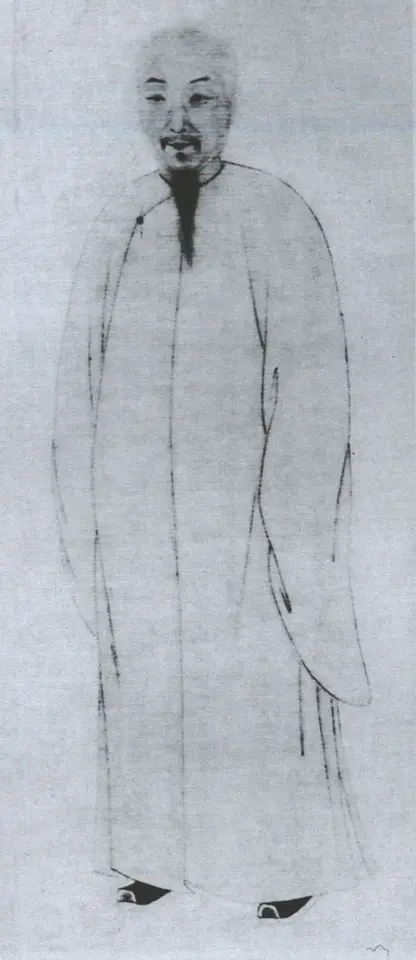
蒋士铨
Jiang Shiquan (1725–1785), courtesy names Xin'yu and Tiaosheng, art names Zangyuan and Qingrong Jushi, native of Yanshan, Jiangxi (ancestral home Changxing, Zhejiang), was an eminent playwright, poet, and man of letters of the mid-Qing dynasty. Together with Yuan Mei and Zhao Yi, he was hailed as one of the "Three Great Masters East of the Yangtze" (also celebrated as the "Three Great Masters of the Qianlong Reign"), and was…
Jiang Shiquan (1725–1785), courtesy names Xin'yu and Tiaosheng, art names Zangyuan and Qingrong Jushi, native of Yanshan, Jiangxi (ancestral home Changxing, Zhejiang), was an eminent playwright, poet, and man of letters of the mid-Qing dynasty. Together with Yuan Mei and Zhao Yi, he was hailed as one of the "Three Great Masters East of the Yangtze" (also celebrated as the "Three Great Masters of the Qianlong Reign"), and was grouped alongside Peng Yuanrui as one of the "Two Eminent Scholars of Jiangxi." Born into a family devoted to classical scholarship, Jiang Shiquan received strict instruction from his mother, Lady Zhong Lingjia, in childhood and traveled across northern and central China with his father, accumulating profound mastery of classical exegesis and literary composition. In 1757 (the twenty-second year of the Qianlong reign), he passed the metropolitan civil service examinations as a Metropolitan Graduate, entered the Hanlin Academy as a Bachelor, and ranked first in the graduation evaluations, being appointed Compiler and participating in the compilation of the Continuation of the Comprehensive Examination of Literature. Upright and outspoken, Jiang Shiquan detested bureaucratic sycophancy; after openly rebuking influential ministers, he faced factional ostracism and resigned from court in 1764. Moving southward, he resided in Jinling (Nanjing) and served as director of the Jishan Academy in Shaoxing and the Anding Academy in Yangzhou for over a decade, training students and reaching the pinnacle of his literary production. In 1777, during an imperial southern inspection, Emperor Qianlong lauded him as a paragon of Jiangxi literati and summoned him back to Beijing as Compiler of the State Historiography Institute. Plagued by a stroke that left his right side paralyzed, he retired to his Zangyuan estate in Nanchang, where he passed away in 1785 at the age of sixty-one. Jiang Shiquan's poetic corpus synthesized Tang and Song virtues with the spirit of the Individualist School, while his dramatic legacy, epitomized by the Nine Plays of Zangyuan, integrated patriotic martyrdom with profound social critique, earning him recognition as the concluding titan of classical Chinese dramatic literature.
Born in Nanchang during a nocturnal thunderstorm; named Leiming and strictly schooled by his mother.
Traveled on horseback across Shanxi, Shaanxi, Henan, and Shandong, studying in the private library of the Wang clan in Zezhou.
Repented youthful romantic verses, burned over four hundred poems, and devoted himself to Neo-Confucian classical study.
Discovered and sponsored by imperial scholar Jin Deying; passed the provincial examinations as a Provincial Graduate.
Passed the palace examinations as a Metropolitan Graduate, subsequently placing first in Hanlin Academy evaluations.
Rebuked arrogant grandees, faced bureaucratic slander, and resigned his Hanlin appointment to return to the south.
Appointed chancellor of Jishan Academy in Shaoxing, composing poetry and dramatic works alongside local luminaries.
Presided over Anding Academy in Yangzhou, befriending painters of the Eight Eccentrics of Yangzhou.
Praised by Emperor Qianlong as an "Eminent Scholar of Jiangxi"; resumed court service in the State Historiography Institute.
Struck by partial paralysis; obtained imperial leave to return to his Zangyuan residence in Nanchang.
Died at Zangyuan at the age of sixty-one; laid to rest at Wenjiaqiao in Yanshan, Jiangxi.
Jiang Shiquan's paternal lineage originally bore the surname Qian in Changxing, Huzhou Prefecture, Zhejiang. During the chaotic fall of the Ming dynasty in 1644, his grandfather Qian Chengrong, then nine years of age, was separated from his family and carried to Yanshan, Jiangxi, where he was adopted by a local magistrate surnamed Jiang, adopting the Jiang ancestral lineage. On December 1, 1725 (the twenty-seventh day of the tenth lunar month in the third year of the Yongzheng reign), Jiang Shiquan was born in Nanchang during a heavy thunderstorm; his parents consequently bestowed upon him the milk-name "Leiming" (Roaring Thunder). His father, Jiang Jian, was a Licentiate renowned for chivalric temperament and legal expertise, serving for decades as a trusted legal secretary in Zezhou, Shanxi, where he overturned numerous wrongful convictions; his mother, Zhong Lingjia, was an accomplished poet and scholar.
The family lived in modest circumstances, and his mother personally supervised his early education. When Jiang was four years old, she split bamboo splints into geometric shapes to form Chinese characters, teaching him literacy. As he grew, she guided him in memorizing the Four Books, the Classic of Poetry, and the Classic of Changes. Her pedagogical discipline never faltered in winter cold or summer heat; even when bedridden by illness, she pasted slips of Tang poetry across the bedroom walls, carrying the infant around the room to recite verses. At the age of ten, his father, anxious that domestic schooling would turn the boy into an effete scholar, strapped him onto a horse and took him across northern and central China—traversing Yan, Zhao, Qin, Wei, and Chu—exposing him to the dramatic passes of Hangu and Yanmen and the soaring peaks of the Taihang Mountains. He was then placed in the prestigious library of the wealthy Wang lineage at Autumn Tree Villa in Fengtai, where he read thousands of classical volumes.
At fifteen, Jiang began studies under master Wang Yunsheng, completing the Nine Classics and taking up verse composition. He initially fell under the spell of late Tang poet Li Shangyin, imitating his ornate, romantic imagery and accumulating hundreds of sensual love verses. In the autumn of his nineteenth year, while confined to bed by severe respiratory illness, Jiang sat gazing at the moon through his window and experienced sudden moral illumination. Pulling himself from bed, he lit a candle, gathered over four hundred romantic poems and ornate manuscripts from his drawers, and burned them entirely in the courtyard, vowing to banish frivolous distraction. The following day, he acquired Zhu Xi's Classified Conversations (Zhuzi Yulei), undertaking rigorous moral and textual discipline; within three months, his lingering ailment miraculously cleared.
In 1744 (the ninth year of the Qianlong reign), Jiang Jian moved the household south to Jiangxi and arranged Jiang Shiquan's marriage to Lady Zhang of Nanchang. The following year, the young couple settled in Yanshan. During this period, the distinguished Hanlin scholar Jin Deying, then serving as Jiangxi Provincial Education Commissioner, inspected Yanshan. Reviewing Jiang Shiquan's poetic essays, Jin marveled at his genius, exclaiming that amid a flock of noisy birds, a solitary phoenix had appeared whose future was boundless. Under Jin Deying's patronage, Jiang accompanied his mentor across Jiangxi, expanding his intellectual horizons and establishing his literary reputation.
In 1746 (the eleventh year of the Qianlong reign), twenty-two-year-old Jiang passed the provincial civil examination as a Provincial Graduate. Yet impoverished circumstances persisted; on New Year's Eve when he was twenty-six, the household had only five pecks of rice remaining. The next morning, the magistrates of Poyang and Nanchang arrived to invite him to serve as chief compiler of the Nanchang County Gazetteer. Jiang accepted the commission, finishing the monumental work in two years and using his remuneration to purchase an estate in Nanchang, which he christened "Zangyuan" (Hidden Garden).
Between the ages of twenty-three and thirty-two, Jiang journeyed three times to the capital to sit for the metropolitan examinations, repeatedly meeting disappointment. Finally, in 1757 (the twenty-second year of the Qianlong reign), thirty-three-year-old Jiang passed the metropolitan and palace examinations as a Metropolitan Graduate and was admitted as a Bachelor in the Hanlin Academy. Upon concluding three years of academy studies, he achieved the highest marks in the graduation examination and was commissioned Compiler. Over the next four years, he served as Associate Examiner for the Shuntian provincial examinations and assisted in editing the imperial encyclopedia Continuation of the Comprehensive Examination of Literature.
Jiang Shiquan was fiercely independent and despised bureaucratic venality. Vice Minister Qiu Yuesxiu once proposed recommending him to write opera librettos for the inner palace players at Jingshan to curry imperial favor, but Jiang rejected the proposal with indignation. In the academy, his forthright reprimands of arrogant dignitaries provoked the hostility of the Hanlin Chancellor and senior courtiers. Colleagues like Zhao Yi wrote poems comparing Jiang's outspoken nature to the ancient Han dynasty official Guan Fu, advising him to withdraw before harm befell him. Disillusioned with the moral compromises of the imperial court, forty-year-old Jiang resigned his office in 1764 and sailed southward.
Upon leaving Beijing, Jiang chose Jinling (Nanjing) as his second home, establishing a lifelong friendship with the celebrated poet Yuan Mei. In 1766 (the thirty-first year of the Qianlong reign), invited by the Governor of Zhejiang, Jiang accepted the directorship of the Jishan Academy in Shaoxing. For six years, he revitalized the academy's curricula while wandering the picturesque mountains of eastern Zhejiang with local literary circles.
In 1772 (the thirty-seventh year of the Qianlong reign), Zheng Dajin, Salt Distribution Commissioner of Lianghuai, recruited Jiang to preside over the prestigious Anding Academy in Yangzhou. Yangzhou was then the thriving commercial and artistic capital of southeast China. At Anding Academy, Jiang instructed hundreds of brilliant disciples, while associating closely with artists of the Eight Eccentrics of Yangzhou, such as Luo Pin, and evidential scholars like Wang Zhong. These fifteen years of academy directorship marked Jiang's most fruitful creative epoch; his poetry discarded pedantic imitation to achieve an autonomous, vigorous expressive voice, and he completed the majority of his legendary dramatic masterpieces, including Frost in Guilin, Autumn on Four Strings, Man in the Snow, Incense Ancestor Pavilion, and Dream of Linchuan.
In 1774, upon the death of his beloved mother Lady Zhong, Jiang stepped down from his post in Yangzhou to escort her coffin back to Mount Ehu in Yanshan. During the traditional mourning period, he actively counseled local magistrates on civil improvements, supervising the restoration of the Wenfeng Pagoda, constructing the Jiaoxi Dam, and engineering the Zixi-Huangbaiban irrigation system that watered six thousand mu of fertile farmland, while establishing examination halls to assist local candidates.
In 1777 (the forty-second year of the Qianlong reign), during an imperial inspection tour of the southern provinces, Emperor Qianlong composed a poem for Vice Minister Peng Yuanrui, explicitly mentioning Jiang Shiquan and Peng as the "Two Eminent Scholars of Jiangxi" and inquiring after Jiang's well-being. Deeply touched by the monarch's recollection, fifty-three-year-old Jiang overcame physical frailty to travel to Beijing, where he was appointed Compiler in the State Historiography Institute and registered as an expectant Censor, supervising the compilation of the fourteen-volume Strategic Plans for Dynastic Foundation (Kaiguo Fanglue).
Years of continuous scholarly labor in drafty archives took a severe toll on his health. In 1781 (the forty-sixth year of the Qianlong reign), fifty-seven-year-old Jiang suffered a massive stroke that paralyzed the right side of his body and impaired his speech. Unable to write with his right hand, he petitioned for retirement, and Emperor Qianlong granted him leave to return home.
Back at Zangyuan in Nanchang, Jiang exhibited extraordinary resolve, training his left hand to hold a brush while directing scribes to assemble his collected works. On April 3, 1785 (the twenty-fourth day of the second lunar month in the fiftieth year of the Qianlong reign), Jiang Shiquan passed away peacefully at Zangyuan at the age of sixty-one. Shortly before his death, Yuan Mei visited his bedside, and Jiang entrusted him with composing his funerary epitaph and writing the preface for his poetry collection. Jiang's remains were interred at Wenjiaqiao in Yanshan, Jiangxi.
During the mid-Qing era, Chinese poetry was dominated by the conservative Classicist school of Shen Deqian and the Evidential Texture theory of Weng Fanggang, which fostered pedantic imitation of ancient models. Jiang Shiquan rejected mechanical copying, joining forces with Yuan Mei and Zhao Yi to champion the "Individualist" (Xingling) poetic revolution, establishing their joint standing as the "Three Great Masters of the Qianlong Reign."
Jiang insisted that true poetry originates from unfeigned human emotion and immediate life experience, rather than superficial resemblance to ancient verses. Describing his own artistic development, he began studying Li Shangyin at fifteen, adopted the gravity of Du Fu and Han Yu at nineteen, incorporated the versatility of Su Shi and Huang Tingjian at forty, and only after fifty broke free from external models to establish his personal poetic voice. He urged scholars to learn from both Tang and Song luminaries, advocating that singular sensibility should discard cliché while preserving the moral essence of the Odes.
Unlike Yuan Mei, whose individualist verse often focused on personal leisure and sensory pleasures, Jiang's poetry was deeply rooted in the moral and social conscience of Du Fu and Han Yu. Among the more than 2,500 extant poems in his Chongyatang Collection, dozens of powerful verses—such as Lament of the Starving, Banning Debased Coinage, and Surveilling Yamen Runners—exposed official exploitation and the hardships of the lower classes. Concurrently, ancient-style poems such as Returning Home at Year's End and Distant Travels movingly depicted filial love and domestic intimacy with profound simplicity. Scholar Wang Chang celebrated his verse as the foremost poetic achievement of the era.
Jiang Shiquan's most lasting contributions to Chinese literature lie in his legendary chuanqi and zaju dramas. At a time when traditional Kunqu opera was degenerating into sterile scholarly exercises, Jiang combined musical brilliance with dramatic craftsmanship to produce sixteen plays, nine of which are renowned as the Nine Plays of Zangyuan (including The Wintergreen Tree, Dream of Linchuan, A Piece of Stone, The Second Stele, Frost in Guilin, Man in the Snow, and Autumn on Four Strings).
Shunning the worn tropes of conventional romances, Jiang infused his theater with heroic loyalty, dynastic patriotism, and acute historical consciousness. The Wintergreen Tree recounted the fall of the Southern Song dynasty, extolling the martyr Wen Tianxiang and condemning traitors who surrendered; Dream of Linchuan chronicled the life of late-Ming master Tang Xianzu and his creation of The Peony Pavilion, probing the philosophical depths of dramatic art and human passion; and Autumn on Four Strings adapted Bai Juyi's Song of the Pipa, composed in just seven days to sweeping critical acclaim. Scholar-reformer Liang Qichao described Jiang as the most heroic spirit in classical Chinese theater, while Japanese theater historian Aoki Masaru revered him as the crowning titan of Chinese dramatic history.
Throughout the two decades following his resignation from imperial office, Jiang poured his energies into collegiate education across southern China. Presiding over the Jishan Academy in Shaoxing for six years and the Anding Academy in Yangzhou for five years, he dismantled rigid civil examination drills, advocating broad historical comprehension alongside artistic creativity. His warm, approachable pedagogical manner drew hundreds of talented students to his lectures.
Moreover, Jiang translated Confucian moral commitments into tangible civic philanthropy. During mourning in his native Yanshan, he leveraged his intellectual stature to persuade local officials to construct vital irrigation canals, dredge flood channels, reconstruct ancient pagodas, and establish public halls for civil candidates. He embodied the classical ideal of the scholar whose learning actively benefited the welfare of common people.
FIGURES ASSOCIATED WITH THIS DYNASTY