Born in Qingzhou
Born into an educated gentry clan in Yidu, Qingzhou, immersed in family traditions of classical studies and agricultural practice.
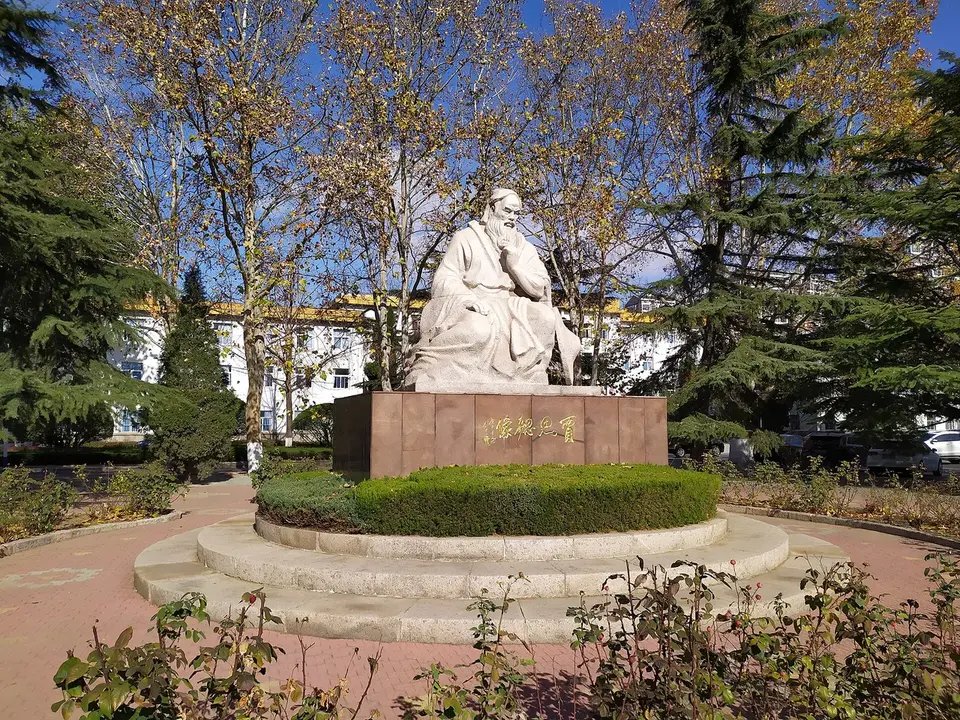
贾思勰
Jia Sixie (贾思勰, fl. 530s–540s CE), a native of Yidu in Qingzhou (modern Shouguang, Shandong), was the most distinguished agronomist in ancient Chinese history and the founding figure who systematized traditional Chinese agricultural science. Born into a scholarly family steeped in both classical learning and farming traditions, he served the Northern Wei Dynasty as Governor of Gaoyang Commandery. During his administrative…
Jia Sixie (贾思勰, fl. 530s–540s CE), a native of Yidu in Qingzhou (modern Shouguang, Shandong), was the most distinguished agronomist in ancient Chinese history and the founding figure who systematized traditional Chinese agricultural science. Born into a scholarly family steeped in both classical learning and farming traditions, he served the Northern Wei Dynasty as Governor of Gaoyang Commandery. During his administrative career and extensive travels across the Yellow River basin, he witnessed widespread social displacement and economic decline, realizing that state survival and civilian welfare depended fundamentally upon advancing and disseminating agricultural technologies. Retiring from office, Jia Sixie traveled through Shandong, Hebei, Henan, and Shanxi, consulting veteran farmers and personally conducting agronomic and livestock trials on his estate. Between 533 and 544 CE (late Northern Wei to Eastern Wei), he synthesized centuries of classical texts and empirical observations into the monumental agricultural encyclopedia Qimin Yaoshu (Essential Techniques for the Peasantry). Comprising ten volumes and ninety-two chapters totaling over one hundred and ten thousand words, the work covers farming, forestry, animal husbandry, sideline production, and fisheries. It established the dryland intensive farming framework of "adapting to celestial seasons and measuring terrestrial advantages," documented advanced food processing and farmstead accounting methods, and preserved lost ancient treatises such as Fan Shengzhi Shu and Simin Yueling, securing its reputation as the greatest agronomic classic of the ancient world.
Born into an educated gentry clan in Yidu, Qingzhou, immersed in family traditions of classical studies and agricultural practice.
Entered Northern Wei officialdom and traveled widely across northern agricultural plains, investigating regional soil characteristics and cultivation methods.
Appointed Governor of Gaoyang Commandery in Qingzhou, actively promoting sericulture and agriculture while studying rural livelihoods.
Resigned from government office to return to his home district, acquiring land and orchards to personally conduct farming and sheep breeding experiments.
Confronting dynastic fragmentation and warfare, he initiated the comprehensive compilation of an agrarian treatise aimed at popular livelihood.
Finalized the ten-volume, ninety-two-chapter Qimin Yaoshu, establishing the paradigm of traditional Chinese intensive farming science.
Passed away in his hometown; his masterpiece circulated via manuscript copies, becoming the canonical agricultural textbook of the Sui and Tang empires.
Jia Sixie was born during the Northern Wei Dynasty in Yidu County, Qingzhou (modern Shouguang, Shandong Province). His lineage was an established local gentry family celebrated for maintaining a balanced tradition of scholarly study and agrarian estate management. Rather than pursuing purely abstract Confucian metaphysics, the Jia family emphasized practical disciplines, recording insights on soil fertility, phenological cycles, and crop rotation. Growing up within this intellectually inquisitive environment, Jia Sixie mastered Confucian classics while immersing himself in pre-Qin and Han agrarian, astronomical, and medical treatises, building an exceptional scholarly foundation for his future research.
Reaching adulthood, Jia Sixie entered the civil service during the era when Emperor Xiaowen's Taihe reforms stimulated northern economic recovery. Fulfilling official duties, he traversed the northern agricultural heartland, traveling through present-day Shandong, Hebei, Henan, and Shanxi. He personally surveyed major agrarian centers including Bingzhou (modern Taiyuan), Chaoge (modern Qixian), Huguan, Shangdang, and Jingxing. Throughout these journeys, he observed how microclimates and soil conditions dictated crop success: Bingzhou lacked indigenous garlic and imported seed garlic from Chaoge; Bingzhou field peas withered when transported east of Jingxing Pass; and Shandong millet planted in the alpine terrains of Shangdang grew tall stalks without bearing grain. These direct observations cured him of abstract bookishness, instilling a lifelong devotion to empirical field investigation.
During the reigns of Emperor Xuanwu and Emperor Xiaoming, Jia Sixie was appointed Governor of Gaoyang Commandery (northwest of modern Linzi, Shandong). Although Northern Wei had enjoyed decades of peace, systemic crises were multiplying: imperial aristocrats indulged in luxury, official corruption flourished, and ethnic tensions deepened across the Central Plains. As commandery governor, Jia Sixie recognized that the state treasury and public order depended entirely upon agrarian prosperity and peasant sustenance.
Governing Gaoyang, Jia Sixie personally supervised agricultural work, frequently casting aside bureaucratic robes to walk through farming hamlets. He disciplined negligent landlords, introduced improved plows, and organized water conservancy repairs. Unlike contemporary mandarins who despised manual labor, Jia Sixie visited ordinary peasants in their fields, examining soil textures, crop varieties, and irrigation channels. He embraced the guiding maxim that "even the wisdom of Yu and Tang cannot equal practical experience," seeking counsel from veteran farmers and gathering regional proverbs, which formed the empirical bedrock of his agronomic philosophy.
The outbreak of the Six Frontier Garrisons rebellion and the subsequent Erzhu Rong cataclysm shattered the Northern Wei realm, eventually cleaving northern China into Eastern Wei and Western Wei. Disillusioned by violent court factionalism, Jia Sixie concluded that political maneuvering was futile and determined to dedicate his remaining years to agricultural research that would benefit millions. Around 530 CE, he resigned from his post as Governor of Gaoyang and retired to his native estate in Qingzhou.
Returning to private life, Jia Sixie converted his manor into an expansive agricultural laboratory. Demanding empirical verification for every technical claim, he refused to rely on unverified lore. To master sheep husbandry and epidemic prevention, he personally purchased two hundred sheep, managing their pasturing, feeding, lambing, selective breeding, and medicinal treatments. In crop cultivation, he shared humble thatched sheds with hired laborers, testing deep plowing, harrowing, intercropping, and soil moisture preservation over several consecutive seasons. In food production, he brewed beers, distilled vinegars, and fermented sauces, testing the biochemical efficacy of various yeast strains to gather precise experimental data.
Concurrently with his experimental farming, Jia Sixie embarked on compiling his monumental masterpiece. Working from 533 to roughly 544 CE (late Northern Wei through early Eastern Wei), he labored for over a decade to complete the eleven-volume work Qimin Yaoshu. He deliberately titled the work Qimin Yaoshu, where qimin signified common peasants and yaoshu denoted indispensable livelihood techniques, reflecting his deep Confucian commitment to stabilizing the population through economic security.
In compiling the text, Jia Sixie synthesized and evaluated nearly two hundred ancient works. He strictly practiced his sixteen-character methodological principle: "collecting from classical records, gathering popular ballads, consulting experienced elders, and verifying through actual practice." He combined textual erudition with field interviews and personal experiments, while fearlessly rejecting occult superstitions. He sharply attacked astrological taboos regarding farming dates found in ancient texts, asserting that agriculture must adhere to natural laws rather than divination. The resulting treatise integrated philosophical rigor, scientific method, and practical instructions, marking the full maturity of classical Chinese agronomy.
Jia Sixie passed away quietly in his hometown shortly after finishing Qimin Yaoshu. Although standard dynastic annals did not include an individual biography, his intellectual legacy became immortalized through his writings. During the late Northern Dynasties, Sui, and Tang eras, Qimin Yaoshu circulated widely via hand-copied manuscripts, serving as an indispensable handbook for imperial agricultural officials. In the Sui Shu bibliography, chancellor Wei Zheng formally recorded it in ten volumes, confirming its status as the supreme agronomic classic.
In 1020 CE (4th year of the Tianxi era), Emperor Zhenzong of Song accepted the memorial of transport commissioner Li Fang and ordered the Imperial Academy (Chongwen Yuan) to carve woodblocks and print Qimin Yaoshu for nationwide distribution, producing China's first officially published agricultural classic. Subsequent woodblock editions from the Southern Song, Ming, and Qing dynasties directly inspired later masterworks including Nongsang Jiyao, Wang Zhen Nongshu, Nongzheng Quanshu, and Shoushi Tongkao. Beyond China, the work spread to Korea, Japan, and the West. In the nineteenth century, British naturalist Charles Darwin repeatedly cited this "ancient Chinese encyclopedia" while formulating his theories of natural and artificial selection, securing Jia Sixie's place in the global pantheon of scientific pioneers.
Jia Sixie's foremost contribution to the history of science was his independent authorship of Qimin Yaoshu, China's earliest, most complete, and most comprehensive surviving agricultural treatise. Structured with remarkable logical coherence, the work comprises ten volumes, ninety-two chapters, approximately seventy thousand characters of main text, and over forty thousand characters of detailed technical notes authored by Jia himself, totaling over one hundred and ten thousand words.
The work encompasses the entire lifecycle of pre-modern rural production: Volumes 1 and 2 address soil tillage, land clearing, and the cultivation of primary grains, legumes, and hemp; Volumes 3 to 5 examine garden vegetables, sericulture, and the propagation, cutting, layering, and grafting of fruit and timber trees; Volume 6 focuses on horse, cattle, donkey, mule, sheep, pig, poultry, and fish farming alongside veterinary medicine; Volumes 7 to 9 detail food processing, covering wine brewing, sauce fermentation, vinegar making, cheese preparation, and vegetable preservation; and Volume 10 catalogues wild edible plants, famine foods, and southern subtropical crops. This comprehensive framework definitively established agronomy as an independent, rigorous scientific discipline in China.
In theoretical agronomy, Jia Sixie articulated the dialectical relationship between human labor and natural ecology, stating: "Adapt to celestial seasons and measure terrestrial advantages, then effort will be halved while success is multiplied; follow reckless impulses contrary to natural principles, and toil will yield nothing." He compared farming against nature to "felling trees underwater or seeking fish on mountaintops," urging farmers to harmonize seasonal cycles with soil capabilities through disciplined human initiative.
For northern dryland agriculture, Jia Sixie codified the integrated technical sequence of "plowing, harrowing, dragging, rolling, and hoeing" (geng, ba, mo, ya, chu) to conserve soil moisture. He defined the relationship between plowing depth and seasonal moisture: "In tillage, autumn plowing should be deep, while spring and summer plowing should be shallow." Deep autumn plowing broke up compacted earth to absorb winter snow, whereas shallow spring plowing minimized moisture evaporation. He advocated immediately dragging and rolling after plowing to pulverize clods and compact topsoil, while repeated shallow hoeing severed soil capillaries, achieving outstanding moisture conservation during droughts.
Regarding soil fertility, Jia Sixie developed sophisticated green manure techniques. He invented the practice of intercropping or relay-planting legumes such as mung beans and black beans in midsummer, plowing the green shoots into the earth as green manure once they reached a foot in height. In seed selection, he recorded and classified eighty-six varieties of millet, categorizing them by ripening time, plant stature, panicle size, milling yield, and drought tolerance, establishing strict standards for single-plant selection, separate harvest, and airtight cellar storage to prevent weevil infestation.
In pomology and horticulture, Jia Sixie made groundbreaking technical observations. He provided detailed instructions on vegetative propagation including seed sowing, division, stem cuttings, layering, and grafting. Discussing pear cultivation, he demonstrated how scion selection determined tree shape and fruit-bearing timelines: "Using young shoot tips from rootstocks creates handsome trees that bear fruit in five years; using old, gnarled pigeon-foot branches yields fruit in three years, but the tree grows stunted and unsightly." He also identified seedling variation, noting that among ten seeds from a pear, only two produce true pears while the rest revert to wild russet pears, emphasizing grafting to maintain superior clonal traits.
His observations on horticultural physiology remain remarkably modern. In the chapter on chives, he recorded the developmental trait that "chives grow from within, rather than expanding outward." In the chapter on Sichuan pepper, he detailed winter protection for saplings: "This plant cannot endure severe frost; trees grown in full sun must be wrapped in straw during winter, whereas those grown in partial shade have adapted to cold and need no wrapping," illuminating the link between microclimate, light exposure, and cold hardiness. In silviculture, he documented shoot propagation for poplars and seed sowing for elms, recommending specific spacing and thinning schedules to produce commercial timber.
Jia Sixie elevated Chinese animal husbandry and veterinary science to unprecedented sophistication. Dedicating six chapters to horses, cattle, sheep, pigs, chickens, ducks, geese, and fish, he insisted that draft animals be worked strictly within their physical capacities and fed according to their natural requirements, formulating the famous guideline: "feed with three kinds of forage and water at three specific times." In swine husbandry, he detailed the feeding of cooked millet and beans to suckling piglets to ensure rapid post-weaning weight gain.
Most notably, Jia Sixie was the first agronomist globally to articulate optimal sex ratios in animal breeding. In the sheep husbandry chapter, he stipulated that ten ewes should be paired with two breeding rams; too few rams resulted in poor conception, whereas excessive rams provoked violent dominance battles that disrupted the flock. He established comparable ratios for poultry and aquaculture: one gander to three geese, one drake to five ducks, and twenty female carp to four male carp in pond stocking. In veterinary practice, he recorded herbal laxative drenches combined with manual rectal disimpaction to treat intestinal obstruction in horses and cattle, herbal fumigation to disinfect stables during outbreaks, and quarantine protocols to halt contagion.
Jia Sixie bridged the gap between primary production and secondary transformation by recording meticulous biochemical and culinary processes for food processing. He documented recipes for over ten specialized microbial starter cultures (qu), detailing fermentation control for wines, cereal vinegars, and savory bean pastes. His sauce recipes encompassed soybean paste as well as meat, fish, shrimp, and elm-seed sauces, alongside steps for clarifying whey, extracting butter, and curing cheeses. For vegetable preservation, he invented the "pit burial storage method," storing fresh greens in deep, straw-insulated pits dug along sunlit southern walls, keeping vegetables fresh and crisp throughout the harsh northern winter.
Furthermore, Jia Sixie introduced market economics and cost-benefit accounting into agricultural management. He instructed farmers to engage in diversified sideline enterprises alongside staple grain farming. In his analysis of timber plantations, he constructed a mathematical model calculating the profit of planting over four thousand poplars per mu: after three years, thinned saplings sold as silkworm rack crossbars at five copper cash each, yielding twenty-one thousand six hundred cash per mu; after five years, poles served as roof rafters; and after ten years, trees matured into load-bearing pillars. Rotating thirty mu annually across a ninety-mu holding generated perpetual, self-sustaining income. He also calculated urban market transport costs and recommended hiring day laborers during peak harvests to minimize year-round labor costs, making Qimin Yaoshu a pioneering treatise on agricultural economics and farm management.
Through his rigorous scholarship, Jia Sixie preserved an invaluable corpus of pre-Qin, Han, and Wei scientific literature that would otherwise have vanished. Qimin Yaoshu cites nearly two hundred ancient classics, technical handbooks, local gazetteers, and medical texts.
Foundational agricultural landmarks such as Fan Shengzhi Shu from the Western Han, Simin Yueling by Cui Shi of the Eastern Han, and Taozhugong Yangyu Jing attributed to Fan Li of the Warring States period all saw their standalone editions destroyed in medieval wars. It was solely through extensive quotations and critical commentaries in Qimin Yaoshu that their core doctrines, ridge-farming methods, and aquaculture formulas survived intact, providing modern scholars with an irreplaceable window into early Chinese civilization.
FIGURES ASSOCIATED WITH THIS DYNASTY