Birth in Wuling
Born into a scholarly family in Wuling, Changde; displayed gravity, moral dignity, and philosophical curiosity in youth.
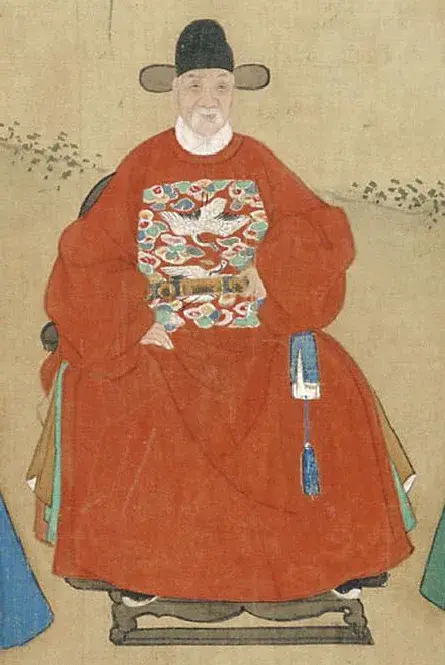
冀元亨
Ji Yuanheng (冀元亨, 1482–1521), courtesy name Weiqian, literary name Gangfu, was a native of Wuling in Changde Prefecture, Huguang (modern Changde, Hunan). He was a distinguished mid-Ming Neo-Confucian thinker, a paramount inner disciple of master philosopher Wang Yangming (Wang Shouren), and the founding pioneer of the Huguang branch of the Yangming School of Mind. Devoting himself to Confucian self-cultivation from early…
Ji Yuanheng (冀元亨, 1482–1521), courtesy name Weiqian, literary name Gangfu, was a native of Wuling in Changde Prefecture, Huguang (modern Changde, Hunan). He was a distinguished mid-Ming Neo-Confucian thinker, a paramount inner disciple of master philosopher Wang Yangming (Wang Shouren), and the founding pioneer of the Huguang branch of the Yangming School of Mind. Devoting himself to Confucian self-cultivation from early youth, Ji passed the provincial examinations as a Provincial Graduate (juren) in 1510. Traveling to Beijing in 1511 for the metropolitan examinations, he met Wang Yangming, who was lecturing on the unity of knowledge and action (zhi xing he yi) following his philosophical enlightenment at Longchang. Deeply moved, Ji enrolled as Wang's devoted disciple. Wang praised Ji's unwavering moral discipline, observing that few students equaled his steadfast commitment to living the truth. In early 1519, Prince of Ning Zhu Chenhao was secretly plotting rebellion in Nanchang. Seeking to lend moral prestige to his court, the prince repeatedly invited Ji to lecture on the classics. With Wang Yangming's authorization, Ji journeyed to Nanchang to ascertain the prince's treasonous intentions and attempt to dissuade him through righteous arguments. Before the princely assembly, Ji fearlessly affirmed the absolute moral obligations of dynastic loyalty, warning that rebellion brought inevitable ruin. Realizing Ji could neither be bribed nor coerced, the prince dismissed him. Months later, Wang Yangming crushed the rebellion in a four-day campaign. However, corrupt court favorites Jiang Bin and Zhang Zhong, envious of Wang's glorious victory, manufactured false charges of complicity against Wang and had Ji arrested and thrown into the Imperial Bodyguard prison (Zhaoyu). Despite enduring horrific torture, Ji refused to utter a single falsehood against his master. Following the accession of Emperor Jiajing and the execution of Jiang Bin, Ji was fully exonerated, but died from the consequences of torture five days after his release at the age of forty. In the Longqing era, he was posthumously honored as Vice Minister of the Court of Imperial Entertainments and enshrined in the Confucian Temple.
Born into a scholarly family in Wuling, Changde; displayed gravity, moral dignity, and philosophical curiosity in youth.
Passed the Huguang provincial examinations with high distinction, attaining the juren degree.
Met Wang Yangming in Beijing; embraced the doctrine of the unity of knowledge and action and established Taochuan Academy.
Accompanied Wang Yangming during his southern suppression campaign in Jiangxi, helping implement community compacts.
Entered the Prince of Ning's palace in Nanchang, lecturing on sovereign duty and urging the prince to abandon rebellion.
Following the rebellion's suppression, framed by imperial favorite Jiang Bin and arrested by the Imperial Bodyguard.
Endured agonizing torture in the imperial dungeon, maintaining serene tranquility without implicating his master.
Exonerated upon the accession of Emperor Jiajing; succumbed to severe physical trauma five days later at the age of forty.
Ji Yuanheng was born in Wuling County, Changde Prefecture, along the southern shores of Dongting Lake. His household preserved rigorous Confucian traditions of ethical conduct and classical learning. Calm, stoic, and contemplative by nature, Ji rejected superficial literary rhapsodies, seeking to comprehend the core teachings of ancient sages regarding moral mind and human nature.
In 1510, Ji passed the Huguang provincial examination, earning the provincial graduate (juren) degree. In the spring of 1511, he traveled north to Beijing to sit for the metropolitan civil examinations. Though he did not obtain the doctorate (jinshi), he encountered Wang Yangming, who was serving as Vice Minister of the Court of the Imperial Stud and lecturing on Neo-Confucianism in the capital. Wang had recently formulated his revolutionary insight that moral principle is inherent within the human mind (xin ji li) and that genuine knowledge is realized only in righteous action (zhi xing he yi). Deeply inspired by these teachings, Ji bowed before Wang, requesting formal discipleship. Wang was impressed by Ji's profound sincerity, enrolling him as an inner disciple.
Following his encounter with Wang, Ji chose to forgo the pursuit of bureaucratic degrees, dedicating his existence to the realization of moral truth. Returning to Wuling, he established the Taochuan Academy amidst the serene landscape of western Hunan, gathering scholars to expound the philosophy of innate moral knowing (liangzhi). He translated abstract metaphysics into daily ethical practices, teaching filial devotion, clan harmony, and moral rectitude, transforming the intellectual climate across northwestern Hunan.
In 1516, the Ming court appointed Wang Yangming Left Assistant Censor-in-Chief to pacify bandits across the rugged borders of Jiangxi, Guangdong, and Fujian. Learning of the assignment, Ji left his family to join Wang's military headquarters in Qianzhou (modern Ganzhou). For three years, Ji served as Wang's trusted intellectual assistant, aiding in drafting the Southern Gannan Community Compact (Nan'gan Xiangyue) and educating pacified populations. Wang frequently praised Ji before all other disciples, declaring: "Weiqian's learning arises from his innate spirit; upright, solid, and deep, he is truly the unshakeable pillar of our school!"
During the late Zhengde era, Prince of Ning Zhu Chenhao plotted treason at his princely seat in Nanchang, amassing illegal weapons and recruiting mercenaries. Seeking to burnish his reputation and attract the support of the regional gentry, the prince repeatedly sent lavish gifts to summon eminent scholars to his court.
In early 1519, the prince dispatched envoys to invite Ji to serve as court lecturer. Recognizing the prince's treasonous ambitions, Ji intended to refuse. However, in deep consultation with Wang Yangming, they reasoned that an outright refusal would arouse suspicion and hasten premature violence. Entering the princely court would enable Ji to ascertain the prince's military preparations and provide a final opportunity to dissuade him using classical moral injunctions. Ji embraced the dangerous assignment with serene resolve.
At Nanchang, Prince Zhu Chenhao hosted banquets, hinting that imperial misrule heralded dynastic collapse. Ji stood with dignified gravity, selecting classical themes such as Shun deferring to Yao's son and the Duke of Zhou protecting the infant King Cheng. He admonished the prince: "Heaven's mandate is not arbitrary; it rests solely upon virtue. The highest duty of a vassal is loyalty and filial piety. Those who unlawfully covet the supreme throne have invariably brought extinction upon their clans!" Chagrined by Ji's uncompromising rectitude, the prince recognized that he could neither seduce nor intimidate the scholar, and dismissed him with cold courtesy several days later.
On June 14, 1519, months after Ji's departure, Zhu Chenhao openly rebelled with an army of one hundred thousand. Wang Yangming mobilized loyalist militias, recapturing Nanchang and capturing the rebellious prince in four days on Poyang Lake.
This momentous victory, which rescued the Ming dynastic house, ignited malicious jealousy among Emperor Wuzong's sycophants, led by eunuch favorite Jiang Bin and military courtier Zhang Zhong. Hoping to seize credit for the pacification, Jiang Bin led the emperor on a southern campaign and sought pretext to incriminate Wang Yangming. Searching the captured archives in Nanchang, Jiang discovered records of the prince's earlier gifts and invitation to Ji Yuanheng. Seizing this discovery, Jiang and Zhang alleged to the emperor that Wang and Ji had colluded with the rebel prince.
In late 1519, Imperial Bodyguards raided Ji's academy in Hunan, placing him in heavy neck chains and iron cages to transport him to Beijing. Jiang Bin ordered the inquisitors to use every torment, promising Ji ministerial rank if he confessed that Wang had plotted with the prince, while threatening death under the whip if he refused.
In the freezing depths of the Imperial Bodyguard prison, Ji was subjected to severe beatings, bone-crushing presses, and branding. Yet Ji remained serene, sitting cross-legged and declaring: "Master Wang is the most loyal minister of the Great Ming, and I am his disciple! The rebel prince plotted treason; we resisted unto death. How dare you speak of collusion? Heaven sees all; you may kill me, but I will never utter a word of falsehood to frame my master!" Jailers and fellow prisoners, observing his mangled body and dignified composure as he expounded the philosophy of moral mind from his cell, wept in awe.
In March 1521, Emperor Wuzong died at the Baofang palace. Grand Secretary Yang Tinghe and Empress Dowager Zhang executed Jiang Bin and installed Emperor Jiajing on the throne, proclaiming an empire-wide amnesty for political prisoners.
After eighteen months of torture, Ji was released from prison. When the gates opened, his limbs were crippled and his body covered with infected wounds. Friends carried him to an inn in Beijing. Looking upon his visitors with peaceful serenity, Ji remarked: "Only today do I fully realize that innate moral conscience is the true master of life. The mortal body may be broken, but this mind rests tranquil between heaven and earth." Five days after his release, Ji succumbed to internal organ failure, passing away at the age of forty.
In the early Longqing reign, Emperor Muzong vindicated Ji's loyalty, conferring upon him the posthumous title of Vice Minister of the Court of Imperial Entertainments, granting imperial funeral sacrifices, and enshrining his spirit tablet in the Confucian Temple alongside China's foremost philosophers.
Ji Yuanheng's life exemplifies the highest Confucian ideal of sacrificing mortal existence to preserve moral benevolence and ethical righteousness.
Upon learning of his disciple's tragic death, Wang Yangming wept uncontrollably, composing a moving elegy: "Alas, Weiqian! Was your death the work of Heaven or of man? You believed in the Dao with absolute purity and practiced it with tireless vigor, standing resolute across the age. Truly the most heroic soul of our brotherhood! A thousand generations hence, there will surely be those who recognize your immortality!"
The official biographical appraisal in the History of the Ming (Ming Shi) records: "Ji Yuanheng followed Wang Yangming, believing deeply and practicing tirelessly. Venturing into the rebel prince's den, he expounded the righteousness of Shun deferring to Yao; imprisoned in the imperial dungeon, he preserved his integrity to the end. Broken unto death, his magnificent spirit never bent—truly a hero of moral rectitude!"
Modern intellectual historians consider Ji the purest exemplar of Wang Yangming's doctrine of "extending the innate moral knowledge" (zhi liangzhi). Faced with state terror and physical annihilation, he demonstrated that moral conscience constitutes an impenetrable fortress against tyranny.
FIGURES ASSOCIATED WITH THIS DYNASTY