Birth at Qiao
Born into an elite intellectual lineage, inheriting the refined physical elegance and moral gravity of Ji Kang.
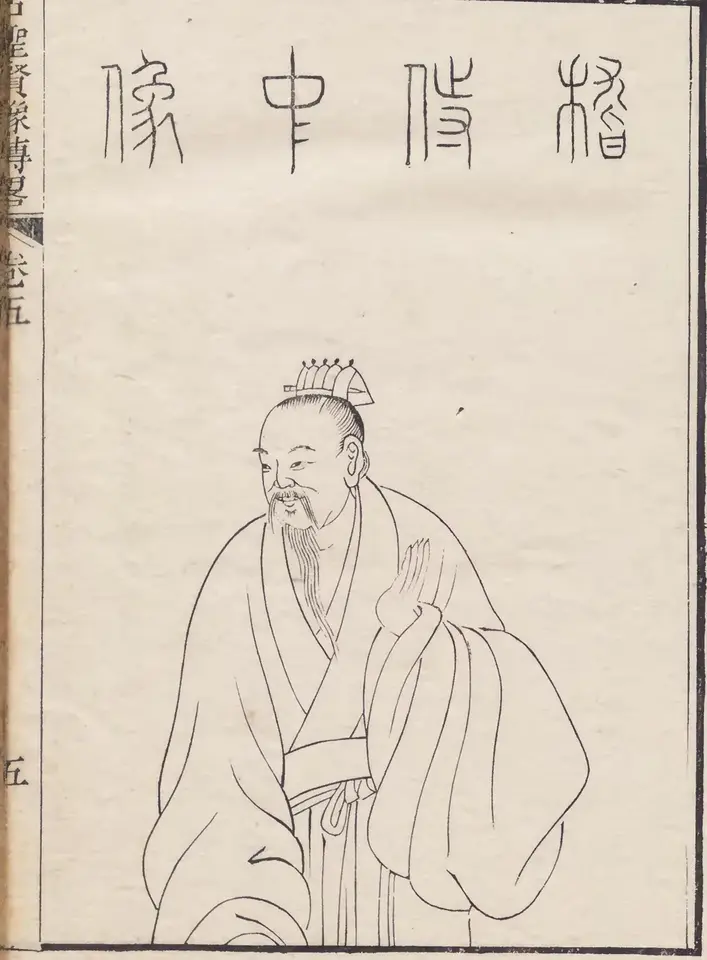
嵇绍
Ji Shao (嵇绍, 253–304 CE), courtesy name Yanzu, was an illustrious statesman, intellectual, and paramount martyr of the Western Jin dynasty, hailing from Zhi County in Qiao (modern Suixi, Anhui). He was the son of Ji Kang, Senior Grand Master of Palace Leisure and preeminent leader of the Seven Sages of the Bamboo Grove. Following his father's tragic execution by Sima Zhao when Ji Shao was merely ten years old, he lived in…
Ji Shao (嵇绍, 253–304 CE), courtesy name Yanzu, was an illustrious statesman, intellectual, and paramount martyr of the Western Jin dynasty, hailing from Zhi County in Qiao (modern Suixi, Anhui). He was the son of Ji Kang, Senior Grand Master of Palace Leisure and preeminent leader of the Seven Sages of the Bamboo Grove. Following his father's tragic execution by Sima Zhao when Ji Shao was merely ten years old, he lived in filial reclusion. Recommended to court by his father's close friend Shan Tao, Ji Shao entered public service as Assistant Editorial Director and successively served as Administrator of Ruyin, Inspector of Xuzhou, Cavalier Regular Attendant, and Chancellor of the Imperial Academy. Amid the corrupt sycophancy surrounding consort favorite Jia Mi, Ji Shao steadfastly refused all social association. During the catastrophic civil wars of the War of the Eight Princes, Ji Shao attained the rank of Palace Attendant (Shizhong), consistently offering unyielding counsel to safeguard the fragile imperial house. In 304 CE, during the disastrous Battle of Dangyin, Prince of Donghai Sima Yue was routed by insurgent forces, causing courtiers and guards to scatter in terror and abandon Emperor Hui. Facing torrential volleys of hostile arrows, Ji Shao adjusted his formal ceremonial robes and mounted the royal carriage, shielding the emperor with his own body. Slain on the carriage by rebel infantry, his blood splattered across Emperor Hui's dragon robes. When attendants subsequently moved to wash the garments, Emperor Hui wept inconsolably, declaring: "This is the blood of Palace Attendant Ji; do not wash it away!" His ultimate sacrifice was immortalized in Wen Tianxiang's Song of Righteous Qi. 318 CE (1st Year of Daxing) | Posthumous Grand Commandant | Emperor Yuan of Jin established Eastern Jin and posthumously granted Ji Shao Grand Commandant with posthumous title Zhongmu.
Born into an elite intellectual lineage, inheriting the refined physical elegance and moral gravity of Ji Kang.
Ji Kang was executed by Sima Zhao; the ten-year-old Ji Shao retreated into private life, dutifully caring for his mother.
Recommended by Minister of Personnel Shan Tao; Emperor Wu appointed him Assistant Editorial Director.
Appointed Attendant Gentleman of the Yellow Gates; strictly rebuffed overtures from powerful consort relative Jia Mi.
When Grand Commandant Chen Zhun died, Ji Shao successfully rebutted proposals for undeserved glorious titles.
Promoted to Palace Attendant; submitted forthright memorials admonishing Prince of Qi Sima Jiong to curb aristocratic excess.
Appointed General Who Pacifies the West by Prince of Changsha Sima Ai, bolstering military morale in besieged Luoyang.
Slain on the royal carriage while shielding Emperor Hui during the rout at Dangyin; aged fifty-two.
Emperor Yuan of Eastern Jin posthumously elevated Ji Shao to Grand Commandant with the posthumous title Zhongmu.
Ji Shao was the son of Ji Kang, the renowned thinker and cultural figure of the late Wei and early Jin periods. In 263 CE, refusing to compromise his philosophical integrity to appease the Sima family, Ji Kang was executed in Luoyang. The ten-year-old Ji Shao was plunged into sudden domestic ruin. Retiring to his rural estate, he attended his widowed mother with consummate filial devotion, dedicating himself to solitary scholarly pursuits. Inheriting his father's striking stature, Ji Shao possessed a commanding physical presence, with contemporaries comparing his bearing among peers to a "crane amidst a flock of domestic fowl."
During the Taikang era, Shan Tao, the venerable Minister of Personnel and former Bamboo Grove companion of Ji Kang, submitted an urgent memorial to Emperor Wu of Jin: "The ancient Classic of Documents dictates that guilt should not pass from father to son. In the Spring and Autumn period, worthy sons of disgraced ministers emerged as pillars of the state. Ji Shao's moral caliber matches that of Que Que; he should be employed as an Editorial Director." Convinced of Shan Tao's infallible eye for talent, Emperor Wu responded: "If he is as you say, he is qualified to serve as Assistant Editorial Director!" Ji Shao was accordingly commissioned into imperial service.
Throughout his provincial and central postings, Ji Shao was celebrated for his incorruptibility and administrative clarity. While serving as Administrator of Ruyin, Senior Vice Director Pei Wei remarked: "If Ji Yanzu were appointed Minister of Personnel, no worthy talent in the realm would remain overlooked." He was subsequently promoted to Inspector of Xuzhou. At the time, the fabulously wealthy magnate Shi Chong supervised military operations in Xuzhou, behaving with notorious arrogance. Ji Shao addressed Shi Chong with dignified moral admonitions, earning the volatile magnate's genuine deference.
In the early Yuankang era, Ji Shao was transferred to Attendant Gentleman of the Yellow Gates. During this period, the empress's nephew Jia Mi monopolized political patronage, with eminent writers such as Pan Yue and Lu Ji eagerly frequenting his salon as the "Twenty-Four Friends of Jingu." Jia Mi repeatedly extended cordial overtures to Ji Shao, seeking his friendship. Ji Shao adamantly rebuffed these advances, maintaining strict professional distance. When the Jia faction was liquidated in 300 CE, those who had sycophantically served it were stripped of rank, while Ji Shao was universally praised for his foresight, elevated to Viscount of Yiyang and appointed Cavalier Regular Attendant.
As the Western Jin fractured into dynastic chaos during the War of the Eight Princes, the imperial capital was repeatedly sacked and occupied. In 301 CE, Prince of Qi Sima Jiong crushed usurper Sima Lun and reinstated Emperor Hui, acting as regent. Sima Jiong quickly degenerated into hedonistic luxury, erecting colossal residences and selling offices. Appointed Palace Attendant (Shizhong), Ji Shao repeatedly presented courageous memorials, warning Sima Jiong: "From antiquity, no lord who occupied exalted station ever endured without yielding merit and honoring humility; Your Highness should elevate the sovereign and restrain private kin." Sima Jiong failed to heed the counsel and was eventually executed.
During Sima Ai's administration, Luoyang was besieged by allied princes. Sima Ai appointed Ji Shao as General Who Pacifies the West, relying on his towering prestige to maintain military morale among imperial garrisons. Following Sima Ai's death, Prince of Chengdu Sima Ying assumed control of the court and purged dissenting officials, reducing Ji Shao to commoner status. Ji Shao accepted his demotion with tranquil indifference.
In 304 CE, Prince of Donghai Sima Yue coerced Emperor Hui into undertaking an imperial expedition against Sima Ying at Ye, reinstating Ji Shao as Palace Attendant to accompany the royal carriage. Advancing to Dangyin (modern Tangyin, Henan), the imperial force was ambushed by insurgent commander Shi Chao. The imperial lines collapsed, and Sima Yue abandoned the field. Terrified by torrential flights of arrows, high ministers, civil officials, and imperial guards fled in disorder, leaving Emperor Hui stranded in his carriage.
Three enemy arrows struck the emperor's face, while hostile cavalry surrounded the royal chariot. In this moment of total abandonment, Ji Shao adjusted his ceremonial cap and robes, climbed into the imperial chariot, and shielded the sovereign with his own physical body. Rebel infantry seized Ji Shao, dragging him from the carriage to execute him. Horrified, Emperor Hui cried out: "This is a loyal minister; do not kill him!" The soldiers coldly retorted: "We follow the orders of the Crown Brother (Sima Ying); we spare only Your Majesty!" They butchered Ji Shao beside the royal wheels.
Ji Shao's blood spattered copiously over Emperor Hui's imperial robes. Following the battle, Emperor Hui was escorted in captivity to Ye. When palace attendants prepared to launder the blood-drenched imperial vestments, Emperor Hui wept aloud, forbidding them: "This is the blood of Palace Attendant Ji; do not wash it away!" Following the founding of the Eastern Jin dynasty, Emperor Yuan posthumously elevated Ji Shao to Grand Commandant with the posthumous title Zhongmu, instituting imperial state sacrifices in his honor.
Beyond his towering political integrity, Ji Shao was profoundly dedicated to classical learning and calligraphic arts. He mastered running and regular scripts with vigorous grace and authored multiple volumes of poetry and philosophical prose. His acclaimed works, such as Poem Expressing My Aspirations and Epistle in Response to Shi Jilun, reflected the tumultuous dynastic transitions of the Jin dynasty with solemn nobility, bequeathing a cherished literary legacy to Six Dynasties scholars.
During the decadent Yuankang era, when political power was concentrated within the parasitic salon of Jia Mi, Ji Shao manifested pristine moral independence. While leading literary figures subordinated their intellects to secure wealth and patronage, Ji Shao maintained strict professional seclusion, refusing all association with the ruling consort house. His incorruptibility preserved the dignity of the intellectual elite during a period of widespread moral collapse, providing an exemplary precedent of ethical resilience.
The Battle of Dangyin represented the absolute nadir of Western Jin imperial authority, characterized by panic, flight, and moral bankruptcy. While the entire imperial entourage abandoned their sovereign, Ji Shao acted with transcendent courage. Shielding his vulnerable sovereign against flights of arrows, he sacrificed his physical life in defense of the imperial institution. His action elevated him to the foremost rank of classical loyalist martyrs, illustrating the highest Confucian ideal of dying for one's sovereign.
Ji Shao's sacrifice and Emperor Hui's immortal lamentation—"This is the blood of Palace Attendant Ji; do not wash it away"—crystallized into one of the most poignant symbols of loyalty in Chinese cultural history. In his celebrated prison poem Song of Righteous Qi, Southern Song national hero Wen Tianxiang commemorated Ji Shao alongside ancient exemplars, writing: "In Qi, the scribal tablets; in Jin, the brush of Dong Hu; the hammer of Zhang Liang in Qin; the staff of Su Wu in Han; the head of General Yan; the blood of Palace Attendant Ji." Through this immortalization, Ji Shao's blood became an enduring emblem of moral righteousness.
During the reign of Emperor Hui, when Grand Commandant Chen Zhun passed away, court officials sycophantically petitioned to bestow extravagant posthumous honors. Ji Shao fearlessly memorialized the throne to protest the inflation of honors, insisting that legal protocol and imperial propriety must strictly reflect factual virtue. His unyielding intervention preserved the dignity of dynastic constitutional discipline and set an enduring institutional precedent.
FIGURES ASSOCIATED WITH THIS DYNASTY