Birth in Wu County
Born into an illustrious Donglin scholar-gentry lineage in Wu County, Suzhou; his grandfather and father were renowned classical masters.
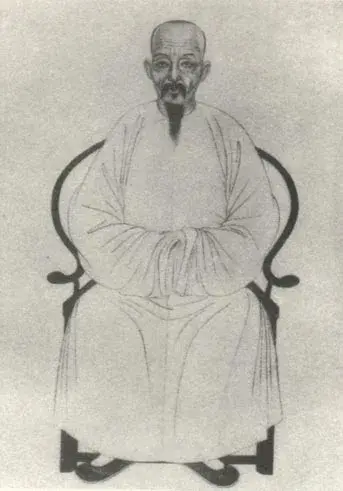
惠栋
Hui Dong (1697–1758), courtesy name Dingyu, art name Songya, and late sobriquet Xiaotian, was a native of Wu County (modern Suzhou), Jiangsu Province. He was an outstanding classical master, textual critic, and philologist of the mid-Qing dynasty, universally celebrated as the founding patriarch of the Wu School of Qianlong-Jiaqing Han Learning. Hailing from an illustrious Suzhou intellectual lineage, his grandfather Hui…
Hui Dong (1697–1758), courtesy name Dingyu, art name Songya, and late sobriquet Xiaotian, was a native of Wu County (modern Suzhou), Jiangsu Province. He was an outstanding classical master, textual critic, and philologist of the mid-Qing dynasty, universally celebrated as the founding patriarch of the Wu School of Qianlong-Jiaqing Han Learning. Hailing from an illustrious Suzhou intellectual lineage, his grandfather Hui Zhouti and father Hui Shiqi were both renowned classical masters, establishing a three-generation tradition celebrated as the Hui Family Scholarship of Wu. Exhibiting intellectual brilliance in youth, Hui mastered classical phonology, philology, and ancient astronomy. Despite repeatedly failing the higher provincial examinations, he chose to remain a commoner in Suzhou, dedicating his life to secluded scholarship and textual criticism. Hui occupies a transformative position in Chinese intellectual history. Breaking away from the empty metaphysical speculation of Song-Ming neo-Confucianism, he raised the banner of Han Learning, asserting that ancient scholarship was authentic and that Han dynasty commentaries were universally trustworthy. He maintained that classical interpretation must rely strictly on Western and Eastern Han exegetes, reconstructing archaic institutions and moral principles through rigorous phonology and semasiology. Devoting his life to ancient Xiangshu (image and number) interpretations of the Book of Changes and pre-Qin canons, he authored monumental treatises including Yi Hanxue, Zhouyi Shu, Guwen Shangshu Kao, Jiujing Guyi, and Mingtang Dadao Lu, systematically resurrecting the exegetical canons of the Han dynasty. The Wu School founded by Hui, shining alongside Dai Zhen's Wan School, trained and inspired giants of evidential research such as Wang Mingsheng, Qian Daxin, Jiang Sheng, and Yu Xiaoke, establishing the bedrock of modern Chinese evidential philology. He passed away in Suzhou in 1758.
Born into an illustrious Donglin scholar-gentry lineage in Wu County, Suzhou; his grandfather and father were renowned classical masters.
Placed first in the local elementary examination to become an official licentiate, mastering phonology, philology, and ancient mathematics.
Completed Guwen Shangshu Kao, providing decisive philological proof that the twenty-five Old Text chapters submitted by Mei Ze were forged.
Completed the landmark eight-volume Yi Hanxue, systematically analyzing the cosmologies of Han masters Meng Xi, Jiao Yanshou, Jing Fang, and Zheng Xuan.
Began drafting Zhouyi Shu, dedicating over a decade to synthesizing Han commentaries by Zheng Xuan, Xun Shuang, and Yu Fan.
Completed the 16-volume Jiujing Guyi, collating textual corruptions across pre-Qin and Han canons and winning wide acclaim.
Passed away at his residence in Suzhou at age sixty-two; disciples Jiang Sheng and Yu Xiaoke arranged his funeral and published his posthumous manuscripts.
Hui Dong was born in 1697 into the prominent Hui scholarly clan of Wu County, Suzhou Prefecture. His great-grandfather Hui Youguang was admired for exemplary moral conduct; his grandfather Hui Zhouti was an 1691 jinshi graduate and Hanlin compiler who authored Shi Shuo and Yi Shuo, pioneering classical exegesis in Suzhou; and his father Hui Shiqi was a 1708 jinshi graduate who served as Hanlin reader-in-waiting and Provincial Education Commissioner of Guangdong, authoring authoritative treatises on the Changes, Rites, and Annals. The intellectual world venerated their unbroken scholarly succession as the Three Generations of Hui Family Classical Learning.
Reared in family learning from infancy, Hui began reading at age four and could recite the Nine Classics with their sub-commentaries by age nine. His father subjected him to rigorous academic training, demanding that he not only understand the general meaning of texts but trace the ancient pronunciation, semantic gloss, and historical dimensions of every single character. Hui Shiqi pointed to the family library and instructed young Hui: "Our clan has preserved classical canons for generations; you must magnify the learning of our ancestors rather than chase the shallow rhetoric of civil service examinations!" Hui honored his father's injunction throughout his life, avoiding worldly honors to study ancient texts in his Hongdou Mountain Villa, finding supreme joy in collating Han and Wei commentaries.
In 1715, at age eighteen, Hui passed the county examination as an official licentiate. However, possessing an aloof, independent temperament, he detested the rigid artificiality of the eight-legged essay, repeatedly failing subsequent provincial examinations. During an era when examination degrees represented the sole path to prestige, Hui resolved to renounce the civil service examinations entirely, choosing to live as a commoner dedicated solely to pure scholarship.
In 1741, imperial courtiers proposed recommending Hui for the special Boxue Hongci examination, but Hui pleaded illness and declined. He lived quietly in his ancestral house outside the Changmen gate in Suzhou, where every room and wall was lined with rare Han, Wei, Tang, and Song classical manuscripts. Maintaining an exacting standard of textual critique, he consulted dozens of ancient editions before verifying a single character, never recording an assertion without incontrovertible textual evidence. Scholars and officials from across the empire traveled to Suzhou to consult him on obscure classical passages; Hui lectured from memory with citations flowing effortlessly, commanding the awe of his listeners.
In his middle and late years, Hui channeled his energy into reconstructing Han Xiangshu cosmologies and archaic classical glosses. Between the early Qianlong reign and 1755, he produced a series of monumental treatises, including Yi Hanxue, Guwen Shangshu Kao, Chunqiu Gushuo, Jiujing Guyi, and Zhouyi Shu. These masterworks redirected the entire trajectory of Qing intellectual history, establishing evidential Han Learning as the dominant national scholarly movement.
In June 1758, exhausted by decades of nocturnal collation, Hui passed away at his home in Suzhou at the age of sixty-two. Living an ascetic life dedicated to learning, he left an empty estate; his disciples Jiang Sheng and Yu Xiaoke tearfully arranged his burial and collated the final manuscripts of Zhouyi Shu for publication. His passing shook the intellectual world, and evidential historians Wang Mingsheng and Qian Daxin composed moving eulogies, honoring him as the supreme classical mentor of the Qing dynasty.
Hui Dong's most momentous contribution to Chinese intellectual history was raising the banner of reviving Han Learning, founding the influential Wu School of evidential scholarship.
Since the Northern Song neo-Confucianism of the Cheng brothers and Zhu Xi, classical commentators had emphasized grasping the philosophical spirit while ignoring literal textual forms, often indulging in speculative introspection that lapsed into intellectual vacuity during the late Ming. Although Gu Yanwu had called for empirical reform, he had not constructed an integrated Han Learning methodology. Hui formulated the core epistemological doctrine: "What the Classics revere is truth; where truth resides is in the Classics; what transmits the Classics is written words. If one discards the phonetic and semantic glosses of Han scholars, how can the Classics exist at all?" He established the guiding methodology that ancient scholarship was authentic and that Han commentaries were universally trustworthy, arguing that Han exegetes stood closest to the ancient sages and that their institutions possessed concrete historical reality. Systematically collating the works of Xu Shen, Zheng Xuan, and Jia Kui, Hui steered scholarship away from metaphysical speculation toward rigorous empirical philology, inaugurating the golden age of Qianlong-Jiaqing evidential learning.
In studies of the Book of Changes, Hui stood as the foremost synthesizer of Han dynasty Xiangshu (image and number) cosmologies since the Song dynasty, with Yi Hanxue and Zhouyi Shu celebrated as twin landmarks of Qing scholarship.
Since Wang Bi's Wei dynasty commentary discarded ancient astrological and calendrical calculations to interpret the Changes through Daoist metaphysics, the ancient Western Han cosmologies of Meng Xi, Jiao Yanshou, Jing Fang, Fei Zhi, Zheng Xuan, and Xun Shuang had been lost for over a millennium. Devoting over two decades to collating fragmented citations preserved in Tang sub-commentaries and Li Dingzuo's Zhouyi Jijie, Hui produced the eight-volume Yi Hanxue. The work methodically deconstructed Meng Xi's hexagram-climate associations, Jing Fang's cyclical lines, Zheng Xuan's planetary correspondences, and Xun Shuang's ascending and descending lines, illuminating the inner mechanics of Han cosmology. He subsequently authored Zhouyi Shu, interpreting the hexagrams and lines exclusively through Han commentaries, restoring the original architecture of ancient Han exegesis.
In textual criticism and forgery detection, Hui's Guwen Shangshu Kao stands alongside Yan Ruoju's Shangshu Guwen Shuzheng as the decisive scholarly treatise conclusively proving that the twenty-five Old Text chapters submitted by Eastern Jin scholar Mei Ze were forged.
Hui examined not merely phonetic glosses and syntax, but reconstructed the lineages of the New Text Shangshu transmitted by Fu Sheng in the Western Han and the citation practices of Eastern Han commentators, uncovering the mosaic stitching of Mei Ze's text. Demonstrating extraordinary philological acumen, Hui proved that the forged chapters were assembled from fragmented phrases found in Zuo Zhuan, Guoyu, Liji, Mencius, and Guo Pu's 4th-century commentaries. His incontrovertible evidence settled the centuries-old debate over the Old Text Shangshu, establishing a classic model of modern evidential philology.
Throughout his life, Hui taught in Suzhou, establishing a vibrant intellectual community that directly nurtured the flourishing ecology of Qianlong-Jiaqing scholarship.
Hui accepted students regardless of wealth, prioritizing intellectual dedication and instructing them that scholarship must seek truth from facts and accept nothing without evidence. Under his direct mentorship and intellectual inspiration, exceptional scholars emerged: direct disciples Jiang Sheng authored Shangshu Jizhu Yinshe and Yu Xiaoke compiled Gujingjie Gouchen, while prominent evidential historians Wang Mingsheng (author of Shiqishi Shangque) and Qian Daxin (author of Ershiershi Kaoyi) drew directly from Hui's rigorous methodology. Classical grandee Ruan Yuan later remarked that the flourishing of Qing Han Learning was divided between the Wu and Wan schools, with Hui Dong standing as the undisputed head of the Wu School whose breakthroughs directly stimulated Dai Zhen's Wan School, earning Hui recognition as the foremost mentor of Qing evidential scholarship.
FIGURES ASSOCIATED WITH THIS DYNASTY