Born in Lingnan
Born on the twenty-fourth day of the third lunar month in Jiaying Prefecture, Guangdong, into a cultured gentry lineage.
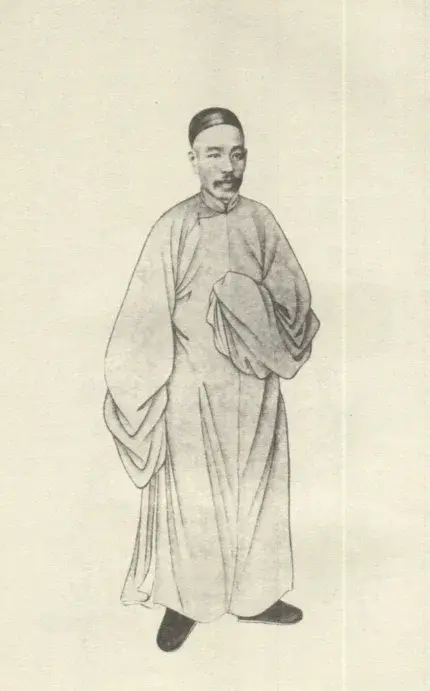
黄遵宪
Huang Zunxian (黄遵宪, April 27, 1848 – March 28, 1905), courtesy name Gongdu and art name Renjinglu Zhuren, was a native of Jiaying Prefecture, Guangdong. He was an eminent pioneer of late Qing modernization, a central thinker and practitioner of the Hundred Days' Reform, a distinguished diplomat, educator, and man of letters. In modern literary history, he is celebrated as the foremost of the "Three Great Masters of the Late…
Huang Zunxian (黄遵宪, April 27, 1848 – March 28, 1905), courtesy name Gongdu and art name Renjinglu Zhuren, was a native of Jiaying Prefecture, Guangdong. He was an eminent pioneer of late Qing modernization, a central thinker and practitioner of the Hundred Days' Reform, a distinguished diplomat, educator, and man of letters. In modern literary history, he is celebrated as the foremost of the "Three Great Masters of the Late Qing Poetic World" and the undisputed leader of the "Poetic Revolution." In modern political and diplomatic history, he is acclaimed as "the first figure of modern China to step outward into the world" and an early pioneer of modern Sino-Japanese cultural exchange. Born into an educated gentry household, Huang achieved the rank of licentiate and tribute student during the Tongzhi reign, before passing the Shuntian provincial examination as a provincial graduate in 1876, where his brilliance was hailed by Grand Secretary Li Hongzhang as "hegemonic genius." Faced with deepening domestic crisis and foreign aggression, he abandoned conventional bureaucratic advancement to enter modern foreign service. He served successively as Counselor of the inaugural Chinese Legation in Japan, Consul-General in San Francisco, Counselor of the Legation in Great Britain, and Consul-General in Singapore. During his diplomatic tenure in Tokyo, he closely studied the Meiji Restoration, authoring the monumental fifty-volume Treatise on Japan and formulating the Strategic Plan for Korea to maintain East Asian balance. In San Francisco and Singapore, he employed international legal statutes to vigorously defend overseas Chinese laborers and merchants against discrimination, establishing the operational foundation for modern consular protection. Following the Sino-Japanese War of 1894–1895, Huang joined the reform movement to save China, co-founding the Society for National Strengthening and the Shiwu Bao newspaper. As Acting Judicial Commissioner of Hunan under Governor Chen Baozhen, he spearheaded the Hunan Reforms, establishing the School of Current Affairs, the Southern Study Society, and the Hunan Bureau of Public Security, introducing modern local self-government. During the Hundred Days' Reform, he was granted an imperial audience by Emperor Guangxu and named Minister to Japan. After the conservative coup of 1898, he was spared capital punishment through British and Japanese diplomatic intervention and dismissed to his home in Meizhou. In his later years, he dedicated himself to promoting modern education, founding the Dongshan Lower Normal School to cultivate teachers and advance public enlightenment, while writing influential verses under his "Poetic Revolution" doctrine. In 1905, Huang died of pulmonary disease at age fifty-six, leaving behind masterpieces like Renjinglu Shicao and Treatise on Japan.
Born on the twenty-fourth day of the third lunar month in Jiaying Prefecture, Guangdong, into a cultured gentry lineage.
Achieved the rank of scholar in Jiaying, recognized for poetic gifts across ancient and modern metres.
Ranked 141st in the Shuntian provincial examination; praised by Zhili Governor-General Li Hongzhang as a rare hegemonic talent.
Invited by Minister He Ruzhang to join the first Chinese legation in Japan as Counselor, relinquishing metropolitan exams.
Drafted extensive diplomatic protests against Japan's annexation of Ryukyu, warning of naval threats to China's coastal security.
Presented A Strategy for Korea to Korean envoy Kim Hong-jip, advising alliances with Japan and the United States against Russia.
Assumed office as Consul-General in San Francisco, using international law to defend Chinese laborers against the Chinese Exclusion Act.
Returned to Guangdong following his mother's death, secluding himself in Renjinglu to complete the Treatise on Japan.
Completed the forty-volume, 500,000-word Treatise on Japan, offering an exhaustive institutional analysis of Meiji reforms.
Accompanied Xue Fucheng on diplomatic missions to Britain, France, Italy, and Belgium, observing parliamentary governance.
Transferred to Singapore, inspecting Nanyang Chinese communities and securing British approval for a consulate in Kuala Lumpur.
Ended seventeen years of overseas diplomatic service; joined Kang Youwei and Liang Qichao in founding the Society for National Strengthening.
Provided crucial funding for Shiwu Bao; granted an imperial audience in Beijing by Emperor Guangxu to discuss administrative reform.
Appointed Acting Judicial Commissioner of Hunan, collaborating with Chen Baozhen to institute modern policing and schools.
Named Minister to Japan; detained during the conservative coup of 1898 but released following British and Japanese intervention.
Founded the Jiaying Educational Association, followed in 1904 by the Dongshan Lower Normal School, pioneering modern normal schooling.
Died of chronic pulmonary illness at his residence in Meizhou on the twenty-third day of the second lunar month at age fifty-six.
Huang Zunxian was born in 1848 in Panguifang, Jiaying Prefecture, Guangdong. His family was an eminent Hakka lineage. His great-grandmother Madame Li, recognizing his unusual quickness of mind, orally taught him the Anthology of One Thousand Poets at the age of three, which young Huang memorized effortlessly. At four, he commenced formal classical studies under tutor Li Botao. When he was ten, his tutor assigned a poem using a verse by Song dynasty Hakka scholar Cai Mengji; Huang composed lines with effortless grace. The following day, tasked with writing an essay on Du Fu's famous line about surveying lesser hills from high peaks, Huang opened with the bold thought that the realm beneath heaven was small enough, let alone mere mountains before one's eyes. His tutor was astonished, and he was celebrated locally as a child prodigy.
In 1867, at the age of twenty, Huang entered the prefecture school as a licentiate. In 1871, he placed first in the annual regional tests, earning government stipend status, and in 1873 was selected as a tribute student. In the spring of 1874, he travelled to Beijing to sit for the Shuntian provincial examinations. His father, Huang Hongzao, was serving in the Ministry of Revenue, and the two lived modestly in the capital, enabling Huang Zunxian to form relationships with leading scholars and reform-minded officials.
In 1876, while accompanying his father to Yantai, Shandong, Huang met modernizing dignitaries Zhang Yinhuan and Zhili Governor-General Li Hongzhang. Impressed by Huang's eloquent analysis of maritime diplomacy and domestic administrative challenges, Li praised him publicly as a rare "hegemonic genius." This recognition from the most powerful official in the empire gave Huang deep confidence and introduced him into the forefront of modernization affairs. Later that autumn, Huang passed the Shuntian provincial examination as a provincial graduate, qualifying for appointment as a county magistrate.
In 1877, fellow townsman and Hanlin Senior Compiler He Ruzhang was appointed China's first imperial envoy to Japan. Highly valuing Huang's administrative and geopolitical insight, He invited him to join the mission. Overcoming domestic pressure to pursue the metropolitan doctorate, Huang made the forward-looking decision to join the emerging foreign service, accepting appointment as Counselor to the Chinese Legation in Tokyo.
During his four years in Japan, Huang travelled widely and interacted with Meiji political figures, Sinologists, and literati. His refined demeanor and classical learning earned him a reputation among Japanese intellectuals as China's "most cultured and dignified diplomat." Through poetic exchanges with scholars such as Ōkōchi Teruna, he composed more than two hundred poems for Japanese Miscellaneous Poems, capturing the vibrant atmosphere of Meiji modernization and earning acclaim as a masterly poet.
In 1879, when Japan moved to annex the Kingdom of Ryukyu, Huang drafted extensive diplomatic memorials exceeding one hundred thousand words for Minister He Ruzhang to submit to the Tsungli Yamen and Li Hongzhang. Huang foresaw that if Ryukyu fell, maritime security along China's southeastern coast would be immediately jeopardized, advocating firm countermeasures that the Qing court tragically ignored.
In 1880, Huang met Korean envoy Kim Hong-jip in Tokyo and presented him with his strategic treatise, A Strategy for Korea. Analyzing imperialist pressures across East Asia, he warned of Russian expansionism and advised Korea to modernize its domestic affairs while balancing its diplomacy through close ties with China, friendly relations with Japan, and an alliance with the United States. During this period, Huang studied Chinese translations of Western political philosophers such as Rousseau and Montesquieu. Concluding that true social peace depended upon constitutional democracy and institutional reform, he underwent a profound ideological transition from traditional bureaucrat to radical modernizer, while collecting over two hundred Japanese source texts for his Treatise on Japan.
In the spring of 1882, Huang arrived in San Francisco as Chinese Consul-General. He landed just as the United States Congress enacted the discriminatory Chinese Exclusion Act. Local California authorities systematically harassed Chinese residents under the pretext of municipal health regulations, arresting laborers and packing county jails.
Confronting this hostility, Huang utilized his mastery of international law to protect his compatriots. Visiting unsanitary American holding cells, he had his staff measure the floor space, directly confronting local officials by asking whether crowded public jails possessed superior sanitation to Chinese residences. Local authorities yielded and released the detained immigrants. Furthermore, Huang invoked international treaties to establish the exclusive right of the Chinese Consul-General to issue legal residency and return certificates to Chinese laborers, establishing an enforceable legal framework that shielded tens of thousands of overseas workers. In 1884, after witnessing the American presidential election, he penned his satirical poem Record of Events, observing party factionalism.
In 1885, Huang returned to China on leave following his mother's death. Retiring to his family estate in Meizhou, he constructed Renjinglu and dedicated three years to completing the Treatise on Japan. By the summer of 1887, the monumental forty-volume work was finished. Encompassing geography, government organization, public finance, military systems, penal law, education, and foreign relations, it provided China's intellectual class with an exhaustive analysis of Meiji reforms, becoming an indispensable blueprint for late Qing institutional reform.
In 1889, Huang accompanied Xue Fucheng to Europe as Second Counselor to the Chinese Legation in Great Britain, travelling through London, Paris, and Berlin. In 1891, he was appointed Consul-General in Singapore. Despite chronic respiratory illness, he worked diligently, restructuring consular paperwork and confronting exploitation by labor contractors. Through rigorous negotiation, he persuaded British colonial authorities to permit the establishment of a Chinese vice-consulate in Kuala Lumpur, extending direct imperial protection to mining and plantation laborers throughout Malaya.
When the Sino-Japanese War broke out in 1894, Huang returned to China and was appointed Superintendent of the Jiangning Foreign Affairs Bureau. The humiliating defeat and the cession of Taiwan in the Treaty of Shimonoseki filled him with grief and catalyzed his participation in the national reform movement. In Shanghai, he joined Kang Youwei's Society for National Strengthening and provided vital funding to establish the influential newspaper Shiwu Bao with Liang Qichao and Wang Kangnian. In September 1896, Emperor Guangxu summoned Huang to the Forbidden City, where Huang argued that Western power derived entirely from institutional modernization and that China could regain strength through systematic reform, earning the emperor's deep trust.
In the summer of 1897, Huang was appointed Changbao Salt Intendant in Hunan, subsequently serving as Acting Judicial Commissioner. Collaborating closely with reformist Governor Chen Baozhen, Huang transformed Hunan into the premier testing ground for institutional reform. He initiated the School of Current Affairs, inviting Liang Qichao as Chief Lecturer to train talented youths including Cai E; he organized the Southern Study Society as a proto-legislative forum, delivering nine lectures on popular sovereignty; and he established China's first modern local police agency, the Hunan Bureau of Public Security, establishing local administrative self-government.
In the summer of 1898, as the Hundred Days' Reform commenced, Emperor Guangxu granted Huang the third-rank metropolitan directorship and appointed him Minister to Japan. Before he could depart, Empress Dowager Cixi launched a conservative coup on September 21, placing the emperor under house arrest and ordering the execution of leading reformers. In October, Shanghai Intendant Cai Jun detained Huang at the Foreign Affairs Bureau, intending to escort him to Beijing for punishment.
At this critical juncture, British and Japanese diplomats intervened forcefully on Huang's behalf. The British Consul-General in Shanghai warned that Britain would actively intervene if Huang were harmed, while the Japanese envoy lodged formal protests stating that prosecuting Huang would damage Sino-Japanese relations. Bowing to diplomatic pressure, the Qing government rescinded the arrest order and dismissed Huang to his ancestral home.
Returning to Meizhou, Huang withdrew to Renjinglu. Convinced that universal education and public enlightenment were essential for national rejuvenation, he devoted his final years to modern education. In 1899, he turned Renjinglu into a classroom to teach history, science, and physiology. In 1903, he founded the Jiaying Educational Association and published An Address to My Fellow Townsmen. In 1904, he established the Dongshan Lower Normal School, sending disciples to Japan for teacher training and catalyzing the creation of hundreds of modern primary and secondary schools across eastern Guangdong.
On March 28, 1905, Huang Zunxian passed away from pulmonary illness at Renjinglu at the age of fifty-six, leaving behind a celebrated legacy of reform and literature.
Huang Zunxian's primary intellectual monument is his forty-volume Treatise on Japan, completed in 1887 after a decade of intensive research. At a time when traditional Chinese literati dismissed Japan as a negligible island neighbour, Huang recognized that the Meiji Restoration was transforming East Asian geopolitics.
The work systematically documents the transformation of Japan from feudal shogunate rule into a modern constitutional state across twelve comprehensive categories: Dynastic Succession, Neighbourly Relations, Astronomy, Geography, Bureaucracy, Economy, Military Systems, Penal Code, Scholarship, Customs, Products, and Crafts. Beyond recording factual data, Huang analyzed the strengths and pitfalls of Meiji policies, presenting them as an explicit roadmap for China's administrative renewal. Published commercially after the Sino-Japanese War, the treatise became the primary reference text for Emperor Guangxu and reformist leaders during the Hundred Days' Reform.
During his tenures in San Francisco and Singapore, Huang pioneered modern consular protection for overseas Chinese. Reversing centuries of imperial indifference that treated emigrants as deserters of their ancestral land, he asserted the modern principle that a sovereign state was obligated to protect its citizens abroad.
In California, he defended Chinese laborers against municipal harassment under the Chinese Exclusion Act, personally inspecting detention centers and securing the release of imprisoned workers. He secured formal United States recognition of the exclusive right of Chinese consuls to issue residency documents, establishing legal security for thousands of migrant workers. In Singapore, he curbed labor racketeering and secured British agreement to establish a vice-consulate in Kuala Lumpur, extending consular protection into the Malayan interior.
As Acting Judicial Commissioner of Hunan, Huang translated the political concepts he had observed in Europe, America, and Japan into local administrative practice. Working alongside Governor Chen Baozhen, he made Hunan the leading model of late Qing provincial reform.
Huang formulated the foundational principle of sharing bureaucratic authority with the people to foster local self-government. Under his direction, Hunan established the School of Current Affairs to educate modern leaders; the Southern Study Society to serve as a consultative civic assembly with weekly public lectures; and the Hunan Bureau of Public Security, China's first modern municipal police organization. The regulations he drafted served as pioneering blueprints for provincial modernization across China.
In Chinese literature, Huang was the theoretical founder and preeminent practitioner of the late Qing "Poetic Revolution." Opposing archaistic poetry schools that repeated stale classical tropes, he established the modern aesthetic doctrine that poetry should express one's own voice free of archaic constraints.
Huang insisted that poetry must reflect contemporary social upheaval. He boldly integrated modern scientific, political, and philosophical concepts into classical poetic forms, writing about steamships, telegraphs, electricity, and international law. Masterpieces such as Mourning Lushun, Song of General Feng, and The Taiwan Ballad captured national struggles against foreign encroachment with epic emotional power, leading Liang Qichao to acclaim him as the commanding pioneer of modern Chinese poetry.
Following the defeat of the Hundred Days' Reform, Huang concluded that political change could not succeed without broad public literacy. Returning to Guangdong, he directed his resources toward educational modernization.
He founded the Jiaying Educational Association to replace traditional classical academies with modern curricula encompassing mathematics, sciences, geography, and physical education. In 1904, he created the Dongshan Lower Normal School in Meizhou, one of China's earliest independent teacher-training institutions. By sending promising graduates to Japan for accelerated normal training, he generated qualified instructors who staffed hundreds of newly established primary and secondary schools across the region, earning Meizhou its reputation as a premier center of modern culture.
FIGURES ASSOCIATED WITH THIS DYNASTY