Birth in Cixi
Born into an established scholarly household in Cixi, dedicating his youth to Confucian classics and practical statecraft.
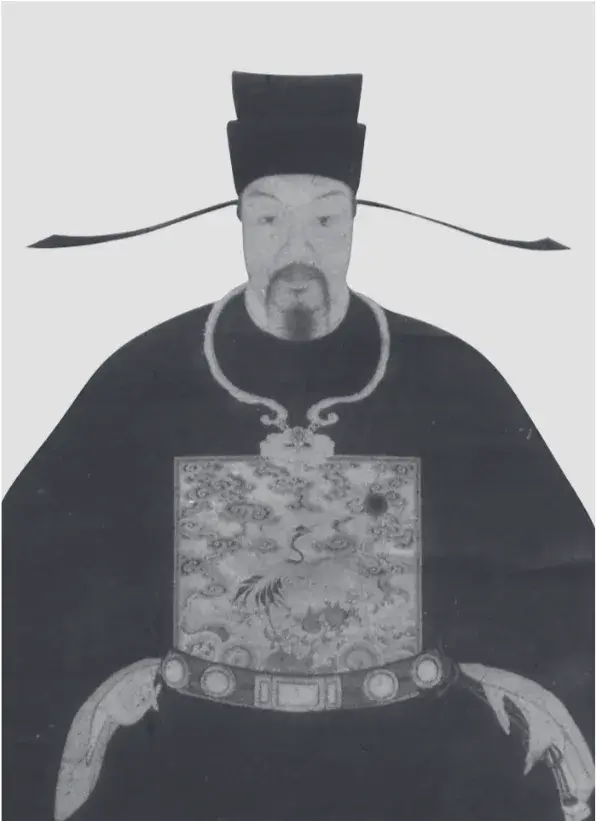
黄震
Huang Zhen (黄震, 1213–1281), courtesy name Dongfa, honored by scholars as Master Yuyue and posthumously designated Master Wenjie by his disciples, was a native of Cixi, Qingyuan Prefecture. He was a distinguished Neo-Confucian philosopher, historian, essayist, and virtuous civil magistrate during the late Southern Song dynasty, as well as the founder of the Dongfa School of eastern Zhejiang. In 1256, he attained his jinshi…
Huang Zhen (黄震, 1213–1281), courtesy name Dongfa, honored by scholars as Master Yuyue and posthumously designated Master Wenjie by his disciples, was a native of Cixi, Qingyuan Prefecture. He was a distinguished Neo-Confucian philosopher, historian, essayist, and virtuous civil magistrate during the late Southern Song dynasty, as well as the founder of the Dongfa School of eastern Zhejiang. In 1256, he attained his jinshi degree alongside Wen Tianxiang. He subsequently served as Assistant Magistrate of Wuxian and Collator in the Historiography Institute, assisting in the compilation of imperial records for Emperors Ningzong and Lizong. During an imperial audience in 1267, he delivered an uncompromising remonstrance before Emperor Duzong, diagnosing the four fundamental crises of the realm: an impoverished populace, a weakened military, exhausted state finances, and shameless scholar-officials. Enraging the sovereign, he was demoted three ranks and dispatched as Vice Prefect of Guangde. There, he banned superstitious cults sacrificing cattle and was dismissed for impeaching prefect Jia Fanshi, the corrupt nephew of Grand Councilor Jia Sidao. Appointed Prefect of Fuzhou during a catastrophic famine in 1271, he issued strict edicts penalizing hoarders and stabilizing rice prices, saving countless lives. In 1275, as Superintendent of Zhedong, he resolved a major salt-workers' revolt by investigating official extortion and reimbursing overdue salt subsidies of over 610,000 strings of cash. Following the fall of the Song dynasty, he refused all Yuan administrative appointments, retreating to Mount Baotang in Yinxian, where he fasted unto death at the age of sixty-nine. Anchoring his thought in Zhu Xi's philosophy while synthesizing the utilitarian statecraft of eastern Zhejiang, his ninety-seven-volume Huangshi Richao represents an enduring intellectual landmark.
Born into an established scholarly household in Cixi, dedicating his youth to Confucian classics and practical statecraft.
Attained the jinshi degree alongside Wen Tianxiang, initially serving as Assistant Magistrate of Wuxian.
Appointed Collator in the Historiography Institute; presented his famous memorial denouncing the four great administrative crises, demoted to Vice Prefect of Guangde.
Suppressed ritual cattle slaughter in Guangde; dismissed from office on charges of administrative obstruction after impeaching corrupt prefect Jia Fanshi.
Appointed Prefect of Fuzhou; cracked down on grain hoarders and established emergency soup kitchens during a severe famine.
Promoted to Superintendent of the Jiangxi Ever-Normal Granary and Judicial Commissioner of Jiangxi, rectifying dozens of wrongful criminal convictions.
Reassigned as Ever-Normal Tea and Salt Superintendent of Zhedong; pacified an armed salt-workers' rebellion by paying 610,000 strings of back subsidies.
Wept bitterly toward the capital upon Lin'an's surrender; retreated into the mountains of Dinghai and Yinxian, adopting the name Elder Dongfa.
Refused all Yuan administrative summonses, fasting unto death at his hermitage on Mount Baotang at age sixty-nine; bestowed the private posthumous name Wenjie.
Huang Zhen was born in 1213 in Guyang, Cixi County, Qingyuan Prefecture, into a respected family of scholar-farmers. From his earliest years, Huang was steeped in the study of canonical Confucian texts, developing a profound affinity for the Luoyang school of the Cheng brothers and the Fujian philosophy of Zhu Xi. Endowed with an unbending moral temperament, he detested the superficial examination rhetoric prevalent among contemporary literati, insisting that genuine scholarship must unite ontological principle with practical governance.
In 1256, at the age of forty-four, Huang traveled to Lin'an and earned the jinshi degree in the same distinguished cohort as national hero Wen Tianxiang. He received his first commission as Assistant Magistrate of Wuxian in Pingjiang Prefecture. In Wuxian, he investigated local fiscal burdens, punished oppressive clerks who exploited poor peasants, and streamlined tax registers, demonstrating formidable administrative acumen.
In 1267, recognized for his profound classical erudition, Huang was promoted to Collator in the Historiography Institute. He participated in compiling the official History and Veritable Records for Emperors Ningzong and Lizong. Serving in the historiographical bureaus, he wrote with unsparing impartiality, thoroughly analyzing the administrative breakdowns that brought the dynasty to the brink of ruin.
In late 1267, Emperor Duzong summoned court scholars for formal palace consultations. Confronting imperial extravagance, Grand Councilor Jia Sidao's autocratic dominance, and the relentless Mongol encirclement of Xiangyang, most courtiers delivered flattering platitudes. Huang Zhen stepped forward alone, presenting a monumental memorial diagnosing the four fatal diseases of the realm: "The people grow increasingly impoverished, the armies grow increasingly fragile, state revenues grow increasingly exhausted, and scholar-officials grow increasingly shameless!"
Huang demonstrated that arbitrary debasement of paper currency destroyed commercial circulation, aggressive land confiscations dispossessed landowners, and sycophantic ministers concealed military defeats. An enraged Emperor Duzong denounced Huang's outspokenness, demoting him three official ranks and exiling him to serve as Vice Prefect of Guangde.
Arriving in Guangde, Huang governed with uncompromising integrity. The local population flocked to the superstitious shrine of King Zhang, where tens of thousands of worshippers gathered annually, slaughtering over ten thousand plow oxen in sacrificial rituals and instigating bloody feuds. Recognizing that oxen were the foundation of agricultural productivity, Huang banned the wasteful sacrifices and dismantled the sorcerers' networks, restoring farming stability across the commandery.
Shortly thereafter, Prefect Jia Fanshi, trading on his kinship as nephew of Grand Councilor Jia Sidao, engaged in rampant embezzlement and illegal trade. Huang confronted Jia Fanshi directly with legal statutes. Jia Fanshi retaliated by lodging malicious accusations with his uncle in Lin'an, prompting Jia Sidao to dismiss Huang on trumped-up charges of administrative obstruction. Huang departed Guangde with serene detachment.
In 1271, the court recalled Huang as Prefect of Fuzhou. Upon his arrival, he found Linchuan gripped by an unprecedented drought; crops were parched and starving refugees filled the roadways, while wealthy grain merchants hoarded stockpiles to inflate prices. Huang traveled alone in a light carriage, establishing his temporary headquarters in a roadside post-station rather than the official magistracy.
He issued immediate public proclamations: "Those who hoard grain shall have their warehouses confiscated; those who seize grain by force shall be executed!" He dispatched constables to unseal speculative granaries, enforcing fair market prices and establishing dozens of soup kitchens. Within ten days, rice prices plunged, civic order was restored, and tens of thousands of peasants survived. Promoted to Judicial Commissioner of Jiangxi, he traveled in civilian clothes, overturning dozens of wrongful convictions.
In the third month of 1275, as Mongol forces advanced down the Yangtze, Huang was urgently dispatched as Ever-Normal Tea and Salt Superintendent of Zhedong. In the Minghe and Shiyan salt fields of Cixi, thousands of desperate salt-workers had launched an armed uprising, slaying corrupt officials and burning government warehouses after enduring years of extortion.
Huang entered the troubled salt fields without an armed escort, listening directly to the grievances of the laborers. Discovering that the rebellion had been provoked entirely by corrupt officials embezzling salt subsidies, Huang memorialized the throne exonerating the workers. He authorized the immediate disbursement of 613,000 strings of cash from regional treasuries to pay all back subsidies, instantly ending an armed rebellion that had terrified eastern Zhejiang.
In 1276, following the surrender of Empress Dowager Xie in Lin'an, the Southern Song collapsed. Huang wept bitterly toward the north, stripped off his robes of office, and resolved never to serve the Mongol conquerors. He fled into reclusion at Mount Zeshan in Dinghai and subsequently relocated to the remote forests of Mount Baotang in Yinxian, adopting the title Elder Dongfa.
During his years in hiding, Yuan provincial officials repeatedly visited his hermitage, offering prestigious offices to harness his fame. Huang rejected every overture, barring his gates and dedicating his final years to teaching and writing under his motto: "Read no book that is not by the ancient sages; write no poetry that does not benefit the world."
In the first month of 1281, facing foreign dominion and relentless imperial pressure, Huang initiated a hunger strike in his cottage at Mount Baotang, passing away in serene martyrdom at the age of sixty-nine. His disciples conferred upon him the private posthumous title Master Wenjie, burying him at Qianjia'ao in Minghe.
Huang Zhen occupies a preeminent position in late Song intellectual history as the founding master of the Dongfa School. In an era when Neo-Confucianism had degenerated into abstract metaphysical musings disconnected from practical statecraft, Huang anchored his thought in Zhu Xi's philosophy while synthesizing the utilitarian statecraft of Ye Shi and Chen Liang.
He vigorously refuted Lu Jiuyuan's intuitionist School of Mind, demonstrating that inner moral cultivation must manifest in tangible benefits for national governance and peasant livelihoods. He asserted that heavenly principle must be grounded in human welfare and that state policies must yield practical results, serving as an indispensable intellectual bridge between Song Neo-Confucianism and the evidential scholarship of the Qing dynasty.
Huang's scholarly magnum opus, Huangshi Richao (Daily Notes of Master Huang) in ninety-seven volumes, represents the culmination of his lifelong intellectual inquiry. The work encompasses rigorous canonical exegesis, evaluations of pre-Qin philosophers, critical historiographical essays, and administrative policy papers.
Huang subjected the Thirteen Classics to meticulous textual criticism, providing objective analyses of dynastic rise and fall across standard histories. The monumental Qing scholar Quan Zuwang praised the work in Jiting Ji, declaring that among all scholars of eastern Zhejiang who adhered strictly to Master Zhu Xi, Huang Zhen was supreme. The editors of the Siku Quanshu transcribed the entire text, praising it as a crowning jewel of Song classical scholarship.
Huang's political career exemplified the ultimate moral courage of the Confucian gentleman. His historic 1267 memorial diagnosing the four great crises of an impoverished populace, a weakened military, exhausted state finances, and shameless scholar-officials provided an unsparing autopsy of the institutional decay that caused the fall of the Southern Song.
Throughout his postings as Assistant Magistrate, Vice Prefect, Prefect, and Judicial Commissioner, he prioritized commoner welfare above personal career advancement. Whether abolishing ritual cattle slaughter in Guangde, relieving famine in Fuzhou, or compensating exploited salt-workers in Zhedong, he established the gold standard of the virtuous magistrate in late imperial China.
FIGURES ASSOCIATED WITH THIS DYNASTY