Born in Wu County
Huang Pilie was born into an educated family in Wu County, Suzhou, immersing himself early in classical texts and parallel prose.
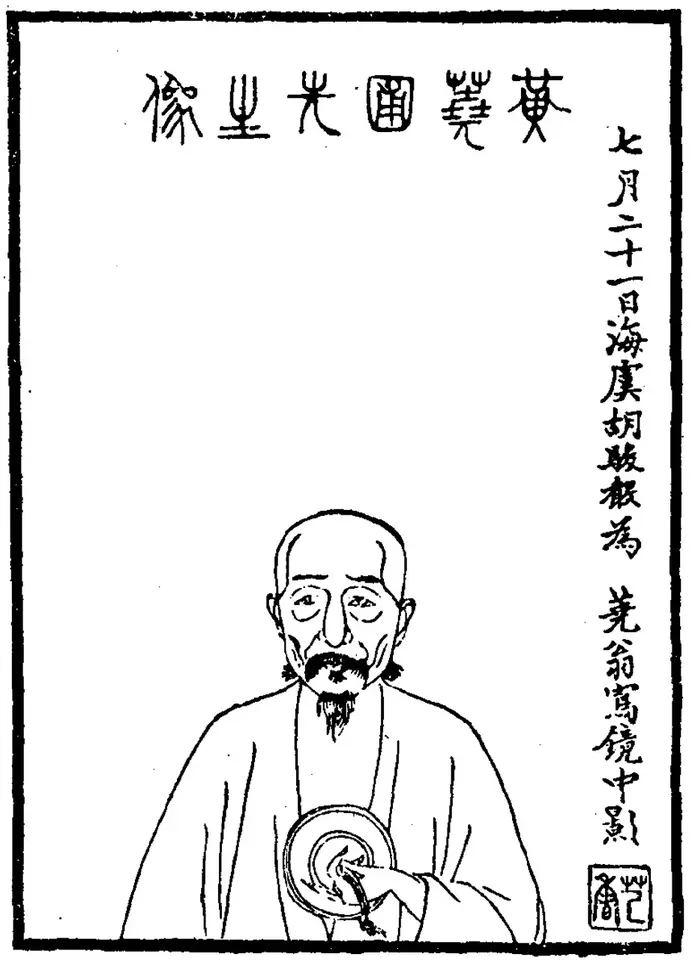
黄丕烈
Huang Pilie (黄丕烈, 1763–1825), courtesy name Shaowu and art name Raopu, self-styled Master Fond of the Song, was a native of Wu County, Jiangsu, and the most prominent bibliophile, textual critic, and philologist of the Qianlong and Jiaqing eras in the Qing Dynasty. Having passed the provincial examination in 1788 and qualified as a first-class county magistrate, he chose to decline official appointments and returned home to…
Huang Pilie (黄丕烈, 1763–1825), courtesy name Shaowu and art name Raopu, self-styled Master Fond of the Song, was a native of Wu County, Jiangsu, and the most prominent bibliophile, textual critic, and philologist of the Qianlong and Jiaqing eras in the Qing Dynasty. Having passed the provincial examination in 1788 and qualified as a first-class county magistrate, he chose to decline official appointments and returned home to dedicate his life to collecting, collating, annotating, and publishing rare pre-modern editions. Passionately devoted to Song Dynasty imprints, he created the famous studio "Baisong Yichan" (A Hundred Song Editions in One Dwelling) and assembled more than two hundred rare Song editions, establishing the influential "Connoisseurship School" and the bibliophilic trend of "Song Adoration" in Chinese book history. Adhering strictly to empirical textual collation without arbitrary alterations, Huang composed nearly one thousand postscripts detailing provenance, typography, and textual variants, and printed the celebrated Shili Ju Congshu (Collectanea of the Studio of Rites). His endeavors elevated bibliophilism into an independent scholarly discipline, securing his reputation as a paramount giant of private book collecting in Qing China.
Huang Pilie was born into an educated family in Wu County, Suzhou, immersing himself early in classical texts and parallel prose.
At age nineteen, he was recognized by Jiangsu Education Commissioner Peng Yuanrui and admitted as a licentiate.
Passed the Jiangnan provincial examination as a provincial graduate (juren), though subsequent metropolitan examinations in Beijing proved unsuccessful.
Selected as a county magistrate in Zhili via the Grand Selection, he declined the post, purchased a titular secretary rank, and retired home to devote himself to book collecting.
Having accumulated over one hundred Song imprints, he founded the studio Baisong Yichan; Gu Guangqi composed a rhapsody for it, which Huang annotated.
Published the annotations to the rhapsody and subsequently commenced carving the Shili Ju Congshu, appending comprehensive textual collation notes.
Compiled the Qiugu Ju Songben Shumu, recording one hundred and eighty-seven Song Dynasty imprints acquired throughout his career.
Facing economic hardship in his late years, he opened the Pangxiyuan Bookstore in front of Suzhou's Xuanmiao Temple to circulate and trade rare texts.
Died at his residence in Wu County in the eighth lunar month at age sixty-three; his precious collection and annotated editions subsequently passed to prominent collectors.
In 1763, Huang Pilie was born into a scholarly family in Wu County, Suzhou Prefecture, Jiangsu Province. From his youth, he demonstrated exceptional diligence, pursuing deep and refined classical learning grounded firmly in the Confucian Six Classics. Emulating the Song Dynasty method of Chunqiu Leidui (Categorized Parallels of the Spring and Autumn Annals), he extracted passages from ancient classics and structured them into balanced, antithetical parallel prose, earning widespread acclaim among regional literati.
In 1781, at the age of nineteen, Huang sat for the local examinations and won the high praise of Peng Yuanrui, Senior Vice Minister of the Ministry of Revenue serving as the Education Commissioner of Jiangnan. Peng, an erudite scholar renowned for his bibliographical expertise, recognized Huang's classical scholarship and admitted him as a government student (zhusheng). This early mentorship firmly established Huang's place within the elite literary circles of Suzhou and inspired his lifelong dedication to classical bibliophilism.
In 1788, Huang Pilie participated in the Jiangnan provincial examination and attained the degree of provincial graduate (juren). Over the ensuing decade, he traveled to the capital several times to sit for the metropolitan examination, but his profound preference for empirical scholarship conflicted with the formulaic requirements of eight-legged essays, resulting in repeated failures. During the special imperial Grand Selection (Datiao), he was evaluated as first-class on account of his demeanor and eloquence, qualifying for appointment as a county magistrate in Zhili Province.
Disinclined toward bureaucratic entanglements, administrative burdens, and social pretense, Huang felt no enthusiasm for local governance. In 1801, when the official assignment arrived, he declined the magistrate position, purchased a nominal titular rank as a Secretary in the Ministry of Revenue, and immediately requested leave to return to Suzhou. Shortly afterward, his father passed away, and Huang observed the required mourning period. During this period, an accidental fire threatened the family residence, approaching the inner chambers; Huang wept over his father's coffin, vowing to perish with it, whereupon the fire was extinguished, earning him great renown for filial devotion. Following the mourning rites, he permanently severed ties with officialdom, dedicating his fortune and energy entirely to collecting, collating, and editing ancient books.
Returning to Suzhou, Huang lived the life of a retired scholar and cultivated friendships with prominent intellectuals. Uninterested in worldly luxuries, his sole passion was the pursuit of rare books. As long-held collections of prominent Jiangnan families dispersed during the mid-Qing period, Huang traversed markets and private holdings, selling property or borrowing funds whenever rare Song or Yuan woodblock editions or early manuscripts appeared. Over years of relentless acquisition, he accumulated more than a hundred Song imprints. Around 1805, he established a dedicated chamber named "Baisong Yichan" (A Hundred Song Editions in One Dwelling) and adopted the sobriquet "Master Fond of the Song" (Ning Song Zhuren).
The eminent philologist and fellow townsman Gu Guangqi composed the celebrated Baisong Yichan Fu (Rhapsody on the Studio of a Hundred Song Editions) to commemorate this feat, and Huang meticulously annotated every line of the rhapsody, documenting paper quality, typography, edition lineages, and transmission history. Huang also constructed the Raopu Garden in Suzhou, hosting scholarly banquets and textual symposia attended by leading Qianlong-Jiaqing philologists such as Qian Daxin, Duan Yucai, Cheng Yaotian, Niu Shuyu, and Wang Yinzhi. Whenever an ancient edition was acquired, Huang collated it day and night, sometimes comparing variants through three to six iterative revisions.
During his middle and late years, Huang focused on woodblock publishing and composing scholarly postscripts. Selecting the rarest Song and Yuan texts from his shelves, he engaged master carvers to produce the Shili Ju Congshu (Collectanea of the Studio of Rites). Renowned for exquisite craftsmanship and accompanying textual notes, this series gained immediate prestige among scholars who treated it on par with Song imprints.
However, decades of continuous book purchasing and expensive carving projects, coupled with regional economic decline in the Daoguang era, severely depleted his family finances. Around 1820, Huang opened the Pangxiyuan Bookstore in front of Suzhou's Xuanmiao Temple to trade and circulate rare books for a livelihood. Literati, antique dealers, and collectors gathered constantly at his shop to discuss editions. In his final years, mounting poverty compelled him to sell treasured Song and Yuan imprints to wealthy collectors such as Wang Shizhong and Yang Yizeng. In September 1825, Huang passed away at his home in Suzhou at the age of sixty-three.
Huang Pilie's foremost contribution to Chinese bibliographical history lies in establishing the "Song Adoration" movement and the Connoisseurship School. While collectors like Qian Zeng had praised Song editions in the seventeenth century, Huang transformed this aesthetic fascination into a rigorous empirical discipline. He evaluated Song editions not merely as antique curiosities, but by analyzing their paper textures, ink quality, calligraphic styles, taboo characters, and carver names, using Song texts as primary benchmarks to correct deletions and errors introduced in Ming Dynasty recarvings.
Between his thirties and fifties, Huang amassed over two hundred individual Song editions. In 1812, he compiled the Qiugu Ju Songben Shumu (Catalogue of Song Editions in the Studio for Seeking Antiquity), which recorded one hundred and eighty-seven Song imprints, including unique treasures such as the southern Song Guichi carving of Wenxuan and surviving fragments of Zhongxing Qungong Yingao. The scholar Hong Liangji honored Huang as the supreme leader of the Connoisseurship School. Subsequent prominent late-Qing private libraries, including the Tieqin Tongjian Lou of the Qu family, the Haiyuan Ge of the Yang family, and the Bisong Lou of the Lu family, all derived their foundational collections and methods from Huang's lineage.
Huang was not merely an avid accumulator of books but also a master of textual criticism. In his editorial practice, he strictly practiced the method of "rigid collation" (sixiao) favored by Qianlong-Jiaqing empirical scholars: adhering strictly to the primary base text, faithfully recording all variant readings, and abstaining from subjective emendations. To verify dubious readings, he frequently gathered three to five divergent editions of a single title to determine ancestral editions, later recarvings, and counterfeit copies.
To disseminate rare scholarship to the wider intellectual community, Huang funded the publication of the Shili Ju Congshu. Spanning twenty-two titles of extreme rarity, including the Song edition of Zhanguoce and Wangben Lishi Kanwu, the collectanea was accompanied by Huang's own rigorous critical apparatus and postscripts. This monumental publication provided scholars with impeccable textual standards and remains one of the finest achievements of private woodblock printing in the Qing Dynasty.
Huang's postscripts (tiba) represent the intellectual pinnacle of his scholarly life. Over decades of bibliophilic work, he composed postscripts for more than nine hundred rare works, with over eight hundred surviving today. Unlike traditional scholars who wrote broad literary introductions, Huang recorded minute bibliographical details: trimming dimensions, line arrangements, character counts per column, paper textures, ink shades, seal impressions, transmission lineages, and detailed narratives of how he negotiated and acquired each copy.
His postscripts also captured his emotional reflections, economic negotiations with book dealers, and intimate details of domestic life and Suzhou literati interactions. Although late-Qing scholar Yu Jiaxi remarked that Huang's detailed discussions resembled a merchant's trade ledger, modern academia recognizes that these postscripts pioneered the sociology of pre-modern Chinese book culture. During the Guangxu era, Pan Zuoyin published six volumes of Shili Ju Cangshu Tibaji, expanded by Miao Quansun into additional volumes and finalized by modern scholars into Raopu Cangshu Tishi, serving as foundational sourcebooks for modern edition studies.
In his later years, Huang established the Pangxiyuan Bookstore in Suzhou, breaking down the traditional barrier wherein elite gentry kept private holdings strictly hidden from the public. Combining the roles of scholar and merchant, he guided young bibliophiles in distinguishing genuine Song and Yuan carvings from later counterfeits, rescuing countless endangered volumes from neglect.
Following his death, although the Shili Ju collection dispersed, its core holdings were acquired by Wang Shizhong, Yang Yizeng, and Lu Xinyuan, forming the backbone of the greatest nineteenth-century Chinese libraries. His methodologies, standards of textual collation, and appreciation for Ming and Qing manuscript copies profoundly inspired later scholars such as Miao Quansun, Ye Changchi, Mo Youzhi, and Ding Richang, serving as an indispensable precursor to modern Chinese library science and textual bibliography.
FIGURES ASSOCIATED WITH THIS DYNASTY