Birth in Wu
Born in Wu Commandery as a ninth-generation descendant of Huang Xiang; displayed precocious intellectual talent.
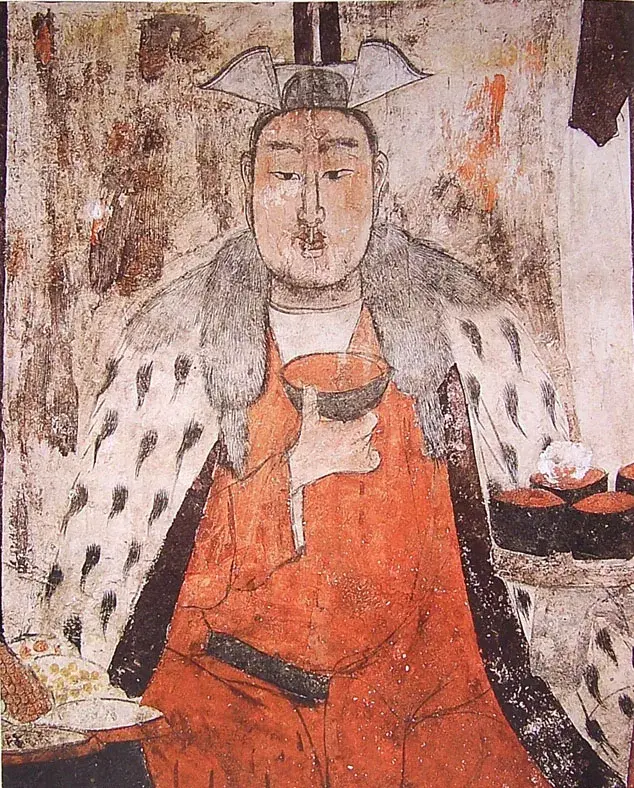
皇侃
Huang Kan (皇侃, 488 – 545, also written 皇偘) was a native of Wu Commandery (modern Suzhou, Jiangsu Province). A ninth-generation descendant of the famous Eastern Wu calligrapher and Qingzhou Inspector Huang Xiang, he was one of the foremost classical scholars of the Southern Liang Dynasty and a premier architect of the Southern Dynasties "sub-commentary" (yishu) school. Studying under the Kuaiji master He Yang in his youth,…
Huang Kan (皇侃, 488 – 545, also written 皇偘) was a native of Wu Commandery (modern Suzhou, Jiangsu Province). A ninth-generation descendant of the famous Eastern Wu calligrapher and Qingzhou Inspector Huang Xiang, he was one of the foremost classical scholars of the Southern Liang Dynasty and a premier architect of the Southern Dynasties "sub-commentary" (yishu) school. Studying under the Kuaiji master He Yang in his youth, he completely mastered his teacher's heritage, attaining profound expertise in the Three Rites, the Analects, and the Classic of Filial Piety. Under Emperor Wu of Liang, Huang Kan began his career as Concurrent Assistant Professor at the National University, where his lectures regularly attracted hundreds of students. After presenting his fifty-volume Lecture Sub-commentary on the Record of Rites to the throne, he was summoned to Shouguang Hall to lecture before Emperor Wu, who praised his erudition and appointed him Supernumerary Gentleman of the Cavalier Attendants. A man of exceptional filial devotion, he made a daily practice of reciting the Classic of Filial Piety twenty times. Upon his mother's death, he retired to his hometown to observe mourning. He later accepted an invitation from Prince of Shaoling Xiao Lun, but contracted heart disease during his journey and passed away in 545 at Xiashou at age fifty-eight. His ten-volume Sub-commentary on the Analects (Lunyu Yishu), which integrated Wei-Jin Xuanxue metaphysics with Confucian hermeneutics, was lost in China during the Southern Song Dynasty but preserved in Japan and repatriated during the Qing Dynasty, surviving as the sole complete pre-Tang classical sub-commentary in East Asia.
Born in Wu Commandery as a ninth-generation descendant of Huang Xiang; displayed precocious intellectual talent.
Studied under the ritual master He Yang in Kuaiji, mastering the Three Rites, the Analects, and the Classic of Filial Piety.
Appointed Concurrent Assistant Professor at the National University, lecturing to several hundred students.
Presented his fifty-volume Liji Jiangshu; lectured before Emperor Wu and was promoted to Supernumerary Gentleman.
Following his mother's demise, resigned his official post to observe filial mourning in his ancestral home.
Accepted an invitation from Prince Xiao Lun; contracted heart illness and died at Xiashou at age fifty-eight.
Huang Kan was born into the distinguished Huang lineage of Wu Commandery, descended in the ninth generation from Huang Xiang, the celebrated calligrapher of the Eastern Wu Kingdom. Nurtured in a scholarly household, Huang Kan displayed sharp analytical perception and a love of learning from boyhood.
During the early Tianjian era of Southern Liang, Huang Kan journeyed to Kuaiji to enter the academy of He Yang, the preeminent ritual scholar of the southern realm. He Yang possessed deep mastery of Han ritual exegesis. Huang Kan applied himself with tireless devotion, acquiring the full breadth of He Yang's learning. He acquired unmatched expertise in the Etiquette and Rites, Rites of Zhou, and Record of Rites, while harmonizing these ritual systems with the philosophical insights of the Analects and the Classic of Filial Piety.
During the Liang Dynasty, Emperor Wu vigorously promoted Confucian learning, establishing the National University and Five Colleges across Jiankang. Recognizing Huang Kan's classical authority, the imperial court appointed him Concurrent Assistant Professor at the National University. Taking the rostrum, Huang Kan elucidated the canonical texts through systematic logic and lucid diction, synthesizing traditional Zheng Xuan glosses with metaphysical philosophy. His lectures drew vast audiences, with several hundred students gathering at every session.
While teaching, Huang Kan spent several years compiling his monumental fifty-volume Lecture Sub-commentary on the Record of Rites (Liji Jiangshu). The treatise synthesized diverse Southern and Northern interpretations while clarifying ceremonial terminology. When the completed manuscript was presented to the throne, Emperor Wu ordered it deposited in the Imperial Secret Archives as an authoritative textbook. Shortly thereafter, Emperor Wu hosted an academic symposium in Shouguang Hall and summoned Huang Kan to expound upon the nuances of the Record of Rites. Huang Kan's articulate explanations and composure delighted the monarch, who promoted him to Supernumerary Gentleman of the Cavalier Attendants while permitting him to retain his university post.
Huang Kan was renowned throughout the southern court for his extraordinary filial piety. He revered the Classic of Filial Piety as the supreme spiritual guide for personal rectitude, regarding it with the same sacred devotion that Buddhists accorded the Avalokiteshvara Sutra. He established an unbending personal rule to cleanse himself, burn incense, and recite the entire Classic of Filial Piety twenty times every single day—a ritual discipline he maintained throughout his life.
During the Datong era, his mother passed away. Devastated by grief, Huang Kan immediately submitted his resignation and returned to his native Wu Commandery to observe strict mourning rites. During his three-year mourning period, he lived in a rudimentary thatched hut beside her tomb, subsisting on thin porridge and weeping daily, earning universal admiration from local communities.
Following the completion of his mourning obligations, Huang Kan declined further bureaucratic advancement, choosing instead to lecture privately at home. Xiao Lun, the Prince of Shaoling and sixth son of Emperor Wu, was an ardent patron of literature and scholarship serving as General Pacifying the West in Xiangyang. Deeply admiring Huang Kan's reputation, Prince Xiao Lun dispatched emissaries bearing lavish gifts to invite Huang Kan to his regional headquarters.
Touched by the prince's sincere regard, Huang Kan agreed to travel westward. However, exhausted by the arduous voyage and weakened by years of ascetic mourning, he contracted an acute cardiac illness upon reaching Xiashou (modern Hanyang, Wuhan, Hubei Province). Medical efforts failed, and he passed away in 545 at the age of fifty-eight. His ten-volume Sub-commentary on the Analects and his ritual commentaries were widely copied and studied across the southern realm, serving as foundational texts for medieval Confucianism.
Huang Kan's crowning intellectual achievement was the compilation of the ten-volume Sub-commentary on the Analects (Lunyu Yishu). Taking He Yan's third-century Collected Explanations of the Analects (Lunyu Jijie) as his base text, Huang Kan compiled comments and sub-commentaries from over twenty Han, Wei, Jin, and Southern Dynasties masters, including Jiang Xi, Wei Guan, Luan Zhao, Sun Chuo, Guo Xiang, Zhang Ping, and Yuan Hong, while weaving Wei-Jin Xuanxue philosophy and early Buddhist concepts of mind and nature into Confucian exegesis.
In hermeneutical method, Huang Kan departed from rigid Han Dynasty philological literalism, seeking instead the philosophical "subtle words and great meanings" of Confucius. For example, in explicating the passage "If a gentleman is not grave, he will not inspire awe" (Xue'er), he cited Laozi's axiom that "gravity is the root of lightness, stillness is the master of restlessness," arguing that personal solemnity reflects conformity with universal natural law. His commentary represented the theoretical pinnacle of Southern Dynasties philosophical Confucianism, standing alongside He Yan's Jijie and Zhu Xi's Jizhu as one of the three great landmarks in the history of Analects interpretation.
The textual preservation of the Lunyu Yishu represents a remarkable episode in East Asian cross-cultural history. Widely utilized during the Sui and Tang dynasties, Huang Kan's commentary served as an indispensable reference for the Tang imperial compilation Correct Meaning of the Five Classics (Wujing Zhengyi). During the Kaiyuan era of the Tang Dynasty, Japanese envoys and student monks transported manuscript copies of the Lunyu Yishu to Nara and Heian Japan, where the Japanese imperial court adopted it as the standard curriculum for Confucian studies.
In China proper, following the rise of Neo-Confucianism during the Song Dynasty and the universal adoption of Zhu Xi's commentary, Huang Kan's work fell into disuse and vanished entirely for several centuries. During the Qianlong era of the Qing Dynasty, Japanese scholars printed movable-type editions based on ancient medieval manuscripts preserved at the Ashikaga School. These Japanese imprints were transported back to China aboard trading vessels. Leading Qing scholars Ji Yun and Dai Zhen acclaimed the repatriated text as an incomparable national treasure, including it in the Imperial Four Treasuries (Siku Quanshu). As the sole complete pre-Tang classical sub-commentary preserved today, the Lunyu Yishu provides modern scholars with an irreplaceable window into early medieval Chinese textual scholarship.
FIGURES ASSOCIATED WITH THIS DYNASTY